
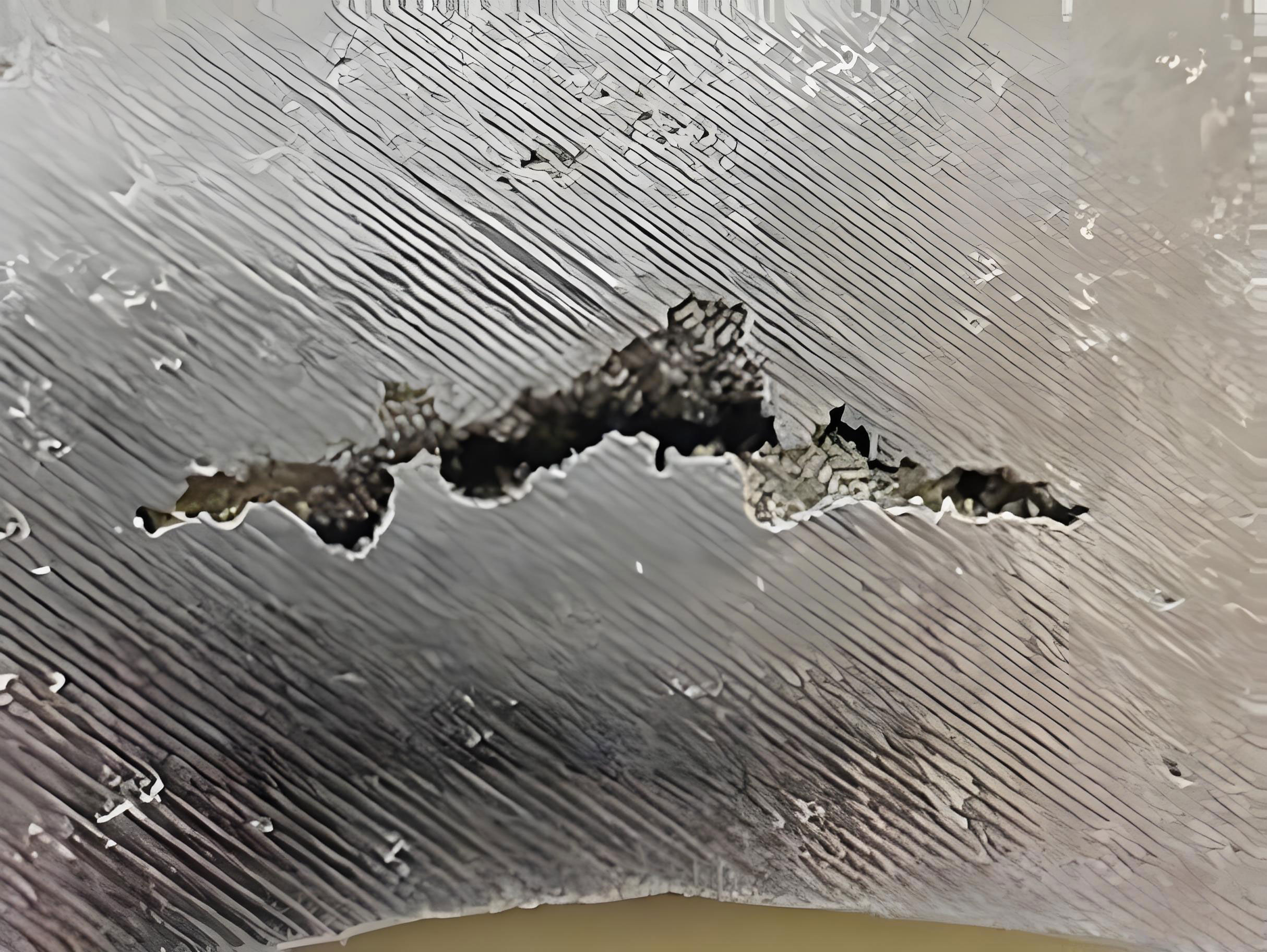
The production of small ductile iron castings presents a persistent challenge for foundries worldwide: the formation of internal shrinkage porosity and surface sink defects. These issues are intrinsically linked to the unique solidification behavior of ductile iron. Small castings are characterized by thin sections, resulting in a low casting modulus, often calculated as Volume/Surface Area. This geometric reality makes them poorly suited for conventional feeding techniques like risers. Consequently, the natural phenomenon of graphitic expansion during solidification, which is the cornerstone of achieving sound, dense castings in heavier sections, becomes difficult to harness effectively in these small components. The fundamental problem lies in the solidification mode. Ductile iron solidifies through a mushy or pasty mechanism, where a significant temperature gradient does not develop, and a long, slushy stage exists between liquidus and solidus. This leads to dispersed shrinkage cavities that cannot be fed externally, manifesting as shrinkage in casting. This article, from an engineering perspective, delves into the metallurgical and processing root causes of these defects and presents effective, practical solutions centered on composition control and innovative nodularization technology.
The Solidification Mechanism and Its Role in Defect Formation
Understanding the formation of shrinkage in casting defects requires a deep dive into the solidification dynamics of ductile iron. Unlike pure metals or some alloys that solidify directionally (skin-forming), ductile iron undergoes a eutectic transformation within a temperature range. The solidification sequence involves the nucleation and growth of graphite spheroids surrounded by austenite shells. This divorced eutectic growth is relatively slow and inhibits the rapid formation of a strong, continuous solid skin at the casting surface. The critical consequence is a reduction in the temperature gradient, $$G$$, across the casting section.
The severity of mushy zone formation is directly related to the width of the eutectic solidification range, $$ \Delta T_{Eut} = T_{Liquidus} – T_{Solidus} $$. A wider $$ \Delta T_{Eut} $$ promotes a more extensive pasty zone. Within this zone, early graphite precipitation occurs while a considerable amount of liquid metal remains interconnected. The expansion pressure from this early graphitization is dissipated through the still-liquid channels and does not contribute to feeding isolated liquid pools that form later. By the time these isolated pools solidify in the final stages, the amount of graphite available to precipitate and generate useful expansion is diminished. If this late-stage expansion is insufficient to compensate for the liquid and solidification contraction of the isolated liquid, shrinkage porosity or a surface sink forms. The latter occurs specifically when the weak, partially solidified surface shell collapses under atmospheric pressure due to a vacuum forming beneath it. This distinct mechanism separates sink defects from gas holes, as the sunk surface retains the mold wall finish.
| Solidification Mode | Temperature Gradient (G) | Solidification Range (ΔT) | Primary Defect Tendency | Key Mechanism |
|---|---|---|---|---|
| Directional / Skin-Forming | High | Narrow | Centralized Shrinkage Pipe | Sequential solidification allows directional feeding. |
| Mushy / Pasty (Ductile Iron) | Low | Wide | Dispersed Shrinkage Porosity & Surface Sink | No directional feeding; late-stage expansion is critical. |
This interplay between solidification mode, temperature range, and graphite precipitation timing is the core reason for shrinkage in casting issues in small ductile iron parts.
The Pivotal Role of Silicon: A Double-Edged Sword
Silicon is the most influential alloying element in ductile iron after carbon. Its effects are multifaceted and directly govern the propensity for shrinkage in casting defects.
1. Widening the Solidification Range: In a pure Fe-C system, the eutectic reaction occurs at a constant temperature (~1155°C). Silicon significantly alters this phase diagram, depressing both the liquidus and solidus temperatures but widening the interval between them. The effect of an element on the eutectic temperature range can be conceptualized. Silicon is a potent “range-widener.” As silicon content increases, $$ \Delta T_{Eut} $$ expands, promoting a more extensive mushy zone and increasing the risk of dispersed shrinkage in casting defects.
2. Enhancing Carbon Activity and Early Graphitization: Silicon increases the thermodynamic activity of carbon in molten and solidifying iron. This means that at a given temperature and carbon content, a higher silicon level increases the driving force for graphite precipitation. Consequently, during the early stages of eutectic solidification, more graphite spheroids nucleate and begin to grow. This early expansion is largely wasted, as previously explained. The detrimental outcome is a depletion of the carbon reservoir available for critical late-stage graphitization in isolated liquid pockets. The relationship can be summarized: excessive early graphite growth reduces the potential for useful, feeding-expansion later.
The combined effect is profound: increasing silicon content raises both the width of the pasty zone and the fraction of total graphite precipitated early in the process. Therefore, a high silicon level is a primary metallurgical factor promoting shrinkage in casting problems in small castings. Foundries often increase silicon in thin-section castings to prevent chill (carbides) and to promote ferrite for ductility. However, this well-intentioned practice can inadvertently cross a threshold, trading one defect (carbides) for another (porosity).
| Element | Effect on Eutectic Range (ΔTEut) | Effect on Carbon Activity | Net Influence on Shrinkage Porosity Tendency |
|---|---|---|---|
| Silicon (Si) | Strongly Increases | Increases | Strongly Increases |
| Carbon (C) | Slightly Increases | N/A (Is Carbon) | Decreases (Provides expansion volume) |
| Manganese (Mn) | Increases | Decreases | Increases |
| Phosphorus (P) | Increases | Minor Effect | Increases |
| Magnesium (Mg) | Minor Effect | Decreases (in melt) | Complex (via nodularization) |
Effective Solutions for Shrinkage Defects
When facing shrinkage in casting defects in small components where traditional methods like risers or chills are impractical due to geometry or process constraints (e.g., shell molding with iron shot, vertical molding lines), the solution must be primarily metallurgical. Two synergistic approaches are most effective.
1. Strategic Control of Silicon Content
The goal is to find the minimum silicon level necessary to achieve the desired microstructure (avoid carbides, ensure ferrite content for mechanical properties) without unnecessarily widening the solidification range. The Carbon Equivalent (CE) is a useful parameter, but its components must be considered independently: $$ CE = \%C + \frac{\%Si + \%P}{3} $$. For a given CE, a higher carbon and lower silicon combination is beneficial. Carbon provides the volume for graphite expansion, while a lower, controlled silicon content minimizes detrimental early expansion and maximizes the useful expansion window.
For small and medium-section castings prone to shrinkage in casting defects, the recommended target range for final silicon content is typically between 2.5% and 2.8%. This range is usually sufficient to suppress chill in modestly thin sections while keeping the eutectic range in check. Pushing silicon to 2.9%-3.2% or higher, as sometimes done to guarantee ferritization or high elongation in low-grade irons, dramatically increases the risk of shrinkage porosity and sinks. Foundries must perform careful trials to identify the lower silicon limit for their specific casting geometry and cooling conditions.
2. Employing Lanthanum-Based Nodularizers
This is a transformative technology for mitigating shrinkage in casting defects. The type of rare earth used in the nodularizing alloy has a profound impact on the graphite nucleation and growth kinetics. Conventional cerium-containing nodularizers often lead to a relatively uniform distribution of graphite nodules that nucleate and grow early in the solidification process.
In contrast, pure lanthanum-based nodularizers (e.g., La-Mg-Si-Fe alloys) alter the solidification sequence. They promote a distinctive bimodal graphite size distribution. This microstructure features a population of very fine graphite nodules that nucleate late in the eutectic reaction, specifically within the final, isolated liquid pools.
The mechanism can be described by considering the undercooling required for nucleation. Lanthanum modifies the potency of nucleation sites, effectively delaying the nucleation of a significant fraction of graphite. The growth kinetics might also be affected. The result is that a larger proportion of the total graphite is forced to precipitate during the critical final stage of solidification. The expansion from this late-stage graphitization is concentrated exactly where it is needed—in the regions most vulnerable to shrinkage in casting—effectively counteracting the remaining liquid contraction and promoting densification.
A critical insight is that merely increasing the total graphite nodule count does not guarantee a reduction in shrinkage. In fact, an excessively high count of uniformly sized, early-forming nodules (achievable through over-inoculation or use of elements like bismuth) can exacerbate the problem by depleting the carbon source too early. The beneficial effect is specifically tied to the delayed nucleation enabled by lanthanum, creating the necessary conditions for late, focused expansion.
The comparative effects can be summarized by the following conceptual relationship for the volume of useful expansion, $$ V_{useful} $$:
$$ V_{useful} \propto \int_{t_{iso}}^{t_{solid}} \frac{dG}{dt} \cdot dt $$
where $$ dG/dt $$ is the rate of graphite precipitation and the integration runs from the time isolated liquid pools form ($$ t_{iso} $$) until complete solidification ($$ t_{solid} $$). Lanthanum treatment acts to increase the value of this integral by shifting the graphitization rate curve $$ dG/dt $$ later in time.
| Parameter | Conventional Ce/Mg Treatment | Pure La/Mg Treatment | Impact on Shrinkage |
|---|---|---|---|
| Primary Graphite Nucleation | Early and abundant | Moderated and delayed | La reduces wasted early expansion. |
| Graphite Size Distribution | Relatively uniform | Bimodal (large + very fine) | La’s fine nodules form in last-to-solidify areas. |
| Expansion Timing Profile | Peaks during mushy stage | Shifted towards end of solidification | La concentrates expansion where feeding is impossible. |
| Final Shrinkage Tendency | Higher | Significantly Lower | La treatment directly counteracts shrinkage in casting. |
Practical Application and Case Studies
The combination of silicon control and lanthanum treatment provides a powerful toolkit for solving persistent shrinkage in casting issues.
Case Study 1: Shell-Molded Component (QT450-10)
A foundry producing a small, complex QT450-10 casting via shell molding (backed with iron shot) encountered internal shrinkage porosity. Initial chemistry was centered at approximately 3.6% C and 3.0% Si. Process adjustments (gating, pouring temperature) showed limited improvement. The solution was a targeted compositional shift: the final silicon content was reduced to 2.7%, and the carbon content was concurrently increased to 3.7% to maintain a similar Carbon Equivalent. This narrower Si window reduced the pasty zone width, allowing the natural expansion to be more effective. The shrinkage in casting defect was eliminated.
Case Study 2: Flanged Pipe Fittings
A manufacturer of ductile iron pipe fittings and flanges consistently faced surface sink defects on thick flanges. Initial measures involving improved rigging and controlled silicon (to 2.7%) resolved the surface sinks. However, subsequent machining operations revealed sub-surface shrinkage in casting porosity in specific locations. Traditional methods were exhausted. The implementation of a pure lanthanum-containing cored wire for nodularization was the final step. The change in nodularizer promoted the late-stage graphitization mechanism, providing the final internal feeding necessary to achieve sound metal. The machining reveals confirmed the elimination of the subsurface shrinkage.
Conclusion
The fight against shrinkage in casting defects in small ductile iron components is won through a mastery of solidification science. The inherent mushy solidification mode and wide eutectic range of ductile iron predispose it to these issues, especially in geometries with low modulus. Silicon, while essential for graphite formation and ferrite promotion, is the primary metallurgical amplifier of shrinkage porosity and sink risk when its content exceeds the necessary threshold.
The effective solution strategy is twofold and synergistic. First, rigorous control of final silicon content to the minimum level required for the desired microstructure (typically 2.5%-2.8%) is critical to constrain the solidification range. Second, the adoption of pure lanthanum-based nodularizers represents a paradigm shift. By retarding graphite nucleation, this technology harnesses the graphitic expansion force where it is most potent—in the final, isolated liquid regions of the casting—turning a inherent weakness into a powerful feeding mechanism. For foundries struggling with shrinkage in casting defects in small, difficult-to-feed ductile iron parts, this combination of precise chemistry and advanced nodularization offers a reliable and fundamental path to higher quality and yield.