
The relentless pace of technological advancement continuously reshapes the industrial landscape. In this context, the convergence of 3D printing, or additive manufacturing, with established metal forming techniques like investment casting process heralds a new era of manufacturing agility and capability. From my perspective as a practitioner and observer in this field, this fusion is not merely an incremental improvement but a fundamental rethinking of how we approach the design and production of complex metal components. This article delves deeply into the integration of 3D printing within the rapid investment casting process, examining its principles, implementation, quantitative benefits, and future trajectory, underpinned by technical data and analytical comparisons.
The traditional investment casting process, also known as lost-wax casting, is a time-honored precision manufacturing method. Its fundamental steps are well-established: first, a disposable pattern, typically made from wax or a similar material, is created. This pattern is then assembled onto a gating system. Next, it undergoes a series of coatings where it is repeatedly dipped into a ceramic slurry and stuccoed with refractory sand to build a robust ceramic shell. Once the shell is sufficiently thick and dried, the pattern is removed, usually via steam or thermal dewaxing, leaving behind a precise cavity. This shell is then fired at high temperature to achieve final strength and remove any residual volatiles. Finally, molten metal is poured into the preheated shell to form the casting. This process is renowned for producing parts with excellent surface finish, dimensional accuracy, and the ability to replicate intricate geometries that are challenging for other casting methods.
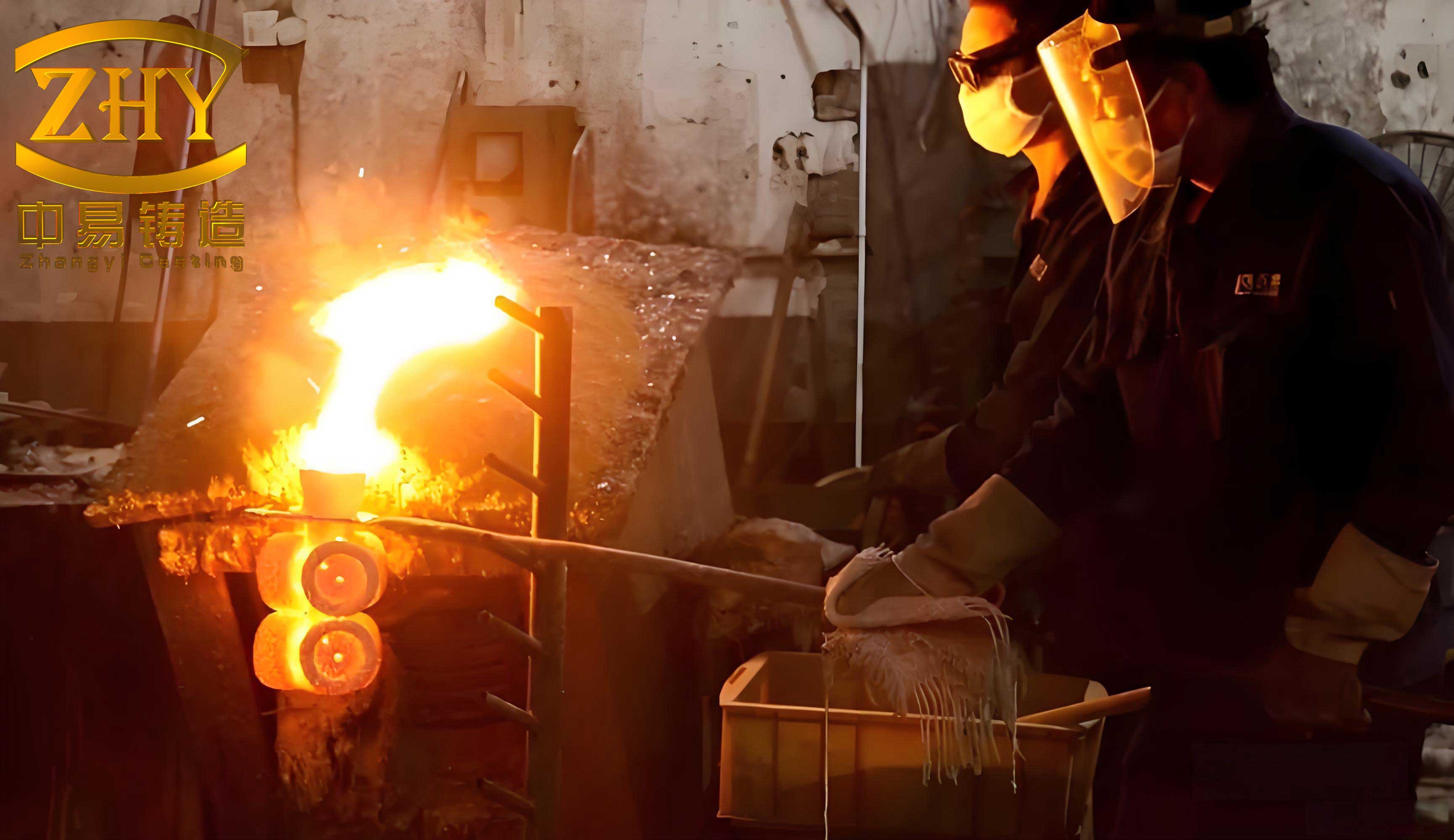
However, this venerable investment casting process carries inherent constraints, particularly in the prototype development and low-volume production phases. The most significant bottleneck lies in the creation of the initial pattern. Producing a metal injection mold (die) for wax pattern injection is costly and time-consuming. This step alone can take weeks and represent a substantial upfront investment, making it economically prohibitive for design validation or small batch sizes. Furthermore, design modifications necessitate altering or completely remaking the mold, further escalating costs and lead times. This rigidity stands in stark contrast to the modern demand for speed and flexibility in product development.
Enter 3D printing, a layer-by-layer additive fabrication technology. Its core value proposition is the direct translation of a digital 3D model into a physical object without the need for hard tooling. This capability dovetails perfectly with the needs of the investment casting process. Instead of machining a metal mold to inject wax patterns, a 3D printer can directly fabricate the sacrificial pattern. This paradigm shift decouples the cost and time of production from geometric complexity. Whether a part has simple bosses or intricate internal channels, the production timeline and cost via 3D printing remain largely driven by the part’s enveloping volume and print resolution, not its complexity. This synergy unlocks unprecedented potential.
Material Convergence: Bridging the Digital and Foundry Worlds
The successful fusion of these technologies hinges on material science. The traditional investment casting process relies on pattern materials that must meet specific criteria: adequate strength for handling, stability during shell building, and, crucially, clean, complete removal during dewaxing without leaving ash that could compromise the ceramic shell or final casting quality.
Traditional pattern materials are categorized based on their composition and properties, as summarized below:
| Material Type | Primary Composition | Melting Range (°C) | Key Characteristics |
|---|---|---|---|
| Wax-Based | Paraffin Wax, Stearic Acid | 60 – 70 | Low cost, good reproducibility, low ash content. |
| Resin-Based | Natural Resins | 70 – 120 | Higher strength and hardness compared to wax. |
| Intermediate Temp. (Rosin-Based) | Rosin, Waxes | 90 – 110 | Good surface finish, moderate strength. |
| Polymer-Based (e.g., PS, PMMA) | Polystyrene, Polymethyl Methacrylate | ~100 (Softens) | Used in rapid prototyping, removed via flash dewaxing or dissolution. |
For 3D printing to insert itself into this investment casting process, the printable materials must emulate or improve upon these characteristics. Fortunately, a range of photopolymer resins and thermoplastic materials have been engineered specifically for this application. These materials are formulated to burn out cleanly with minimal residual ash, a critical parameter often quantified and guaranteed by material suppliers. A comparison of common 3D printing materials relevant to casting is shown below.
| Printing Technology | Common Material | Key Print & Casting Properties | Typical Ash Content (%) |
|---|---|---|---|
| Stereolithography (SLA) | Castable Photopolymer Resin | High resolution, smooth surface finish, low viscosity for fine features. Designed for clean burnout. | < 0.01 – 0.05 |
| Digital Light Processing (DLP) | Castable Photopolymer Resin | Similar to SLA, fast layer curing. Excellent for detailed patterns. | < 0.01 – 0.05 |
| Material Jetting (PolyJet) | Castable Simulant Photopolymer | Multi-material capability, very high detail. Supports can be water-soluble. | Varies by blend |
| Fused Deposition Modeling (FDM) | Specialized Casting Wax Filament | Lower equipment cost, good for larger patterns. Layer lines may require smoothing. | < 0.1 |
The choice between these materials and technologies involves a trade-off analysis. The decision function can be conceptualized as optimizing for a set of weighted parameters:
$$ \text{Optimization Score} = w_1 \cdot R + w_2 \cdot \frac{1}{T} + w_3 \cdot \frac{1}{C} + w_4 \cdot S $$
Where:
- $R$ = Resolution/Accuracy
- $T$ = Total Lead Time
- $C$ = Cost per pattern
- $S$ = Surface Finish quality
- $w_1, w_2, w_3, w_4$ = Weights assigned based on project priorities (e.g., prototype vs. production).
For a high-detail prototype, $w_1$ and $w_4$ would be high, favoring SLA/DLP. For a large, low-volume production run where cost is paramount, $w_3$ might dominate, making FDM with casting wax a contender.
The Integrated Workflow: A Step-by-Step Synthesis
The practical implementation of 3D printing within the rapid investment casting process creates a streamlined, digital thread from CAD to metal part. Let’s elucidate this integrated workflow using the example of manufacturing a complex impeller, a common component in aerospace and turbo-machinery.
Step 1: Digital Model Creation & Preparation. The process initiates with a 3D CAD model. This can be a new design from scratch or a digitized existing part via 3D scanning (reverse engineering). The model must be prepared for the investment casting process, which includes adding necessary allowances for shrinkage (both of the pattern material and the final metal), designing an effective gating and feeding system to ensure sound metal filling and solidification, and potentially segmenting the part if it is too large for the printer build volume. The finalized model is exported as an STL file and sliced into layers for the 3D printer.
Step 2: 3D Printing of the Sacrificial Pattern. For our high-detail impeller, an SLA printer using a high-resolution castable resin is selected. The build parameters—layer thickness, exposure time, orientation—are optimized to achieve the required surface finish and dimensional accuracy while minimizing print time and support structure usage. Once printed, the pattern is cleaned in a solvent bath (e.g., isopropyl alcohol) to remove uncured resin and then post-cured under UV light to achieve full polymerization and strength. The result is a precise, handleable resin pattern that is a direct physical counterpart of the CAD model.
Step 3: Shell Building (The Investment Process). This step remains the heart of the investment casting process but now uses a 3D printed pattern. The pattern, often assembled with other patterns onto a printed sprue base, undergoes the standard ceramic shell-building sequence:
- Primary (Face) Coat: Dip into a fine ceramic slurry (e.g., zirconia) to capture surface detail. Stucco with fine sand.
- Secondary (Back-up) Coats: Repeated dipping into coarser slurry (e.g., silica) and stuccoing with progressively coarser sand.
- Drying: Each coat is thoroughly dried in a controlled environment.
The number of coats (typically 5-8) determines the final shell thickness and strength, governed by the equation for shell strength: $ \sigma_{shell} \propto \frac{E \cdot t}{r} $, where $E$ is the ceramic’s Young’s modulus, $t$ is the thickness, and $r$ is a characteristic radius of the part. A robust shell is critical to withstand the thermal shock of dewaxing and metal pouring.
Step 4: Dewaxing & Firing. With the ceramic shell complete, the 3D printed pattern must be removed. This is typically done in a high-pressure steam autoclave or a flash-fire furnace. The rapid heating causes the photopolymer resin to expand, melt, vaporize, and burn out. The specialized low-ash formulation ensures nearly complete evacuation of the cavity. The shell is then fired at temperatures ranging from 870°C to 1095°C (1600°F to 2000°F) to eliminate any last traces of organic material, sinter the ceramic, and bring the mold to a temperature suitable for casting.
Step 5: Casting, Knock-out, and Finishing. Molten metal (e.g., stainless steel, aluminum, superalloy) is poured into the preheated shell. After solidification, the ceramic shell is mechanically removed via vibration or water blasting. The castings are cut from the gating system and undergo standard post-processing: heat treatment, shot blasting, and any required machining on critical dimensions.
Quantifying the Advantage: A Data-Driven Comparison
The superiority of the hybrid 3D printing/investment casting process becomes unequivocal when analyzed through quantitative metrics. The impact is most pronounced in the realms of time, cost, and capability.
Lead Time Compression: This is the most dramatic benefit. The traditional route requires design and fabrication of a metal mold, which can take 4-8 weeks. The 3D printing route eliminates this entirely. A pattern can be printed in hours or days, with the entire casting cycle from CAD to metal part often completed in less than one week. This acceleration can be modeled as a significant reduction in the critical path duration: $ T_{total}^{hybrid} = T_{print} + T_{shell} + T_{cast} $, whereas $ T_{total}^{traditional} = T_{mold} + T_{wax-inject} + T_{shell} + T_{cast} $. Since $T_{mold}$ is the largest component and is eliminated, the savings are substantial.
Economic Efficiency for Low Volumes: The cost equation flips for prototypes and small batches. The fixed cost of a mold ($C_{mold}$) is high but amortized over many parts in production. For N parts, traditional per-part pattern cost is approximately $ \frac{C_{mold}}{N} + C_{wax} $. For the hybrid process, the per-part pattern cost is simply the 3D printing cost $C_{print}$, which is largely independent of N. Therefore, there exists a break-even point $N_{be}$ where $ \frac{C_{mold}}{N_{be}} + C_{wax} = C_{print} $. For $N < N_{be}$, the hybrid process is more economical. This makes the investment casting process accessible for projects previously deemed non-viable.
Geometric Freedom and Performance Enhancement: 3D printing enables the creation of patterns with geometries impossible to eject from a traditional two-part mold. This allows designers to integrate conformal cooling channels, lattice structures for lightweighting, and organic shapes optimized by generative design algorithms directly into the casting. This enhances the final part’s performance—improving thermal management, reducing weight, or increasing strength—while still leveraging the superior material properties and surface finish of a cast metal part.
The following table synthesizes a comprehensive comparison between the traditional and hybrid approaches:
| Parameter | Traditional Investment Casting | 3D Printing + Investment Casting | Implication & Quantitative Advantage |
|---|---|---|---|
| Initial Tooling Lead Time | 4 – 8 weeks | 0 – 3 days | Lead time reduction of >80% for first article. |
| Initial Tooling Cost | High ($5,000 – $50,000+) | Low to Moderate ($0 tooling, part cost depends on volume) | Eliminates high fixed cost barrier. Cost-effective for N < ~50-100 parts. |
| Design Change Flexibility | Very Low (New mold required) | Very High (Modify CAD, re-print) | Enables rapid design iterations (A/B testing) with minimal cost delta. |
| Geometric Complexity | Limited by mold design and draft angles. | Extremely High (Any printable geometry). | Enables integrated features (e.g., internal channels, lattices). |
| Part Consolidation Potential | Moderate (Limited by assembly of wax patterns). | Very High (Can print a single, complex assembly as one pattern). | Reduces part count, assembly time, and potential failure points. |
| Material Utilization (Pattern) | Moderate (Wax can be recycled). | High (Additive process, minimal waste). | $\eta_{material}^{print} > \eta_{material}^{wax-injection}$. |
| Surface Finish (as-cast) | Excellent (Replicates smooth wax surface). | Good to Excellent (Depends on print layer resolution and post-processing). SLA can achieve ~1-2 µm Ra. | SLA/DLP patterns can approach wax-like surface quality. |
| Dimensional Accuracy | High (CT4-6 per ISO 8062). | Comparable to High (Accuracy depends on printer calibration, resin shrinkage, and shell process control). | Can consistently achieve tolerances within ±0.1 mm per 25 mm. |
The dimensional accuracy of the final casting can be described as a composite of errors from each stage. A simplified model for a linear dimension $D$ is:
$$ D_{casting} = D_{CAD} \cdot (1 + S_{print}) \cdot (1 + S_{shell}) \cdot (1 + S_{metal}) + \epsilon $$
Where:
- $S_{print}$ is the shrinkage/swell factor of the 3D printed pattern.
- $S_{shell}$ is the dimensional change of the ceramic shell during firing.
- $S_{metal}$ is the solidification shrinkage of the alloy.
- $\epsilon$ encompasses random errors (e.g., measurement, process variation).
Successful implementation requires characterizing and compensating for these factors in the initial CAD model.
Future Trajectory and Evolving Challenges
The fusion of 3D printing and the investment casting process is still maturing. Its trajectory points towards greater material sophistication, process automation, and scale.
Material Development: Research is ongoing into next-generation casting patterns with even lower ash content (<0.001%), tailored thermal expansion properties to minimize shell cracking during dewaxing, and enhanced toughness to survive automated handling. Furthermore, the direct 3D printing of ceramic shells (Binder Jetting) is emerging as a complementary technology, potentially bypassing the pattern-making stage altogether for certain applications, though it presents its own challenges in permeability and green strength.
Process Integration and Quality Assurance: The future lies in seamlessly integrated digital workflows. This involves software that automatically adds casting allowances, designs optimal gating, schedules print builds, and tracks the digital twin of the part through the entire investment casting process. In-process monitoring using sensors and machine learning for defect prediction (e.g., shell cracks, incomplete burnout) will enhance reliability and yield.
Scaling for Higher Volumes: While currently ideal for low volumes, there is a push to make the technology competitive for medium series. This involves scaling up printer build volumes and throughput (e.g., using multiple lasers in SLA, faster DLP engines, or pellet-extrusion FDM for very large patterns). The economic break-even point $N_{be}$ will continue to shift upward as printing speeds increase and material costs decrease.
In conclusion, from my vantage point, the integration of 3D printing into the rapid investment casting process represents a profound and lasting transformation. It has democratized access to high-quality metal castings for designers and engineers, collapsing lead times from months to days and making complexity essentially free. It bridges the gap between the limitless possibilities of digital design and the robust material realities of metallurgy. While challenges in material science, process control, and economics for mass production remain, the synergistic potential of this hybrid manufacturing approach is undeniable. It is not replacing the ancient art of casting; it is revitalizing it with digital precision, making the entire investment casting process faster, more flexible, and more capable than ever before, thereby fueling innovation across aerospace, medical, automotive, and energy sectors.