
As a researcher and engineer deeply involved in the field of advanced manufacturing, I have witnessed firsthand the transformative potential of integrating 3D printing, or additive manufacturing, with traditional precision investment casting techniques. This synergy is particularly crucial for titanium and titanium alloys, materials celebrated for their high strength-to-weight ratio, exceptional corrosion resistance, and biocompatibility. The conventional precision investment casting process for titanium, while capable of producing complex geometries, is often hampered by long lead times, high costs for mold fabrication, and significant challenges in prototyping or small-batch production. The advent of 3D printing offers a paradigm shift, enabling rapid, moldless pattern production directly from digital models. In this comprehensive exploration, I will detail the refined process we have developed, addressing specific challenges and presenting solutions that enhance the viability of 3D printing for titanium precision investment casting. Throughout this discussion, the term ‘precision investment casting’ will be central, as it represents the core traditional method we are augmenting.
The foundational step in our adapted precision investment casting workflow is the creation of the sacrificial pattern. Unlike traditional methods requiring hard tooling, we employ 3D printing to fabricate patterns directly from CAD models. Several materials are viable, but their suitability for titanium casting, which demands minimal residue to prevent surface contamination, varies significantly. We systematically evaluated different printable polymers.
| Material Type | Printing Technology | Ash/Residue Content | Suitability for Ti Casting | Key Advantages/Challenges |
|---|---|---|---|---|
| Specialty Casting Wax | Material Jetting | Very Low (<0.01%) | Excellent | Low residue, good surface finish, but may have lower structural strength for large parts. |
| Polylactic Acid (PLA) | Fused Deposition Modeling (FDM) | Low (~0.05%) | Good | Widely available, cost-effective, requires careful thermal debinding to avoid shell cracking. |
| Photopolymer Resin | Stereolithography (SLA) | High (>0.5%) | Poor (without treatment) | High resolution and detail, but high residue leads to severe alpha-case formation on castings. |
Our findings clearly indicate that wax and PLA are preferable for titanium precision investment casting due to their low ash content. The residue, or ash content, is a critical parameter as it directly influences the thickness of the alpha-case (oxygen-enriched brittle layer) on the final titanium casting. The relationship can be conceptually described by a contamination function:
$$ C_d = k \cdot A_r \cdot t_{exp}^{1/2} $$
Where \( C_d \) is the depth of contamination, \( k \) is a material-reactivity constant, \( A_r \) is the ash residue mass fraction, and \( t_{exp} \) is the time the molten metal is exposed to the decomposing pattern during burn-out. Minimizing \( A_r \) is therefore paramount.
For large components, printing a single piece can be inefficient. We optimize this by employing strategies like adaptive slicing for faster print speeds, designing parts for minimal support structures, and even segmenting the digital model for parallel printing on multiple machines followed by assembly. A critical post-printing step we introduced is coating the printed pattern with a thin, uniform layer of high-quality microcrystalline wax. This serves multiple purposes: it smooths the staircase effect inherent in some 3D printing processes, improves surface finish for better ceramic shell replication, and significantly enhances the adhesion of the primary ceramic slurry. The coating process involves dipping the pattern into a wax bath maintained at 62–68°C, ensuring a thickness of 0.5–0.6 mm after controlled drainage and manual finishing.
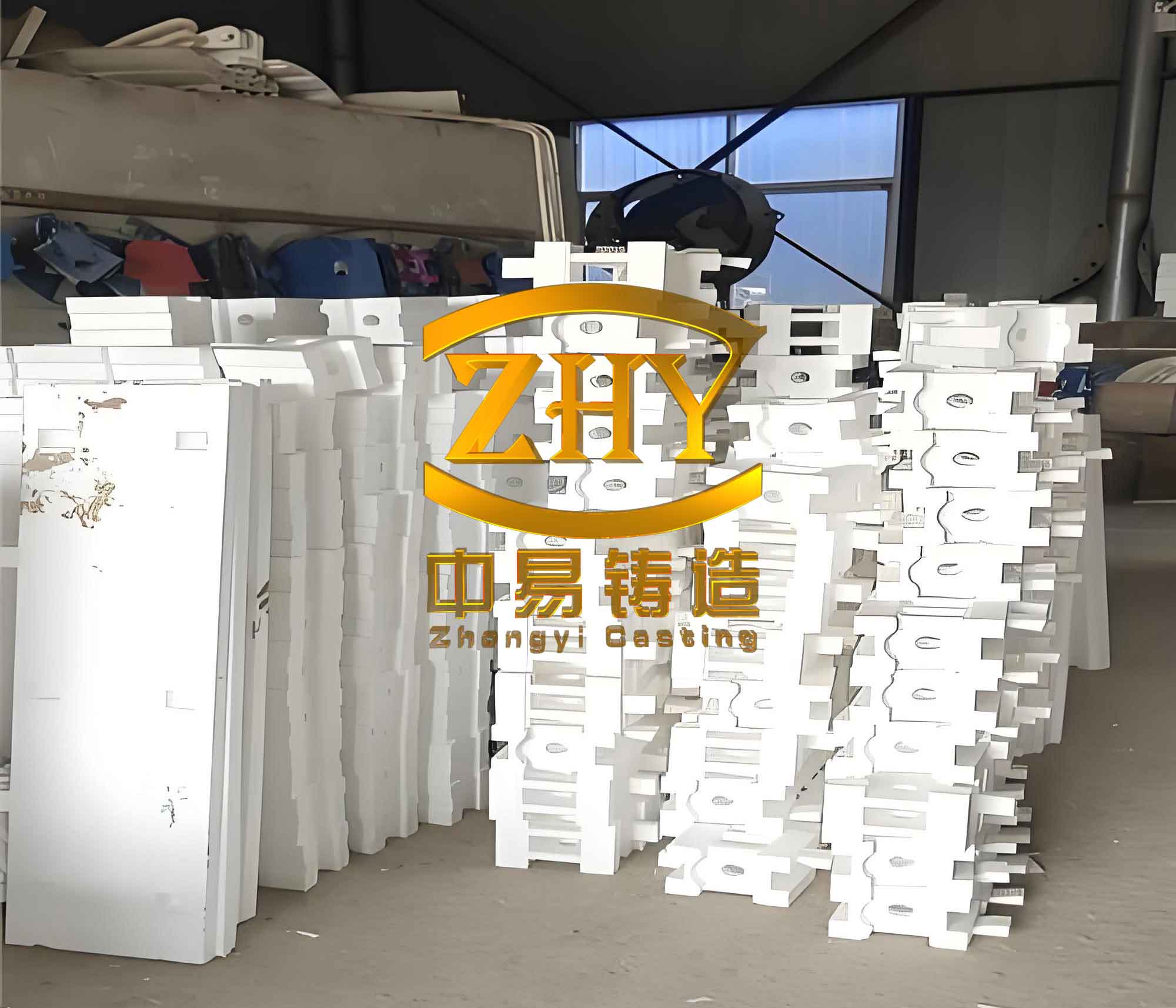
The assembly of patterns into a cluster, or “tree,” is a crucial step for efficient casting. We utilize a low-temperature hot glue gun for assembling individual pattern segments or attaching patterns to the wax runner and pouring cup system. This method provides sufficient strength while allowing for precise positioning. The entire assembly is then inspected to ensure all joints are smooth and filleted to prevent ceramic shell weakness. Following assembly, the wax-coated tree undergoes a final cleaning process using a mild solvent to remove any grease or debris, further promoting slurry adhesion in the subsequent precision investment casting shell-building stage.
The construction of the ceramic shell is the heart of the precision investment casting process, and for reactive metals like titanium, it demands exceptionally inert materials. We employ yttria (Y₂O₃) as the facecoat refractory material due to its high thermodynamic stability against molten titanium. The binder system is a critical innovation: we use a colloidal zirconia-silicate-based inorganic binder instead of conventional zirconium acetate or yttria sol. This binder formulation, represented empirically for slurry viscosity control, offers superior green strength and better compatibility with the wax-coated 3D-printed patterns.
The slurry viscosity \( \eta \) is a key controlled parameter, following a modified Bingham model for ceramic suspensions:
$$ \tau = \tau_0 + \eta_p \cdot \dot{\gamma} $$
Where \( \tau \) is shear stress, \( \tau_0 \) is the yield stress, \( \eta_p \) is the plastic viscosity, and \( \dot{\gamma} \) is the shear rate. We maintain the facecoat slurry viscosity between 40-60 seconds as measured by a Zahn cup #4. The backing layers use fused alumina (Al₂O₃) or mulite-based refractories to provide structural strength. The process parameters are meticulously controlled.
| Layer Sequence | Refractory Material | Binder Type | Slurry Viscosity (Zahn Cup #4) | Stucco Sand Grit | Drying Conditions (Temp, Humidity, Time) |
|---|---|---|---|---|---|
| Primary (1st & 2nd) | Yttria (Y₂O₃) | Zirconia-Silicate Sol | 45-55 s | Fine Yttria (80-120 mesh) | 22±2°C, 65±5% RH, 12-24 h |
| Secondary (3rd & 4th) | Fused Alumina | Silica Sol | 18-22 s | Medium Alumina (30-60 mesh) | 22±2°C, 45±5% RH, 6-8 h |
| Tertiary (5th to 8th) | Fused Alumina/Mulite | Silica Sol | 16-20 s | Coarse Alumina (16-30 mesh) | 22±2°C, 40±5% RH, 4-6 h |
The dewaxing and burn-out cycle is where the sacrificial pattern is removed, and the shell is sintered to achieve final strength. This step presents a major challenge for 3D-printed polymer patterns, especially PLA and resin, due to their higher thermal expansion and decomposition characteristics compared to traditional wax. Our two-stage protocol mitigates shell cracking (also called “shell rash”). First, the invested shell undergoes a low-temperature pre-heat at approximately 60°C for 3 hours. This gently melts the external wax coating, creating a compliant buffer zone between the decomposing polymer core and the rigid ceramic shell. Second, the shell is rapidly transferred to a high-temperature gas-fired furnace. The rapid, oxidative environment of the gas furnace is crucial for patterns like PLA and resin, as it promotes rapid combustion rather than slow pyrolysis, minimizing expansive pressure. The thermal cycle follows a specific profile: ramp to 300°C at 120°C/h (to complete pattern removal), then ramp to the final sintering temperature of 1050°C at 180°C/h, hold for 2 hours, and finally furnace cool. The hold temperature and time are critical for developing adequate shell strength, described by a sintering kinetics approximation:
$$ S = S_0 \cdot \exp\left(-\frac{E_a}{R T}\right) \cdot t^{n} $$
Where \( S \) is shell strength, \( S_0 \) is a pre-exponential factor, \( E_a \) is the apparent activation energy for sintering, \( R \) is the gas constant, \( T \) is absolute temperature, \( t \) is time, and \( n \) is a time exponent. The 1050°C/2h hold optimizes strength without promoting excessive reaction layers.
After sintering, the shell is preheated to a temperature close to the titanium alloy’s pouring temperature (typically 200-400°C below) to prevent thermal shock and ensure proper metal fluidity. The casting is then performed in a vacuum arc melting or vacuum induction melting furnace to prevent titanium oxidation. The inert shell and vacuum environment are essential for successful titanium precision investment casting.
Post-casting, the ceramic shell is removed via mechanical vibration and media blasting. However, all titanium precision investment castings develop a surface contamination layer, known as the alpha-case, due to minor reactions with the shell and atmosphere. For thin-walled castings from wax or PLA patterns, this layer is often within acceptable limits (typically <0.1 mm). For thicker sections or castings from less optimal patterns, an aggressive chemical milling (acid pickling) process is necessary. We have developed an effective and safer pickling solution as an alternative to the hazardous HF-HNO₃ mixture. Our formulation is based on ferric sulfate and hydrofluoric acid, which provides rapid removal with better control.
| Component | Chemical Formula | Weight Percentage (%) | Function |
|---|---|---|---|
| Ferric Sulfate (Fe-content ≥19%) | Fe₂(SO₄)₃ | 22.9 | Oxidizing agent, accelerates dissolution of titanium compounds. |
| Water | H₂O | 69.0 | Solvent and diluent. |
| Hydrofluoric Acid (49%) | HF | 8.1 | Primary etching agent, dissolves titanium and its oxides. |
The pickling reaction for titanium removal can be simplified as:
$$ Ti + 6HF + 2Fe^{3+} \rightarrow [TiF_6]^{2-} + 2Fe^{2+} + 3H_2 \uparrow $$
and for titanium dioxide:
$$ TiO_2 + 6HF \rightarrow [TiF_6]^{2-} + 2H_2O + 2H^+ $$
The ferric ion (\(Fe^{3+}\)) acts as a cathodic depolarizer, accelerating the overall reaction rate. The process is conducted at room temperature (20-25°C) with immersion times ranging from 2 to 10 minutes, depending on the initial alpha-case thickness, which itself is a function of the pattern ash content and shell interactions. After pickling, castings are thoroughly rinsed in deionized water and subjected to non-destructive evaluation and heat treatment (e.g., Hot Isostatic Pressing – HIP) as required.
In conclusion, the integration of 3D printing technology with titanium precision investment casting represents a significant advancement in manufacturing flexibility and efficiency. By carefully selecting pattern materials (favoring wax and PLA), implementing a protective wax coating, developing a high-strength yttria-based shell system with a novel binder, optimizing the thermal debinding cycle for polymer patterns, and employing an effective ferric sulfate-based pickling solution, we have systematically overcome the key barriers to adoption. This hybrid process streamlines the production of complex, high-integrity titanium components, dramatically reducing lead time and cost for prototypes and low-volume batches. It embodies the future of digital foundries, where “design-to-cast” cycles are compressed, enabling more agile innovation in aerospace, biomedical, and other high-performance sectors reliant on titanium precision investment casting. The continued refinement of printable pattern materials with even lower ash content, along with the development of direct 3D-printed ceramic shells compatible with titanium, will further propel this transformative approach, solidifying the role of additive manufacturing in the next generation of precision investment casting.