
The engine cylinder block, a cornerstone of automotive powertrains, directly influences engine performance, fuel efficiency, and reliability. As the automotive industry evolves, the demand for advanced processing technologies to manufacture high-quality 1.5L engine cylinder blocks has intensified. This article explores the optimization and innovation of manufacturing processes for 1.5L engine cylinder blocks, focusing on material selection, precision machining, surface treatment, and emerging trends in smart and sustainable manufacturing.
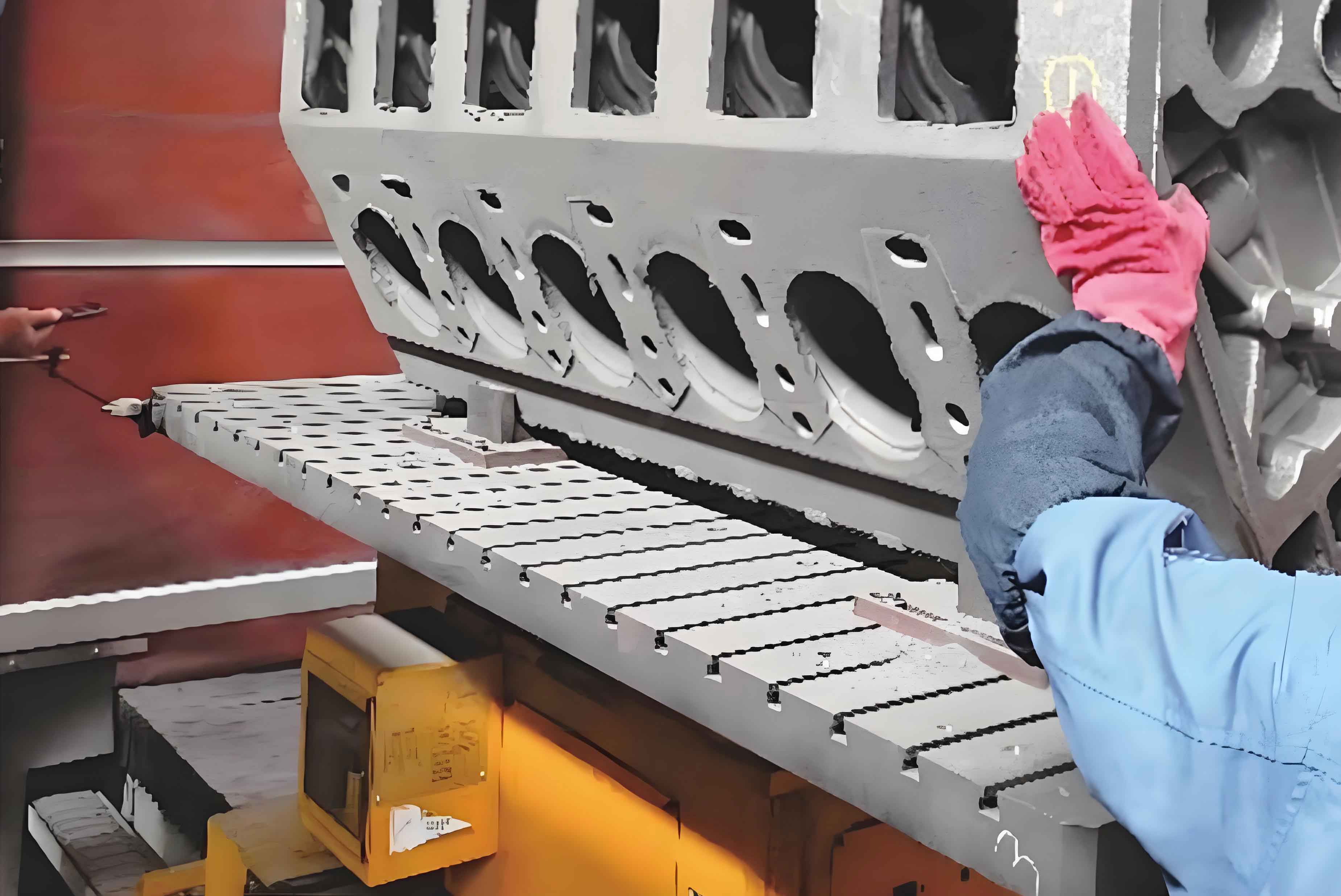
1. Overview of 1.5L Engine Cylinder Block Processing Technology
The engine cylinder block serves as the structural foundation for combustion chambers, pistons, and crankshafts. Its processing technology involves three critical stages: material selection, precision machining, and surface treatment.
Material Selection
Aluminum alloys dominate modern 1.5L engine cylinder block manufacturing due to their low density, excellent thermal conductivity, and machinability. Key considerations include:
| Property | Requirement for Engine Cylinder Block |
|---|---|
| Strength | High tensile strength to withstand combustion pressures |
| Thermal Conductivity | Efficient heat dissipation to prevent overheating |
| Wear Resistance | Durability under high friction and cyclic loads |
| Machinability | Ease of precision machining with minimal tool wear |
Common aluminum alloys include A356-T6 and 319 Al, optimized for casting and post-machining stability.
Precision Machining
The engine cylinder block undergoes sequential processes:
- Casting: High-pressure die casting (HPDC) or gravity casting forms the initial block geometry.
- CNC Machining: Critical features like cylinder bores, valve seats, and coolant channels are machined to micron-level tolerances.
- Surface Treatment: Techniques such as anodizing or thermal spraying enhance surface properties.
A typical CNC machining workflow includes:
- Boring: Achieves precise cylinder bore diameters (D=75±0.005 mmD=75±0.005mm).
- Milling: Generates flatness (≤0.01 mm≤0.01mm) for mating surfaces.
- Drilling: Ensures coolant channel alignment (±0.02 mm±0.02mm).
Surface Treatment
Post-machining treatments improve durability and performance:
| Technique | Purpose | Impact on Engine Cylinder Block |
|---|---|---|
| Anodizing | Corrosion resistance | Forms a protective oxide layer |
| Thermal Spraying | Wear resistance | Deposits ceramic coatings (e.g., Al2O3Al2O3) |
| Nitriding | Surface hardening | Increases hardness to ≥800 HV≥800HV |
2. Key Technologies for Optimizing Engine Cylinder Block Processing
2.1 CNC Machining Advancements
Modern CNC systems enable high-precision, flexible manufacturing. Key innovations include:
- Adaptive Machining: Real-time adjustments to cutting parameters (Vc,fz,apVc,fz,ap) based on sensor feedback.Vc=π×D×N1000(Cutting Speed)Vc=1000π×D×N(Cutting Speed)Where DD = tool diameter (mm), NN = spindle speed (RPM).
- Toolpath Optimization: Reduces machining time by 15–20% using AI-generated toolpaths.
- In-Process Metrology: Laser scanners validate dimensional accuracy (±2 μm±2μm) during machining.
Table 1: Optimized Cutting Parameters for Aluminum Alloys
| Parameter | Roughing | Finishing |
|---|---|---|
| Cutting Speed (VcVc) | 300–400 m/min | 500–600 m/min |
| Feed Rate (fzfz) | 0.15–0.2 mm/tooth | 0.05–0.1 mm/tooth |
| Depth of Cut (apap) | 2–3 mm | 0.5–1 mm |
2.2 Tool Material and Geometry
Tool selection directly impacts machining efficiency and surface finish.
Table 2: Tool Materials for Engine Cylinder Block Machining
| Material | Hardness (HV) | Thermal Conductivity (W/m·K) | Application |
|---|---|---|---|
| Carbide | 1500–1800 | 80–100 | General machining |
| Ceramic | 2000–2200 | 20–30 | High-speed finishing |
| PCD (Polycrystalline Diamond) | 7000–8000 | 500–700 | Ultra-precision boring |
Tool geometry optimization reduces cutting forces (FcFc):Fc=kc×ap×fz(Cutting Force)Fc=kc×ap×fz(Cutting Force)
Where kckc = specific cutting force (N/mm²).
2.3 Surface Roughness Control
Surface roughness (RaRa) critically affects friction and sealing. For cylinder bores:Ra≤0.4 μm(Target after honing)Ra≤0.4μm(Target after honing)
Honing parameters:
- Abrasive grit size: 180–400 mesh
- Lubricant viscosity: 10–15 cSt
3. Innovations in Engine Cylinder Block Manufacturing
3.1 Advanced Materials
- Hybrid Composites: Aluminum matrix composites (AMCs) reinforced with SiC particles (10–15%10–15%) improve strength-to-weight ratios.
- Nano-Coatings: Graphene-based coatings reduce friction (μ≤0.05μ≤0.05) in cylinder liners.
3.2 Smart Manufacturing
- Digital Twins: Virtual replicas simulate machining processes, predicting tool wear (ΔT≤5%ΔT≤5%).
- AI-Driven Quality Control: Machine vision detects surface defects with ≥99.5%≥99.5% accuracy.
Table 3: Benefits of Smart Manufacturing
| Technology | Impact on Engine Cylinder Block Production |
|---|---|
| Predictive Maintenance | Reduces downtime by 30% |
| Adaptive Control | Improves dimensional accuracy by 25% |
| IoT Integration | Enhances traceability and process transparency |
3.3 Sustainable Practices
- Dry Machining: Eliminates coolant usage, reducing waste by 90%.
- Recyclable Tooling: Carbide tools with 70% recycled content lower carbon footprint.
4. Conclusion
The optimization and innovation of 1.5L engine cylinder block processing technologies are pivotal to advancing automotive performance and sustainability. By integrating advanced CNC machining, smart manufacturing, and eco-friendly practices, manufacturers can achieve unparalleled precision, efficiency, and durability. Future advancements in materials science and AI-driven processes will further elevate the engine cylinder block’s role in next-generation powertrains, ensuring its continued dominance in the automotive industry.