
Introduction
Ductile iron camshafts, renowned for their high strength, wear resistance, and vibration damping capabilities, are critical components in automotive engines. The casting process directly determines the microstructure uniformity, mechanical integrity, and defect minimization of these components. However, suboptimal casting parameters — such as improper pouring temperatures, inadequate cooling rates, or flawed mold designs — can lead to defects like shrinkage cavities, porosity, and cracks, severely compromising durability. This study investigates the interplay between casting variables and ductile iron camshaft performance, proposing actionable optimization strategies to enhance reliability and longevity.
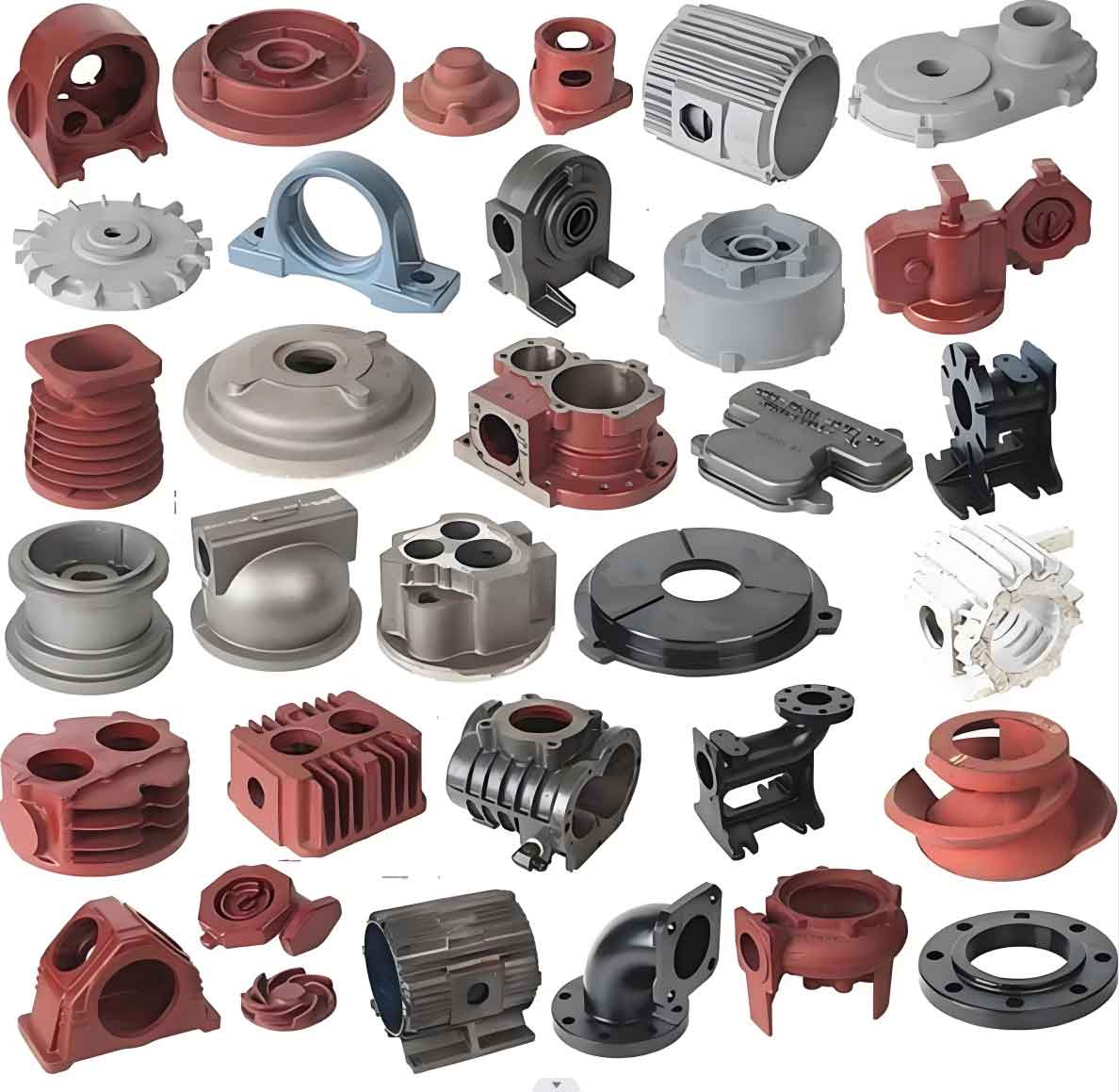
Role of Ductile Iron Camshafts in Automotive Applications
Ductile iron camshafts regulate valve timing, ensuring precise combustion cycles and engine efficiency. Their microstructure, characterized by spheroidal graphite embedded in a ferritic or pearlitic matrix, provides exceptional fatigue resistance under cyclic loads. Key advantages include:
- High Strength-to-Weight Ratio: Enables lightweight designs without sacrificing load-bearing capacity.
- Thermal Stability: Maintains dimensional accuracy at elevated temperatures (up to 400°C).
- Damping Capacity: Reduces engine noise and vibrations by 20–30% compared to steel counterparts.
Foundry Process for Ductile Iron Camshafts
1. Melting and Alloy Preparation
The melting phase involves precise control of raw materials (pig iron, steel scrap, and recycled ductile iron) to achieve target compositions. Critical elements include:
- Carbon (3.6–3.8%): Promotes graphite nucleation.
- Silicon (2.2–2.8%): Enhances fluidity and graphite spheroidization.
- Magnesium (0.03–0.05%): Facilitates graphite nodularization via the reaction:
Mg+FeS→MgS+Fe
Table 1 summarizes the optimal chemical ranges for ductile iron camshafts.
| Element | Composition Range (%) |
|---|---|
| Carbon (C) | 3.6–3.8 |
| Silicon (Si) | 2.2–2.8 |
| Manganese (Mn) | 0.2–0.4 |
| Magnesium (Mg) | 0.03–0.05 |
| Phosphorus (P) | <0.04 |
| Sulfur (S) | <0.02 |
2. Pouring and Solidification
Pouring temperature (Tp) and velocity (vp) govern mold filling and defect formation. Empirical relationships define optimal parameters:
Tp=1350∘C±20∘C
vp=A⋅tQ
where Q = molten metal volume, A = cross-sectional area of gating system, and t = pouring time.
Excessive Tp (>1450°C) accelerates mold erosion and gas entrapment, while low Tp (<1300°C) induces cold shuts.
3. Cooling and Stress Management
Controlled cooling rates (dtdT) prevent residual stresses and distortion. For ductile iron, the ideal cooling gradient is:
dtdT=20–30∘C/min
Rapid cooling (>50°C/min) promotes carbides and brittleness, whereas slow cooling (<10°C/min) fosters coarse graphite.
Impact of Casting Parameters on Camshaft Performance
1. Mold Design and Microstructure
Mold geometry influences heat dissipation and solidification patterns. Finite element analysis (FEA) simulations reveal that tapered sprue designs reduce turbulence by 40%, minimizing slag inclusion. Figure 1 illustrates the relationship between mold geometry and graphite nodularity.
2. Temperature Gradients and Defect Formation
Thermal gradients (∇T) during solidification determine shrinkage behavior. The critical gradient to avoid shrinkage porosity is:
∇Tcritical=kα⋅L
where α = thermal expansion coefficient, L = characteristic length, and k = thermal conductivity.
3. Pouring Velocity and Mechanical Properties
High vp (>2 m/s) generates turbulent flow, increasing oxide inclusions and reducing fatigue life by 15–20%. Optimal vp (0.5–1.5 m/s) balances mold filling and defect suppression.
Process Optimization Strategies
1. Mold Geometry Refinement
- Modular Mold Systems: Enable rapid adjustments for complex geometries.
- Conformal Cooling Channels: Optimize heat extraction using additive manufacturing.
2. Advanced Alloy Modification
Inoculation with ferrosilicon (75% Si) enhances graphite nucleation density (Ng):
Ng=KCSi⋅tinoculation
where CSi = silicon concentration and K = inoculation efficiency constant.
3. Real-Time Process Monitoring
Embedded thermocouples and spectroscopy systems enable closed-loop control of Tp, vp, and dtdT, reducing scrap rates by 25%.
Conclusion
Optimizing the casting process for ductile iron camshafts requires a holistic approach integrating mold design, thermal management, and real-time analytics. By refining pouring parameters, enhancing alloy compositions, and adopting modular molds, manufacturers can achieve defect-free components with superior mechanical properties. Future research should focus on AI-driven process automation to further elevate performance benchmarks.