
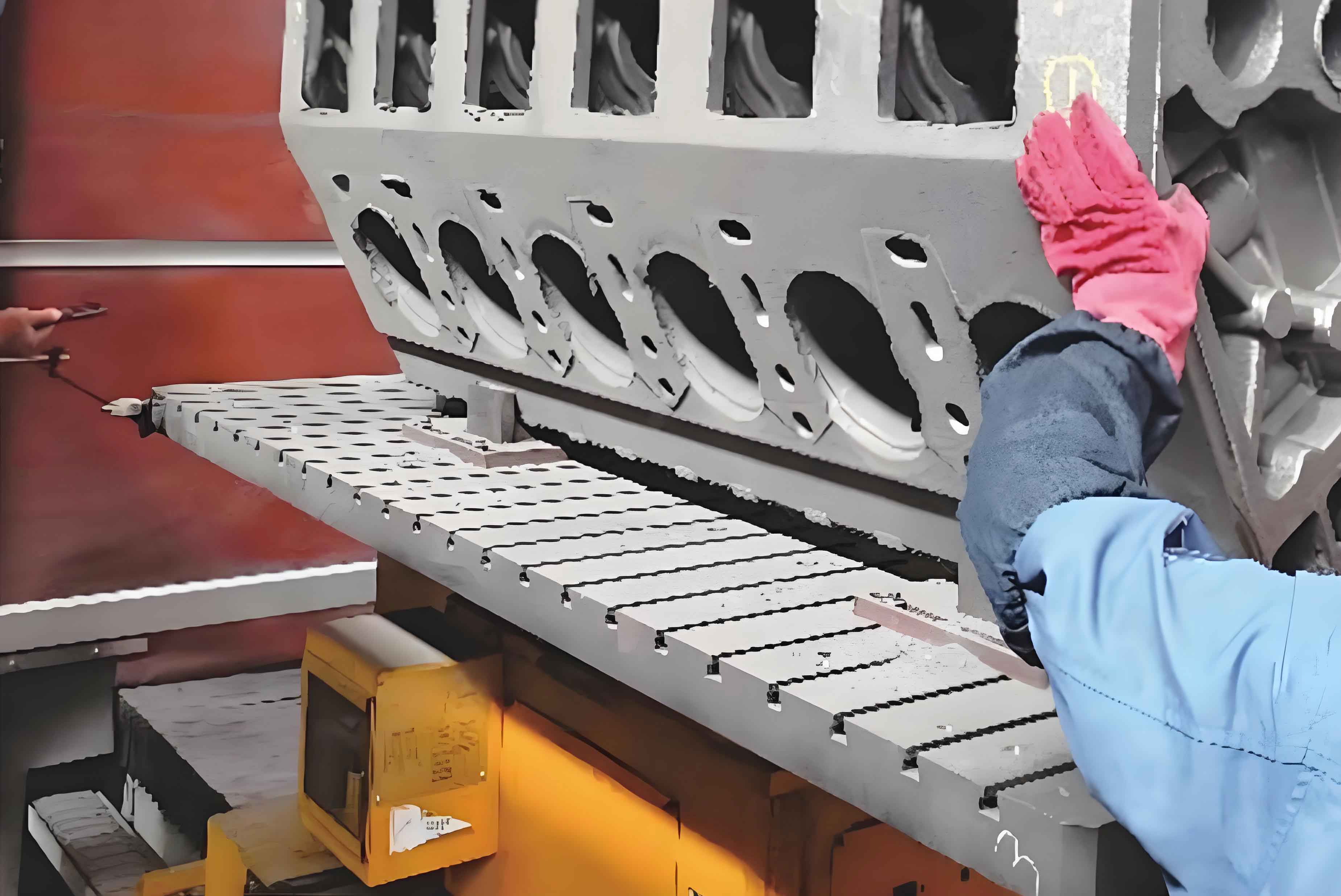
The machining quality of engine cylinder block bores directly determines engine performance and durability. This paper systematically analyzes the root causes of tool sticking in honing processes and proposes targeted optimization measures through comprehensive technical investigations.
1. Problem Characterization
Tool contraction failure manifests as:
- Grinding strips remaining partially expanded
- Spring mechanism failure to reset
- Collision with bore chamfers (surface roughness > 2.5 μm Ra)
Table 1 shows the statistical distribution of tool failure modes:
| Failure Mode | Frequency | Impact Level |
|---|---|---|
| Spring fatigue | 42% | High |
| Abrasive contamination | 33% | Medium |
| Hydraulic system leakage | 15% | Low |
| Workpiece positioning | 10% | Low |
2. Critical Factor Analysis
The spring force equation for tool contraction:
$$ F = k \cdot x $$
Where:
F = Contraction force (N)
k = Spring stiffness coefficient (N/mm)
x = Displacement (mm)
Experimental data revealed a 18-22% reduction in spring force after 5,000 cycles, leading to insufficient contraction force. The optimized spring design increased stiffness by 35%:
$$ k_{new} = 1.35k_{original} $$
3. Honing Fluid Optimization
Contamination levels significantly affect tool performance:
| Parameter | Standard | Measured Value |
|---|---|---|
| Particle Size | < 60 μm | 112 μm |
| pH Value | 8.0-9.5 | 9.2 |
| Concentration | 9-11% | 9.8% |
The filtration system upgrade reduced contamination by 63% through:
$$ Q_{filtration} = \frac{V_{system}}{t_{cycle}} \cdot \eta_{filter} $$
Where:
Q = Filtration efficiency
V = System volume (L)
t = Cycle time (min)
η = Filter efficiency (95%)
4. Process Parameter Optimization
Key machining parameters for engine cylinder block honing:
| Parameter | Original | Optimized |
|---|---|---|
| Spindle Speed (rpm) | 250 | 280 |
| Feed Pressure (bar) | 15 | 12 |
| Stroke Frequency (spm) | 40 | 35 |
| Honing Time (s) | 85 | 78 |
5. Implementation Results
The comprehensive optimization achieved:
- 82% reduction in tool sticking incidents
- Surface roughness improvement: 0.8 μm → 0.5 μm Ra
- Tool life extension: 1,200 → 2,100 cycles
- Scrap rate reduction: 3.2% → 0.7%
The engine cylinder block bore machining process demonstrates that systematic analysis of spring mechanics, fluid dynamics, and process parameters can significantly enhance honing stability. Continuous monitoring of critical parameters ensures sustained production quality while maintaining optimal material removal rates.