
This article presents the methodology for designing and optimizing the production process of a complex thin-walled steel casting with streamlined geometry. By integrating empirical foundry expertise with numerical simulation, we address challenges in solidification control, defect mitigation, and dimensional accuracy.
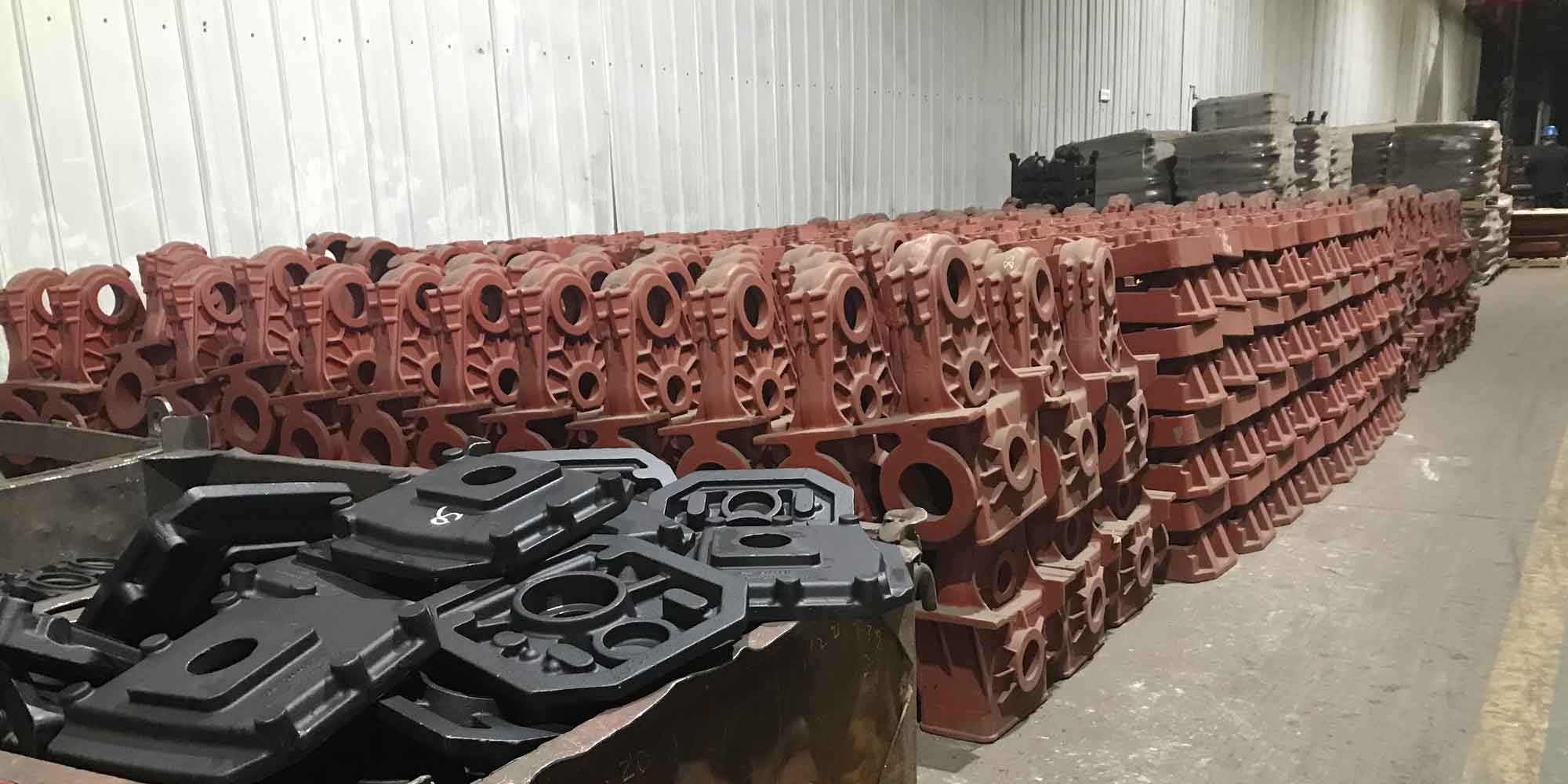
1. Process Design Fundamentals
The steel casting features asymmetrical geometry with wall thickness ranging from 12-35mm. Key design parameters include:
| Parameter | Value |
|---|---|
| Total weight | 321.2 kg |
| Yield efficiency | 71% |
| Pouring temperature | 1580-1620°C |
| Solidification time | 28-32 min |
The modulus calculation for riser design follows:
$$ M_r = f \times M_c $$
Where:
$M_r$ = Riser modulus
$M_c$ = Casting modulus
$f$ = Safety factor (1.1-1.2)
2. Solidification Control Strategy
Numerical simulation identified critical thermal nodes at junction areas:
| Location | Modulus (cm) | Riser Type |
|---|---|---|
| Rib intersections | 1.8 | Side riser |
| End sections | 2.4 | Top riser |
The optimized gating system achieves controlled filling with velocity distribution:
$$ v_{max} = \sqrt{2gh} \leq 1.0\ \text{m/s} $$
Where:
$h$ = Metallostatic head height
$g$ = Gravitational acceleration
3. Crack Prevention Mechanism
Initial trials revealed cracking susceptibility in thin-walled regions (occurrence rate: 23%). The anti-cracking reinforcement design follows:
$$ \sigma_{thermal} = E \cdot \alpha \cdot \Delta T $$
Where:
$E$ = Young’s modulus (200 GPa for steel)
$\alpha$ = Thermal expansion coefficient (12×10⁻⁶/°C)
$\Delta T$ = Temperature gradient
| Parameter | Before Optimization | After Optimization |
|---|---|---|
| Crack occurrence | 23% | 0% |
| Surface roughness | Ra 25μm | Ra 12.5μm |
| Dimensional tolerance | ±1.5mm | ±0.8mm |
4. Production Validation
The final steel casting process demonstrates:
- 100% UT compliance per ASTM A609
- Reduced machining allowance (from 5mm to 2mm)
- Improved yield efficiency (71% → 74%)
This methodology establishes a robust framework for producing high-integrity steel castings with complex geometries, combining empirical knowledge with computational analysis to achieve optimal results in modern foundry practice.