
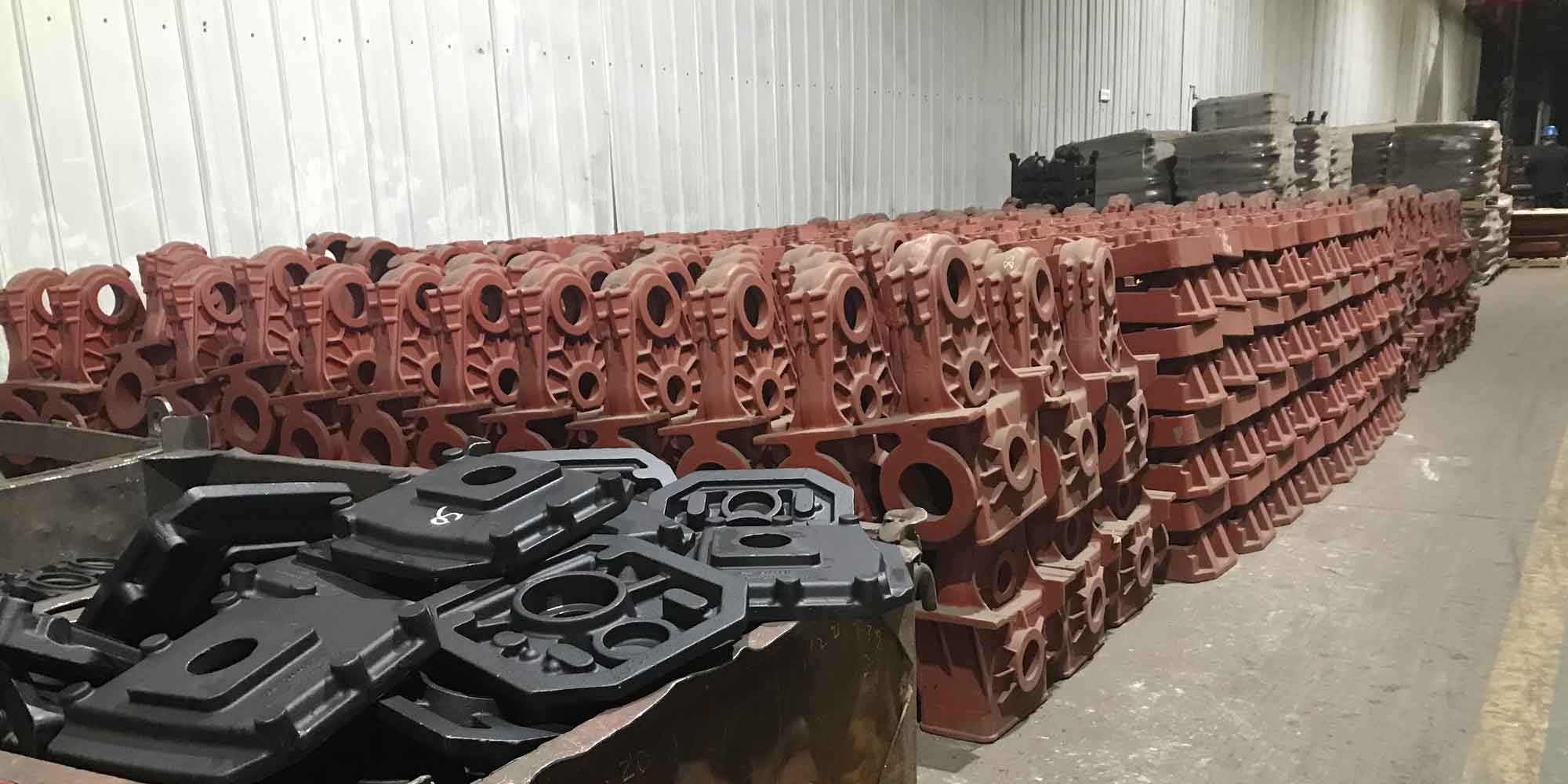
Steel castings serve as fundamental components in heavy industries such as power generation, shipbuilding, and mining equipment. The quality of these castings directly impacts operational efficiency and maintenance costs. This article analyzes common welding defects encountered during the repair of large steel castings and presents practical solutions supported by quantitative data.
1. Slag Inclusion
Slag inclusion occurs when non-metallic residues become trapped in weld seams, typically appearing as localized discontinuities. These defects reduce mechanical strength and may initiate stress concentration.
| Control Parameter | Optimal Range |
|---|---|
| Groove Angle | 10°–15° upward slope |
| Welding Speed | 12–15 cm/min |
| Electrode Diameter | 3.2–4.0 mm |
The critical factor for preventing slag inclusion in steel castings is interpass cleaning efficiency. The required cleaning energy can be calculated as:
$$ E_c = \frac{W_d \times HAZ}{t_{interpass}} $$
Where \( W_d \) = weld deposit width (mm), \( HAZ \) = heat-affected zone thickness (mm), and \( t_{interpass} \) = time between passes (min).
2. Porosity
Gas porosity in steel casting welds manifests as spherical or elongated cavities. Key prevention measures include:
- Preheating temperature: \( T_p = 150°C + 0.25 \times CE \)
- Hydrogen control: <5 mL/100g deposited metal
| Porosity Type | Size Range (µm) | Acceptance Criteria |
|---|---|---|
| Isolated | ≤300 | ASTM E186 |
| Linear | ≤150 | ASME BPVC |
3. Undercut
Undercut defects in steel casting repairs typically occur at weld toes due to improper heat input management. The critical current density is given by:
$$ J_{crit} = \frac{I}{\pi r^2} \leq 85 A/mm^2 $$
Where \( I \) = welding current (A), \( r \) = electrode radius (mm). Optimal parameters for different positions:
| Position | Current (A) | Travel Speed (mm/s) |
|---|---|---|
| Flat | 180–210 | 3.5–4.2 |
| Vertical | 150–180 | 2.8–3.5 |
4. Cold Cracking
The most critical defect in steel castings, cold cracking results from hydrogen embrittlement and residual stresses. The cracking susceptibility index is calculated as:
$$ CSI = CE + 0.15\log[H] + 0.04\sigma_{res} $$
Where \( CE \) = carbon equivalent, \( [H] \) = hydrogen content (ppm), \( \sigma_{res} \) = residual stress (MPa).
| Preheating Method | Temperature Range (°C) | Holding Time (min/mm) |
|---|---|---|
| Local | 200–250 | 1.5 |
| Global | 300–350 | 2.0 |
5. Integrated Quality Control
For large steel castings, a comprehensive approach combining multiple parameters ensures welding quality:
| Parameter | Monitoring Method | Frequency |
|---|---|---|
| Interpass Temp | IR Thermography | Continuous |
| Hydrogen Level | Chromatography | Per Batch |
| Stress Relief | XRD Analysis | Post-Weld |
Modern steel casting manufacturers implement real-time monitoring systems using the relationship:
$$ Q = \int_{0}^{t} \frac{k \times I \times V}{v} dt $$
Where \( Q \) = heat input (kJ/mm), \( k \) = process efficiency (0.7–0.9), \( V \) = voltage (V), \( v \) = travel speed (mm/s).
Conclusion
Effective management of welding defects in steel castings requires systematic control of metallurgical, thermal, and operational parameters. The strategies presented demonstrate how quantitative approaches significantly improve repair quality while maintaining production efficiency in heavy steel casting applications.