
In recent years, the production of steel castings in China has steadily increased, accounting for 12.2% of total casting output in 2020. Steel castings are critical components in industries such as petrochemicals, nuclear power, and marine equipment. However, challenges like penetration-induced sand adhesion persist due to high pouring temperatures and prolonged liquid-state oxidation. Traditional solutions involving zirconium-based coatings face limitations in cost, labor intensity, and operational complexity. This article explores the development and application of a zirconium-free composite coating (TL405B) optimized for steel castings.
1. Composition Design of TL405B
The formulation of TL405B prioritizes adhesion, flowability, and thermal stability through strategic material selection:
| Component | Selection Criteria | Key Properties |
|---|---|---|
| Refractory Base | Fused alumina (Al2O3 ≥99%) | High chemical stability, no low-melting phases |
| Carrier Fluid | Ethanol-isopropanol blend | Non-toxic, improved combustibility |
| Binder System | Phenolic resin + inorganic binders | Low-temperature adhesion & high-temperature strength |
| Suspension Agent | Magnesium-aluminum silicate | Fiber-reinforced thixotropy |
The coating’s performance is governed by fundamental relationships in suspension systems. The viscosity-shear rate behavior follows the Herschel-Bulkley model:
$$ \tau = \tau_0 + K\dot{\gamma}^n $$
where τ0 represents yield stress, K is consistency index, and n is flow behavior index. For TL405B, experimental measurements show n = 0.68 ± 0.03, indicating shear-thinning characteristics ideal for brush/spray applications.
2. Performance Characterization
Key parameters of TL405B compared with traditional zirconium coatings:
| Parameter | TL405B | Zr-Based Coating | Test Standard |
|---|---|---|---|
| Density (g/cm3) | 1.90 | 2.25 | GB/T 15957-1995 |
| Suspension Stability (%) | 96 | 92 | 24h settling test |
| Gas Evolution (mL/g) | 18 | 22 | Thermal decomposition at 1000°C |
| Thermal Conductivity (W/m·K) | 0.85 | 1.02 | Laser flash analysis |
The reduced thermal conductivity (15% lower than zirconium coatings) improves thermal insulation for steel castings, calculated as:
$$ Q = \frac{\lambda \cdot A \cdot \Delta T}{d} $$
Where λ = thermal conductivity, A = surface area, ΔT = temperature gradient, and d = coating thickness.
3. Industrial Applications
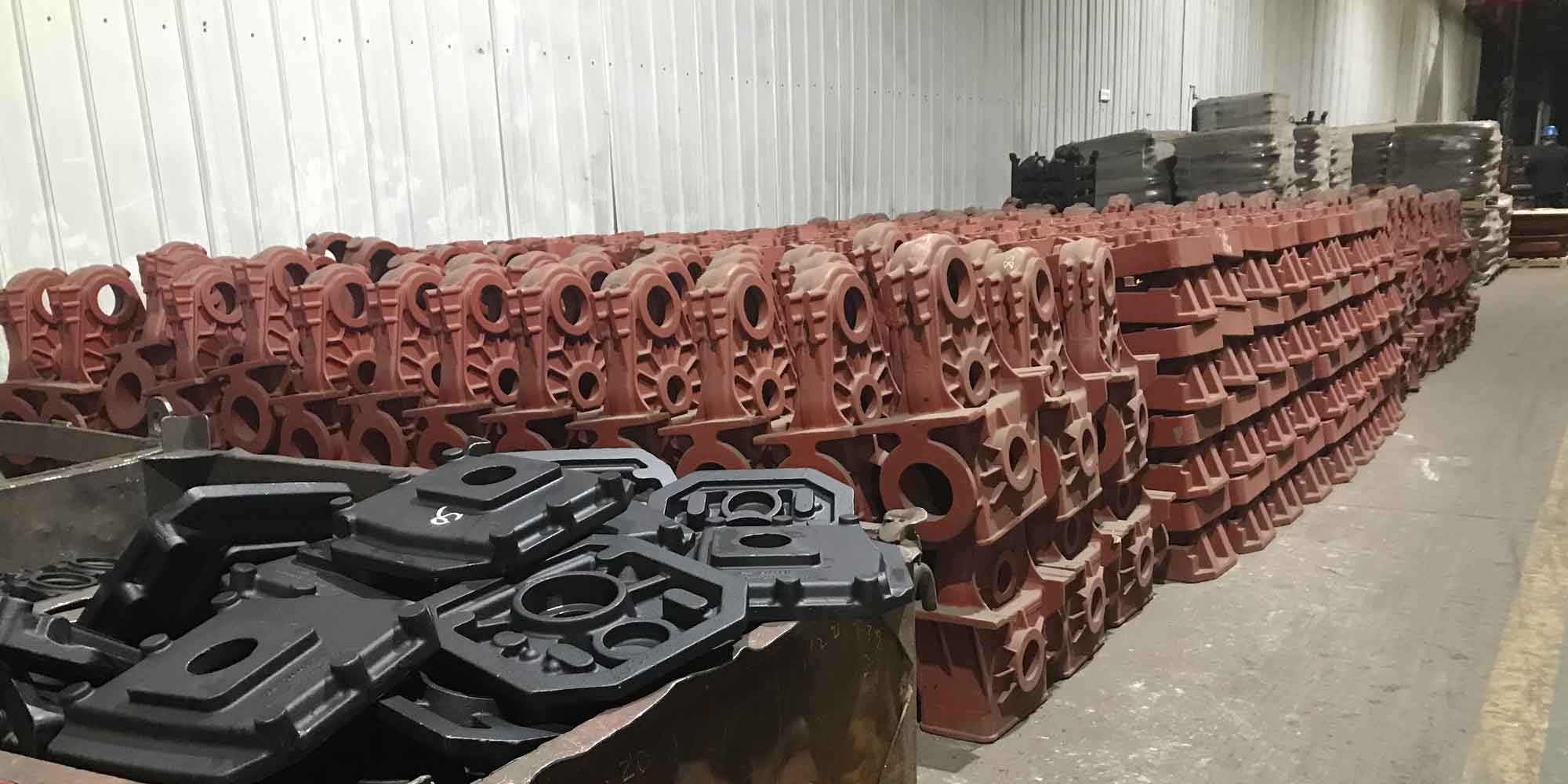
Case 1: Valve Castings (WCB Material)
For 50-2000 kg steel castings in resin-bonded ceramic sand molds, TL405B demonstrated:
- Single-layer application at 70°Bé for sections <100mm
- Double-layer application (70°Bé + 65°Bé) for heavy sections
- Post-burn coating strength: ≥0.8 MPa (measured via scratch test)
Case 2: Turbine Castings (Low-Alloy Steel)
In alkaline phenolic resin sand systems for 10-ton steel castings:
$$ \text{Coating Efficiency} = \frac{\text{Coverage Area}}{\text{Coating Consumption}} = 5.2 \, \text{m}^2/\text{kg} $$
Compared to 4.1 m²/kg for conventional coatings, representing 27% improvement in material utilization.
4. Process Optimization
Application methods significantly affect coating performance in steel casting production:
| Method | Viscosity (°Bé) | Layer Thickness (μm) | Drying Time (min) |
|---|---|---|---|
| Brushing | 65-70 | 200-300 | 8-12 |
| Spraying | 60-65 | 150-250 | 5-8 |
| Flow Coating | 55-60 | 300-400 | 10-15 |
The optimal coating thickness (δ) for steel castings follows:
$$ \delta = 0.15 \cdot T^{0.5} $$
Where T = casting section thickness (mm). For a 200mm steel casting, this gives δ ≈ 300μm, verified through industrial trials.
5. Economic Analysis
Cost comparison per ton of steel castings:
| Cost Component | TL405B | Zr-Based Coating |
|---|---|---|
| Material Cost (USD) | 58 | 125 |
| Labor Cost (USD) | 20 | 35 |
| Waste Treatment (USD) | 12 | 18 |
| Total | 90 | 178 |
The 49.4% cost reduction makes TL405B particularly advantageous for large-scale steel casting production while maintaining surface quality standards (Ra ≤ 25μm).
6. Technical Advancements
Recent improvements in TL405B for steel castings include:
- Nano-scale alumina reinforcement (3-5wt%) increasing high-temperature strength by 40%
- Rheology modifiers reducing brushing resistance by 30%
- Anti-settling agents extending shelf life to 6 months
The enhanced coating system demonstrates exceptional performance in complex steel castings, with defect rates reduced from 1.2% to 0.4% in field applications.