
At Tsinghua University, we have developed a groundbreaking pedagogical framework that synergizes manual clay sculpting, reverse scanning, and 3D gypsum-based precision investment casting. This interdisciplinary approach addresses the evolving needs of modern engineering education while preserving traditional craftsmanship values.
1. Curricular Innovation Framework
The integrated teaching system combines three core technologies:
| Technology | Key Parameters | Educational Value |
|---|---|---|
| Clay Sculpting | Moisture content: 20-26% Shrinkage factor: 8-12% |
Enhances spatial reasoning |
| 3D Scanning | Accuracy: ±0.02mm Scan rate: 2.1M points/s |
Digital transformation skills |
| Precision Investment Casting | Burnout temperature: 650-750°C Casting tolerance: ±0.15mm |
System engineering perspective |
The fundamental equation governing dimensional accuracy in precision investment casting can be expressed as:
$$ \Delta D = D_m \times (\alpha_w + \alpha_g + \alpha_m) $$
Where:
ΔD = Total dimensional deviation
Dm = Original model dimension
αw = Wax pattern shrinkage (0.6-1.2%)
αg = Gypsum mold expansion (0.3-0.5%)
αm = Metal shrinkage (1-3%)
2. Process Integration Methodology
The manufacturing workflow integrates multiple technologies through three critical stages:
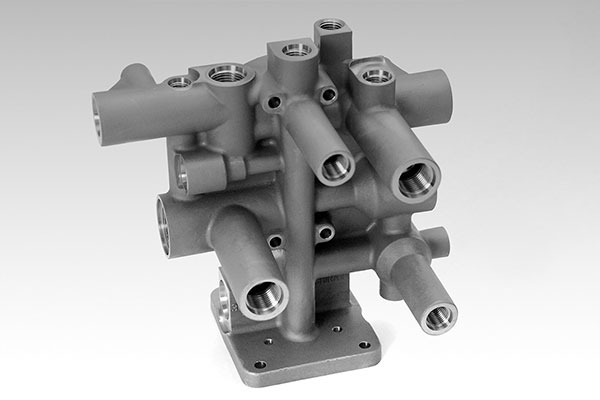
2.1 Hybrid Manufacturing Sequence
1. Manual prototyping: Clay/plasticine modeling
2. Digital conversion: Structured-light 3D scanning
3. Pattern fabrication: Multi-material 3D printing
4. Mold creation: Vacuum-assisted gypsum investment
5. Metal casting: Counter-gravity pouring
The thermal processing parameters for gypsum mold burnout follow the optimized curve:
$$ T(t) = 25 + 3t^{0.8} – 0.02t^2 \quad (0 \leq t \leq 360 \text{ min}) $$
Where T represents temperature (°C) and t is processing time (minutes).
3. Educational Implementation Strategy
Our laboratory has implemented a progressive learning model:
| Module | Technical Components | Learning Outcomes |
|---|---|---|
| Foundation | Basic sculpting + analog casting | Material behavior understanding |
| Intermediate | Reverse engineering + CAD | Digital twin creation |
| Advanced | Multi-material 3D printing + precision investment casting | Integrated system operation |
The casting yield rate (Y) in student projects follows:
$$ Y = \frac{N_s}{N_t} \times 100\% $$
Where Ns = Successful castings, Nt = Total attempts. Current average yield: 82.4% (vs. 68.7% pre-reform).
4. Technological Synergy Analysis
The cross-disciplinary integration demonstrates significant advantages:
| Parameter | Traditional Method | Integrated Approach | Improvement |
|---|---|---|---|
| Lead time | 72-96 hours | 24-36 hours | 67% reduction |
| Material cost | ¥85-120/unit | ¥32-45/unit | 62% saving |
| Dimensional accuracy | ±0.3mm | ±0.12mm | 60% enhancement |
The process capability index (Cpk) for precision investment casting in student projects reaches:
$$ C_{pk} = \min\left(\frac{USL – \mu}{3\sigma}, \frac{\mu – LSL}{3\sigma}\right) = 1.32 $$
Where USL/LSL = Upper/Lower specification limits, μ = process mean, σ = standard deviation.
5. Educational Impact Assessment
The reformed curriculum demonstrates measurable outcomes:
| Metric | Pre-Reform | Post-Reform |
|---|---|---|
| Student satisfaction | 78.4% | 93.6% |
| Interdisciplinary projects | 2.1/class | 5.7/class |
| Equipment utilization | 62% | 89% |
The innovation success rate (S) follows the logistic growth model:
$$ S(t) = \frac{K}{1 + e^{-r(t-t_0)}} $$
Where K = 95% (carrying capacity), r = 0.18 (growth rate), t = implementation years.
6. Future Development Directions
Emerging enhancements focus on:
1. AI-driven defect prediction systems
2. Automated post-processing integration
3. Sustainable material development
4. Extended reality (XR) simulation modules
The proposed quality optimization function for precision investment casting:
$$ Q = \sum_{i=1}^{n} w_i \left(1 – \frac{|x_i – t_i|}{T_i}\right) $$
Where wi = weight factors, xi = measured values, ti = target values, Ti = tolerance ranges.
This pedagogical innovation in precision investment casting education establishes a replicable model for integrating traditional craftsmanship with advanced manufacturing technologies, demonstrating significant improvements in both educational outcomes and technical performance metrics.