
Precision investment casting is widely recognized for its ability to produce complex geometries with high dimensional accuracy and superior surface finish. However, traditional process development relies heavily on iterative trial-and-error experiments, leading to prolonged cycles and elevated costs. This study explores the application of numerical simulation to optimize the gating system design for a nickel-based superalloy (K444) support component, thereby eliminating defects and improving casting quality.
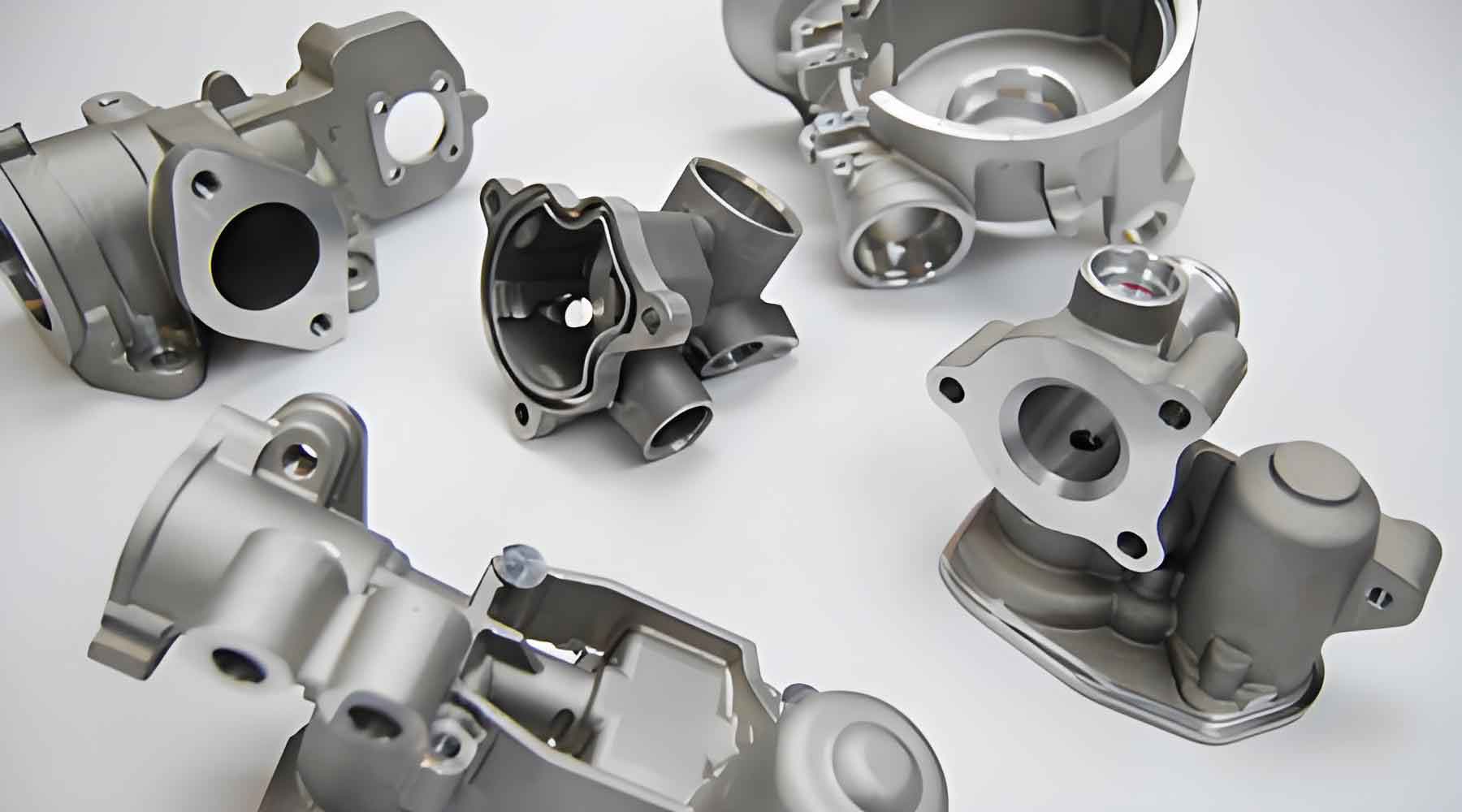
Process Challenges and Initial Trial
The support component features thin-walled structures (4.5 mm thickness) with dimensions of 186 mm × 308 mm × 318 mm. Initial trials using a simplified gating system revealed severe shrinkage porosity in the upper-middle regions of the sidewalls, as identified through X-ray and fluorescent inspections. The defects were attributed to premature solidification of feeding channels, which created isolated liquid zones (ILZs) incapable of receiving adequate metallostatic pressure.
Gating System Optimization Strategies
Three gating system designs were proposed to address these challenges:
| Design | Features | Insulation Configuration |
|---|---|---|
| “Loop” System | 9 gates per side, 6 mm insulation on gates | 12 mm insulation on sprue |
| “Herringbone” System | 4 gates per side, enlarged gate cross-sections | 12 mm insulation on all runners |
| “Linear” System | 5 staggered gates, optimized thermal gradient | 12 mm insulation with cross-flow control |
Numerical Simulation and Defect Prediction
ProCAST simulations evaluated solidification behavior using key parameters:
$$ \text{Fraction Solid (FS)} = \frac{T_{liquidus} – T}{T_{liquidus} – T_{solidus}} $$
where $T$ represents real-time temperature at each node. The Niyama criterion predicted shrinkage porosity:
$$ NY = \frac{G}{\sqrt{\dot{T}}} $$
where $G$ denotes thermal gradient (°C/mm) and $\dot{T}$ is cooling rate (°C/s). Threshold values were set at $NY \leq 1.0$ for critical shrinkage risk.
| Metric | Loop System | Herringbone | Linear |
|---|---|---|---|
| Max FS in Gates (%) | 66.7 | 40.0 | 53.3 |
| Solidification Time (s) | 800 | 620 | 710 |
| Defect Volume (%) | 5.2 | 0.8 | 3.1 |
Thermal Gradient Analysis
The herringbone system demonstrated optimal thermal management, achieving sequential solidification from base to top. The temperature gradient distribution followed:
$$ \nabla T = \frac{\partial T}{\partial z} = 8.7\,\text{°C/cm} $$
This gradient ensured continuous liquid metal feeding until complete solidification, as verified by the absence of ILZs in simulation results.
Industrial Validation
Production trials using the herringbone design confirmed simulation predictions. X-ray inspection showed no detectable shrinkage defects, with dimensional accuracy meeting CT6 tolerance standards. The success highlights the effectiveness of precision investment casting simulation in reducing development cycles by 68% compared to conventional methods.
Conclusion
This study demonstrates that numerical simulation enables systematic optimization of precision investment casting processes. By analyzing fraction solid progression and thermal gradients, engineers can design gating systems that prevent defect formation while maintaining production efficiency. The methodology proves particularly valuable for thin-walled superalloy components requiring strict quality control.