
Titanium alloys are widely recognized for their low density, high specific strength, corrosion resistance, and biocompatibility, making them indispensable in aerospace, marine, and chemical industries. However, the high manufacturing costs associated with titanium components remain a significant barrier to broader adoption. Precision investment casting, a near-net-shape manufacturing technique, offers a viable solution by minimizing material waste and post-processing requirements. This article details the successful application of precision investment casting to produce a complex-curved titanium impeller, emphasizing process optimizations such as segmented wax scaling, anti-deformation compensation, and advanced gating design.
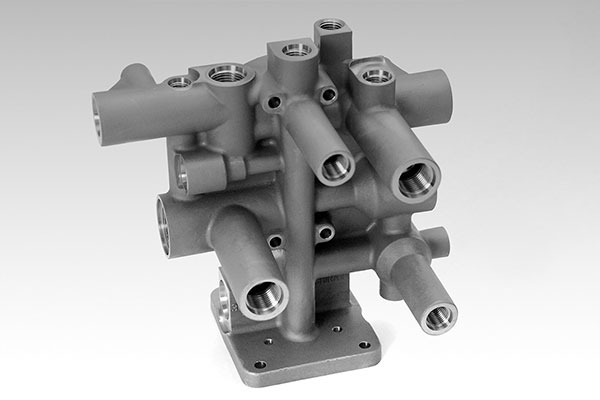
Wax Pattern Design and Dimensional Compensation
In precision investment casting, dimensional accuracy is critical due to titanium’s shrinkage behavior. The linear shrinkage rate of ZTC4 titanium alloy varies between 0.5% and 0.8%, depending on geometric complexity and wall thickness. To address non-uniform shrinkage across the impeller’s structure, a segmented scaling strategy was applied to the 3D-printed wax patterns:
$$
\text{Scaling Factor} =
\begin{cases}
1.0\% & \text{(Proximal blade regions)} \\
1.0\% \rightarrow 2.0\% & \text{(Transition zones)} \\
2.0\% & \text{(Distal blade regions)}
\end{cases}
$$
Anti-deformation compensation was further incorporated to counteract differential cooling stresses:
$$
\delta_c = \frac{\Delta L_{\text{thermal}}}{L_0} \times 100\%
$$
where $\delta_c$ is the compensation factor, $\Delta L_{\text{thermal}}$ is thermal contraction, and $L_0$ is the nominal dimension. Compensation values ranged from 0.5% to 1.0%, adjusted iteratively based on finite element simulations.
Gating System and Mold Shell Optimization
A top-pouring gating system with five radially distributed runners was designed to ensure laminar filling and directional solidification. The Bernoulli equation guided runner sizing to minimize turbulence:
$$
P + \frac{1}{2}\rho v^2 + \rho gh = \text{constant}
$$
where $P$ is pressure, $\rho$ is melt density, $v$ is velocity, and $h$ is elevation. The shell mold utilized yttria-stabilized zirconia (YSZ) for the face coat due to its low reactivity with molten titanium. Key process parameters included:
| Parameter | Value |
|---|---|
| Primary slurry viscosity | 12–15 s (Ford Cup #4) |
| Stucco grain size | 80–120 μm (Al2O3) |
| Dewaxing temperature | 98°C (Steam autoclave) |
| Shell firing temperature | 950°C (2 h, reducing atmosphere) |
Melting, Casting, and Quality Validation
The ZTC4 alloy was melted in a vacuum skull furnace under the following conditions:
| Parameter | Value |
|---|---|
| Arc current | 28–36 kA |
| Voltage | 34–41 V |
| Vacuum pressure | 3.0–5.0 Pa |
| Cooling rate | ≤45°C/min |
Post-casting inspection revealed exceptional dimensional compliance (CT9 per GB/T6414-1999) and surface roughness ($R_a = 3.2\ \mu m$). Chemical analysis confirmed alloy conformity:
| Element | Composition (wt%) |
|---|---|
| Al | 5.98–6.01 |
| V | 4.08–4.10 |
| Fe | ≤0.19 |
| O | ≤0.13 |
Conclusion
Precision investment casting enables the production of high-integrity titanium impellers with complex geometries. Key innovations include segmented wax scaling, anti-deformation compensation, and optimized gating systems, which collectively reduce material waste by 35–40% compared to subtractive machining. The methodology demonstrates the viability of precision investment casting for critical aerospace components requiring stringent quality standards.