
Precision investment casting, a near-net-shape manufacturing process, is widely utilized in aerospace, automotive, and energy industries due to its ability to produce complex geometries with high dimensional accuracy. This study investigates dimensional deviations in flange castings manufactured using low-temperature and medium-temperature wax patterns. A systematic analysis of process variables, material properties, and quality control methodologies is presented to address critical challenges in precision investment casting.
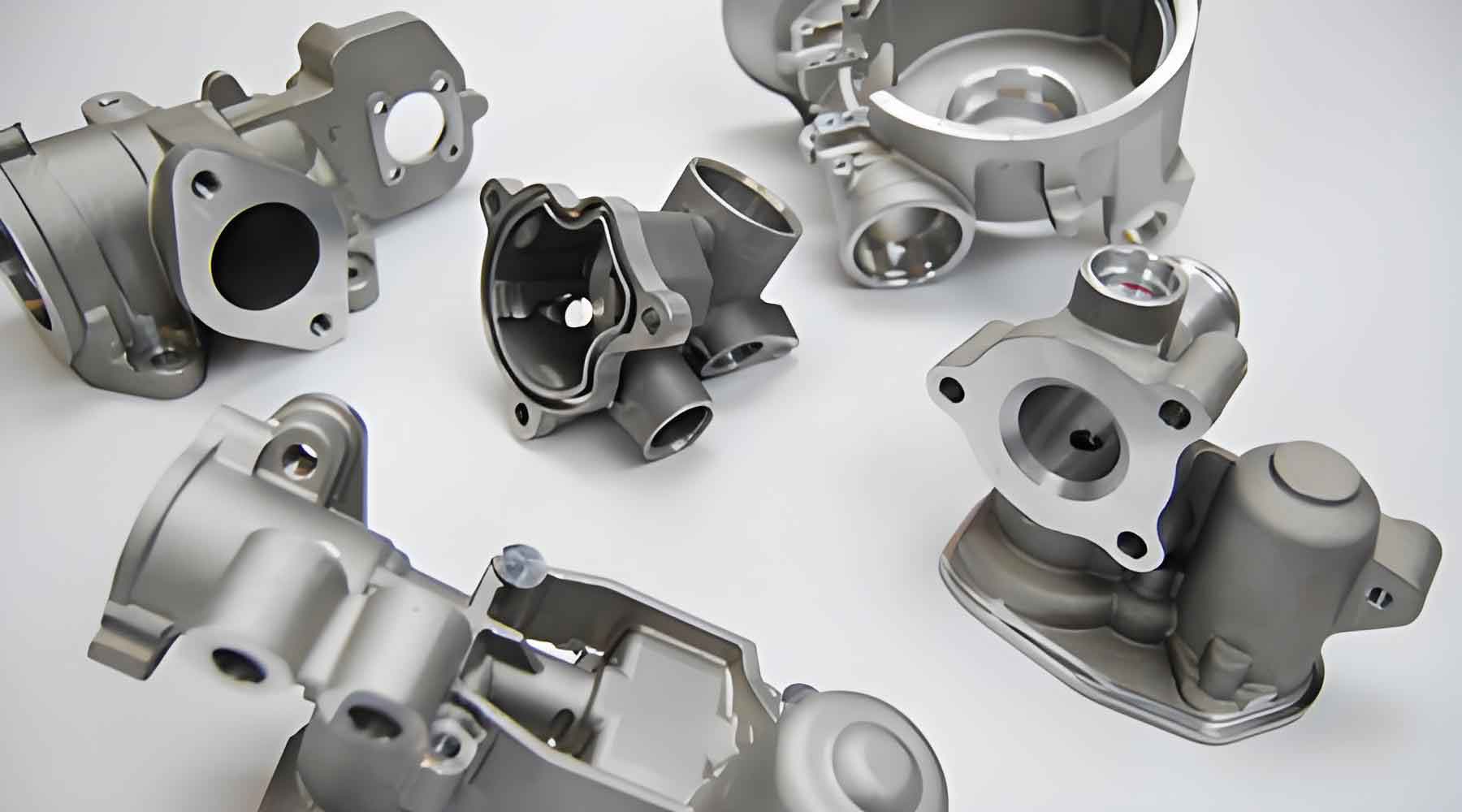
Process Fundamentals of Precision Investment Casting
The precision investment casting workflow comprises four primary stages:
- Wax pattern fabrication
- Ceramic shell formation
- Dewaxing and sintering
- Metal pouring and finishing
Critical dimensional accuracy is primarily determined during the wax pattern phase. The shrinkage behavior of wax materials follows the relationship:
$$
\delta = \alpha \cdot \Delta T \cdot L_0
$$
where $\delta$ = total shrinkage (mm), $\alpha$ = thermal expansion coefficient (1/°C), $\Delta T$ = temperature differential (°C), and $L_0$ = original dimension (mm).
Case Study: Flange Dimensional Deviation
A production batch of ZL101 aluminum alloy flanges exhibited critical dimensional deviations:
| Feature | Nominal Dimension (mm) | Measured Deviation (mm) |
|---|---|---|
| Outer Diameter A | ϕ70 ± 0.55 | +1.0 to +1.2 |
| Compound Diameter B | ϕ96 ± 0.55 | +1.8 to +2.0 |
Root Cause Analysis
Fault Tree Analysis (FTA) and Fishbone Diagram methods identified key contributing factors:
| Factor Category | Critical Variables | Impact Severity |
|---|---|---|
| Material Properties | Wax shrinkage characteristics | High |
| Process Parameters | Injection pressure/temperature | Medium |
| Tooling Design | Mold compensation factors | High |
The wax shrinkage compensation formula for precision investment casting molds is:
$$
C = \frac{1}{(1 – S_w)(1 – S_c)(1 – S_m)}
$$
where $S_w$ = wax shrinkage (%), $S_c$ = ceramic shell expansion (%), and $S_m$ = metal contraction (%).
Experimental Validation
A comparative study of low-temperature (LTW) and medium-temperature waxes (MTW) revealed significant shrinkage differences:
| Feature | Theoretical (mm) | LTW Shrinkage (%) | MTW Shrinkage (%) |
|---|---|---|---|
| ϕ70 Outer Diameter | 70.0 | 1.03 | 2.20 |
| ϕ96 Compound Diameter | 96.0 | 0.83 | 2.20 |
| Wall Thickness | 9.0 | 2.30 | 2.10 |
The modified shrinkage compensation model for precision investment casting becomes:
$$
C_{adj} = C \cdot \left(1 + \frac{\Delta S}{S_{nom}}\right)
$$
where $\Delta S$ = actual shrinkage deviation and $S_{nom}$ = nominal shrinkage value.
Process Optimization Strategies
Key improvements for dimensional control in precision investment casting include:
- Wax material standardization
- Real-time injection parameter monitoring
- Adaptive mold compensation algorithms
The optimized process capability index ($C_{pk}$) improved from 0.82 to 1.33 through these measures, demonstrating enhanced consistency in precision investment casting operations.
Conclusion
This analysis demonstrates that wax material selection significantly impacts dimensional accuracy in precision investment casting. By implementing material-specific shrinkage compensation and advanced process controls, manufacturers can achieve tighter tolerances while maintaining the inherent advantages of precision investment casting for complex components like flanges. Continuous monitoring of wax properties and adaptive tooling adjustments remain critical for maintaining quality in high-precision applications.