
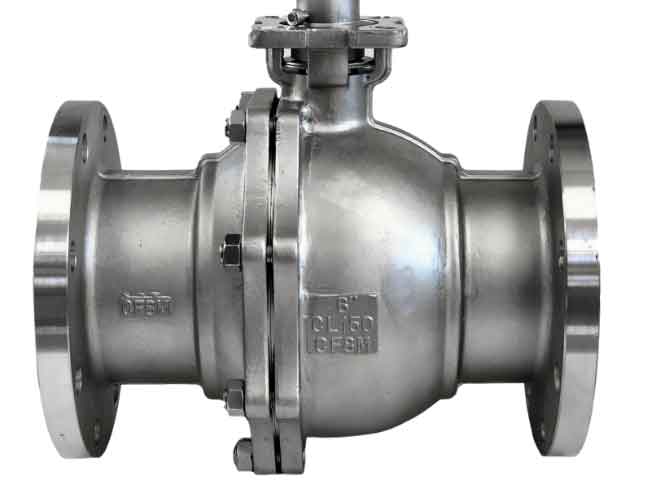
Valve body castings represent one of the dominant products in foundry production, with substantial annual market demand. Rising raw material costs significantly increase production expenses, while relatively low efficiency and high rejection rates severely impact output. At one facility, over 1,200 tons of valve body castings were produced annually, with nearly 120 tons classified as waste—a rejection rate exceeding 9%. Through systematic data analysis of defect patterns, we identified primary causes and implemented targeted improvements, significantly enhancing product quality and production efficiency.
Statistical Analysis of Pre-Improvement Rejection Rates
Annual production reached 1,208.5 tons, with internal rejection at 3.67% and external rejection at 6.31%. Key defect distributions are shown below:
| Defect Type | Sand Inclusion | Slag Inclusion | Gas Porosity | Dimensional Deviation | Performance Failure | Other |
|---|---|---|---|---|---|---|
| Quantity (t) | 172.5 | 19.7 | 10.2 | 5.1 | 5.7 | 24.45 |
| Proportion (%) | 72.5 | 8.3 | 4.3 | 2.1 | 2.4 | 10.4 |
| Defect Type | Shrinkage | Sand Inclusion | Slag Inclusion | Gas Porosity | Dimensional Deviation | Other |
|---|---|---|---|---|---|---|
| Quantity (t) | 21.7 | 15.8 | 14.3 | 12.9 | 8.1 | 3.43 |
| Proportion (%) | 28.5 | 20.7 | 18.8 | 16.9 | 10.6 | 4.5 |
Sand inclusion, slag inclusion, shrinkage, and gas porosity collectively accounted for 81.4% of total rejections. The solubility of hydrogen in molten iron—a key factor in gas porosity—follows Sievert’s Law:
$$[H] = K_H \sqrt{P_{H_2}}$$
where \([H]\) is hydrogen solubility, \(K_H\) is the equilibrium constant, and \(P_{H_2}\) is hydrogen partial pressure. Higher carbon equivalents reduce gas solubility, decreasing porosity risk in valve body castings.
Root Cause Analysis of Major Defects
1. Process Instability: Melting equipment exhibited poor control over molten iron composition due to variable coke quality, furnace conditions, and airflow. Resin sand properties fluctuated with temperature and catalyst ratios, often bypassing regeneration and cooling. Elevated sand temperatures reduced mold strength, causing mold wall movement and increasing shrinkage susceptibility:
$$\text{Shrinkage Volume} \propto \frac{\Delta T \cdot \alpha}{\rho}$$
where \(\Delta T\) is solidification range, \(\alpha\) is thermal expansion, and \(\rho\) is density.
2. Inclusions: Loose sand in cavities and turbulence during pouring caused sand inclusions. Slag particles from melting entered molds with molten iron, forming slag holes. Stokes’ Law governs slag particle flotation:
$$v = \frac{2}{9} \frac{(\rho_m – \rho_d) g r^2}{\eta}$$
where \(v\) is flotation velocity, \(\rho_m\) and \(\rho_d\) are metal/slag densities, \(g\) is gravity, \(r\) is particle radius, and \(\eta\) is viscosity.
3. Gas Porosity: Nitrogen content increased with temperature (\(T\)) but decreased with carbon equivalent (\(CE\)):
$$[N] \propto \frac{T}{CE}$$
Combined nitrogen and hydrogen formed blowholes. Moisture absorption in sand cores amplified gas generation.
4. Dimensional Inaccuracy: Deformed pattern plates created uneven parting surfaces, leading to mismatches. Core shifts during pouring caused wall thickness variations in valve body castings.
Comprehensive Improvement Strategies
1. Composition Optimization: Increased carbon equivalent (\(CE\)) to enhance graphite expansion for self-feeding:
$$CE = C + \frac{Si + P}{3}$$
Restricted alloying elements (Cr, V) below 0.3% to reduce gas solubility. Exclusive use of carbon steel, gray iron, or ductile iron returns minimized gas generation.
2. Sand System Control:
- Ensured uniform compaction to achieve minimum mold strength >1.8 MPa
- Mandatory sand regeneration and cooling to maintain temperature <35°C
- Core coating and limited storage (<48 hrs) with pre-pouring surface baking in high humidity
3. Pouring Process Upgrades:
- Initial pouring temperature raised by 30°C to 1,480–1,520°C, reducing secondary slag
- Valve body castings prioritized in early furnace taps to avoid ladle slag buildup
- Replaced multi-segment filters with single-piece ceramic filters in gating systems
4. Tooling and Core Management:
- Implemented dedicated pattern plates with ≤0.1 mm/m flatness tolerance
- Used resin sand spacers on core prints to prevent floating in DN200 valve body castings
- Prohibited mold/plate combined handling to eliminate deformation
Post-Improvement Quality Metrics
Annual production reached 1,285.7 tons post-implementation, with internal rejection at 1.14% and external rejection at 1.58%. Defect distributions shifted significantly:
| Defect Type | Gas Porosity | Slag Inclusion | Shrinkage | Sand Inclusion | Other |
|---|---|---|---|---|---|
| Quantity (t) | 0.7 | 1.8 | 4.3 | 2.1 | 7.54 |
| Proportion (%) | 4.4 | 11.3 | 26.9 | 13.1 | 47.2 |
| Defect Type | Gas Porosity | Shrinkage | Slag Inclusion | Sand Inclusion | Other |
|---|---|---|---|---|---|
| Quantity (t) | 1.1 | 1.4 | 1.0 | 1.8 | 15.7 |
| Proportion (%) | 5.4 | 6.9 | 4.9 | 8.9 | 73.9 |
Total rejection decreased by 5.28 percentage points. Sand-related defects in valve body castings dropped by 82%, while gas and slag defects fell by 75%. Production cost savings exceeded $64,000 annually.
Conclusion
Optimizing the carbon equivalent and pouring temperature, strengthening sand control, upgrading filtration, and securing cores are effective measures for defect reduction in valve body castings. Implementing these strategies decreased total rejection by 5.28% while achieving substantial cost savings. Future work will focus on real-time process monitoring to further enhance consistency in valve body casting production.