
As a researcher specializing in materials forming technology, I have focused on enhancing the performance of flanged ball valves used in industrial fluid conveyance systems. With increasing standards for transporting media like water, liquefied petroleum gas, and natural gas, the demand for high-performance valve body casting has surged. These valves must operate reliably in diverse environments—handling water, oil, and gas—across temperatures from -29°C to 260°C. Key requirements include zero defects like porosity, shrinkage cavities, or inclusions, alongside superior sealing, corrosion resistance, high hardness, and robust pressure resistance. This necessitates an advanced casting process to achieve defect-free valve body casting. My work centers on designing and optimizing such a process using numerical simulations and practical refinements.
To begin, I analyzed a specific flanged ball valve made from 304 stainless steel. The valve body casting has a compact outline of 145 mm × 160 mm × 220 mm, featuring flat end faces with bolt holes that require high dimensional accuracy. Internally, it contains variably sized holes connected by stepped cylinders, with protruding sections for control mechanisms. This symmetrical design about the vertical axis influences the casting approach. Options like bottom pouring or side pouring were evaluated, with bottom pouring selected for its stability and ease in riser placement—a critical factor for minimizing defects in valve body casting. The valve body casting must withstand thermal stresses and mechanical loads, making material integrity paramount. For instance, 304 stainless steel’s properties include a density of approximately 7,900 kg/m³ and thermal conductivity that impacts solidification. Here’s a summary of key parameters:
| Parameter | Value | Unit |
|---|---|---|
| Material | 304 Stainless Steel | – |
| Density | 7,900 | kg/m³ |
| Thermal Conductivity | 16.2 | W/(m·K) |
| Pouring Temperature | 1,540 | °C |
| Solidification Shrinkage | 6.0 | % |
To visualize the valve body casting, a detailed model was developed. The symmetrical structure allows for efficient core design in the casting process. This is essential for achieving high precision in valve body casting applications.
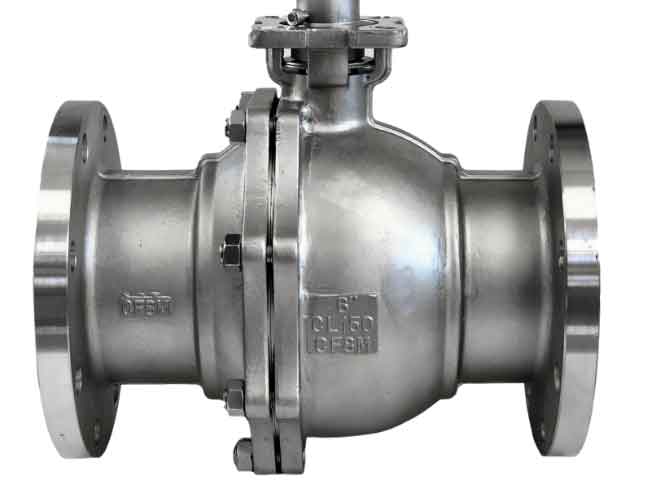
In designing the casting process, I prioritized cold-box precision core assembly for high dimensional accuracy and surface finish. This method involves hand-made cores without sandbox fixation, reducing costs and improving repeatability for valve body casting. Based on symmetry, cores were split along the vertical centerline: Core #1 and Core #2 form the external shapes, while Core #3 defines internal cavities. Core #4 was added at the bottom to facilitate gating system setup and core stability. This core configuration ensures easy removal and integrity during pouring. The gating system was designed for bottom pouring to promote steady filling and effective riser function. A filter screen at the sprue-runner junction traps slag and reduces turbulence, preventing sand erosion. The riser was placed at the top to compensate for shrinkage in valve body casting. The area ratios for the gating system followed established standards:
$$ \sum F_{\text{sprue}} : \sum F_{\text{runner}} : \sum F_{\text{gate}} = 1 : 2 : 2 $$
where \( F \) represents cross-sectional area. Dimensions were calculated to ensure optimal flow:
| Component | Cross-Sectional Area (cm²) | Length (cm) |
|---|---|---|
| Sprue | 1.4 | 14.4 |
| Runner (per unit) | 10.5 | 1.5 |
| Gate (per unit) | 2.4 | 1.4 |
Pouring parameters were tightly controlled: temperature at 1,540°C, cooling time monitored, and insulation maintained to prevent defects. This setup is vital for producing defect-free valve body casting, as uneven solidification can lead to issues like shrinkage. The solidification time \( t \) can be estimated using Chvorinov’s rule:
$$ t = k \left( \frac{V}{A} \right)^2 $$
where \( t \) is time, \( V \) is volume, \( A \) is surface area, and \( k \) is a mold constant. For this valve body casting, \( V \approx 0.0025 \, \text{m}^3 \) and \( A \approx 0.035 \, \text{m}^2 \), yielding \( t \approx 120 \, \text{s} \) with \( k = 1.5 \, \text{s/mm}^2 \).
Numerical simulation using AnyCasting software was employed to predict and eliminate defects in the valve body casting. Initial simulations revealed the solidification sequence: top sections and gating solidified first due to higher heat transfer, followed by the middle valve body, with the bottom disk solidifying last. This created shrinkage defects at the bottom and internal holes, as predicted by defect probability models. The defect probability \( P_d \) relates to thermal gradients:
$$ P_d = 1 – e^{-\alpha \Delta T} $$
where \( \alpha \) is a material constant and \( \Delta T \) is the temperature gradient. High \( \Delta T \) in late-solidifying zones increased \( P_d \) above 0.8, indicating severe shrinkage. To address this, I introduced chills—metal inserts that accelerate cooling—at critical locations: the central bore surface and bottom disk. Chill effectiveness depends on thermal diffusivity \( \alpha \):
$$ \alpha = \frac{k}{\rho c_p} $$
where \( k \) is thermal conductivity, \( \rho \) is density, and \( c_p \) is specific heat. For steel chills, \( \alpha \approx 4.5 \times 10^{-6} \, \text{m}^2/\text{s} \), significantly reducing local solidification time. Post-optimization simulations showed a reversed sequence: the valve body solidified before the gating, concentrating defects in the riser. Defect probability dropped below 0.1 in the valve body casting, ensuring integrity.
Practical validation confirmed the optimized process. Actual castings, inspected via X-ray, showed no internal defects, with minor shrinkage only in the riser—easily removable during machining. This valve body casting approach demonstrates high feasibility, combining core design, gating ratios, and chill placement to eliminate defects. The process is scalable for medium-sized valves and adaptable to other alloys, reinforcing the importance of simulation in valve body casting. Future work will explore automated core-making to enhance efficiency and consistency in producing reliable valve body casting for critical applications.