
In mineral processing operations, the ball mill is a critical piece of equipment where the large gear’s lubrication directly impacts operational stability and service life. At Luohe Concentrator, aging components, grease leakage, single-line oil supply, absence of temperature monitoring, and harsh environmental conditions compromised our original lubrication system. This led to frequent equipment failures and inflated operating costs. To address these challenges, we redesigned the lubrication system with a dual-line centralized control mechanism, integrated infrared temperature sensors, an intelligent HMI, and heating elements. The overhaul resulted in enhanced ball mill reliability, reduced grease consumption, and significant cost savings.
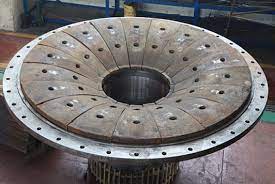
Problems with the Original Lubrication System
The legacy single-line progressive lubrication system exhibited critical flaws:
- Component Degradation: Exposure to abrasive dust and humidity accelerated corrosion of distribution modules and pneumatic pumps.
- Structural Vulnerabilities: Unsealed grease reservoirs allowed contamination, degrading lubricant viscosity. Fragmented component placement complicated maintenance.
- Systemic Failures: Single-line dependency meant blockage at any nozzle halted entire lubrication, risking gear scoring. Annual grease leakage exceeded 300 kg.
- Monitoring Gaps: No real-time temperature data led to reactive maintenance. Undetected friction spikes caused premature wear.
| Issue | Frequency | Production Loss (hours) | Cost Impact (USD) |
|---|---|---|---|
| Nozzle Blockage | 22 incidents | 88 | 35,200 |
| Grease Contamination | 8 incidents | 40 | 16,000 |
| Gear Overheating | 5 incidents | 120 | 48,000 |
Optimization Strategy
We evaluated two technical pathways:
| Feature | Option 1: Basic Dual-Line | Option 2: Smart Dual-Line |
|---|---|---|
| Reliability | Dual-line redundancy | Dual-line redundancy |
| Component Protection | IP65 enclosure | IP65 enclosure |
| Temperature Monitoring | None | 3× IR sensors (cloud-enabled) |
| Nozzle Diagnostics | Manual inspection | Real-time per-nozzle feedback |
| Cost Premium | Baseline | +41% |
Option 2 was selected for its predictive capabilities. The system’s core innovations include:
- Dual-Line Lubrication Circuit: Uses parallel oil paths (Line A/B) with hydraulic diverter valves. If Line A clogs, pressure-triggered switching activates Line B without interrupting ball mill operation. Flow continuity is governed by:
$$Q_{effective} = \frac{\pi \cdot d^2 \cdot \Delta P}{4\mu L}$$
where \(d\) = pipe diameter, \(\Delta P\) = pressure differential, \(\mu\) = grease viscosity, and \(L\) = line length. - Thermal Monitoring: Infrared sensors detect tooth surface temperature (\(T_{tooth}\)) anomalies. Cloud-based analytics compare real-time data against historical baselines. Alerts trigger if:
$$|T_{tooth} – \overline{T}_{historical}| > 15^\circ \text{C} \quad \text{or} \quad \Delta T_{max-min} > 20^\circ \text{C}$$ - Heating System: Peltier elements maintain grease temperature (\(T_{grease}\)) above pour point:
$$P_{heater} = k \cdot A \cdot (T_{set} – T_{ambient})$$
where \(k\) = thermal conductivity, \(A\) = surface area, and \(T_{set}\) = 40°C.
Implementation Workflow
- Decommission legacy components and install 50mm-diameter dual oil lines.
- Mount spray nozzles targeting large gear flank surfaces at 30° incidence.
- Integrate PLC-controlled pneumatic pumps (flow rate: 0.8 L/min @ 6 bar).
- Calibrate IR sensors at meshing zones with ±1°C accuracy.
- Configure HMI thresholds: Grease intervals = 5 min, \(T_{alarm}\) = 85°C.
Performance Outcomes
The optimized system achieved:
- 98.7% ball mill operational availability (pre-upgrade: 91.2%)
- Annual grease consumption reduction of 4,320 kg
- Elimination of lubrication-related downtime
| Metric | Pre-Optimization | Post-Optimization | Reduction |
|---|---|---|---|
| Grease Cost (USD/year) | 94,500 | 55,190 | 41.6% |
| Maintenance Labor (hours/year) | 320 | 80 | 75% |
| Gear Replacement Frequency | Every 5 years | Projected >8 years | ≥60% lifespan increase |
Conclusion
Our optimized lubrication system transforms ball mill reliability through engineering redundancy and predictive intelligence. The dual-line architecture eliminates single-point failures, while thermal monitoring enables proactive maintenance. Centralized component housing extends hardware lifespan, and adaptive grease dispensing cuts operational costs. This approach sets a benchmark for mineral processing facilities seeking to maximize ball mill productivity and longevity.