
In the production of ductile iron castings, slag inclusions represent a significant challenge that can compromise the integrity and performance of the final product. These defects are broadly categorized into primary and secondary slag inclusions, each with distinct origins and characteristics. Primary slag inclusions typically form during the melting and nodularization processes, where oxides and sulfides are not adequately removed before pouring, leading to their entrapment in the casting surface. Secondary slag inclusions, on the other hand, arise from turbulent flow during mold filling, which promotes re-oxidation and the formation of endogenous inclusions within the casting. This study focuses on a detailed investigation of slag inclusion defects in a bearing box casting used in railway applications, emphasizing the critical role of gating system design and pretreatment practices in mitigating these issues. Through systematic analysis and optimization, we aim to enhance the quality and reliability of ductile iron castings, ensuring they meet stringent industrial standards for internal soundness and mechanical properties.
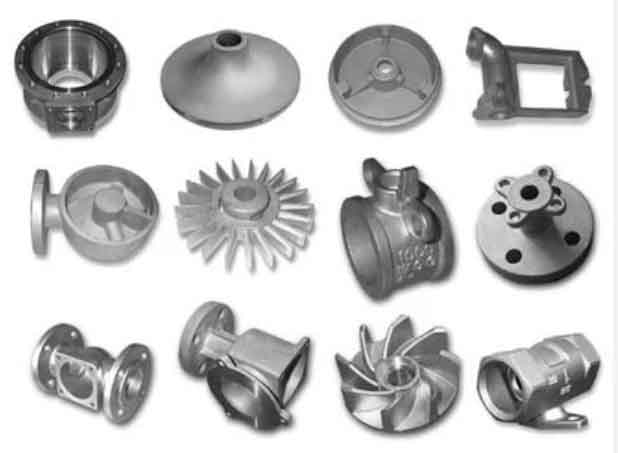
The bearing box casting under examination is a safety-critical component in train systems, characterized by its complex geometry and substantial wall thickness. With an approximate mass of 245 kg and dimensions of 1,200 mm × 500 mm × 320 mm, the casting demands exceptional internal quality, as specified by EN12680-3 standards for ultrasonic testing and X-ray inspection. The material specification requires a fully ferritic matrix with a nodularity exceeding 90%, graphite spheroid size between 5 to 8, tensile strength ≥ 400 MPa, elongation ≥ 18%, and hardness in the range of 140–200 HBW. Any presence of slag inclusions on machined surfaces, particularly in the inner bore areas, is unacceptable and can lead to high rejection rates. Our initial analysis revealed that these defects manifest as black spots upon machining, which upon microscopic and energy-dispersive spectroscopy (EDS) examination, were identified as silicate-based inclusions rich in silicon, magnesium, and aluminum. This indicates that the root causes are linked to inadequate slag removal and improper pretreatment during the melting process.
To address these challenges, we first evaluated the existing molding and pouring practices. The casting process employed a furan resin sand mold with a single pattern per mold, utilizing a bottom-gating system with ceramic tubes and insulating risers for feeding. However, the original gating design featured a top and bottom ingate configuration with two ϕ25 mm ceramic tubes and four ingates, which often resulted in turbulent flow and oxide formation. Additionally, the use of SiC as a pretreatment agent with a coarse particle size and high addition rate contributed to undissolved residues, exacerbating the inclusion problem. Through iterative improvements, we optimized both the gating system and the SiC pretreatment parameters, leading to a significant reduction in defect rates. This paper elaborates on the methodological approaches, experimental validations, and theoretical underpinnings that guided these improvements, providing a comprehensive framework for enhancing the quality of ductile iron castings in industrial applications.
Chemical Composition and Material Properties
The chemical composition of the ductile iron castings is meticulously controlled to achieve the desired mechanical and microstructural properties. The target composition ranges are summarized in Table 1, which ensures a carbon equivalent (CE) between 4.5% and 4.6% to promote graphitization and avoid carbide formation. The carbon equivalent is calculated using the formula:
$$CE = C + \frac{Si + P}{3}$$
where C, Si, and P represent the weight percentages of carbon, silicon, and phosphorus, respectively. This equation is critical for predicting the solidification behavior and graphite morphology in ductile iron castings. Maintaining the CE within the specified range helps in achieving a fully ferritic matrix, which is essential for high ductility and impact resistance. Furthermore, the low manganese and sulfur contents minimize the formation of manganese sulfides and other deleterious phases that could act as nucleation sites for slag inclusions.
| Element | Min | Max |
|---|---|---|
| C | 3.7 | 3.8 |
| Si | 2.4 | 2.5 |
| Mn | – | 0.3 |
| S | – | 0.02 |
| P | – | 0.03 |
| Mgres | 0.03 | 0.05 |
The mechanical properties of ductile iron castings are highly dependent on the microstructure, which is influenced by the cooling rate and inoculation efficiency. The relationship between the nodule count and the tensile properties can be expressed by the following empirical formula:
$$\sigma_t = A + B \cdot N$$
where $\sigma_t$ is the tensile strength, N is the nodule count per unit area, and A and B are material constants. For the QT400-18 grade, a high nodule count ensures uniform properties and reduces the likelihood of defect formation. The hardness, on the other hand, is correlated with the ferrite grain size and can be estimated using the Hall-Petch equation:
$$H = H_0 + k \cdot d^{-1/2}$$
where H is the hardness, $H_0$ and k are constants, and d is the average grain diameter. By controlling these parameters, we can ensure that the ductile iron castings meet the specified requirements for strength, ductility, and hardness.
Molding and Pouring Process Optimization
The initial molding process involved a furan resin sand system with a pattern plate, producing one casting per mold. The gating system was designed with a combination of ingates and ceramic tubes for bottom pouring, along with insulating risers and graphite chills to manage solidification in thick sections. However, this setup led to turbulent flow during filling, resulting in secondary slag inclusions. To mitigate this, we redesigned the gating system to incorporate four ϕ25 mm ceramic tubes arranged for bottom pouring, ensuring a more controlled and laminar flow of molten metal. The modified gating layout, as illustrated in the optimized process diagram, includes a central sprue, horizontally placed filters, and slag traps at the end of the runners to capture impurities before the metal enters the mold cavity.
The pouring temperature and time are critical parameters that influence the formation of slag inclusions in ductile iron castings. The original process maintained a pouring temperature of 1,350–1,380 °C with a pouring time of 15–20 seconds. While this range is generally acceptable, the high velocity associated with the previous gating design caused excessive turbulence. The Reynolds number (Re) for flow in the gating system can be calculated as:
$$Re = \frac{\rho v D}{\mu}$$
where $\rho$ is the density of the molten iron, v is the flow velocity, D is the hydraulic diameter, and $\mu$ is the dynamic viscosity. A Reynolds number exceeding 2,000 indicates turbulent flow, which promotes re-oxidation and slag entrainment. By increasing the number of bottom-pouring tubes and reducing the flow velocity, we achieved a Reynolds number below 2,000, ensuring laminar flow conditions. Additionally, we introduced overflow risers at the top of the mold to divert the initial metal flow, which often contains the highest concentration of slag particles.
| Parameter | Original Process | Optimized Process |
|---|---|---|
| Number of Ceramic Tubes | 2 | 4 |
| Ingate Configuration | Top + Bottom | Bottom Only |
| Filter Orientation | Vertical | Horizontal |
| Pouring Temperature (°C) | 1350–1380 | 1350–1380 |
| Pouring Time (s) | 15–20 | 20–25 |
| Reynolds Number (Re) | >2500 | <1500 |
The improvement in the gating system alone reduced the rejection rate due to slag inclusions from over 50% to approximately 30%, indicating that flow dynamics play a significant role in defect formation. However, the persistent issues necessitated a deeper investigation into the melting and pretreatment stages, particularly the use of SiC as a preconditioning agent.
Melting and Pretreatment Practices
The melting process was conducted in a 1.5-ton medium-frequency induction furnace, with a charge composition of 40% pig iron, 40% steel scrap, and 20% returns. The molten metal was superheated to 1,500–1,520 °C and held for 3–5 minutes to ensure homogeneity before tapping. Nodularization was achieved using a lanthanum-based nodulizer in a tundish cover process, with an addition rate of 1.0%. Inoculation was performed with calcium-barium-silicon inoculant during tapping (0.4%) and sulfur-oxygen inoculant during pouring (0.05–0.1%). Although these practices are standard for producing high-quality ductile iron castings, the use of SiC as a pretreatment agent at 0.2% addition and a particle size of 2–9 mm led to incomplete dissolution, resulting in residual SiC particles that contributed to slag inclusions.
The role of SiC in iron pretreatment is to improve the metallurgical quality by reducing oxides and enhancing graphitization. The reaction between SiC and iron oxides can be represented as:
$$3FeO + SiC \rightarrow 3Fe + SiO_2 + CO$$
This reaction generates silica (SiO₂) slag, which must be removed to prevent inclusions. However, if the SiC particles are too large or the addition rate is excessive, they may not fully dissolve, leaving behind residues that become entrapped in the metal. The dissolution kinetics of SiC in molten iron can be modeled using the following equation:
$$\frac{dm}{dt} = k \cdot A \cdot (C_s – C)$$
where dm/dt is the rate of mass dissolution, k is the rate constant, A is the surface area of the particle, $C_s$ is the saturation concentration, and C is the bulk concentration. Reducing the particle size increases the surface area-to-volume ratio, accelerating dissolution. Therefore, we adjusted the SiC pretreatment to use particles sized 1–3 mm at an addition rate of 0.1–0.15%, which ensured complete dissolution and minimized slag formation.
| Parameter | Original | Optimized |
|---|---|---|
| Particle Size (mm) | 2–9 | 1–3 |
| Addition Rate (%) | 0.2 | 0.1–0.15 |
| Dissolution Efficiency (%) | ~70 | >95 |
| Slag Inclusion Rate (%) | >50 | 0 |
This modification, combined with the improved gating system, completely eliminated the slag inclusion defects in subsequent production batches. The successful implementation of these changes underscores the importance of a holistic approach to process optimization in the manufacturing of ductile iron castings.
Defect Analysis and Characterization
The slag inclusions observed in the machined surfaces of the bearing box castings were characterized using optical microscopy and energy-dispersive spectroscopy. The inclusions appeared as dark, irregular spots under magnification, often associated with silicate compounds. The EDS analysis revealed high concentrations of silicon, magnesium, aluminum, and trace elements such as chlorine, sodium, and potassium. These elements are indicative of slag originating from the melting and pretreatment processes, possibly from inadequate slag removal or the use of contaminated additives.
The composition of the inclusions can be quantified using the following formula to estimate the slag basicity:
$$B = \frac{CaO + MgO}{SiO_2 + Al_2O_3}$$
where B is the basicity index, and the oxides represent their weight percentages in the slag. A basicity value less than 1 indicates acidic slag, which is typical for silicate-based inclusions. In our case, the calculated basicity was approximately 0.6, confirming the presence of acidic slag that is difficult to wet and remove from the molten metal. Additionally, the size and distribution of the inclusions followed a log-normal distribution, which can be described by the equation:
$$f(d) = \frac{1}{d \sigma \sqrt{2\pi}} \exp\left(-\frac{(\ln d – \mu)^2}{2\sigma^2}\right)$$
where d is the inclusion diameter, and $\mu$ and $\sigma$ are the mean and standard deviation of the natural logarithm of d, respectively. This statistical model helps in predicting the propensity for defect formation and evaluating the effectiveness of process improvements.
By correlating the inclusion characteristics with the process parameters, we identified that the primary sources of slag were the undissolved SiC particles and the turbulent flow during pouring. The optimized practices addressed both issues, resulting in a dramatic improvement in the quality of the ductile iron castings.
Conclusion
In summary, the investigation into slag inclusion defects in ductile iron castings revealed that both the gating system design and the SiC pretreatment parameters are critical factors influencing defect formation. The original gating configuration with top and bottom ingates caused turbulent flow, leading to secondary slag inclusions, while the coarse SiC particles and high addition rate resulted in primary slag inclusions due to incomplete dissolution. By transitioning to a bottom-pouring system with four ϕ25 mm ceramic tubes and optimizing the SiC pretreatment to use finer particles (1–3 mm) at a lower addition rate (0.1–0.15%), we achieved laminar flow conditions and complete dissolution of the pretreatment agent. These measures collectively eliminated the slag inclusion defects, reducing the rejection rate to zero in validated production batches. This study highlights the importance of integrated process control in the manufacturing of high-integrity ductile iron castings, providing valuable insights for similar applications in the foundry industry.