
As the equipment manufacturing industry advances towards high-power, heavy-duty, and high-strength applications, large section ductile iron castings have become increasingly vital in the mechanical equipment market. These ductile iron castings can weigh hundreds of tons with maximum wall thicknesses exceeding one meter. Ductile iron is a high-performance cast iron known for its excellent mechanical properties, good formability, and cost-effectiveness, making it widely used in critical components of large machinery, often replacing large steel castings and forgings with significant advantages. However, large section ductile iron castings face challenges due to slow cooling rates and prolonged solidification times, ranging from several hours to over twenty hours. This often leads to defects such as reduced graphite nodule count, coarse graphite nodules, graphitization decay, graphite distortion, graphite flotation, element segregation, and interdendritic carbides.
To address these issues, I conducted pouring experiments using a test block with material grade QT450-10, dimensions of 400 mm × 400 mm × 400 mm, and a单体 mass of approximately 500 kg. The goal was to develop a melting process suitable for producing large section ductile iron castings, ensuring the microstructure and mechanical properties meet standard requirements. The casting process employed a bottom-gating system with a filter screen in the runner to ensure clean molten metal entry into the cavity. Ceramic tubes were used for the ingates at the bottom of the test block. To simulate normal sand mold conditions, no chills or risers were used, only vent sheets on the top surface. Furan resin self-hardening sand was utilized for molding, with emphasis on enhanced compaction to improve mold strength, allowing for adequate self-feeding during solidification to achieve dense internal structure and minimize impact on mechanical properties. The mold surface was coated with zircon flour paint to reduce chemical reactions with the molten iron.
The melting equipment consisted of a 3-ton medium-frequency induction furnace, with nodularization treatment using the sandwich method. The charge comprised 50% Q10 pig iron and 50% low-manganese scrap steel, with the pig iron having a titanium content ω(Ti) < 0.035%. For nodularization, a blend of 50% heavy rare earth yttrium-based nodularizer and 50% light rare earth nodularizer was used, with a total addition of 1.2%. Inoculation involved 75% silicon-barium inoculant, with a post-inoculation addition of sulfur-oxygen inoculant during pouring at 0.15%. Pre-treatment included adding silicon carbide with over 90% purity, combined with low-nitrogen, low-sulfur high-temperature graphitized petroleum coke carbon raiser to adjust carbon content. Chemical composition control was based on the following table:
| Element | Composition (mass fraction, %) |
|---|---|
| C | 3.6–3.7 |
| Si | 2.3–2.4 |
| Mn | ≤ 0.2 |
| P | ≤ 0.03 |
| S | ≤ 0.012 |
| RE | 0.01–0.02 |
| Mg | 0.04–0.05 |
| Sb | 0.0045 |
Antimony (Sb), although an anti-nodularizing element, serves as a beneficial trace alloy in large section ductile iron castings, particularly when rare earth (RE) content is high, by neutralizing excess RE, improving graphite spheroidization, and increasing graphite nodule count. Sb was crushed into powder and added along with the sulfur-oxygen inoculant during pouring via a ladle funnel. For the nodularization process, the ladle was prepared with a dam; nodularizer was placed on one side of the dam, compacted with a rammer, covered with 0.2% inoculant by mass of iron, and then topped with small steel chips to delay ignition and improve magnesium absorption. The furnace was heated to 1500 °C, held for 5 minutes for superheating treatment, then power was reduced, and pig iron was added to cool the melt to 1420 °C before tapping for nodularization. Adding pig iron served to increase graphite nuclei and enhance iron quality while facilitating rapid cooling for efficiency. The sandwich method involved pouring iron into the side opposite the nodularizer. Inoculation was multi-stage, including ladle, tap stream, and pouring additions, with a dedicated inoculator above the furnace adding 0.6% silicon-barium inoculant during tapping.
Initial experiments under these conditions, with a pouring temperature of 1290–1310 °C, yielded test blocks. Samples were drilled from various positions for mechanical and metallographic analysis. The test block exhibited a circular dark spot at the center upon sectioning, and metallographic examination revealed severe graphite distortion with extensive chunky graphite formation. Research indicates that chunky graphite can reduce tensile strength by 20–40%, elongation by 50–80%, and impact toughness by 50%. Mechanical properties from the initial test blocks were substandard, as shown below:
| Sample ID | Tensile Strength (MPa) | Yield Strength (MPa) | Elongation (%) |
|---|---|---|---|
| Target (70 mm sample) | ≥ 390 | ≥ 260 | ≥ 8 |
| Upper 1 | 331.1 | 260.64 | 4.5 |
| Lower 1 | 339.1 | 264.35 | 4.0 |
| Upper 2 | 324.3 | 258.91 | 4.0 |
| Lower 2 | 317.2 | 261.58 | 3.0 |
| Upper 3 | 363.0 | 273.10 | 5.5 |
| Lower 3 | 333.6 | 265.95 | 5.0 |
The formation mechanism of chunky graphite in large section ductile iron castings is complex, often attributed to high carbon-silicon levels causing graphite球 growth and fragmentation, or rare earth elements destabilizing the austenite shell. During slow cooling, graphite eutectic cells grow, and under molten metal convection, graphite at boundaries may break into fragments, leading to chain-like or dendritic abnormal graphite. Production experience shows a direct correlation between chunky graphite and high RE content in the melt, as RE segregation at austenite grain boundaries prevents enclosure, allowing carbon diffusion and graphite distortion. Analysis of the initial process indicated that the DF-4 nodularizer with ω(RE) of 3.5% was unsuitable for large section ductile iron castings. Thus, adjustments were made to the nodularizer and chemical composition.
With improvements in pig iron purity, high-RE nodularizers can be detrimental. I switched to a DY-8 heavy rare earth nodularizer with ω(RE) of 1.0%, blended with light rare earth nodularizer (ω(RE) 0.6%) in a 30:70 ratio to reduce melt ω(RE) below 0.015%, preventing chunky graphite. Some manufacturers use high-purity pig iron with RE-free nodularizers for such castings. The initial carbon content of 3.6–3.7% was too high for sections over 400 mm, as prolonged solidification allows excessive carbon precipitation and graphite fragmentation. Carbon was adjusted to 3.3–3.5%, and to maintain carbon equivalent (CE) around 4.25–4.35%, silicon was increased to 2.4–2.6%. Antimony content was raised to 0.0075% to enhance graphite nodularity. The revised composition is summarized below:
| Element | Composition (mass fraction, %) |
|---|---|
| C | 3.3–3.5 |
| Si | 2.4–2.6 |
| Mn | ≤ 0.2 |
| P | ≤ 0.03 |
| S | ≤ 0.012 |
| RE | 0.008–0.015 |
| Mg | 0.04–0.05 |
| Sb | 0.0075 |
The carbon equivalent can be calculated using the formula: $$CE = C + \frac{Si}{3}$$ For the adjusted composition, CE ranges from approximately 4.23 to 4.37, which is optimal for large section ductile iron castings. After implementing these changes, additional test blocks were poured and analyzed. Sectioning showed no dark spots, and machining surfaces appeared normal. Metallographic examination indicated nodularization grade 2, graphite size grade 5–6, pearlite content below 5%, and complete elimination of chunky graphite. Mechanical properties improved significantly, as detailed in the following table:
| Sample ID | Tensile Strength (MPa) | Yield Strength (MPa) | Elongation (%) |
|---|---|---|---|
| Upper 1 | 404 | 283 | 13.5 |
| Lower 1 | 412 | 283 | 19.0 |
| Upper 2 | 403 | 282 | 15.0 |
| Lower 2 | 409 | 281 | 18.5 |
| Upper 3 | 412 | 285 | 20.5 |
| Lower 3 | 408 | 283 | 19.0 |
The improved melting process was validated in production of a 30-ton component with a maximum wall thickness of 730 mm. Samples from thick sections showed no graphite abnormalities, confirming the process’s effectiveness for large section ductile iron castings. The relationship between cooling rate and graphite formation can be described by the solidification time equation: $$t_s = k \cdot V^2$$ where \(t_s\) is solidification time, \(k\) is a constant, and \(V\) is volume. For ductile iron castings, controlling composition and nodularization is critical to mitigate defects in thick sections.
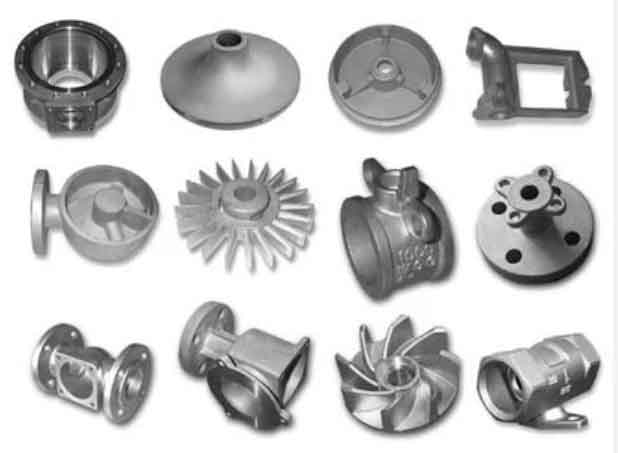
In summary, the optimized melting process for large section ductile iron castings involves precise control of rare earth content, carbon, silicon, and antimony levels to prevent chunky graphite and ensure desired mechanical properties. This approach has proven successful in industrial applications, highlighting the importance of tailored compositions and treatments for high-quality ductile iron castings. Further research could explore dynamic solidification models or advanced inoculation techniques to enhance performance in extreme conditions.