
In the field of lost wax investment casting, the quality of the ceramic shell directly influences the final casting quality and product yield, while the production cycle of the shell impacts the overall manufacturing timeline. The silica sol-based shell-making process, widely adopted for its simplicity, high dimensional accuracy, minimal pretreatment requirements, and environmental friendliness, relies heavily on the drying and hardening stages to achieve optimal performance. The strength and surface quality of silica sol shells are closely tied to the control of the drying process. For complex investment castings featuring deep holes and narrow grooves, these areas often prove challenging to dry thoroughly due to inconsistent drying rates compared to more accessible regions. This inconsistency can lead to uneven stress distribution during drying, resulting in shell deformation, localized bulging, cracking, and even steel leakage during pouring. Therefore, enhancing the drying efficiency in deep hole and narrow groove sections is critical to ensure uniform shell drying, improve shell integrity, and boost production efficiency in lost wax investment casting.
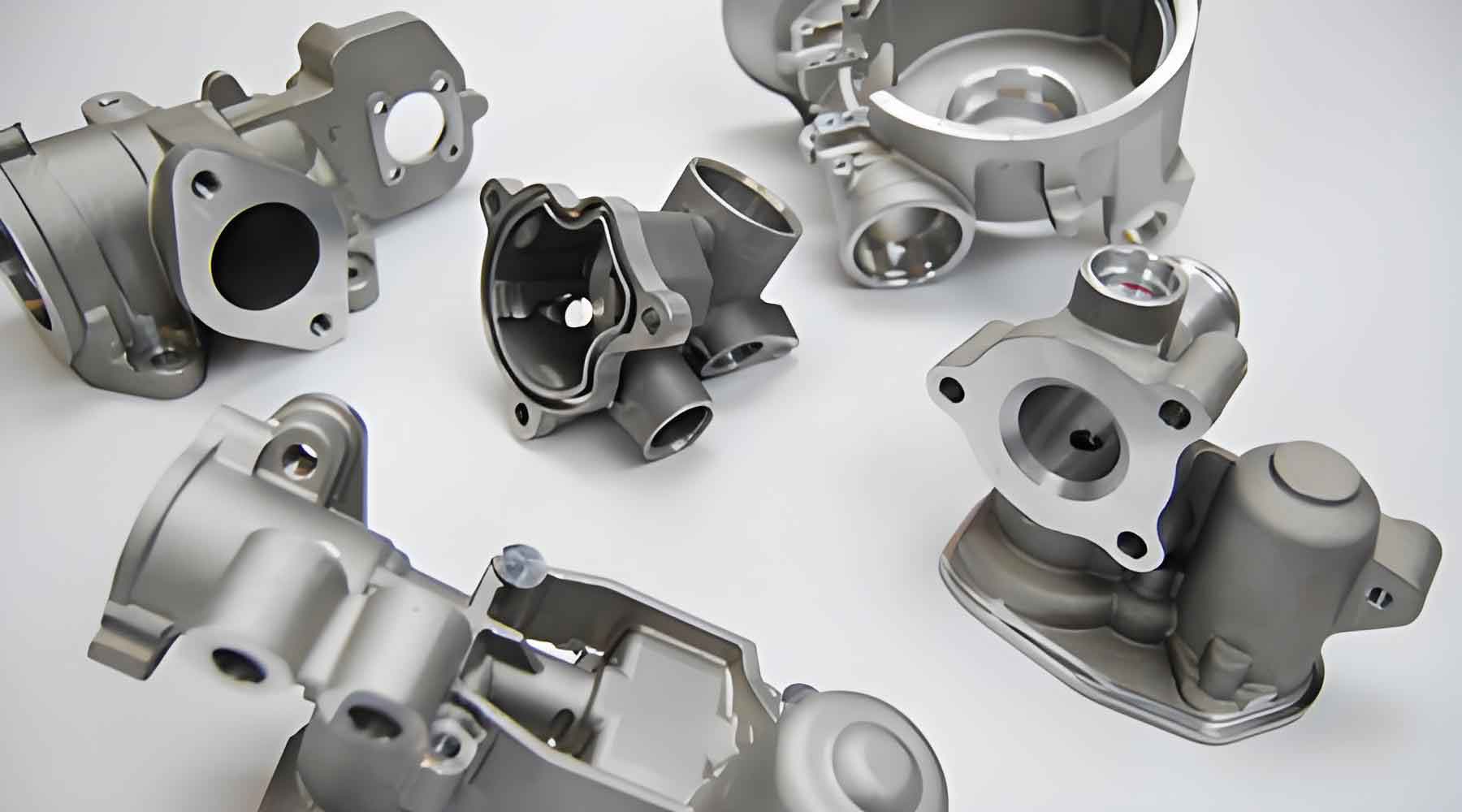
A typical transition segment component exemplifies this issue, with multiple deep沟槽 structures where槽 widths are approximately 14.5 mm and depths reach 90 mm, characteristic of deep hole narrow groove configurations. Internal flow channels are interspersed with windows, while the external flow surface is entirely enclosed, creating stagnant air pockets that hinder airflow. This stagnation prevents the convective removal of free water vapor, leading to inadequate drying, compromised shell strength, and subsequent leakage during pouring. The resultant scrap parts due to leakage highlight the severity of the problem in lost wax investment casting applications.
The drying process of silica sol shells本质上 involves water evaporation, and the mode of water loss varies with environmental conditions. In stagnant air, the drying of silica sol slurry comprises three stages: free water migration, free water evaporation, and water vapor diffusion. Surface evaporation reduces water content in the shell’s outer layer, increasing SiO2 concentration and disrupting the system’s equilibrium. This drives free water from the inner layers to migrate towards the surface, a spontaneous process where the Gibbs free energy change satisfies $\Delta G_{T,P} < 0$. The diffusion rate of water molecules in stagnant air depends on temperature and humidity gradients, described by Fick’s law: $$J = -D \frac{\partial C}{\partial x}$$ where $J$ is the diffusion flux, $D$ is the diffusion coefficient, and $\frac{\partial C}{\partial x}$ is the concentration gradient. In convective airflow, evaporated water molecules are rapidly carried away by the moving air, preventing accumulation at the shell surface. Under strong blowing conditions, convection reduces the vapor pressure and thickness of the humidity layer, increases the humidity gradient across the air and vapor layers, and can even extend the convective zone into the shell layer, thereby accelerating the drying rate. The drying rate in convection can be modeled as: $$\frac{dm}{dt} = k A (P_s – P_a)$$ where $\frac{dm}{dt}$ is the mass loss rate, $k$ is the mass transfer coefficient, $A$ is the surface area, $P_s$ is the saturated vapor pressure at the surface, and $P_a$ is the vapor pressure in the air.
Standard shell drying employs constant temperature (21.5°C ± 3.5°C) and humidity (55% ± 5% for face coat, 45% ± 5% for backup coats) with strong air blowing for backup layers, corresponding to the convective water loss mode. However, deep hole and narrow groove areas, lacking adequate airflow, form enclosed stagnant zones where drying follows the stagnant air loss mode. To address this, introducing air guides in these dead zones to facilitate forced convection is an effective strategy to shorten drying times and enhance shell strength in lost wax investment casting. While reducing ambient humidity and increasing temperature can also accelerate drying by lowering vapor pressure and speeding up diffusion, their impact on deep hole narrow groove areas is limited due to the isolated high-humidity microenvironment. Excessive temperature increases risk wax pattern expansion and shell cracking.
Monitoring with intelligent data loggers compared the drying processes of open shells and deep hole narrow groove shells. For open shells, after coating completion, the shell temperature dropped from ~22°C to ~17°C within 30 minutes due to evaporative cooling, while surface humidity rose from ~43% to ~65% in 20 minutes. Temperature stabilized after 3.5–6 hours, indicating complete drying under constant conditions (21.5°C ± 3.5°C, 45% ± 5% humidity, strong wind). In contrast, deep hole narrow groove shells showed a slower temperature decrease from ~22.5°C to ~18°C over 4.5 hours, with humidity peaking at ~73% after 3 hours. Drying required up to 29 hours to reach a stable state under relative constant conditions (21.5°C ± 1°C, 60% ± 5% humidity), but full drying to standard conditions was unattainable even with extended drying (up to 48 hours). The data underscore that stagnant airflow in deep hole narrow grooves creates a high-humidity enclosure, slowing free water diffusion and migration.
| Parameter | Open Shell | Deep Hole Narrow Groove Shell |
|---|---|---|
| Initial Temperature Drop | ~5°C in 30 min | ~4.5°C in 4.5 h |
| Humidity Peak | ~65% in 20 min | ~73% in 3 h |
| Drying Time to Stability | 6 h | 29 h (relative) |
| Final Humidity | ~45% | ~60% |
To quantitatively assess shell strength, standard test specimens with varying groove depths (6 mm, 21 mm, 40 mm, 57 mm) were prepared on identical clusters to ensure consistent coating application. The shells were built with six layers: a face coat of general zircon flour slurry with 80# alumina sand, a transition coat of mullite flour slurry with 46# alumina sand, a third coat of mullite flour slurry with 35# mullite sand, and subsequent backup coats of mullite flour slurry with 22# mullite sand. Drying was performed at 21.5°C ± 1°C and 45% ± 5% humidity with fan-assisted blowing. Different drying times and methods were applied to the deep hole narrow groove areas, as summarized in Table 2.
| Scheme | Drying Time (h) | Drying Method | Notes |
|---|---|---|---|
| Scheme 1 | 12 ± 2 | Self-blowing | Reference |
| Scheme 2 | 24 ± 2 | Self-blowing | Reference |
| Scheme 3 | 24 ± 2 | Forced blowing | With air guide |
| Scheme 4 | 12 ± 2 | Forced blowing | With air guide |
“Self-blowing” refers to drying in the standard constant-condition room with existing air circulation, while “forced blowing” involves using compressed air with air guides directed into the deep hole narrow grooves to enhance convection. After shell building, dewaxing, and pre-firing, room temperature flexural strength was measured on cut specimens. The results, compared to reference specimens (1#), showed that deep hole narrow groove specimens exhibited reduced strength across all schemes, but the extent varied. The flexural strength data is summarized in Table 3 and illustrated in the strength curve.
| Scheme | 1# Reference | 2# Specimen | 3# Specimen | 4# Specimen |
|---|---|---|---|---|
| Scheme 1 | 5.2 | 4.1 | 3.8 | 3.5 |
| Scheme 2 | 5.3 | 4.8 | 4.5 | 4.2 |
| Scheme 3 | 5.4 | 5.1 | 4.9 | 4.7 |
| Scheme 4 | 5.2 | 4.9 | 4.6 | 4.4 |
The flexural strength followed the order: Scheme 3 (24 h + forced blowing) > Scheme 4 (12 h + forced blowing) > Scheme 2 (24 h + self-blowing) > Scheme 1 (12 h + self-blowing). This demonstrates that both prolonged drying time and enhanced air convection via air guides improve shell strength in deep hole narrow grooves, with forced convection being more effective. The strength improvement can be correlated with the enhanced drying rate, which for forced convection can be expressed as: $$\frac{d\theta}{dt} = \frac{h A (T_a – T_s)}{\lambda}$$ where $\frac{d\theta}{dt}$ is the drying rate, $h$ is the heat transfer coefficient, $T_a$ and $T_s$ are air and surface temperatures, and $\lambda$ is the latent heat of vaporization.
For the transition segment component, the shell-making process was adjusted to incorporate longer drying times and forced convection in deep hole narrow grooves. Specifically, the second layer dried for 24 ± 2 hours, and the third to fifth layers for 48 ± 2 hours—first 24 hours on hanging lines and the next 24 hours horizontally on drying carts with air guides connected to compressed air for directed blowing into the grooves. From the sixth layer onward, automated shell-making lines were used. This modified approach in lost wax investment casting significantly reduced leakage incidents; post-pouring, the metal level in the pouring cup remained stable, and castings showed minimal iron nodules at the bottom, confirming improved shell integrity.
In conclusion, this research on lost wax investment casting identifies stagnant airflow in deep hole narrow grooves as the primary cause of inadequate drying, due to small humidity gradients forming isolated high-humidity environments that slow free water diffusion. Extending drying times allows shells to reach a relative dry state matching the local microclimate but not the standard conditions. Experimental comparisons confirm that both prolonged drying and forced air convection enhance shell strength, with forced convection being markedly more effective. Implementation on typical components validates that this strategy effectively mitigates leakage issues, underscoring its importance in advancing lost wax investment casting processes for complex geometries.