
In my extensive experience working with industrial manufacturing, I have observed that the demand for high-performance machine tool castings has escalated significantly. Machine tool castings, particularly those used for bed components, must exhibit exceptional stiffness, wear resistance, low stress, and superior machinability. The evolution in machine design necessitates diverse material properties, with a shift from traditional low-strength gray irons like HT150 to medium-high strength variants such as HT200 and HT250, and even high-strength grades like HT300 and HT350. Moreover, the adoption of ductile iron for machine tool castings is gaining traction. This progression imposes stricter requirements on dimensional stability, surface integrity, and internal quality, elevating the importance of effective defect inspection and repair welding techniques. As a practitioner, I emphasize that the repair welding of machine tool castings is not merely a corrective measure but a critical process to ensure longevity and precision in industrial applications.
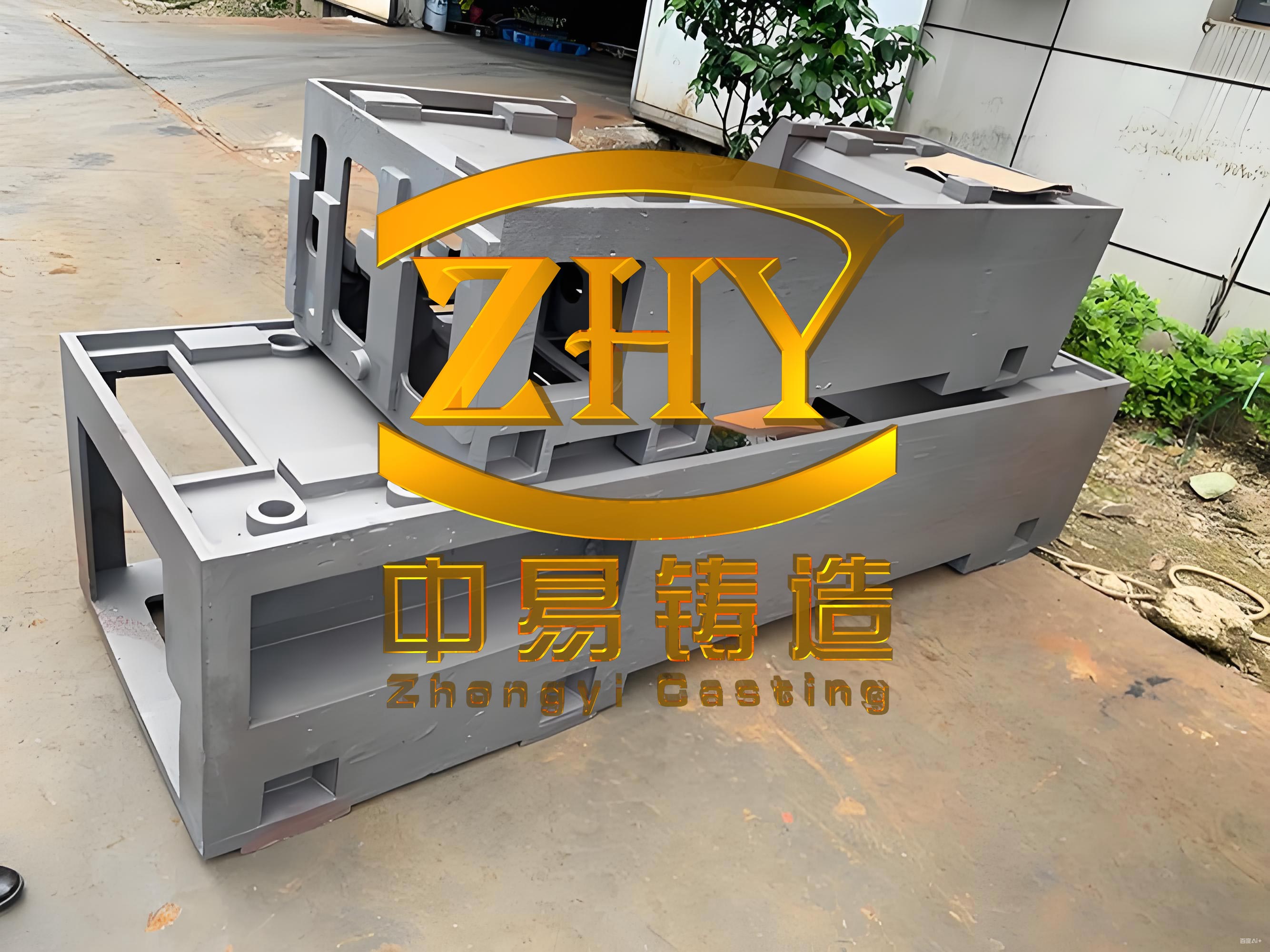
The welding behavior of high-strength machine tool castings, such as those made from HT250 gray iron, is inherently challenging due to their microstructure and composition. In my analysis, the primary issues revolve around the formation of undesirable phases and susceptibility to cracking. The microstructure of gray iron consists of graphite flakes distributed in a metallic matrix, with high levels of sulfur and phosphorus impurities. These elements increase the sensitivity of the weld to cooling rates. During rapid cooling, the short crystallization time inhibits sufficient graphitization, leading to the precipitation of cementite (Fe3C) in the fusion zone and weld metal. This results in hard, brittle structures like white iron and hardened phases, with hardness values potentially reaching 600 HBW. Additionally, the low strength and poor plasticity of gray iron, combined with non-uniform heating and rapid cooling during welding, generate significant residual stresses. This makes the weld joint highly prone to both cold and hot cracks, which can compromise the integrity of machine tool castings.
To quantify the microstructural transformations in HT250 gray iron weld joints, I have compiled data from various studies, which can be summarized in the following table. This table outlines the temperature ranges and corresponding microstructures in different zones of the weld joint, highlighting the critical role of cooling rate in determining the final properties of machine tool castings.
| Zone | Temperature Range | Microstructure |
|---|---|---|
| Weld Metal | >1250°C | Homogeneous weld: Ledeburite (eutectic cementite) + secondary cementite + pearlite, essentially white iron structure. Heterogeneous weld: High-carbon martensite under rapid cooling. |
| Partially Melted Zone | 1150–1250°C | White iron and hardened structures. |
| Austenite Zone | 820–1150°C | With faster cooling, secondary cementite precipitates from austenite; amount proportional to carbon content in austenite. For moderate cooling, pearlitic transformation occurs; for rapid cooling, martensite or bainite forms. |
| Recrystallization Zone | 780–820°C | Pearlite or martensite, depending on cooling conditions. |
In my practice, I have found that the propensity for cracking in machine tool castings is a major concern. Cold cracks typically occur in铸铁-type welds and are accompanied by audible brittle fracture sounds. These cracks arise due to high tensile stresses generated during cooling, exacerbated by the low plasticity of iron below 400°C. The risk is heightened when white iron forms, as its higher shrinkage rate (2.3%) compared to gray iron (1.26%) induces additional stress. In cases where the weld metal has higher strength than the base metal, “peeling” or separation at the interface can occur, especially in rigid structures or multi-layer welds. On the other hand, hot cracks are common when using nickel-based or low-carbon steel electrodes. The high sulfur and phosphorus content in gray iron leads to low-melting eutectics, such as Ni-Ni3S2 (melting point 644°C) and Ni-Ni3P (melting point 880°C), which facilitate crack initiation under thermal stress. This is particularly critical for machine tool castings where dimensional accuracy is paramount.
The selection of an appropriate repair welding method for machine tool castings depends on multiple factors, including the casting’s condition (e.g., composition, geometry, and mechanical properties), defect characteristics (type, size, and location), post-weld requirements (strength, color match, sealability, and machinability), and practical constraints (equipment availability and cost). Based on my experience, I often evaluate methods such as manual arc welding, gas welding, and brazing, with variations like hot welding, semi-hot welding, and cold welding. Each technique offers distinct advantages and limitations, which I summarize in the following table to guide practitioners in choosing the optimal approach for machine tool castings.
| Welding Method | Filler Material | Machinability | Density | Hot Crack Tendency | Cold Crack Tendency | Applications and Features |
|---|---|---|---|---|---|---|
| Manual Arc Welding – Hot/Semi-Hot | Z408, Z208 | Excellent | Excellent | Very Low | Almost None | Ideal for large defects, aged castings, or poor-quality materials; provides good match in microstructure and color; drawbacks include poor working conditions and high cost. |
| Manual Arc Welding – Cold (No Preheat) | Z408 | Good | Good | Low | Prone in rigid areas | Suitable for general machining requirements; offers better working conditions but may have property disparities. |
| Manual Arc Welding – Cold (Other Electrodes) | Z308, Z408, Z100, J507, Z116, Z117 | Fair to Good | Fair to Good | Varies (Low to High) | Varies (Low to High) | Used based on specific needs; Z308/Z408 provide good color match, while others may sacrifice properties for cost. |
| Gas Welding – Hot | Gray Iron Wire | Excellent | Excellent | Very Low | Very Low | Applicable for high-quality repairs; involves preheating, leading to improved microstructure but poor working conditions. |
| Gas Welding – No Preheat | Gray Iron Wire | Excellent | Excellent | Very Low | Low | Good for general applications without preheating; balances quality and practicality. |
| Gas Welding – Heating Reduction | Gray Iron Wire | Excellent | Excellent | Very Low | Prone if heated improperly | Focuses on stress reduction through controlled heating; requires skill to avoid cracks. |
| Brazing | Brass or Cupronickel | Excellent | Poor | Low | Low | Best for surface scratches or non-fusion applications; offers good machinability but lower strength. |
| Electroslag Welding | Gray Iron Chips | Excellent | Excellent | Very Low | Low | Used for thick, large castings; provides deep penetration but has poor working conditions. |
| Oxy-Acetylene Powder Spray Welding | F103, F302 | Excellent | Good | Low | Low | Effective for small defects in machined surfaces; minimizes heat input and distortion. |
For specific applications in machine tool castings, I recommend tailoring the welding method and filler material based on the component’s role. For instance, slideways subject to sliding friction require excellent surface integrity, whereas fixed joints may prioritize strength. The table below provides my suggested guidelines for selecting repair welding processes and materials, derived from practical scenarios involving machine tool castings.
| Repair Location and Requirements | Recommended Method | Alternative Methods |
|---|---|---|
| Slideways (As-Cast) | Hot arc welding with iron-core electrodes; hot gas welding with iron wire | No-preheat arc welding with iron-core electrodes (risk of cracking in rigid areas); cold welding with EZNiCu, EZNi, or EZNiFe electrodes |
| Slideways (Machined) | Cold welding with EZNiCu, EZNi, or EZNiFe electrodes, with slight preheat if needed | No-preheat arc welding with iron-core electrodes (may crack in rigid areas) |
| Fixed Joints (As-Cast) | Hot arc welding with iron-core electrodes; hot gas welding with iron wire; no-preheat arc welding (cautious in rigid areas) | Cold welding with EZNiCu, EZNi, or EZNiFe electrodes, with slight preheat |
| Fixed Joints (Machined) | Cold welding with EZNiCu, EZNi, or EZNiFe electrodes, with slight preheat | No-preheat arc welding with iron-core electrodes (risk of cracking); brazing with brass |
| Sealing Requirements (As-Cast) | Hot arc welding with iron-core electrodes; hot gas welding with iron wire; no-preheat arc welding (cautious in rigid areas) | Cold welding with EZNi or EZNiFe electrodes |
| Sealing Requirements (Machined) | Cold welding with EZNi or EZNiFe electrodes, with slight preheat (for high pressure, avoid EZNiCu) | No-preheat arc welding with iron-core electrodes (risk of cracking); brazing with brass |
| Non-Machined Surfaces (Strength/Sealing) | Cold welding with EZFeCu, EZNiCu, or austenitic iron-copper electrodes (for low pressure); cold welding with EZNiFe, EZNiCu, or EZr electrodes (for high pressure) | Hot arc welding; hot gas welding; no-preheat arc welding; brazing |
| Non-Machined Surfaces (No Specific Requirements) | Cold welding with EZNiCu or austenitic iron-copper electrodes; cold welding with low-carbon steel electrodes (E5015, E5016) | Any other gray iron repair method |
In my approach to repair welding for machine tool castings, pre-weld preparation is crucial to ensure success. I always begin by thoroughly cleaning the defect area using mechanical methods or carbon arc gouging to remove all imperfections. For cracks, I drill stop-holes at the ends to prevent propagation. The groove design should minimize the angle to reduce melting of the base metal, thereby lowering the risk of carbon and impurity pickup. In edge or corner repairs, I often use molding materials like clay or refractory mud to contain the weld metal and achieve a sound profile. Pre-weld cleaning is essential to eliminate contaminants such as oil and rust, ensuring a clean, shiny surface for optimal adhesion.
When executing the repair, I adhere to specific techniques tailored to the welding method. For hot or semi-hot welding, I position the workpiece on an incline to facilitate uphill or vertical welding, which reduces dilution. Preheating is determined by the casting’s size, thickness, and complexity; overall preheating to 600–700°C (indicated by a dull red color) is used for complex structures, while local preheating to around 400°C suffices for minor defects in low-stress areas. The heating rate must be controlled to avoid thermal stresses. During welding, I maintain the preheat temperature to prevent the formation of hard phases. Post-weld, I emphasize slow cooling in insulation, and for critical machine tool castings, I recommend stress relief heat treatment at 600–700°C with controlled cooling. The welding parameters are critical; for instance, in hot welding, I use a long arc and high current to promote graphite dissolution and maintain temperature, calculated as: $$I = (40 \text{ to } 50) \times d$$ where \(I\) is the welding current in amperes, and \(d\) is the electrode diameter in millimeters.
For cold welding processes, I implement strategies to manage heat input and stress. This includes short-segment welding (10–40 mm per segment), intermittent welding with pauses to cool to 50–60°C between passes, dispersed welding to distribute heat, and step-back welding to reduce peak tensile stresses. The heat input formula is vital for controlling the thermal cycle: $$Q = \frac{I \times V \times \eta}{v}$$ where \(Q\) is the heat input in joules per millimeter, \(I\) is current, \(V\) is voltage, \(\eta\) is efficiency (typically 0.8 for arc welding), and \(v\) is the travel speed in mm/s. By minimizing the dilution ratio, I reduce the infusion of carbon, sulfur, and phosphorus from the base metal into the weld, which mitigates crack susceptibility. In multi-pass welding, I sequence the beads to disperse heat, focusing on the interface layers where I use lower currents and faster travel to avoid excessive melting. Peening the weld at temperatures above 400°C with a rounded tool helps relax stresses through work hardening, though I avoid it on the first and last layers to prevent defects.
Through years of hands-on work, I have concluded that the repair welding of high-strength machine tool castings is a manageable challenge when based on a comprehensive understanding of material behavior and process dynamics. The key lies in selecting the appropriate method—whether hot welding for critical sections or cold welding for economical repairs—and meticulously controlling parameters to avoid defects like white iron formation and cracking. Empirical models, such as the carbon equivalent formula for predicting weldability, can aid in decision-making: $$\text{CE} = \text{C} + \frac{\text{Si} + \text{P}}{3}$$ where CE is the carbon equivalent, and higher values indicate greater susceptibility to hardening. By integrating these principles, manufacturers can enhance the reliability and performance of machine tool castings, ensuring they meet the rigorous demands of modern industry. Ultimately, a methodical approach to repair welding not only restores functionality but also extends the service life of these essential components.