
In the development of high-efficiency steam turbines for power generation, the manufacturing of critical components like outer cylinders demands exceptional precision. These cylinders, operating under extreme temperatures and pressures, require advanced foundry technology to achieve the necessary structural integrity and dimensional accuracy. Through my involvement in multiple projects, I have analyzed and implemented machining strategies that address the unique challenges posed by these massive castings. This article delves into the intricacies of machining ultra-high-pressure, high-pressure, and medium-pressure outer cylinders for a 1000MW ultra-supercritical steam turbine, emphasizing how modern foundry technology enables high-precision, cost-effective manufacturing.
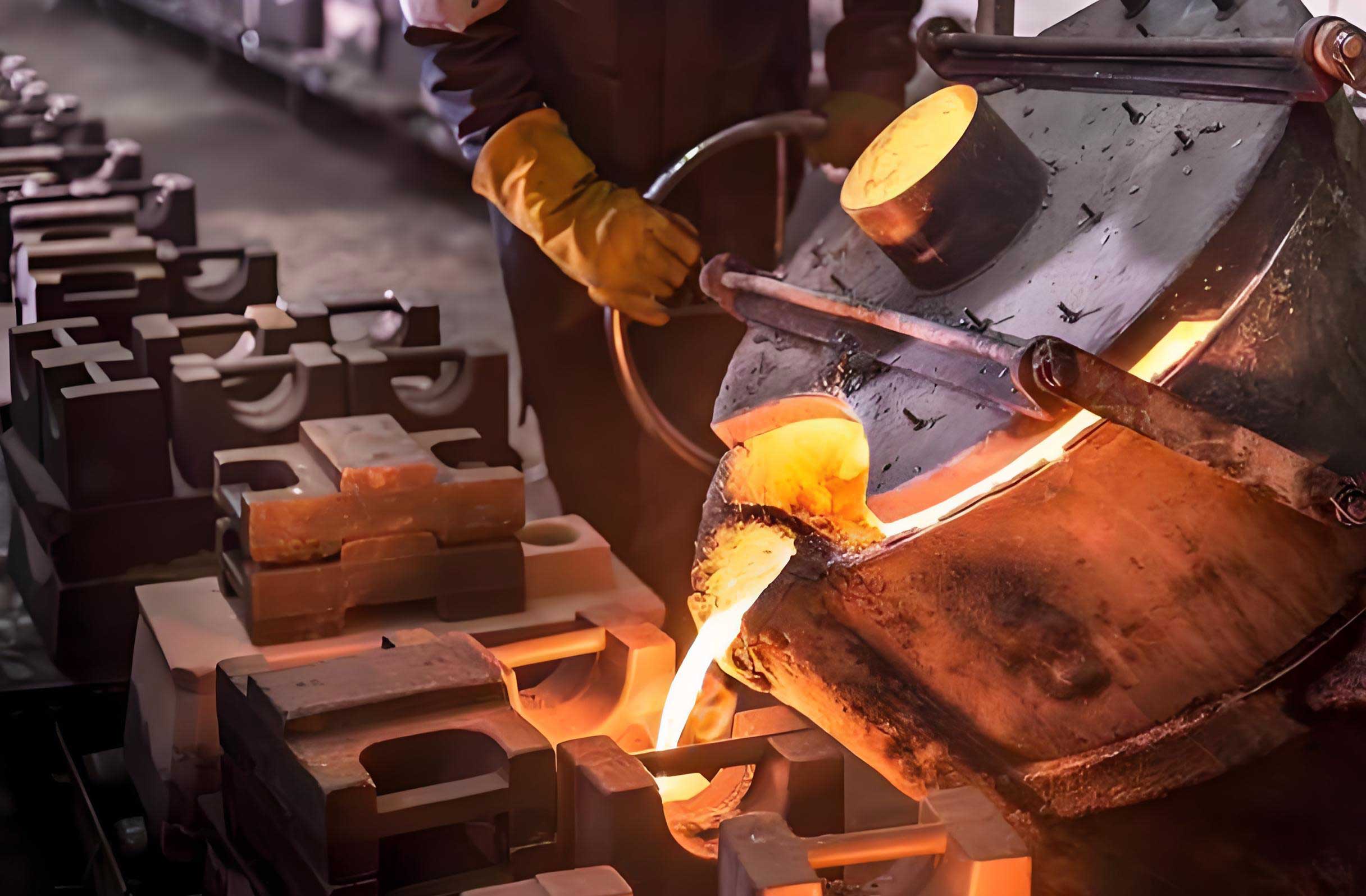
The outer cylinders serve as the primary support structure for internal components such as inner casings, diaphragms, and sealing assemblies. Their complex geometry, combined with stringent sealing requirements, makes them among the most challenging parts to machine. Foundry technology plays a pivotal role here, as the casting process must produce near-net-shape components with minimal defects to facilitate subsequent machining. The material used is ZG15Cr1MoV cast steel, which offers excellent high-temperature strength but poses difficulties due to variations in hardness and microstructure. The key dimensions and weights are summarized in Table 1.
| Cylinder Type | Dimensions (L × W × H, mm) | Weight (tons) | Material |
|---|---|---|---|
| Ultra-High Pressure | 5670 × 3890 × 3995 | 117 | ZG15Cr1MoV |
| High Pressure | 6072 × 3560 × 3940 | 108 | ZG15Cr1MoV |
| Medium Pressure | 7572 × 4310 × 4809 | 152 | ZG15Cr1MoV |
The technical requirements for these cylinders are exceptionally rigorous. For instance, the coaxiality of sealing surfaces relative to the cylinder centerline must be within $$ \phi 0.025 \, \text{mm} $$ to $$ \phi 0.05 \, \text{mm} $$, while perpendicularity of end faces is limited to $$ 0.025 \, \text{mm} $$. Surface roughness for critical interfaces like horizontal and vertical joints must achieve $$ Ra \leq 1.6 \, \mu \text{m} $$. Additionally, bolt holes for M4.5-8UN to M6-8UN threads require precise machining to depths up to 545 mm, with stringent tolerances on fit and finish. These specifications necessitate a machining approach that leverages the latest advancements in foundry technology to minimize distortions and ensure consistency.
Structural Analysis and Technical Challenges
The ultra-high-pressure outer cylinder features a unique design with front and rear sections, utilizing top-mounted support paws. In contrast, the high-pressure and medium-pressure cylinders employ conventional top-bottom splits with bottom-mounted paws. This structural diversity introduces varying rigidity characteristics, with the medium-pressure cylinder being particularly prone to deformation under load. The primary machining challenges stem from the components’ massive size, complex geometry, and the need to maintain precision across multiple interfaces. Key difficulties include:
- Ensuring flatness and surface finish on horizontal and vertical joint faces to achieve leak-proof seals under operating conditions.
- Controlling axial and radial misalignment between upper and lower halves for sealing surfaces and internal bores, with tolerances as tight as $$ < 0.05 \, \text{mm} $$.
- Machining deep bolt holes and counterbores with high thread quality and surface integrity to prevent galling during assembly.
- Compensating for thermal distortions and machine tool inaccuracies in non-climate-controlled environments.
- Managing heterogeneous material properties inherent in large castings, which affect tool life and cutting parameters.
These challenges underscore the importance of integrating robust foundry technology with precision machining. The casting process must yield components with uniform material properties and minimal residual stresses to facilitate accurate machining. Furthermore, the selection of cutting tools and parameters must account for the material’s behavior under dynamic loads.
Machining Strategy: A Foundry Technology Perspective
To address these challenges, I developed a comprehensive machining strategy centered on several core principles. First, component-specific machining is employed, where the ultra-high-pressure cylinder is processed as separate front and rear sections, while the high-pressure and medium-pressure cylinders are machined individually except for combined operations on critical features. This approach minimizes cumulative errors from repeated handling. Second, operations are consolidated at single workstations to reduce setup times and enhance accuracy. Third, a unified datum system ensures that design benchmarks like the cylinder centerline and joint faces serve as consistent references throughout machining, with alignment accuracies within $$ 0 – < 0.02 \, \text{mm} $$.
Support and clamping methods are tailored to mimic assembly conditions. For example, high-pressure and medium-pressure cylinder lowers are supported on four paws during machining, while uppers are secured via lifting lugs or exhaust flanges. The ultra-high-pressure cylinder employs a mandrel定位 system for turning operations to enhance stability. Load distribution during machining is critical; support points are strategically placed to counteract gravitational and clamping deformations. The machining sequence prioritizes high-material-removal operations early in the process to mitigate stress-induced distortions. Key steps include semi-finishing joint faces and bolt holes before final precision machining.
Tool selection is integral to this strategy. For instance, high-efficiency boring tools from manufacturers like INGERSOLL and KOMET are used for heavy stock removal, while custom-developed反向 scraping tools handle deep counterbores. These tools incorporate internal cooling and vibration-damping features, crucial for maintaining accuracy in intermittent cutting conditions. The cutting parameters are derived from empirical models that account for material variability. For example, the feed rate $$ v_f $$ and spindle speed $$ n $$ for drilling bolt holes are optimized using the relation:
$$ v_f = k \times n \times f $$
where $$ f $$ is the feed per revolution, and $$ k $$ is a material-specific constant. Typical values range from $$ n = 220-270 \, \text{r/min} $$ and $$ v_f = 25-27 \, \text{mm/min} $$ for drilling, to $$ n = 6-8 \, \text{r/min} $$ and $$ v_f = 0.1-0.15 \, \text{mm/min} $$ for fine scraping. This systematic approach, rooted in advanced foundry technology, ensures that machining efficiency and precision are balanced effectively.
Precision Machining of Critical Features
The machining of horizontal and vertical joint faces, bolt holes, and internal bores requires meticulous planning. For the ultra-high-pressure cylinder, initial semi-finishing on a vertical lathe is followed by bolt hole processing on a planer-mill. The bolt holes, which involve removing up to 4.5 tons of material, are drilled using compound drills and finished with custom scraping tools. The scraping tool consists of a $$ \phi 85 \, \text{mm} $$ mandrel with interchangeable cutting heads, designed for stability during deep cavity machining. A铸铁 sleeve with a clearance of $$ 0.3-0.4 \, \text{mm} $$ provides additional support, while internal coolant delivery manages thermal effects. The tool’s flexibility prevents harmonic vibrations, a common issue in heavy machining.
For the high-pressure and medium-pressure cylinders, planer-mills are used for face milling and boring. The medium-pressure cylinder, with its lower rigidity, requires配作 (matching) techniques for internal bores and combined machining of sealing surfaces. Key steps include:
- Simultaneously machining upper and lower halves on a planer-mill, with supports configured to approximate assembly conditions.
- Semi-finishing bolt holes and internal features before final face milling to distribute stresses.
- Using a precision face mill with large-radius inserts for joint faces, achieving flatness within $$ < 0.015 \, \text{mm}/1000 \, \text{mm} $$ and surface roughness of $$ Ra 0.8 \, \mu \text{m} $$.
- Combining halves to drill and ream定位销 holes, then machining sealing surfaces in a combined setup to ensure coaxiality within $$ \phi 0.05 \, \text{mm} $$.
Post-machining treatments like研磨 (lapping) are essential for bolt holes and counterbores. Threads are lapped using cast iron bolts under spring pressure to achieve smooth engagement, with contact areas exceeding 80%. This process eliminates micro-imperfections from tool deflection or material heterogeneity. The effectiveness of these methods is evident in the consistent achievement of sealing requirements, with joint gaps below $$ 0.05 \, \text{mm} $$ in free state and $$ < 0.03 \, \text{mm} $$ under bolt preload.
| Operation | Tool Type | Spindle Speed (r/min) | Feed Rate (mm/min) | Depth of Cut (mm) |
|---|---|---|---|---|
| Rough Counterbore Milling | Guide Drill Mill | 230-250 | 27-30 | Full Depth |
| Bolt Hole Drilling | Compound Drill | 220-270 | 25-27 | 545 max |
| Fine Scraping | Custom Scraper | 6-8 | 0.1-0.15 | 0.02-0.04 |
| Face Milling | INGERSOLL F3030252 | 160-180 | 500-700 | 0.02-0.04 |
Accuracy Assurance and Economic Impact
Ensuring dimensional and geometric accuracy hinges on continuous monitoring and correction throughout the process. For instance, during the machining of medium-pressure cylinder bores, real-time measurements of misalignment between halves inform compensatory cuts. The relationship between machining errors and corrective actions can be modeled as:
$$ \Delta E = k_c \times \Delta C + \delta $$
where $$ \Delta E $$ is the error reduction, $$ \Delta C $$ is the compensatory offset, $$ k_c $$ is a machine-specific coefficient, and $$ \delta $$ represents environmental factors. By iteratively refining these parameters, radial and axial misalignments are maintained within $$ < 0.05 \, \text{mm} $$.
The economic benefits of this approach are substantial. By reducing setup times and minimizing scrap through precision foundry technology, overall manufacturing costs are lowered. The custom scraping tool, for example, eliminates the need for specialized machinery, saving over 30% in tooling expenses compared to conventional methods. Moreover, the enhanced sealing performance reduces leakage during operation, improving turbine efficiency and lifecycle cost. The integration of these strategies demonstrates how foundry technology can drive both technical and economic excellence in heavy component manufacturing.
Conclusion
In summary, the machining of large steam turbine cylinders requires a holistic approach that combines advanced foundry technology with precision engineering. The strategies outlined—including component-specific machining, unified datums, and customized tooling—have proven effective in meeting stringent tolerances while optimizing efficiency. The success of these methods underscores the critical role of foundry technology in enabling the production of high-performance power generation equipment. Future work will focus on further refining these processes through digital twin simulations and adaptive machining techniques, continuing to push the boundaries of what is achievable in heavy cast component manufacturing.