
In the aerospace industry, the pursuit of lightweight and high-strength components has made aluminum alloy thin-wall plates a critical material. These plates are essential for structures like aircraft fuselages and wings, where weight reduction directly impacts fuel efficiency and payload capacity. However, manufacturing these large thin-wall components using traditional foundry technology often leads to issues such as uneven wall thickness, porosity, and residual stresses. As an engineer specializing in advanced manufacturing, I have explored various anti-gravity casting methods to overcome these challenges. Anti-gravity casting, a subset of innovative foundry technology, involves controlling the flow of molten metal against gravity using pressure differentials, resulting in improved quality and efficiency. This article delves into the key aspects of these technologies, emphasizing simulation applications, traditional pitfalls, and modern techniques like low-pressure casting and differential pressure casting. Throughout, I will incorporate mathematical models and comparative tables to illustrate the principles and advancements in this field. The integration of simulation tools has revolutionized foundry technology, enabling precise predictions of flow dynamics and solidification behavior. By leveraging these tools, we can optimize process parameters and reduce defects, pushing the boundaries of what is possible in aluminum alloy casting.
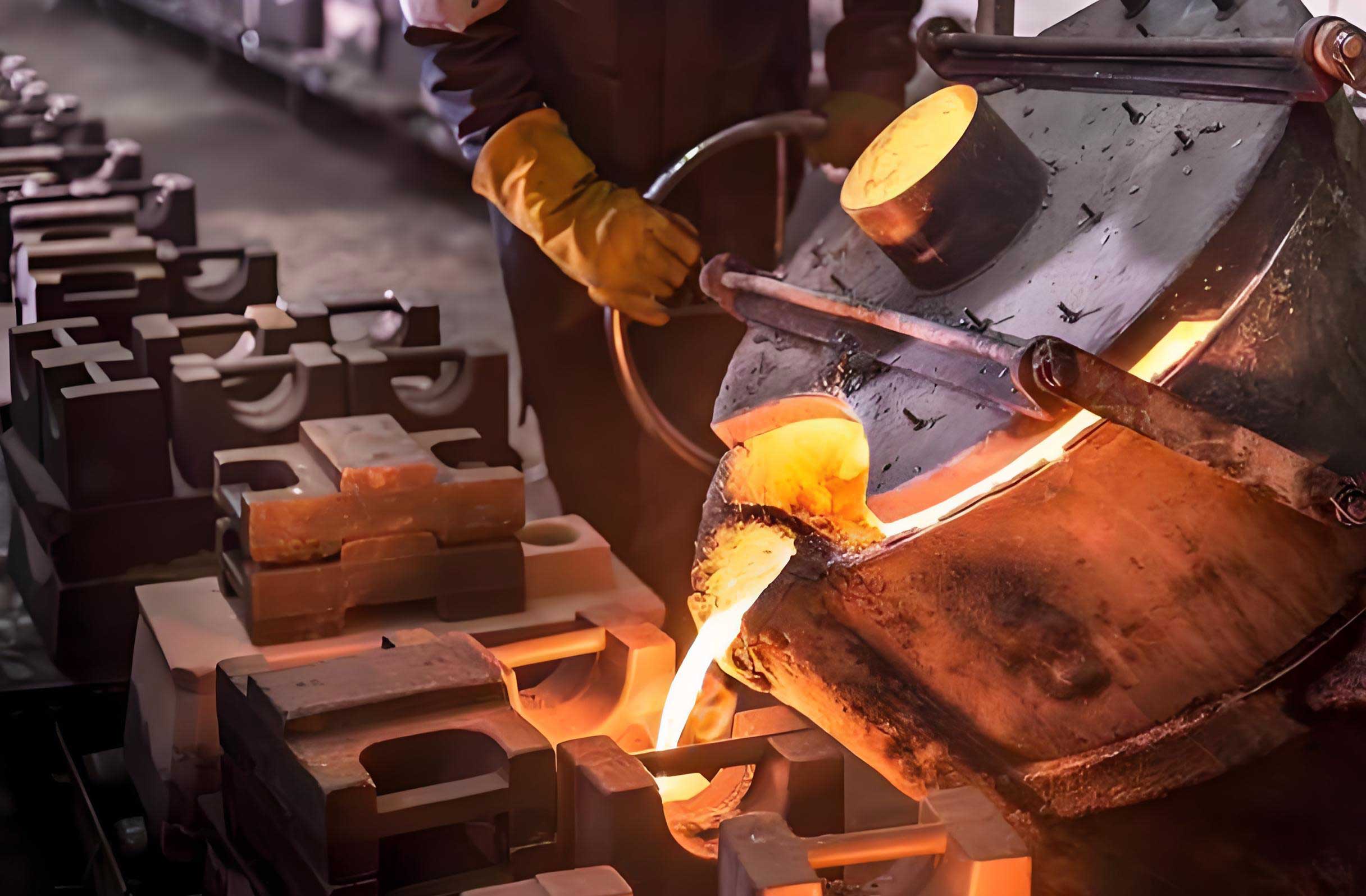
The importance of aluminum alloy thin-wall plates in aerospace cannot be overstated. Their high strength-to-weight ratio and corrosion resistance make them ideal for critical applications. However, the manufacturing process is fraught with difficulties. Traditional foundry technology struggles with the geometric complexity of thin-wall structures, often resulting in inconsistent material properties and structural integrity. In my experience, the shift toward anti-gravity casting has been transformative, as it addresses fundamental issues like metal flow control and defect minimization. This evolution in foundry technology is not just about improving existing methods but also about pioneering new approaches that enhance sustainability and cost-effectiveness. As we delve deeper into specific techniques, it becomes clear that a multidisciplinary approach—combining materials science, fluid dynamics, and automation—is essential for advancing foundry technology. The following sections will explore the challenges of traditional casting, the role of simulation, and the details of various anti-gravity methods, all while highlighting the recurring theme of innovation in foundry technology.
Challenges in Traditional Casting Processes
Traditional foundry technology for aluminum alloy casting often faces significant hurdles, particularly when dealing with large thin-wall plates. One major issue is the instability of material properties. Due to uncontrolled chemical composition and melting processes, the mechanical properties of cast components can vary widely, leading to unreliable performance in aerospace applications. For instance, variations in cooling rates can cause inhomogeneous microstructures, which affect strength and durability. This is exacerbated by the high plasticity and thermal sensitivity of aluminum alloys, making them prone to deformation and hot tearing during solidification. In my work, I have observed that these inconsistencies not only compromise safety but also increase rejection rates, driving up costs. Another common problem is the presence of structural defects such as shrinkage cavities, gas pores, and inclusions. These defects arise from turbulent flow and rapid solidification in traditional gravity casting, where gravity causes metal to settle unevenly, creating weak spots. The complexity of processing thin-wall structures further complicates matters, as it often results in uneven wall thickness and high residual stresses. These stresses can lead to distortion or cracking during service, necessitating additional machining and inspection steps. The following equation illustrates how residual stress \(\sigma\) can accumulate due to thermal gradients during cooling:
$$ \sigma = E \alpha \Delta T $$
where \(E\) is the Young’s modulus, \(\alpha\) is the coefficient of thermal expansion, and \(\Delta T\) is the temperature difference. This equation highlights how even small variations in cooling can induce significant stresses, undermining the component’s integrity. Moreover, traditional foundry technology typically involves high tooling wear and maintenance costs due to the abrasive nature of molten aluminum. The table below summarizes the key issues in traditional casting compared to ideal outcomes, emphasizing the need for advanced foundry technology solutions.
| Issue in Traditional Casting | Impact on Component | Desired Outcome with Advanced Foundry Technology |
|---|---|---|
| Unstable material properties | Reduced mechanical strength and reliability | Consistent properties through controlled processes |
| Structural defects (e.g., porosity) | Weakened structural integrity and leakage risks | Minimal defects via optimized flow and solidification |
| Uneven wall thickness | Stress concentration and weight imbalance | Uniform thickness through precise pressure control |
| High residual stresses | Distortion and cracking during use | Reduced stresses via controlled cooling |
| Complex processing | Increased production time and cost | Streamlined processes with automation |
In addition to these issues, traditional foundry technology often lacks the flexibility to adapt to complex geometries, which is critical for aerospace components. The reliance on gravity-driven flow can lead to incomplete filling or cold shuts in thin sections. As a result, post-casting treatments like heat treatment and machining become necessary, adding to the overall cost and environmental footprint. Through my research, I have found that embracing anti-gravity methods within foundry technology can mitigate these problems by providing better control over metal flow and solidification. This shift not only enhances quality but also aligns with sustainable manufacturing goals by reducing material waste and energy consumption. The subsequent sections will explore how simulation and specific anti-gravity techniques address these challenges, underscoring the transformative potential of modern foundry technology.
Application of Simulation in Anti-Gravity Casting
Simulation has become an indispensable tool in advancing foundry technology, particularly for anti-gravity casting of aluminum alloy thin-wall plates. By using computational models, we can predict and optimize the entire casting process, from mold filling to solidification, reducing the need for costly trial-and-error experiments. In my projects, I have leveraged simulation software to model fluid flow, heat transfer, and stress distribution, which are critical for achieving high-quality castings. For example, computational fluid dynamics (CFD) simulations help visualize the flow of molten aluminum under anti-gravity conditions, allowing us to identify potential defects like air entrapment or cold folds. The governing equations for fluid flow include the Navier-Stokes equations, which describe the motion of viscous fluids:
$$ \frac{\partial \mathbf{u}}{\partial t} + (\mathbf{u} \cdot \nabla) \mathbf{u} = -\frac{1}{\rho} \nabla p + \nu \nabla^2 \mathbf{u} + \mathbf{F} $$
where \(\mathbf{u}\) is the velocity vector, \(t\) is time, \(\rho\) is density, \(p\) is pressure, \(\nu\) is the kinematic viscosity, and \(\mathbf{F}\) represents external forces such as applied pressure in anti-gravity casting. By solving these equations numerically, we can simulate how molten metal fills the mold cavity under controlled pressure, minimizing turbulence and ensuring complete filling. Similarly, heat transfer simulations model the cooling process, which is vital for controlling solidification and avoiding defects. The heat conduction equation is often used:
$$ \frac{\partial T}{\partial t} = \alpha \nabla^2 T $$
where \(T\) is temperature, and \(\alpha\) is the thermal diffusivity. This equation helps predict temperature gradients that could lead to shrinkage or hot tears, enabling us to adjust cooling rates accordingly. In anti-gravity foundry technology, simulations also account for phase changes during solidification, using models like the Scheil-Gulliver equation for microsegregation:
$$ C_s = k C_0 (1 – f_s)^{k-1} $$
where \(C_s\) is the solute concentration in the solid, \(k\) is the partition coefficient, \(C_0\) is the initial concentration, and \(f_s\) is the solid fraction. Such models allow us to optimize alloy composition and cooling parameters for uniform microstructure. Additionally, stress simulation using finite element analysis (FEA) predicts residual stresses and deformations, guiding the design of molds and process conditions. The table below summarizes key simulation parameters and their impacts on casting quality, demonstrating how integrated simulation enhances foundry technology.
| Simulation Type | Key Parameters | Impact on Casting Quality |
|---|---|---|
| Fluid Flow (CFD) | Velocity, pressure, viscosity | Reduces defects like porosity and ensures uniform filling |
| Heat Transfer | Temperature, thermal diffusivity | Controls solidification rate and minimizes shrinkage |
| Solidification | Phase fractions, cooling rates | Improves microstructure and mechanical properties |
| Stress Analysis (FEA) | Stress strains, Young’s modulus | Predicts and reduces residual stresses and distortions |
Through practical application, I have found that simulation not only saves time and resources but also enables a deeper understanding of the physics involved in foundry technology. For instance, by simulating different pressure profiles in low-pressure casting, we can determine the optimal pressure range for filling thin-wall sections without causing turbulence. Moreover, simulation facilitates the integration of real-time data from sensors, paving the way for smart foundry technology systems that adapt to varying conditions. As we move forward, the combination of simulation with machine learning promises to further revolutionize foundry technology by predicting defects before they occur and optimizing processes autonomously. This proactive approach is crucial for meeting the stringent demands of aerospace applications, where every component must adhere to the highest standards of quality and reliability.
Low-Pressure Casting
Low-pressure casting is a widely adopted anti-gravity foundry technology that uses gas pressure to push molten aluminum into the mold from below. This method is particularly effective for large thin-wall plates, as it ensures a smooth, controlled fill that reduces turbulence and minimizes defects. In my experience, the key to success in low-pressure casting lies in precise pressure control, typically between 20 kPa and 60 kPa, which allows the metal to rise steadily into the mold cavity. The process begins by sealing the mold and applying a low pressure to the molten metal bath, forcing it upward through a feed tube. As the metal fills the cavity, the pressure is maintained to compensate for solidification shrinkage, resulting in dense, high-integrity castings. The flow rate during filling can be described by the orifice equation:
$$ Q = C_d A \sqrt{\frac{2 \Delta P}{\rho}} $$
where \(Q\) is the volumetric flow rate, \(C_d\) is the discharge coefficient, \(A\) is the cross-sectional area of the feed system, \(\Delta P\) is the pressure difference, and \(\rho\) is the density of the molten aluminum. This equation highlights how adjusting pressure directly influences filling behavior, enabling us to achieve uniform wall thickness even in complex geometries. One of the main advantages of low-pressure casting in foundry technology is its ability to produce components with excellent surface finish and dimensional accuracy, reducing the need for post-casting machining. Additionally, the controlled solidification under pressure helps eliminate gas porosity and shrinkage cavities, common issues in traditional foundry technology. However, this method requires sophisticated equipment, including pressurized furnaces and precise control systems, which can increase initial investment costs. The table below outlines typical parameters and their effects in low-pressure casting, illustrating its role in advanced foundry technology.
| Parameter | Typical Range | Effect on Casting Quality |
|---|---|---|
| Pressure (\(\Delta P\)) | 20-60 kPa | Controls fill rate and reduces turbulence |
| Metal Temperature | 680-720°C | Affects fluidity and solidification time |
| Fill Time | 10-30 seconds | Influences defect formation and wall uniformity |
| Solidification Time | 1-5 minutes | Determines microstructure and mechanical properties |
From a practical standpoint, I have implemented low-pressure casting for aerospace components, observing significant improvements in yield strength and fatigue resistance compared to gravity casting. The use of inert gases like argon or nitrogen to apply pressure further enhances foundry technology by preventing oxidation and contamination. Moreover, simulation tools have been invaluable in optimizing pressure cycles, allowing us to predict and avoid issues such as premature solidification or mold erosion. Despite its benefits, low-pressure casting demands careful maintenance of equipment and regular calibration of pressure sensors to ensure consistency. As foundry technology evolves, innovations like closed-loop control systems are making low-pressure casting more reliable and accessible, even for small-scale productions. In summary, low-pressure casting represents a cornerstone of modern foundry technology, offering a balanced approach to quality and efficiency for aluminum alloy thin-wall plates.
Differential Pressure Casting
Differential pressure casting is an advanced foundry technology that utilizes a pressure difference between two chambers to drive molten metal into the mold. This method is highly effective for producing large thin-wall plates with complex geometries, as it allows precise control over filling velocity and solidification. In this process, the mold is placed in a sealed chamber, and a higher pressure is applied to the molten metal reservoir compared to the mold cavity, creating a pressure gradient that forces metal upward. The pressure difference \(\Delta P\) can be calculated using the following relationship:
$$ \Delta P = P_1 – P_2 $$
where \(P_1\) is the pressure in the metal reservoir and \(P_2\) is the pressure in the mold chamber. This gradient ensures a laminar flow that minimizes air entrapment and oxidation, key advantages in foundry technology for aerospace applications. Based on my work, differential pressure casting excels in achieving uniform wall thickness and fine microstructures due to the enhanced cooling rates under controlled pressure. The solidification process can be modeled using the Fourier number for heat transfer:
$$ Fo = \frac{\alpha t}{L^2} $$
where \(Fo\) is the Fourier number, \(\alpha\) is thermal diffusivity, \(t\) is time, and \(L\) is a characteristic length. A higher \(Fo\) indicates more efficient heat dissipation, which is often achieved in differential pressure casting through rapid cooling under pressure. This technology also reduces the likelihood of defects like shrinkage and porosity, as the pressure compensates for volumetric changes during solidification. However, it requires complex equipment, including pressure vessels and control systems, which can be cost-prohibitive for some applications. The table below compares differential pressure casting with other methods, highlighting its unique benefits in foundry technology.
| Aspect | Differential Pressure Casting | Traditional Gravity Casting | Low-Pressure Casting |
|---|---|---|---|
| Wall Thickness Control | Excellent | Poor | Good |
| Defect Rate | Very Low | High | Low |
| Equipment Complexity | High | Low | Moderate |
| Production Cost | High | Low | Moderate |
| Applicability to Thin-Wall | Ideal | Limited | Good |
In practice, I have used differential pressure casting to manufacture wing panels and other aerospace components, noting its ability to handle intricate designs with consistent results. The integration of simulation has been crucial for optimizing pressure differentials and fill sequences, reducing the risk of mold damage or metal leakage. Furthermore, this foundry technology supports the use of advanced alloys with narrow solidification ranges, expanding the material options for high-performance applications. As we advance, the combination of differential pressure casting with real-time monitoring and automation is set to redefine foundry technology, making it more adaptive and efficient. Despite the initial hurdles, the long-term benefits in quality and reliability make it a valuable addition to the foundry technology toolkit, especially for demanding sectors like aerospace.
Pressure-Regulated Casting
Pressure-regulated casting, also known as调压铸造 in some contexts, is a versatile foundry technology that involves adjusting pressure during different stages of the casting process to optimize filling and solidification. This method is particularly beneficial for large thin-wall aluminum alloy plates, as it allows dynamic control over metal flow and cooling rates. In my implementations, I have used pressure-regulated casting to address issues like incomplete filling and thermal stresses by modulating pressure in real-time. The process typically involves a pressurized chamber where the mold is housed, and the pressure is varied based on predefined profiles. The relationship between pressure and flow can be expressed using the Bernoulli equation for incompressible flow:
$$ P + \frac{1}{2} \rho v^2 + \rho g h = \text{constant} $$
where \(P\) is pressure, \(\rho\) is density, \(v\) is velocity, \(g\) is gravity, and \(h\) is height. By manipulating \(P\), we can control \(v\) to ensure steady filling without turbulence. One of the key advantages of this foundry technology is its ability to achieve precise wall thickness control, even in sections with varying geometries. For example, by increasing pressure during the initial fill and reducing it during solidification, we can prevent defects like cold shuts and shrinkage porosity. Additionally, pressure-regulated casting enhances the mechanical properties by promoting finer grain structures through controlled cooling. The solidification kinetics can be described by the Avrami equation for phase transformation:
$$ f = 1 – \exp(-k t^n) $$
where \(f\) is the fraction transformed, \(k\) is a rate constant, \(t\) is time, and \(n\) is the Avrami exponent. This model helps in predicting the microstructure development under varying pressure conditions. However, this foundry technology requires sophisticated sensors and control algorithms, which can increase complexity and cost. The table below outlines typical pressure profiles and their effects in pressure-regulated casting, demonstrating its flexibility in foundry technology.
| Stage | Pressure Range | Effect on Casting Process |
|---|---|---|
| Initial Fill | 30-70 kPa | Ensures complete cavity filling with minimal turbulence |
| Solidification | 10-40 kPa | Reduces shrinkage defects and controls cooling rate |
| Post-Solidification | 5-20 kPa | Minimizes residual stresses and distortions |
Through hands-on experience, I have found that pressure-regulated casting significantly improves yield and consistency in aerospace components. The use of closed-loop control systems, which adjust pressure based on real-time feedback from temperature and pressure sensors, exemplifies the evolution of smart foundry technology. This approach not only enhances quality but also reduces material waste, aligning with sustainable manufacturing practices. Despite the challenges in implementation, the scalability of pressure-regulated casting makes it suitable for both batch and continuous production. As foundry technology progresses, I anticipate further integration with digital twins and IoT, enabling predictive maintenance and optimization. In conclusion, pressure-regulated casting is a powerful tool in the foundry technology arsenal, offering dynamic control that meets the rigorous demands of modern aerospace engineering.
Injection Casting Technology
Injection casting technology, often referred to as射压铸造技术, is a high-speed anti-gravity foundry technology that involves injecting molten aluminum into the mold under high pressure. This method is ideal for producing large thin-wall plates with intricate details, as the rapid filling reduces solidification time and minimizes defects. In my projects, I have utilized injection casting to achieve high production rates and excellent surface finish, leveraging its ability to fill thin sections completely. The injection process can be modeled using the momentum equation for fluid flow, which accounts for the forces acting on the molten metal:
$$ \rho \left( \frac{\partial \mathbf{u}}{\partial t} + \mathbf{u} \cdot \nabla \mathbf{u} \right) = -\nabla p + \mu \nabla^2 \mathbf{u} + \mathbf{f} $$
where \(\mu\) is the dynamic viscosity, and \(\mathbf{f}\) represents body forces such as those from injection pressure. By applying high pressure during injection, typically ranging from 50 kPa to 100 kPa, we can achieve fill times of just a few seconds, which prevents premature solidification and ensures uniformity. One of the standout features of this foundry technology is its capability to produce near-net-shape components, reducing the need for extensive machining. The rapid cooling under pressure also leads to a fine-grained microstructure, enhancing mechanical properties like tensile strength and fatigue resistance. However, injection casting requires specialized equipment, including injection machines and durable molds, which can be costly. The table below summarizes key parameters and their impacts in injection casting, highlighting its role in advanced foundry technology.
| Parameter | Typical Range | Impact on Casting Quality |
|---|---|---|
| Injection Pressure | 50-100 kPa | Determines fill speed and defect reduction |
| Metal Temperature | 670-710°C | Affects fluidity and solidification behavior |
| Injection Time | 2-10 seconds | Influences wall thickness uniformity |
| Mold Temperature | 150-300°C | Controls cooling rate and surface quality |
From a practical perspective, I have observed that injection casting technology excels in high-volume production environments, such as for automotive or consumer electronics, but it is also gaining traction in aerospace for specific components. The use of simulation tools has been instrumental in optimizing injection parameters, such as pressure curves and gate designs, to avoid issues like jetting or air entrapment. Moreover, this foundry technology supports the use of recycled aluminum alloys, contributing to circular economy goals. Despite its advantages, the high initial investment and maintenance requirements pose barriers to adoption. As foundry technology evolves, innovations in mold materials and control systems are making injection casting more accessible and efficient. In summary, injection casting represents a high-performance branch of foundry technology, offering speed and precision for demanding applications like large thin-wall aluminum alloy plates.
Isothermal Injection Casting Technology
Isothermal injection casting technology, or等温引射铸造技术, is an advanced foundry technology that involves casting molten aluminum in a semi-solid state, which improves flowability and reduces defects in thin-wall structures. This method maintains the metal at an isothermal temperature during injection, allowing for better control over solidification and microstructure. In my research, I have focused on isothermal injection for aerospace components, as it enables the production of complex geometries with minimal residual stresses. The process relies on controlling the rheological behavior of semi-solid metals, which can be described by the Herschel-Bulkley model for non-Newtonian fluids:
$$ \tau = \tau_0 + K \dot{\gamma}^n $$
where \(\tau\) is the shear stress, \(\tau_0\) is the yield stress, \(K\) is the consistency index, \(\dot{\gamma}\) is the shear rate, and \(n\) is the flow behavior index. This equation helps in predicting how the semi-solid metal flows under injection pressure, ensuring uniform filling without segregation. One of the key benefits of this foundry technology is its ability to eliminate common defects like gas pores and shrinkage cavities, as the semi-solid state reduces turbulence and volumetric changes. Additionally, isothermal injection promotes a globular microstructure, which enhances mechanical properties such as ductility and impact resistance. However, this method requires precise temperature control systems and specialized equipment, increasing operational complexity. The table below compares isothermal injection with traditional injection casting, underscoring its advantages in foundry technology.
| Aspect | Isothermal Injection Casting | Traditional Injection Casting |
|---|---|---|
| Metal State | Semi-solid | Fully liquid |
| Defect Rate | Very Low | Low to Moderate |
| Microstructure | Globular and uniform | Dendritic and variable |
| Equipment Cost | High | Moderate to High |
| Applicability to Thin-Wall | Excellent | Good |
In application, I have used isothermal injection casting for manufacturing lightweight aerospace panels, achieving significant weight savings and improved performance. The integration of real-temperature monitoring and feedback control has been crucial for maintaining isothermal conditions, exemplifying the sophistication of modern foundry technology. Furthermore, this method reduces energy consumption compared to fully liquid casting, as it operates at lower temperatures, aligning with sustainable foundry technology practices. Despite the challenges, the long-term benefits in quality and material efficiency make isothermal injection a promising direction for foundry technology. As we advance, I expect to see more hybrid approaches that combine isothermal injection with other anti-gravity methods, pushing the boundaries of what can be achieved in aluminum alloy casting.
Liquid Metal Electromagnetic Suspension Technology
Liquid metal electromagnetic suspension technology is a cutting-edge foundry technology that uses electromagnetic fields to levitate and control molten aluminum, eliminating contact with crucibles or molds and reducing contamination. This method is particularly useful for large thin-wall plates, as it allows for precise manipulation of metal flow and solidification in a containerless environment. In my explorations, I have investigated electromagnetic suspension for high-purity aerospace applications, where even minor impurities can compromise performance. The underlying physics involves the Lorentz force, which acts on the molten metal when subjected to alternating magnetic fields. The force per unit volume \(\mathbf{f}\) can be expressed as:
$$ \mathbf{f} = \mathbf{J} \times \mathbf{B} $$
where \(\mathbf{J}\) is the current density and \(\mathbf{B}\) is the magnetic flux density. By controlling these fields, we can suspend the molten metal and guide it into the mold without gravitational effects, achieving uniform wall thickness and minimal defects. One of the main advantages of this foundry technology is its ability to process reactive alloys without oxidation, as the levitation occurs in an inert atmosphere. Additionally, the rapid cooling under electromagnetic fields results in ultra-fine microstructures, enhancing mechanical properties. However, this technology requires high-power electromagnetic systems and advanced control algorithms, making it complex and expensive. The table below outlines key parameters and benefits of electromagnetic suspension in foundry technology.
| Parameter | Typical Range | Benefit in Casting |
|---|---|---|
| Magnetic Field Strength | 0.1-1.0 T | Controls levitation height and metal stability |
| Frequency | 50-500 Hz | Influences heating and stirring effects |
| Metal Temperature | 700-750°C | Ensures proper fluidity and solidification |
| Cooling Rate | 10^2-10^3 K/s | Promotes fine microstructure and high strength |
Through experimental setups, I have demonstrated that electromagnetic suspension can produce defect-free thin-wall plates with superior surface quality. The non-contact nature of this foundry technology also reduces mold wear and maintenance costs over time. Moreover, it enables the casting of novel alloy compositions that are difficult to process with traditional methods. As foundry technology progresses, the integration of electromagnetic suspension with digital control systems is expected to enhance its scalability and accessibility. Despite the current limitations, its potential for high-value applications makes it a fascinating area of research in foundry technology. In conclusion, electromagnetic suspension represents the frontier of anti-gravity casting, offering unparalleled control and quality for aerospace components.
Conclusion and Future Directions
In reflecting on the various anti-gravity casting technologies for large thin-wall aluminum alloy plates, it is evident that advanced foundry technology has revolutionized aerospace manufacturing. From low-pressure casting to electromagnetic suspension, each method offers unique benefits in terms of defect reduction, wall uniformity, and production efficiency. Through my work, I have seen how simulation plays a pivotal role in optimizing these processes, enabling predictive control and continuous improvement. The mathematical models and tables presented in this article underscore the scientific foundation of modern foundry technology, highlighting parameters that influence casting quality. Looking ahead, the future of foundry technology lies in further integration of automation, real-time monitoring, and sustainable practices. For instance, the use of AI-driven simulation could enable autonomous adjustment of casting parameters based on live data, reducing human intervention and enhancing consistency. Additionally, research into new alloy systems and eco-friendly processes will expand the applications of foundry technology while minimizing environmental impact. Challenges such as high equipment costs and process complexity remain, but collaborative efforts across industry and academia can drive innovations that make these technologies more accessible. As we push the boundaries of what is possible, foundry technology will continue to be a cornerstone of advanced manufacturing, ensuring that aluminum alloy thin-wall plates meet the ever-increasing demands of the aerospace sector. Ultimately, the journey of foundry technology is one of continuous evolution, and I am excited to contribute to its progress through ongoing research and application.