
In this paper, I explore the wear mechanisms, failure modes, and enhancement techniques for high manganese steel casting, a material widely used in demanding industrial applications due to its exceptional toughness and work-hardening capabilities. High manganese steel casting, particularly in components like crusher hammers and mill liners, faces challenges such as inadequate hardening under low-impact conditions and susceptibility to corrosion. Through a detailed analysis of precipitation strengthening, modification methods, and inoculation treatments, I aim to provide insights into improving the durability and performance of high manganese steel casting. The discussion incorporates thermodynamic principles, microstructural evolution, and practical approaches to mitigate wear, with an emphasis on the role of alloying elements and heat treatment processes. By leveraging formulas and tables, I summarize key relationships and methodologies, ensuring a comprehensive understanding of how to optimize high manganese steel casting for extended service life and economic efficiency.
The development of high manganese steel casting dates back to the late 19th century, with Hadfield’s pioneering work leading to its adoption in railway crossings and other high-stress environments. High manganese steel casting typically consists of austenitic structures stabilized by manganese and carbon, but its performance is highly dependent on composition and processing. For instance, the Fe-C-Mn ternary system reveals that the microstructure evolves with temperature, influencing phase transitions such as carbide precipitation and austenite stability. In high manganese steel casting, controlling elements like carbon (1.0–1.4%) and manganese (11–14%) is crucial to avoid brittleness and enhance work-hardening. However, impurities like phosphorus and sulfur can lead to hot cracking, necessitating careful metallurgical control. The widespread use of high manganese steel casting in mining and construction underscores its importance, yet failures due to wear result in significant economic losses, estimated at up to 5% of GDP annually in some studies. Thus, advancing the properties of high manganese steel casting through innovative treatments is a priority for the manufacturing sector.
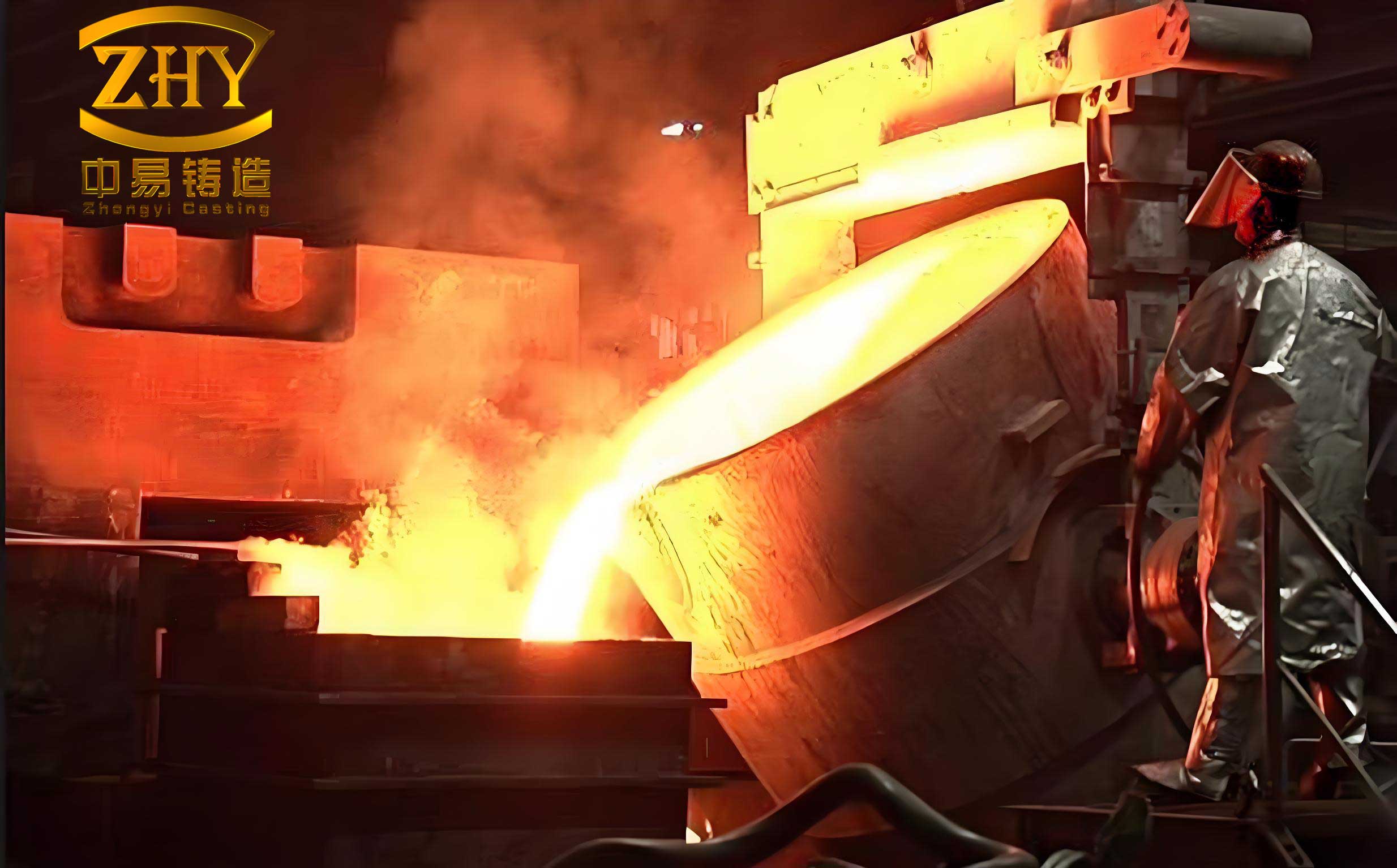
High manganese steel casting exhibits unique wear characteristics under various loading conditions. Impact wear, for example, involves material loss from repeated high-energy collisions, as seen in crusher components where particles abrade the surface. The wear volume \( W \) in such scenarios can be modeled using the Archard equation: $$ W = \frac{K \cdot L \cdot d}{H} $$ where \( K \) is the wear coefficient, \( L \) is the load, \( d \) is the sliding distance, and \( H \) is the hardness. For high manganese steel casting, the work-hardening effect increases \( H \) dynamically, but under low stresses, this mechanism is insufficient. Abrasive wear, another common failure mode, includes micro-mechanisms like ploughing, cutting, fatigue, and cracking, which contribute to gradual material degradation. In corrosive environments, high manganese steel casting may suffer from accelerated wear due to chemical reactions, leading to oxide formation and spalling. Understanding these mechanisms is essential for designing high manganese steel casting with improved resistance, as summarized in Table 1.
| Wear Type | Mechanism | Impact on High Manganese Steel Casting |
|---|---|---|
| Impact Wear | Repeated high-load collisions causing surface deformation | Leads to work-hardening but can result in fatigue cracks if overloaded |
| Abrasive Wear | Micro-cutting and ploughing by hard particles | Reduces material thickness and can initiate subsurface cracks |
| Corrosive Wear | Chemical reactions combined with mechanical action | Accelerates material loss in humid or acidic conditions |
To enhance the wear resistance of high manganese steel casting, various strengthening methods are employed. Precipitation strengthening involves heat treatments to disperse fine carbides within the austenitic matrix, improving hardness without compromising toughness. The process typically includes solution treatment at temperatures around 1050–1100°C to dissolve carbides, followed by aging to precipitate secondary phases. The kinetics of carbide precipitation can be described by the Avrami equation: $$ X = 1 – \exp(-k t^n) $$ where \( X \) is the fraction transformed, \( k \) is the rate constant, \( t \) is time, and \( n \) is the exponent. For high manganese steel casting, this method is effective but requires precise control to avoid excessive grain growth. Modification strengthening, on the other hand, adjusts the carbon and manganese content to alter the austenite phase field. For example, ultra-high manganese steel casting with 15–23% Mn shows better low-temperature toughness, but excessive manganese can coarsen grains. The relationship between composition and properties is critical, as illustrated in Table 2.
| Element | Typical Range (%) | Effect on High Manganese Steel Casting |
|---|---|---|
| Carbon | 0.9–1.5 | Increases hardness and wear resistance; high levels may cause brittleness |
| Manganese | 11–14 (standard), up to 23 (ultra-high) | Stabilizes austenite; improves toughness but can lead to coarse grains if excessive |
| Silicon | <0.65 | Enhances fluidity in casting; high levels promote carbide formation |
| Phosphorus | <0.05 | Reduces hot cracking tendency; low levels are essential for sound castings |
Inoculation strengthening, or变质处理, involves adding rare earth elements or other alloys to refine the microstructure of high manganese steel casting. Rare earth elements act as nucleants, reducing grain size and improving homogeneity. The Hall-Petch relationship explains the strength increase with finer grains: $$ \sigma_y = \sigma_0 + \frac{k_y}{\sqrt{d}} $$ where \( \sigma_y \) is the yield strength, \( \sigma_0 \) is the friction stress, \( k_y \) is the strengthening coefficient, and \( d \) is the grain diameter. For high manganese steel casting, inoculation with cerium or titanium forms high-melting-point compounds that pin grain boundaries, enhancing both strength and wear resistance. However, the addition of multiple elements often yields superior results compared to single-element treatments, as they synergistically improve carbide distribution and austenite stability. The effectiveness of different inoculation agents is summarized in Table 3, highlighting their impact on the mechanical properties of high manganese steel casting.
| Inoculation Agent | Mechanism | Benefits for High Manganese Steel Casting |
|---|---|---|
| Rare Earths (e.g., Ce, La) | Promote heterogeneous nucleation and refine grains | Improves toughness and reduces hot tearing |
| Titanium (Ti) | Forms TiC carbides that inhibit grain growth | Enhances wear resistance but requires high melting temperatures |
| Vanadium (V) | Creates fine VN or VC precipitates | Increases hardness and fatigue resistance |
| Niobium (Nb) | Produces NbC for grain refinement | Improves austenite stability; challenging to implement due to high temperature needs |
The failure of high manganese steel casting often results from a combination of factors, including inadequate work-hardening, microstructural defects, and environmental conditions. To prevent such failures, several strategies can be adopted. First, controlling key chemical components is vital; for instance, maintaining manganese levels within 12–14% ensures austenite stability, while limiting phosphorus below 0.05% reduces cracking risks. Second, enhancing surface work-hardening through pre-straining or heat treatments can improve resistance to impact and abrasive wear. The work-hardening behavior of high manganese steel casting can be modeled using the Ludwigson equation: $$ \sigma = K \epsilon^n $$ where \( \sigma \) is the true stress, \( \epsilon \) is the true strain, \( K \) is the strength coefficient, and \( n \) is the strain-hardening exponent. Optimizing this exponent for high manganese steel casting involves adjusting processing parameters like cooling rates. Third, extending the holding time during casting allows for more uniform solidification, reducing residual stresses and improving microstructural integrity. These measures, combined with advanced alloy design, can significantly extend the service life of high manganese steel casting components.
In conclusion, the performance of high manganese steel casting is influenced by a complex interplay of composition, microstructure, and external loads. While traditional high manganese steel casting excels under high-impact conditions, its limitations in low-stress environments necessitate continuous improvement through methods like precipitation, modification, and inoculation strengthening. The incorporation of alloying elements and optimized heat treatments can refine the austenitic matrix and enhance carbide distribution, leading to superior wear resistance. However, practical challenges such as high processing temperatures and cost must be addressed for widespread adoption. Future research should focus on developing cost-effective inoculation techniques and exploring novel alloy systems to further advance high manganese steel casting. By integrating theoretical models with industrial practices, we can achieve more durable and economical high manganese steel casting solutions, ultimately reducing maintenance costs and downtime in critical applications.
Throughout this discussion, I have emphasized the importance of a holistic approach to high manganese steel casting, considering both material science principles and real-world operational demands. The use of formulas and tables aids in quantifying relationships and comparing treatment options, providing a foundation for further innovation. As industries evolve towards harsher conditions, the role of high manganese steel casting will remain pivotal, driving the need for ongoing research and development. I encourage continued exploration of microstructural engineering and wear mechanisms to unlock the full potential of high manganese steel casting in global manufacturing.