
In the realm of advanced manufacturing, precision investment casting stands as a cornerstone technology for producing complex, high-integrity components such as turbine blades, aerospace parts, and medical implants. This process relies heavily on the quality of ceramic shells, which serve as molds for molten metal. As an engineer deeply involved in materials science for casting applications, I have long been fascinated by the challenges of optimizing these shells. The ideal ceramic shell for precision investment casting must balance a myriad of properties: sufficient strength at room and high temperatures, low thermal expansion, high permeability, good thermal conductivity, and ease of removal after casting. However, achieving this balance is often elusive, as improvements in one property can detract from another. For instance, enhancing strength typically involves denser structures, which reduces permeability and complicates casting outcomes. This dilemma has driven our research team to explore innovative additives that can fundamentally alter the microstructure of ceramic shells. In this comprehensive article, I will delve into our investigations on incorporating aluminum fluoride trihydrate (AlF3·3H2O) into ceramic shell formulations for precision investment casting, detailing its profound effects on microstructure, phase composition, and critical performance metrics. Our goal is to present a holistic view that not only highlights experimental findings but also contextualizes them within the broader framework of precision investment casting advancements.
The ceramic shell in precision investment casting is typically built up through successive dips in slurry and stucco applications, resulting in a layered structure. The slurry consists of refractory powders, a binder (often silica sol), and various additives to control rheology and properties. After drying and firing, the shell must withstand the rigors of dewaxing, high-temperature exposure during metal pouring, and subsequent cooling. Key performance indicators include permeability, which allows gases to escape during casting; thermal properties, which influence solidification rates and residual stresses; and mechanical strength, which prevents shell failure. Traditional systems, such as those based on fused alumina and silica sol, offer good refractoriness but often suffer from limited permeability due to dense packing. This has spurred interest in microstructural modifications, such as introducing porosity or reinforcing phases. One promising approach is the in-situ generation of mullite whiskers within the shell matrix. Mullite (3Al2O3·2SiO2) is renowned for its excellent high-temperature stability, low thermal expansion, and good mechanical properties. By catalyzing the reaction between alumina and silica, we can create a network of whiskers that enhance performance without compromising other attributes. This article explores how AlF3·3H2O serves as a catalyst for mullite formation in precision investment casting shells, transforming their properties and paving the way for more efficient casting processes.
Before delving into our experimental work, it is essential to understand the state of the art in precision investment casting shell technology. The industry predominantly uses silica sol as a binder due to its low viscosity, good wettability, and environmental friendliness compared to alternatives like water glass. Refractory materials range from zircon flour and fused alumina to mullite and fused quartz, each offering distinct advantages. Fused alumina, for instance, provides high melting points, good thermal conductivity, and cost-effectiveness, making it a popular choice for shell back-up layers. However, its dense nature can limit permeability. Researchers have attempted to address this by incorporating fibers, such as nylon or polypropylene, to create channels for gas escape. While these methods improve permeability, they can reduce strength or introduce other issues like inhomogeneity. Our approach diverges by focusing on chemical modification: using AlF3·3H2O to promote the formation of mullite whiskers during firing. This not only alters the microstructure but also leverages the inherent properties of mullite to enhance overall shell performance. The concept stems from earlier studies showing that fluorides like AlF3 can catalyze the vapor-phase reaction between alumina and silica to produce mullite whiskers. We adapt this for bulk ceramic shells in precision investment casting, aiming to create a synergistic effect where whisker growth increases porosity and improves key properties.
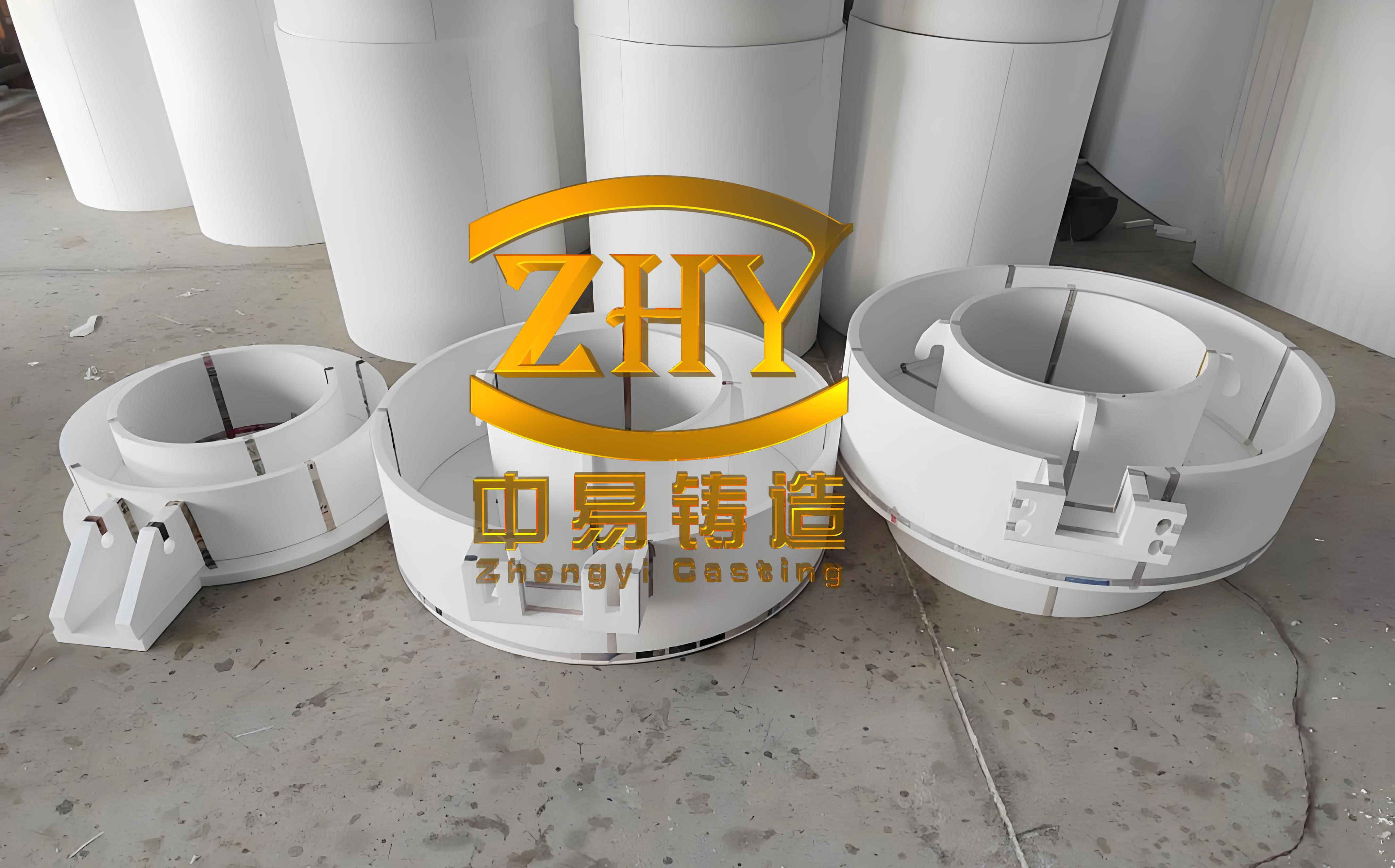
The experimental methodology for this study was designed to mimic industrial precision investment casting practices while allowing for controlled variations. We formulated ceramic shell slurries based on a silica sol binder (1030C, 30 wt% SiO2) and fused alumina powder (325 mesh) as the primary refractory. For the back-up layers, we prepared two groups: a control group without additives and an experimental group with AlF3·3H2O powder (240 mesh) added as a mullite phase conversion promoter. The slurry compositions were carefully optimized to ensure good coating behavior, with details provided in Table 1. The slurries were applied to wax patterns through dipping, followed by stuccoing with alumina sands of varying grit sizes (e.g., 90 mesh for face coat, 54 mesh for transition, and 24 mesh for back-up layers). After building up multiple layers (typically one face coat, one transition layer, five back-up layers, and a seal coat), the shells were dried and then fired in a muffle furnace. The firing cycle involved heating at 5°C/min to 1200°C, with holds ranging from 0.5 to 5 hours to study the effect of time on mullite formation. This temperature was selected based on prior knowledge that AlF3·3H2O decomposition and mullite synthesis occur effectively around 1200°C. The fired shells were characterized for phase composition using X-ray diffraction (XRD), microstructure via scanning electron microscopy (SEM) with energy-dispersive spectroscopy (EDS), and various properties including permeability, density, thermal diffusion, thermal expansion, high-temperature deformation, and mechanical strength.
| Layer Type | Component | Control Group (Mass, g) | Experimental Group (Mass, g) |
|---|---|---|---|
| Face Coat | Silica Sol | 500 | 500 |
| Fused Alumina Powder | 1600 | 1600 | |
| Latex | 5 | 5 | |
| Kaolin | 32 | 32 | |
| Wetting Agent | 2.1 | 2.1 | |
| Dispersing Agent | 2.1 | 2.1 | |
| Defoamer | 2.1 | 2.1 | |
| Back-up Layer | Silica Sol | 300 | 321 |
| Fused Alumina Powder | 958 | 958 | |
| Kaolin | 19.2 | 19.2 | |
| AlF3·3H2O | 0 | 69.2 | |
| Dispersing Agent | 1.3 | 1.3 | |
| Defoamer | 1.3 | 1.3 |
The phase composition analysis revealed a striking difference between the control and AlF3·3H2O-modified shells. XRD patterns of samples fired at 1200°C for 5 hours showed strong mullite peaks in the experimental group, whereas the control group exhibited only minor mullite indications, primarily from the alumina-silica interactions in the silica sol binder. This confirms that AlF3·3H2O effectively catalyzes the formation of mullite from alumina and silica. The reaction mechanism involves the decomposition of AlF3·3H2O and subsequent vapor-phase reactions. At high temperatures, AlF3 releases fluorine species that interact with alumina and silica, facilitating their conversion to mullite. The overall process can be represented by a series of equations. First, aluminum fluoride decomposes: $$6\text{AlF}_3 + 3\text{O}_2 \rightarrow 6\text{AlOF} + 12\text{F}.$$ Then, fluorine attacks alumina: $$\text{Al}_2\text{O}_3 + 2\text{F} \rightarrow 2\text{AlOF} + \frac{1}{2}\text{O}_2.$$ Similarly, silica reacts: $$2\text{SiO}_2 + 8\text{F} \rightarrow 2\text{SiF}_4 + 2\text{O}_2.$$ Finally, the intermediates combine: $$6\text{AlOF} + 2\text{SiF}_4 + \frac{7}{2}\text{O}_2 \rightarrow 3\text{Al}_2\text{O}_3 \cdot 2\text{SiO}_2 + 14\text{F}.$$ This cyclic reaction allows fluorine to act as a catalyst, promoting whisker growth without being consumed. The in-situ generation of mullite whiskers is a key achievement, as it leverages the existing components in precision investment casting shells to create a reinforced microstructure.
Microstructural examination via SEM provided vivid insights into the whisker formation. In the control shells, the microstructure consisted of densely packed alumina grains bonded by silica-derived glassy phases, with minimal porosity. In contrast, the AlF3·3H2O-modified shells displayed a network of mullite whiskers, typically around 10 µm in length and 1 µm in diameter, yielding an aspect ratio of approximately 10:1. These whiskers were often concentrated near the original sites of AlF3·3H2O particles, where local concentrations of alumina and silica were high. The whiskers appeared to bridge gaps between larger alumina grains, creating a more open structure. This morphological change has profound implications for shell properties. Firstly, the whiskers introduce additional porosity, as the inter-whisker spaces and interfaces with the matrix form micro-channels. Secondly, the whiskers themselves contribute to mechanical reinforcement due to their high strength and modulus. The growth of whiskers was found to be highly dependent on firing time; shorter holds (e.g., 0.5 hours) resulted in smaller, less developed whiskers, whereas extended firing promoted longer, well-defined whiskers. This tunability allows for optimization based on specific precision investment casting requirements.
One of the most critical properties for precision investment casting shells is permeability, which dictates the ease of gas escape during metal pouring. Poor permeability can lead to defects like gas porosity, incomplete filling, or even mold failure. We measured high-temperature permeability using a standard test where compressed air flows through a shell sample, and the permeability coefficient K is calculated as: $$K = \frac{V/t}{P_e A} \times \delta.$$ Here, \(V/t\) is the volumetric flow rate (m³/min), \(P_e\) is the air pressure (Pa), \(A\) is the inner surface area (m²), and \(\delta\) is the shell thickness (m). The results, summarized in Table 2, show a remarkable improvement in the AlF3·3H2O group. At 1000°C, the permeability of the modified shell was approximately 20.04 m⁴/(N·min), compared to 10.47 m⁴/(N·min) for the control—an increase of about 90%. This enhancement correlates with the increased porosity from whisker formation. Additionally, density measurements via Archimedes’ method revealed a decrease from 3.41 g/cm³ for the control to 3.36 g/cm³ for the modified shell, confirming the more open structure. Such improvements in permeability are highly beneficial for precision investment casting, as they facilitate faster degassing and reduce the risk of casting defects.
| Temperature (°C) | Control Group Permeability (m⁴/(N·min)) | Experimental Group Permeability (m⁴/(N·min)) | Percentage Increase |
|---|---|---|---|
| 800 | 8.92 | 16.45 | 84.4% |
| 900 | 9.75 | 18.34 | 88.1% |
| 1000 | 10.47 | 20.04 | 91.4% |
Thermal properties are equally vital in precision investment casting, as they influence solidification kinetics, thermal stresses, and dimensional accuracy. We evaluated thermal diffusivity using a laser flash apparatus and thermal expansion via a dilatometer. The thermal diffusivity coefficients, plotted over a temperature range of 25–500°C, were higher for the AlF3·3H2O-modified shells across the board. For instance, at 200°C, the diffusivity was around 1.2 × 10⁻⁶ m²/s for the experimental group versus 0.9 × 10⁻⁶ m²/s for the control. This increase can be attributed to the enhanced porosity, which allows for better air circulation and heat transfer, as air has a higher thermal diffusivity than the dense ceramic matrix. The thermal expansion coefficients, measured from 25 to 1500°C, showed subtle differences. Both groups exhibited low expansion, below 14 × 10⁻⁶ °C⁻¹, consistent with alumina-based materials. However, the modified shells had slightly higher expansion up to about 1485°C, likely due to their more porous structure being more compliant to thermal expansion. Above 1485°C, the trend reversed, with the control shells expanding more. This crossover may be related to glassy phase softening in the silica binder, which fills pores in the modified shells at very high temperatures, reducing effective expansion. Such behavior is advantageous for precision investment casting, as lower expansion at near-pouring temperatures minimizes mismatch stresses between the shell and casting.
Mechanical performance at both room and high temperatures is paramount for ceramic shells in precision investment casting. We conducted three-point bend tests to determine flexural strength, using the formula: $$\sigma_w = \frac{3PL}{2ah^2}.$$ Here, \(\sigma_w\) is the flexural strength (MPa), \(P\) is the fracture load (N), \(L\) is the span (mm), \(a\) is the sample width (mm), and \(h\) is the thickness (mm). The results, compiled in Table 3, indicate that at room temperature, the control shells had a strength of 9.05 MPa, while the AlF3·3H2O-modified shells measured 7.91 MPa—a modest reduction. This is expected because, at room temperature, the whiskers are not fully developed, and the additive may slightly weaken the green structure. However, at high temperatures (1500°C), the story changes. The control shells reached 21.76 MPa, benefiting from sintering and glass phase formation, whereas the modified shells achieved 13.89 MPa. While this is lower, it remains within an acceptable range for precision investment casting applications. Importantly, the reduced high-temperature strength improves shell “yield” or collapsibility, making it easier to remove the shell after casting without damaging the part. This balance is crucial: too high strength can complicate decoring, while too low can risk shell failure during pouring. The modified shells strike an optimal compromise, maintaining integrity during casting while allowing post-casting removal.
| Test Condition | Control Group Strength (MPa) | Experimental Group Strength (MPa) | Notes |
|---|---|---|---|
| Room Temperature | 9.05 | 7.91 | Slight reduction due to additive |
| High Temperature (1500°C) | 21.76 | 13.89 | Lower but adequate for casting |
High-temperature deformation resistance is another key metric, as shells must maintain shape under their own weight and thermal gradients during preheating and casting. We performed deformation tests by heating shell samples to 1500°C and measuring dimensional changes. The control shells showed an average deformation of 0.20 mm, while the AlF3·3H2O-modified shells averaged 0.19 mm—virtually identical and both very low. This indicates that the whisker reinforcement does not compromise dimensional stability. In fact, the mullite whiskers, with their high melting point and creep resistance, may contribute to restraining deformation. Compared to literature values for similar shells, which can exceed 1 mm deformation at 1600°C, our shells exhibit superior performance. This is critical for precision investment casting of components like turbine blades, where dimensional tolerances are tight. The combination of low deformation and improved permeability makes these shells highly suitable for advanced casting processes.
The implications of our findings extend beyond laboratory results to practical applications in precision investment casting. The in-situ generation of mullite whiskers via AlF3·3H2O addition offers a scalable method to enhance shell properties without major process changes. For foundries, this means potentially thinner shells (due to improved strength-permeability balance), reduced casting defects, and easier cleanup. Moreover, the environmental aspect is noteworthy: by enabling thinner shells, material usage and waste are reduced, aligning with sustainable manufacturing goals. However, challenges remain, such as optimizing the amount of AlF3·3H2O and firing schedules for different shell geometries, or ensuring uniform whisker distribution. Future work could explore synergistic effects with other additives, like fibers, to further tailor properties. Additionally, long-term stability and interactions with various alloy systems warrant investigation. From a fundamental perspective, the catalytic role of fluorides in ceramic reactions opens new avenues for designing multi-functional materials for precision investment casting and beyond.
In summary, our research demonstrates that incorporating AlF3·3H2O into ceramic shell formulations for precision investment casting can revolutionize shell performance. Through detailed characterization, we have shown that this additive catalyzes the formation of mullite whiskers during firing, leading to a more open microstructure. This, in turn, boosts permeability by nearly 100%, enhances thermal diffusivity, and maintains low thermal expansion. While high-temperature strength is reduced, it remains sufficient for casting purposes, and the shell’s deformability improves, aiding in post-casting removal. The overall outcome is a ceramic shell that better meets the multifaceted demands of precision investment casting, from aerospace to medical industries. As we continue to refine this technology, the integration of such microstructural engineering approaches promises to push the boundaries of what is possible in precision investment casting, enabling the production of more complex, reliable, and cost-effective components. The journey from lab to factory floor will require collaboration across disciplines, but the potential benefits for manufacturing efficiency and product quality are immense.