
In my extensive experience within the aerospace manufacturing sector, the production of high-integrity, thin-wall structural components via precision investment casting presents a unique set of technological challenges. This narrative details my first-hand involvement in developing a reliable process for a critical aero-engine part, leveraging the principles of precision investment casting. The component in question is a convergent regulator backplate section, characterized by its intricate network of ribs on a thin, stepped底板. The alloy specified, a Ni-based superalloy analogous to JG4246A, is notoriously sensitive to thermal gradients and solidification dynamics, making precision investment casting the only viable forming method. Initial trial campaigns were plagued by a high incidence of cracking and shrinkage porosity, yielding unacceptable qualification rates below 30%. Through systematic investigation and iterative refinement of the entire precision investment casting chain—from pattern assembly to heat treatment—my team and I successfully elevated the process yield to a consistent 85%. The core of this success lay in a holistic understanding and control of the interactions between gating design, shell engineering, and thermal management during pouring.
The fundamental challenge stemmed from the component’s geometry. A dominant feature is a large, thin底板 with a nominal wall thickness ranging from 0.8 to 1.0 mm, demanding exceptional dimensional stability with a flatness requirement under 0.3 mm. This底板 is reinforced by an array of intersecting ribs, ranging in height from 2.4 to 8.5 mm with a consistent 1 mm thickness. Two primary load-bearing ribs run the entire length, creating pronounced thermal masses. Furthermore, three machined pads, which are substantial after accounting for stock allowance, act as isolated hot spots, complicating directional solidification. This configuration inherently promotes areas of stress concentration and inadequate feeding, classic failure modes in precision investment casting. The table below summarizes the critical structural challenges.
| Feature | Dimension / Characteristic | Associated Casting Risk |
|---|---|---|
| Base Plate Thickness | 0.8 – 1.0 mm | Misrun, distortion, hot tearing |
| Base Plate Flatness | ≤ 0.3 mm | Warpage during cooling |
| Rib Height | 2.4 – 8.5 mm | Thermal gradient, shrinkage |
| Rib Thickness | 1.0 mm | Feeding difficulty at junctions |
| Machined Pads | Localized heavy sections | Shrinkage porosity, hot spots |
The selected alloy’s behavior is paramount in precision investment casting. This class of superalloy exhibits a narrow solidification range and high susceptibility to forming deleterious phases and hot tears under stress. Its chemical composition, critical for achieving the required high-temperature mechanical properties, also influences fluidity and hot strength. The nominal composition is detailed in the following table.
| Element | Min | Max | Key Influence on Casting |
|---|---|---|---|
| Ni | Balance | Balance | Matrix former |
| Cr | 7.40 | 8.20 | Oxidation resistance |
| Al | 7.60 | 8.50 | γ’ former, influences fluidity |
| Co | – | – | Typically present, strengthens matrix |
| Ti | 0.60 | 1.20 | γ’ former |
| W | 1.50 | 2.50 | Solid solution strengthener |
| Mo | 3.50 | 5.50 | Solid solution strengthener |
| C | 0.06 | 0.20 | Carbide formation |
| B | – | 0.05 | Grain boundary strengthener |
| Zr/Hf | 0.30 | 0.90 | Grain boundary modifiers |
The initial phase of process development focused on pattern and tooling. The wax injection mold was designed with a complex ejection system to handle the deep draws and thin sections. A critical lesson learned involved accounting for the differential shrinkage between the thick ribs and the thin底板. The initial模具收缩率 (pattern shrink factor) was applied uniformly, but post-casting coordinate measurement revealed undersize dimensions on the machined pads attached to the primary ribs. This was attributed to constrained contraction of the thicker rib sections pulling on the adjoining thin walls. The solution was to apply a form of反向变形 (reverse distortion) to the mold cavity for these specific features, effectively预补偿 (pre-compensating) for the anticipated distortion. The mold was also modified to include temporary connecting bars between the two critical pads. This served a dual purpose: maintaining the critical spacing dimension during wax injection and cooling, and, crucially, providing mechanical support to reduce stress on the pad-to-底板 junctions during the early stages of shell removal and metal solidification. This upfront tooling adjustment was a foundational step for successful precision investment casting.
The heart of the optimization lay in the gating and feeding system design. The primary goal in precision investment casting is to establish controlled directional solidification, moving from the extremities of the casting toward the feeder heads. The initial scheme employed a simple侧注式 (side-gating) system with two castings per cluster, feeding metal directly into the machined pads and the ends of the primary ribs. This layout, however, created catastrophic conditions. Severe hot tears propagated from the junctions where the thick primary ribs met the thin底板, and significant shrinkage porosity was found in the T-section of the底板 where wall thickness increased locally. The root cause was twofold: first, the large feeders on the pads acted as rigid anchors, constraining contraction and generating tensile stress in the脆弱的 (fragile) thin sections during the latter stages of solidification when the alloy has low ductility. This stress ($\sigma_t$) can be conceptually related to the thermal strain and the material’s hot strength ($S_h$) via a simplified relation: $$ \sigma_t \approx E(T) \cdot \alpha \cdot \Delta T – S_h(T) $$ where $E(T)$ is the temperature-dependent Young’s modulus, $\alpha$ is the coefficient of thermal expansion, and $\Delta T$ is the local temperature gradient. When $\sigma_t$ exceeds the material’s cohesive strength at that temperature, a hot tear initiates.
Second, the feeding path to the T-section was inadequate. The local thermal center, or hot spot, solidified later than the surrounding thin areas, leading to interdendritic shrinkage. To solve these issues, the gating system was radically redesigned. The key modification was the introduction of a horizontal tie-bar connecting the two pad feeders within the cluster itself. This bar, which becomes part of the finished casting and is later removed, fundamentally altered the stress state. It acted as a mechanical fuse or a stress distributor, taking up the contractional pull from the large feeders and reducing the tensile load on the critical rib-底板 junctions. Furthermore, the feeding system was enhanced with additional smaller feeders targeting the T-section area to promote more uniform thermal management. The optimized cluster also incorporated extensive venting and strengthening ribs on the main sprue to prevent shell cracking during handling—a common pitfall in precision investment casting of large, heavy clusters.
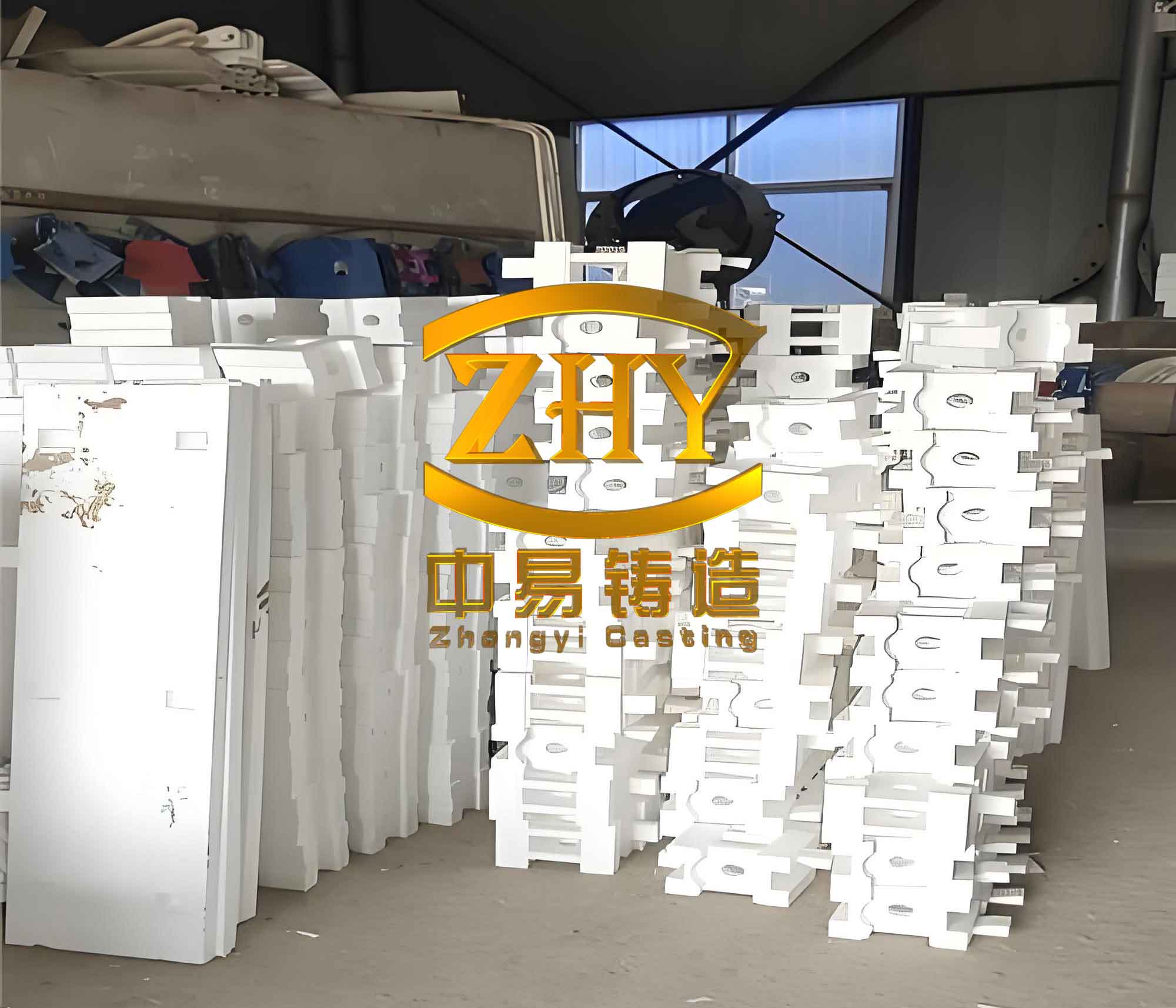
The shell system is the negative of the final casting in precision investment casting, and its properties dictate heat extraction rates. To address the shrinkage in the T-section, we employed a strategic use of inoculants in the primary slurry. The first coat was formulated with a fine alumina-based powder containing 50 wt.% cobalt aluminate (CoAl₂O₄) as a nucleation agent. This promotes finer grain structure and more equiaxed solidification at the metal-shell interface, which can significantly reduce the size and interconnectivity of shrinkage pores. The subsequent backup layers alternated between ethyl silicate and colloidal silica binders to build strength while maintaining some permeability. A total of 8 coating layers were applied to withstand the metallostatic pressure and thermal shock. The table below outlines the shell build-up sequence.
| Layer # | Binder System | Refractory Flour | Primary Function |
|---|---|---|---|
| 1 (Prime) | Colloidal Silica | Alumina + 50% CoAluminate | Surface finish, grain refinement |
| 2 | Ethyl Silicate | Alumina | Interface strength |
| 3 | Colloidal Silica | Alumina / Molochite | Backup strength |
| 4-7 | Alternating | Molochite / Alumina | Thermal insulation, strength |
| 8 (Seal) | Colloidal Silica | Fine Alumina | Surface sealing |
Thermal management during dewaxing, firing, and pouring is arguably the most critical phase in precision investment casting for crack-prone alloys. The fired ceramic shell must act as an insulating medium to control the cooling rate. We adopted a comprehensive insulation wrap technique. After firing at 950°C, the shells were individually wrapped with ceramic fiber blanket. The pouring cup area received a double wrap first, followed by an overall double wrap for the entire cluster. This practice minimizes radiative and convective heat loss, creating a more isothermal environment within the shell cavity during pour. The precise control of metal temperatures was non-negotiable. The liquidus temperature ($T_L$) and solidus temperature ($T_S$) for this alloy are closely spaced. The target pouring temperature ($T_p$) must be high enough for complete filling of thin sections but low enough to minimize grain growth and thermal stress. Through iterative trials, the optimal window was established. The melting and superheating were conducted under vacuum to prevent oxidation. The metal was superheated to approximately 1500°C for effective refining and slag removal, then cooled to the precise pouring temperature. The relationship between fluidity ($F$), undercooling ($\Delta T_u$), and viscosity ($\eta$) can be approximated for thin-section filling: $$ F \propto \frac{\Delta T_u}{\eta(T_p)} \cdot \sqrt{t_f} $$ where $t_f$ is the filling time. Our experiments determined that a pouring temperature of 1430°C ±5°C, combined with a fast fill time of 2-4 seconds, yielded the best results. The furnace power was maintained during pour to prevent a temperature drop in the crucible. A representative thermal cycle is shown below, though specific furnace curves are proprietary.
The solidification time ($t_s$) for a thin section can be estimated using Chvorinov’s rule, modified for investment casting shells: $$ t_s = B \cdot \left( \frac{V}{A} \right)^n $$ where $V$ is volume, $A$ is cooling surface area, $B$ is a mold constant dependent on shell properties and metal superheat, and $n$ is an exponent typically near 2. For our thin底板 with high $A/V$ ratio, $t_s$ is very short, demanding extremely precise thermal synchronization with the feeder heads.
The efficacy of the optimized precision investment casting process was validated through multiple production batches. The following table summarizes the defect analysis and yield improvement across key trial campaigns. The data clearly shows a reduction in crack-related defects following the implementation of the horizontal tie-bar and improved thermal management.
| Batch ID | Total Castings | Acceptable Castings | Qualification Rate (%) | Major Defect Modes (Count) |
|---|---|---|---|---|
| A (Initial) | 30 | 8 | 26.7 | Cracks (5), Shrinkage (3), Inclusions (2) |
| B | 28 | 9 | 32.1 | Cracks (4), Distortion (2), Inclusions (3) |
| C (After Gating Mod) | 30 | 22 | 73.3 | Inclusions (1), Minor Cracks (2) |
| D (After Shell Mod) | 28 | 21 | 75.0 | Inclusions (3), Minor Cracks (2) |
| E (Final Process) | 48 | 41 | 85.4 | Isolated Inclusions (2), Minor Surface (1) |
Post-casting operations were also refined. To achieve the demanding flatness specification, a controlled straightening operation was integrated into the heat treatment cycle. Castings were loaded onto precision校正胎具 (correcting fixtures) during the solution heat treatment stage. The combination of thermal stress relief and applied mechanical constraint allowed for permanent shape correction without introducing new stress cracks—a delicate balance unique to precision investment casting of thin-wall components.
In reflection, the successful development of this precision investment casting process was a multidisciplinary exercise in control. It underscored that achieving high yields with challenging geometries and sensitive alloys is not about a single silver bullet but about the synergistic optimization of every step: from predictive tooling design that anticipates stress states, to intelligent gating that manages both feeding and contraction, to engineered shell systems that modulate heat transfer, and finally to exacting thermal control during pouring. The horizontal tie-bar concept, in particular, proved to be an elegant solution to a complex stress problem, transforming a crack-prone junction into a sound one. The consistent achievement of an 85% qualification rate for such a demanding thin-wall component stands as a testament to the power of a systematic, science-based approach to precision investment casting. Future work will focus on further digitalization, using simulation software to predict the modified modulus and stress evolution during solidification, potentially allowing for even more optimized gating designs and reducing development time for next-generation, even more complex aerospace structures manufactured via precision investment casting.