
In the evolving landscape of engineering education, the integration of traditional manufacturing techniques with advanced digital technologies has become a pivotal focus. As an educator and developer involved in the construction of experimental platforms, I have spearheaded an initiative to merge precision investment casting with precision carving systems. This fusion aims to bridge the gap between conventional industries and emerging technologies, fostering a holistic learning environment for students. The core of this endeavor revolves around creating an innovative teaching platform that emphasizes cross-disciplinary integration, practical hands-on experience, and systemic understanding of industrial processes. Throughout this exploration, the term ‘precision investment casting’ will be frequently highlighted, as it forms the bedrock of our pedagogical approach, enabling students to grasp the nuances of metal casting, mold-making, and subtractive manufacturing.
The motivation behind this platform stems from the observed limitations in contemporary engineering training. Traditionally, educational modules have been siloed into single-skill or single-equipment setups, such as isolated training on CNC milling, 3D printing, or industrial robotics. While these modules provide foundational knowledge, they often fail to convey the interconnectedness of manufacturing workflows. In my experience, this fragmented approach leads to a lack of systemic cognition among students, who may struggle to see how different processes collaborate in real-world production. To address this, our team at the training center embarked on developing a blended experimental platform that combines precision investment casting—a method renowned for its ability to produce complex, high-accuracy metal parts—with precision carving systems like CNC machining. This integration not only enhances technical proficiency but also cultivates interdisciplinary thinking, aligning with the growing demand for versatile engineers in today’s industries.
From a first-person viewpoint, the journey began with assessing the current educational landscape. Many institutions have recognized the need for cross-technological fusion, but implementing such initiatives requires substantial resources, including师资 training, equipment coordination, and curriculum redesign. In our case, we focused on a phased approach, starting with the development of a dedicated experimental platform in 2018. This platform incorporates both precision investment casting and precision carving, allowing students to engage in end-to-end project cycles—from design and simulation to actual manufacturing. The essence of ‘precision investment casting’ is emphasized at every stage, as students learn to create wax patterns using CAD/CAM software, assemble them into trees, embed them in plaster molds, and ultimately cast metals under controlled conditions. By immersing themselves in this integrated process, they gain insights into the synergies between hot and cold manufacturing methods, thereby overcoming the pitfalls of modularized training.
The construction of this teaching platform was guided by several key principles. First, we prioritized a product-oriented methodology, where students work on tangible outputs such as personalized pendants or rings. This approach breaks down the production into manageable stages: product design, process planning, machining, and casting. Each stage involves specific tasks that require collaboration and role-playing, mirroring real industrial teams. For instance, students take on roles as design engineers, process planners, and manufacturing operators, ensuring that everyone contributes to the final outcome. Second, we leveraged the flexibility of ‘precision investment casting’ to accommodate diverse materials and geometries, enabling experimentation with different alloys and mold configurations. This adaptability is crucial for fostering creativity and problem-solving skills, as students must optimize parameters like plaster-to-water ratios and sintering temperatures to achieve desired results.
To provide a structured learning experience, we designed a comprehensive curriculum spanning multiple sessions. Below is a table summarizing the initial course schedule, which integrates both precision carving and precision investment casting modules. This table illustrates how time is allocated across various activities, emphasizing the seamless transition between digital design and physical fabrication.
| Time Slot | Activity | Duration (minutes) | Key Focus |
|---|---|---|---|
| Day 1: 8:00-8:40 | Overview and Introduction | 40 | Platform objectives and safety protocols |
| 8:40-9:10 | Brainstorming and Sketching | 30 | Idea generation for product design |
| 9:10-9:50 | Cross-disciplinary Skill Training | 40 | Basics of CAD/CAM and precision investment casting |
| 9:50-11:30 | Data Collection and CAD Design | 100 | Wax pattern creation and initial modeling |
This schedule is just the beginning; subsequent days delve deeper into CAM programming, CNC milling of wax patterns, and the intricacies of precision investment casting. For example, on the second day, students learn to simulate machining parameters and operate CNC铣床 to carve wax models, followed by manual refinement using雕刻 tools. The integration is further solidified through hands-on activities like wax tree assembly and plaster pouring, where the principles of ‘precision investment casting’ are applied in real-time. By breaking down the course into such segments, we ensure that students progressively build competence, while also appreciating the interdependencies between design and manufacturing.
A critical aspect of our platform is the emphasis on experimental technology and process optimization. In precision investment casting, several technical challenges must be addressed to ensure high-quality castings. One of the primary difficulties involves determining the optimal plaster-to-water ratio for mold making, as this directly affects the mold’s strength, permeability, and dimensional accuracy. Through repeated experimentation, we derived a formula to calculate the required amount of plaster powder based on the flask volume. The relationship can be expressed as:
$$ \text{Plaster Mass (g)} = V \times \rho \times k $$
where \( V \) is the flask volume in cubic centimeters, \( \rho \) is the approximate density factor (around 1.4 g/cm³ for typical investment plasters), and \( k \) is a correction coefficient based on mold complexity. For a cylindrical flask with diameter \( d \) and height \( h \), the volume is \( V = \pi \left(\frac{d}{2}\right)^2 h \). Thus, the plaster mass simplifies to:
$$ \text{Plaster Mass} = \pi \left(\frac{d}{2}\right)^2 h \times 1.4 $$
For instance, a flask of diameter 8 cm and height 8 cm would require approximately 570 grams of plaster, as calculated below:
$$ \text{Plaster Mass} = \pi \times (4)^2 \times 8 \times 1.4 \approx 570 \, \text{g} $$
This formula guides students in standardizing their mold preparation, a fundamental step in precision investment casting. Moreover, the water-to-plaster ratio is adjusted according to the specific investment material. For standard石膏-based investments, a ratio of 100:40 (water to plaster by weight) is common, whereas phosphate-bonded investments might use 100:35. These ratios influence gas permeability and mold integrity, so students must carefully calibrate them based on the part geometry—for example, using a higher plaster content for intricate, filigree structures to prevent cracking.
Another pivotal technical area is the sintering cycle of the plaster molds, which involves three distinct phases to eliminate wax residues and strengthen the mold. We investigated various temperature profiles to balance efficiency and mold quality. The following table summarizes the optimized sintering parameters for different mold sizes, derived from empirical trials on our platform.
| Phase | Objective | Temperature Range (°C) | Heating Rate (°C/min) | Hold Time (minutes) |
|---|---|---|---|---|
| Phase 1 | Wax removal and moisture evaporation | 20 to 300 | 2.5 (small molds), 1.25 (large molds) | 30-60 |
| Phase 2 | Plaster sintering and consolidation | 300 to 730 | 4-5 | 60-300 |
| Phase 3 | Temperature stabilization for casting | 730 (holding) | N/A | 30-60 |
These parameters ensure that molds achieve adequate strength without thermal shock, which is vital for precision investment casting. For example, a gentle sintering curve might take around 7 hours total, whereas a faster profile—suited for robust molds—can compress this to under 4 hours. Students learn to select appropriate curves based on mold size and alloy type, thereby understanding the trade-offs between time and quality. This hands-on experimentation with sintering cycles directly enhances their grasp of thermal processing in precision investment casting.
The casting temperature itself is another variable that requires meticulous optimization. Through iterative testing, we established correlations between alloy composition, part geometry, and optimal pouring temperatures. For thin-walled or intricate designs, higher temperatures (e.g., 750-850°C for bronze alloys) are needed to ensure complete mold filling, whereas bulky components may require lower temperatures to minimize shrinkage defects. This relationship can be modeled using empirical equations, such as:
$$ T_{\text{cast}} = T_{\text{melt}} + \Delta T_{\text{superheat}} – \Delta T_{\text{loss}} $$
where \( T_{\text{melt}} \) is the alloy’s melting point, \( \Delta T_{\text{superheat}} \) is the additional heat for fluidity (typically 50-100°C for precision investment casting), and \( \Delta T_{\text{loss}} \) accounts for heat dissipation during pouring. Students apply this framework to determine temperatures for different scenarios, reinforcing the scientific underpinnings of precision investment casting.
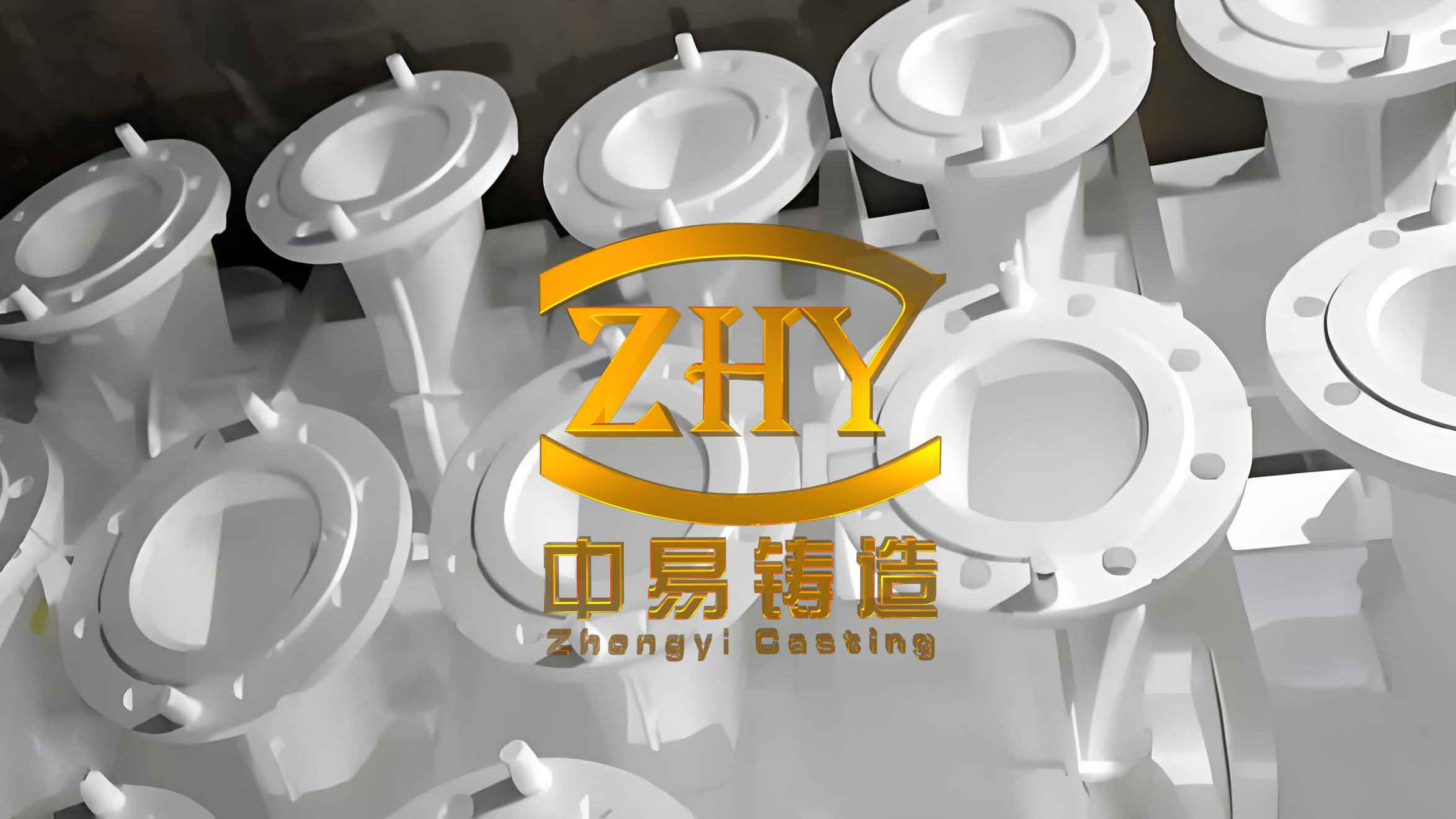
The image above visually complements our discussion on casting processes, though in our platform, the focus is specifically on precision investment casting with plaster molds. This visual aid helps students contextualize the steps involved, from pattern creation to final metal part. It is inserted here to illustrate the practical aspects of mold-making and casting, which are central to our integrated teaching methodology.
Beyond technical skills, the platform fosters soft skills like teamwork and project management. Students are organized into small groups, each responsible for a complete product cycle. They must collaborate on design decisions, allocate tasks, and troubleshoot issues collectively. For assessment, we use a multifaceted evaluation system that includes technical performance, creativity, and adherence to safety standards. The following table outlines the grading criteria for the precision investment casting component, which constitutes half of the overall course evaluation.
| Assessment Category | Weight (%) | Description |
|---|---|---|
| Safety and 6S Compliance | 15 | Proper use of equipment and workspace organization |
| Design Innovation and Rationality | 25 | Originality and feasibility of product design |
| Wax Pattern Fabrication | 20 | Accuracy and craftsmanship in pattern making |
| Casting and Post-processing | 15 | Quality of final cast part and finishing techniques |
| Process Documentation | 25 | Detailed reports on工艺 cards and optimization steps |
This rubric ensures that students are graded not just on outcomes, but on their understanding of the entire precision investment casting workflow. They must submit process cards that detail each step, from plaster mixing to pouring, along with reflections on challenges faced and solutions devised. Such documentation reinforces learning and provides a tangible record of their engineering journey.
In terms of curriculum reorganization, our platform has enabled a shift from isolated modules to integrated project-based learning. We have observed that students from diverse backgrounds—mechanical engineering, materials science, and even art and design—can effectively collaborate in this environment. The fusion of precision investment casting with precision carving acts as a catalyst for cross-pollination of ideas. For instance, a student with a background in CAD might focus on designing intricate wax patterns, while another with metallurgy knowledge might optimize casting parameters. This interdisciplinary synergy is further enhanced through regular brainstorming sessions, where techniques like KANO analysis are used to filter and refine design concepts. By embracing such methods, we move beyond “perfect” theoretical solutions to practical, iterative prototyping, which is a cornerstone of modern engineering education.
The experimental platform also serves as a research tool for advancing precision investment casting techniques. We continuously collect data on mold performance, alloy behavior, and machining parameters, which feeds back into curriculum improvements. For example, we have developed a database of optimal casting temperatures for various alloys, such as aluminum, bronze, and silver, used in student projects. This database is presented in a formulaic manner for easy reference:
$$ T_{\text{opt}} = a \cdot T_{\text{melt}} + b \cdot \frac{\text{Surface Area}}{\text{Volume}} + c $$
where \( a, b, \) and \( c \) are empirical constants derived from our experiments. Such models help students predict outcomes and make informed decisions, thereby deepening their engagement with precision investment casting.
Looking ahead, the platform’s impact extends beyond immediate skill acquisition. It cultivates a systems-thinking mindset, where students appreciate the entire product lifecycle—from raw material to finished good. This aligns with broader educational goals of fostering innovation and adaptability. In my role, I have witnessed how students initially unfamiliar with precision investment casting gradually become proficient, often expressing awe at the transformation of digital designs into solid metal objects. Their feedback highlights increased confidence in handling complex manufacturing challenges and a renewed interest in traditional crafts enhanced by modern technology.
In conclusion, the construction of this innovative teaching platform, centered on the fusion of precision investment casting and precision carving systems, represents a significant stride in engineering pedagogy. By blending hands-on experimentation with theoretical principles, we have created a dynamic learning environment that transcends disciplinary boundaries. The platform not only addresses technical hurdles like plaster formulation and sintering cycles but also promotes collaborative, project-driven education. As we refine our approaches, the emphasis on precision investment casting remains steadfast, serving as a conduit for students to explore the synergies between age-old techniques and contemporary digital tools. Ultimately, this initiative underscores the value of integrated learning in preparing the next generation of engineers for the complexities of the industrial world.