
The pursuit of advanced manufacturing techniques for titanium alloy components is driven by the material’s exceptional combination of properties: low density, high specific strength, outstanding corrosion resistance, non-magnetic characteristics, and excellent biocompatibility. These attributes make titanium alloys indispensable in aerospace, marine engineering, chemical processing, and biomedical applications, where performance and weight savings are paramount. While forming processes like forging and machining are common, casting remains the most effective method for producing complex, net-shape components, significantly reducing material waste and secondary machining operations. The global market for titanium castings is experiencing steady growth, reflecting increasing demand across high-tech sectors.
However, the widespread adoption of titanium castings is hindered by significant technical and economic challenges. Titanium’s high chemical reactivity at elevated temperatures precludes the use of conventional foundry materials like silica (SiO2) or alumina (Al2O3). Molten titanium readily reacts with these oxides, leading to severe surface contamination and degradation of mechanical properties. Consequently, the industry relies on two primary, yet costly, methods: machined graphite mold casting and precision investment casting using refractory oxides like yttria (Y2O3) or zirconia (ZrO2). Each method has inherent limitations. Machined graphite molds often suffer from poor filling capability, resulting in cold shuts, flow marks, and surface defects, while the process is generally unsuitable for thin-walled sections (<4 mm). On the other hand, precision investment casting, though capable of excellent surface finish and complexity, involves high costs for wax patterns and metal dies, especially for large, low-volume components, and has long lead times. This technological gap creates a pressing need for a complementary process that offers design flexibility, cost-effectiveness for small batches, and high-quality outcomes. The Lost Foam Investment Casting (LFIC) process, a hybrid technique, emerges as a promising solution to these challenges.
The Lost Foam Principle and Hybrid Adaptation
Traditional Lost Foam Casting (LFC), invented in the mid-20th century, utilizes an expandable polystyrene (EPS) foam pattern embedded in unbonded sand. During pouring, molten metal vaporizes the foam and fills the cavity, precisely replicating the pattern’s shape. This process offers distinct advantages for cast metals like iron, steel, and aluminum: unparalleled design freedom (no parting lines or cores needed), reduced machining allowances, and simplified foundry operations. However, its direct application to titanium is impossible due to the necessity of a vacuum melting and pouring environment and the risk of carbon pickup from the decomposing foam.
The innovative adaptation for titanium—Lost Foam Investment Casting—bridges the gap between conventional LFC and precision investment casting. In this hybrid process, a machined or molded foam pattern is not surrounded by sand but is instead used as a sacrificial master to build a ceramic shell, identical to the precision investment casting process. This ceramic shell is subsequently fired in a furnace, during which the foam pattern thermally decomposes and evacuates, leaving behind a hollow, precise ceramic mold. This mold is then used for vacuum arc melting and pouring of titanium. This synergy combines the pattern-making simplicity and cost-effectiveness of LFC with the mold integrity and superior surface finish of precision investment casting.
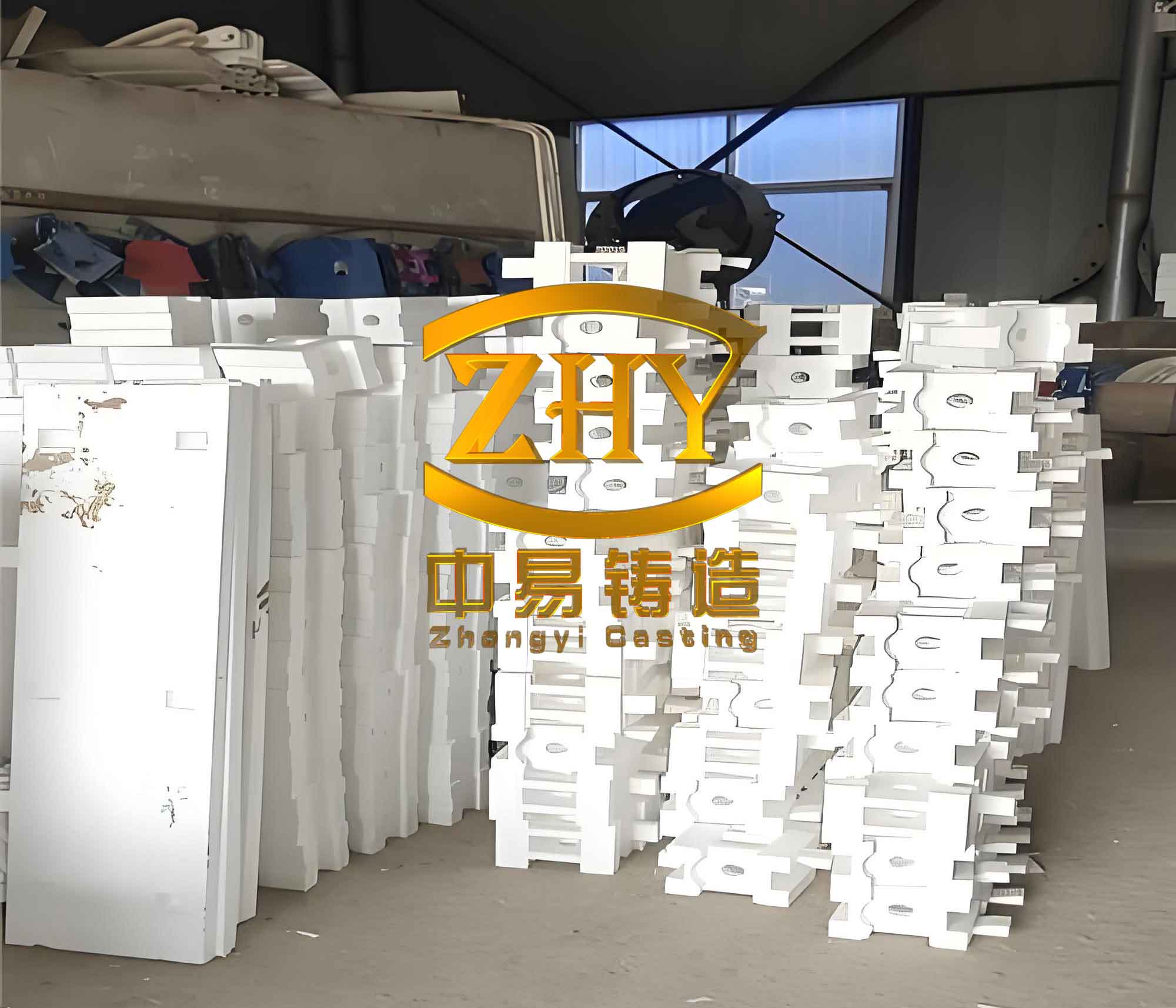
Comparative Advantages Over Existing Titanium Casting Methods
The LFIC process presents compelling advantages when evaluated against the incumbent titanium casting techniques, particularly for prototype development, small-to-medium batch production, and large, complex components.
| Feature | Machined Graphite Mold Casting | Conventional Precision Investment Casting | Lost Foam Investment Casting (LFIC) |
|---|---|---|---|
| Pattern/Mold Cost | High (Graphite material & machining) | Very High (Metal die & wax injection for batches) | Low (Foam machining/ molding) |
| Lead Time for First Article | Medium | Long (Die manufacturing) | Short (Direct foam machining) |
| Design Flexibility & Complexity | Limited by machining & core assembly | Very High | Very High (Monolithic foam patterns) |
| Surface Finish & Filling | Poor (Cold shuts, flow marks) | Excellent | Good to Excellent (Ceramic shell) |
| Thin-Wall Capability | Poor (>4 mm typical) | Excellent (<3 mm achievable) | Good (Similar to investment) |
| Environmental & Operational | Graphite dust, cleanup intensive | Wax handling, chemical binders | Cleaner foam removal, reduced finishing |
| Ideal Production Volume | Low to Medium | Medium to High | Low to Medium (Single pieces to batches) |
vs. Machined Graphite Casting: LFIC can reduce costs by over 30% for suitable components. The low-thermal-conductivity ceramic shell improves fluidity, virtually eliminating the cold shuts and severe surface imperfections common with graphite molds. It enables the casting of thinner walls and more intricate internal passages without complex core assemblies, improving dimensional accuracy. The process is also cleaner, eliminating graphite dust pollution.
vs. Conventional Precision Investment Casting: For large components or single-part orders, LFIC eliminates the prohibitive cost and lead time of manufacturing large-scale metal dies and operating large wax injection lines. The foam pattern cost is a fraction (often less than 20%) of an equivalent wax pattern assembled for a large precision investment casting. This makes LFIC economically viable where traditional precision investment casting is not.
Technical Process Flow and Material Considerations
The successful implementation of titanium LFIC requires careful attention to each step in the process chain, from foam selection to heat treatment.
1. Foam Pattern Production:
The pattern material must satisfy conflicting requirements: sufficient mechanical strength and thermal stability to withstand shell building stresses, and complete, clean thermal decomposition during mold firing. Specialized EPS or polymethyl methacrylate (PMMA) foams with high density and modified polymer structures are used. Key properties include:
– Tensile Strength: $$ \sigma_t \geq 2 \text{ MPa} $$
– Flexural Strength: $$ \sigma_f \geq 8 \text{ MPa} $$
– Thermal Stability Temperature: $$ T_{stable} \geq 80^\circ \text{C} $$
Patterns are machined from foam blanks using CNC routers or hot-wire cutters. Complex geometries are assembled from smaller sections using low-ash adhesives. The pattern surface can be sealed or coated with a wax-based material to improve smoothness and barrier properties before shelling.
2. Ceramic Shell Building:
This is the critical step that defines the quality of the final casting and is directly adopted from advanced precision investment casting practice. The shell must be absolutely refractory and inert to molten titanium.
– Primary (Face) Coat: A yttria- or zirconia-based slurry is used. A common formulation involves a binder like yttrium acetate and fine refractory flour. The slurry viscosity is tightly controlled, e.g., $$ \eta_{face} \approx 35 \pm 3 \text{ seconds (Ford Cup #4)} $$. The coated pattern is stuccoed with coarse zirconia sand.
– Backup Coats: Subsequent layers use colloidal silica (silica sol) binder with fused silica or alumino-silicate (mullite) refractories. Viscosity is graded:
– Layers 1-2: $$ \eta_{back1} \approx 24 \pm 3 \text{ s} $$
– Layers 3+: $$ \eta_{back2} \approx 16 \pm 3 \text{ s} $$
Each layer must be thoroughly dried under controlled humidity and temperature conditions to achieve adequate green strength.
3. Pattern Burnout and Mold Firing:
The drying furnace cycle is crucial. A carefully ramped temperature profile ensures the foam decomposes and diffuses out without cracking the shell or leaving carbonaceous residue.
– Ramp to ~300°C: Ventilation begins, initial foam depolymerization.
– Slow ramp to 700-800°C, hold: Complete foam pyrolysis and removal.
– Ramp to final firing temperature (~1100°C for zirconia), prolonged soak (e.g., 5 hours): Sinters the ceramic, develops high-temperature strength, and removes all organic volatiles. The resulting mold is a pure ceramic replica of the foam pattern.
4. Melting, Pouring, and Post-Processing:
The fired shell is placed in a vacuum arc skull melting (VARM) or induction melting furnace. Titanium alloy (e.g., Ti-6Al-4V or ZTC4) is melted under high vacuum and poured into the preheated mold. Standard post-casting processes for titanium precision investment casting follow: Hot Isostatic Pressing (HIP) to eliminate internal microporosity, heat treatment, chemical milling (etching) to remove the alpha-case surface contamination layer, and non-destructive testing (NDT).
Process Simulation and Gating Design
Numerical simulation is as vital for LFIC as it is for conventional precision investment casting. Since the final mold is a ceramic shell, the physics of filling and solidification are analogous. Simulation software (e.g., ProCAST, FLOW-3D CAST) can accurately model the process, using the following governing equations for fluid flow and heat transfer:
Mass Conservation (Continuity):
$$ \nabla \cdot \vec{u} = 0 $$
where $\vec{u}$ is the velocity vector.
Momentum Conservation (Navier-Stokes with Boussinesq approximation):
$$ \rho \left( \frac{\partial \vec{u}}{\partial t} + (\vec{u} \cdot \nabla) \vec{u} \right) = -\nabla p + \mu \nabla^2 \vec{u} + \rho \vec{g} \beta (T – T_{ref}) $$
where $\rho$ is density, $p$ is pressure, $\mu$ is dynamic viscosity, $\vec{g}$ is gravity, $\beta$ is thermal expansion coefficient, and $T$ is temperature.
Energy Conservation:
$$ \rho C_p \left( \frac{\partial T}{\partial t} + (\vec{u} \cdot \nabla) T \right) = \nabla \cdot (k \nabla T) + \dot{Q}_{latent} $$
where $C_p$ is specific heat, $k$ is thermal conductivity, and $\dot{Q}_{latent}$ is the latent heat release rate during solidification.
The simulation helps optimize the gating and risering system to ensure progressive solidification toward the feeder, minimizing shrinkage porosity. For the example component discussed earlier, a top-gating system was simulated. The temperature field evolution (see isotherms at 35s, 60s, 100s, 200s) showed a relatively uniform thermal gradient of approximately 200°C across most of the casting. The simulation predicted a risk of microporosity at the bottom thick section due to inadequate feeding, which was later confirmed and rectified via HIP.
Application Case Study and Performance Evaluation
A production trial was conducted on a structural titanium alloy (ZTC4) component requiring CT4 dimensional tolerance and compliance with relevant material standards.
Process Execution: A foam pattern was CNC machined as a single piece with an integrated gating system. After sealing, it underwent the yttria-face-coat and silica-backup-coat shelling sequence. The shell was fired using the prescribed ramp-and-hold cycle. The mold was then used for vacuum pouring of ZTC4 alloy.
Results and Analysis:
– Dimensional Accuracy & Surface Finish: The as-cast component required minimal machining. The surface roughness averaged $$ R_a \approx 6.3 \mu m $$, comparable to good quality precision investment casting. The alpha-case contamination layer was measured at ~44 µm, easily removed by standard chemical milling.
– Internal Soundness: Pre-HIP radiography revealed isolated shrinkage in predicted locations, approximately 50% less severe than the initial simulation forecast. Post-HIP inspection confirmed the complete elimination of internal discontinuities, achieving Grade II B quality per relevant standards.
– Mechanical Properties: Tensile tests from separately cast coupons attached to the gating system showed properties exceeding specification requirements.
| Property | Specification Min. (GB/T 6614) | As-Cast + HIP + Annealed Result |
|---|---|---|
| Tensile Strength (MPa) | 835 | 930 |
| Yield Strength (MPa) | 765 | 833 |
| Elongation (%) | 6 | 15 |
– Metallography: Microstructural examination revealed a typical lamellar alpha+beta structure with no evidence of oxide inclusions or abnormal grain growth, confirming the chemical inertness of the ceramic shell system.
Future Prospects and Development Directions
The Lost Foam Investment Casting process establishes a compelling niche within the titanium casting ecosystem. Its future development will focus on several key areas to broaden its applicability and competitiveness:
1. Advanced Foam and Pattern Technology: Development of next-generation foam materials with higher strength-to-density ratios, even lower ash content, and tailored decomposition profiles will enable larger, more delicate patterns and improve surface finish. Research into additive manufacturing (3D printing) of foam patterns could unlock unprecedented geometric complexity, directly competing with binder jetting for sand molds in other metals.
2. Refractory and Shell System Innovation: While yttria is excellent, its high cost drives research into alternative face coat materials or composite refractories that offer equivalent inertness at lower cost. Optimization of shell architectures—using fewer, stronger layers through nanoparticle technology or fiber reinforcement—can reduce shell weight, cost, and firing time.
3. Integrated Process Digitalization: The full integration of LFIC into a digital thread is essential. This includes topology optimization for lightweight design, generative design of gating systems via AI-driven simulation, digital twin of the shell building and firing process, and in-process monitoring for quality assurance. The seamless flow from CAD model to machined foam pattern is a inherent advantage of LFIC over conventional precision investment casting for prototypes.
4. Expansion to Other Reactive Alloys: The fundamental process is not limited to titanium. It holds significant potential for the casting of other reactive and refractory metals such as zirconium alloys (for nuclear applications), high-entropy alloys (HEAs), and certain intermetallic compounds, where traditional mold materials are also problematic.
Conclusion
Titanium Alloy Lost Foam Investment Casting represents a synergistic fusion of two established casting philosophies. It successfully addresses the critical limitations of cost and lead time for low-volume, complex titanium components inherent in traditional precision investment casting, while simultaneously overcoming the quality and capability constraints of machined graphite mold casting. By utilizing a simple, machinable foam pattern as the sacrificial master for building a high-integrity ceramic shell, the process achieves the dimensional precision and surface quality associated with precision investment casting. The case studies and data confirm its capability to produce sound castings with excellent mechanical properties that meet rigorous aerospace and industrial standards.
As material costs rise and the demand for rapid prototyping and flexible manufacturing of high-performance components increases, LFIC is poised to become an indispensable complementary technology in the foundry portfolio. Continued research into advanced materials, process digitalization, and simulation will further enhance its capabilities, solidify its economic advantages, and expand its role in manufacturing the next generation of titanium alloy components. Its development is a clear testament to the ongoing innovation within the field of advanced precision investment casting technologies.