
The development of high-performance materials for advanced aerospace, defense, and specialized civilian applications is a continuous pursuit, driven by the need for components that offer an exceptional combination of low density, high specific stiffness, dimensional stability, and good thermal properties. Among the promising candidates, beryllium-aluminum (Be-Al) alloys, often classified as metal matrix composites with a discontinuous Be phase reinforcing a continuous Al matrix, have garnered significant attention. These alloys uniquely combine the extreme lightness and high modulus of beryllium with the superior manufacturability, ductility, and toughness of aluminum. The resultant material exhibits a density approximately 24% lower than conventional aluminum alloys, a specific stiffness surpassing that of titanium, a low coefficient of thermal expansion, and respectable thermal conductivity. The manufacturing of complex, thin-walled structural components from Be-Al alloys frequently relies on precision investment casting, a process capable of producing near-net-shape parts with excellent surface finish and dimensional accuracy, which is crucial for minimizing the costly and difficult machining typically associated with beryllium-containing materials.
The macro-scale properties of any composite material are intrinsically governed by the microstructure and, more critically, by the nature of the interfaces between its constituent phases. In Be-Al alloys, the Be/Al interface acts as the critical bridge for load transfer from the relatively soft aluminum matrix to the stiff beryllium reinforcements. The bonding strength, chemical stability, and atomic structure of this interface directly dictate the composite’s mechanical performance, including tensile strength, ductility, and fracture toughness. A weak or reactive interface can become a preferential site for crack initiation and propagation, severely undermining the material’s potential. Therefore, a fundamental understanding of the interfacial characteristics in as-cast Be-Al alloys is paramount for optimizing both the precision investment casting process and the final material performance. While previous studies have often focused on processing parameters, mechanical testing, and the effects of alloying elements, detailed microstructural investigations of the as-cast Be/Al interface, particularly at the atomic scale, have been less frequently reported. This work presents a comprehensive investigation into the interfacial structure of a Be-Al alloy produced via precision investment casting, utilizing advanced transmission electron microscopy (TEM) techniques to elucidate the crystallographic orientation, bonding nature, and the presence of secondary phases at the interface.
Material Synthesis via Precision Investment Casting
The Be-Al alloy studied in this work was synthesized using the precision investment casting technique, a method chosen for its ability to create intricate geometries with high fidelity. The nominal composition of the alloy is provided in Table 1.
| Element | Content (wt.%) |
|---|---|
| Be | 60.00 – 65.00 |
| Al | Balance |
| Ag | 1.50 – 2.50 |
| Co | 0.65 – 1.35 |
| Ge | 0.55 – 1.20 |
| Si | ≤ 0.30 |
| Fe | ≤ 0.20 |
| O | ≤ 0.20 |
| C | ≤ 0.20 |
| Mg | ≤ 0.06 |
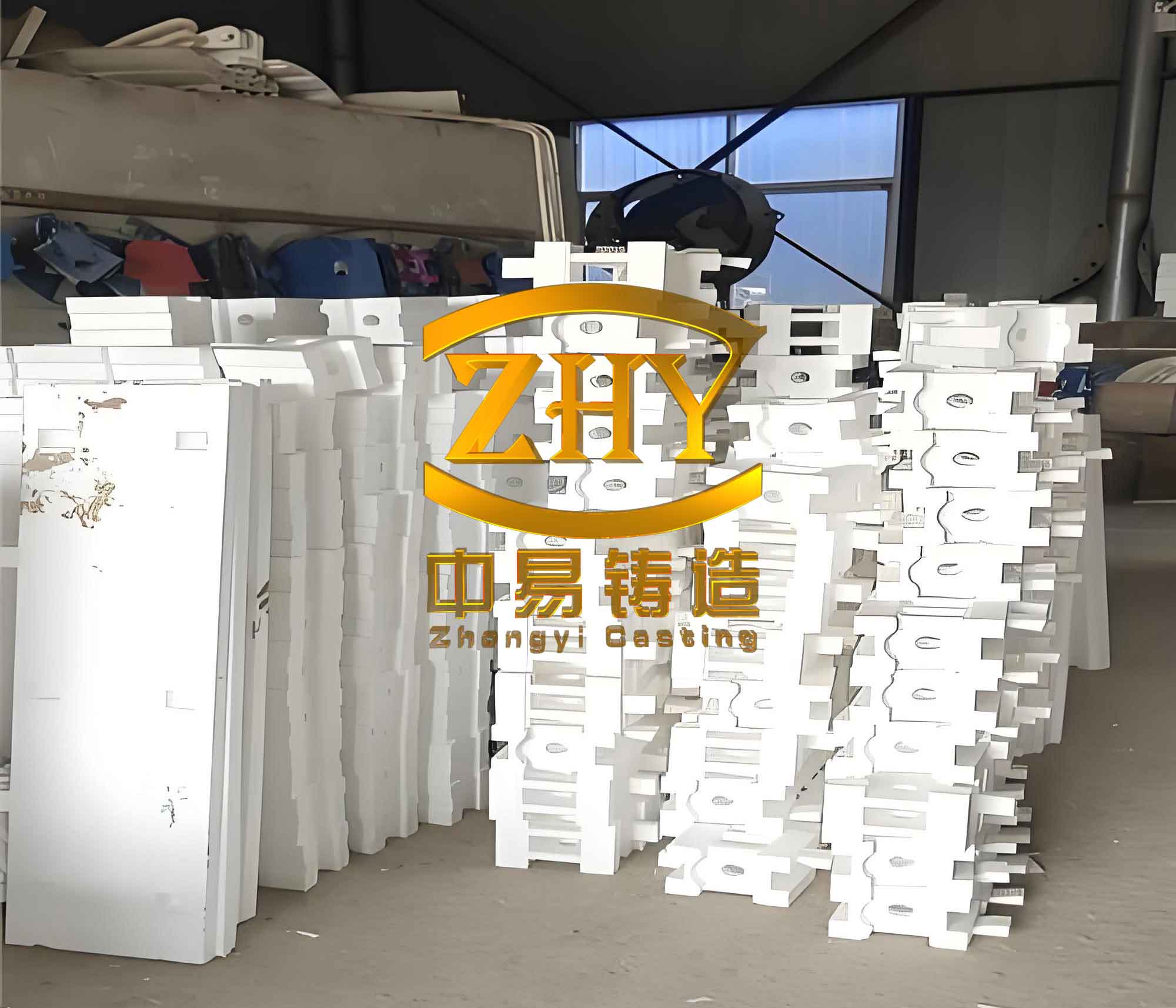
The process began with the fabrication of a wax pattern, which was subsequently assembled into a cluster (“tree”). A ceramic shell mold was built around this cluster using successive coats of refractory materials, primarily mullite, to achieve a final shell thickness of approximately 8 mm. Prior to casting, the shell was pre-fired to 750°C to eliminate residual moisture and volatiles. The melting and casting were conducted in a medium-frequency vacuum induction furnace. The crucible containing the charge was heated to a temperature range of 1400–1500°C to ensure complete melting and adequate fluidity. The molten alloy was then poured into the preheated ceramic shell at a superheat temperature of around 1290°C. After pouring, the casting was solidified under forced air cooling to room temperature. This controlled solidification via precision investment casting is critical for governing the final microstructure, including the size, distribution, and interfacial characteristics of the Be phase within the Al matrix. A schematic representation of a typical mold cluster used in such a process is shown below.
Experimental Methodology for Microstructural Characterization
To probe the nanoscale features of the Be/Al interface, specimens for transmission electron microscopy (TEM) were meticulously prepared. Slices approximately 0.6 mm thick were first cut from the as-cast material using wire electrical discharge machining (EDM). These slices were then mechanically ground and polished to a thickness of 70–80 μm. Final electron transparency was achieved by electrochemical twin-jet polishing using a suitable electrolyte under controlled conditions of temperature, voltage, and flow rate. Microstructural analysis was performed using a JEM-2100Plus high-resolution transmission electron microscope (HRTEM) equipped with an energy-dispersive X-ray spectroscopy (EDS) system. This combination allowed for simultaneous imaging of atomic-scale lattice structures and chemical microanalysis at specific sites of interest, particularly across the phase boundaries.
Results and Discussion: Interfacial Structure and Chemistry
General Interface Morphology
Low-magnification TEM imaging reveals the typical microstructure of the as-cast Be-Al alloy. The Be phase (darker contrast due to its higher atomic number) appears as discrete particles or interconnected clusters embedded within the continuous Al matrix (lighter contrast). At this scale, the Be/Al interfaces appear predominantly clean, smooth, and well-bonded, with no visible evidence of extensive interfacial reaction layers or brittle intermetallic compounds. Interestingly, the interfaces are not perfectly planar but exhibit a subtle, fine-scale roughness or serration. This characteristic, non-planar interface morphology is a direct consequence of the solidification dynamics during precision investment casting, where local variations in solute diffusion, thermal gradients, and crystal growth directions can lead to this irregular, interlocking configuration between the two phases.
Crystallographic Orientation and Coherency
High-resolution TEM (HRTEM) was employed to resolve the atomic arrangement at the interface. Analysis of the lattice fringes confirms the crystallographic nature of the two phases: Aluminum possesses a face-centered cubic (FCC) structure with a lattice parameter $$a_{Al} = 0.4049 \, \text{nm}$$. Beryllium has a hexagonal close-packed (HCP) structure with lattice parameters $$a_{Be} = 0.2286 \, \text{nm}$$ and $$c_{Be} = 0.3584 \, \text{nm}$$.
The HRTEM images show a direct atomic contact between the Be and Al lattices without an amorphous or secondary crystalline layer. The observed orientation relationship between the two phases can be described as:
$$ \text{Be } (0001) \parallel \text{Al } (110) $$
$$ \text{Be } [11\bar{2}0] \parallel \text{Al } [1\bar{1}0] $$
This represents a specific lattice matching where the close-packed basal plane of Be aligns with a specific plane in the Al lattice. To quantify the degree of lattice matching and predict the interfacial structure, the misfit parameter $$\delta$$ is calculated. For two planes with interatomic spacings $$d_{\alpha}$$ and $$d_{\beta}$$, the misfit is defined as:
$$ \delta = \frac{d_{\beta} – d_{\alpha}}{(d_{\beta} + d_{\alpha})/2} $$
Considering the $$(0001)_{\text{Be}}$$ plane (with an atomic spacing related to $$a_{Be}$$) and the $$(110)_{\text{Al}}$$ plane (with a spacing of $$a_{Al}/\sqrt{2}$$), we approximate relevant spacings. Taking $$d_{Be} \approx 0.23 \, \text{nm}$$ (from the Be basal plane) and $$d_{Al} \approx 0.286 \, \text{nm}$$ (for Al (110)), the misfit is:
$$ \delta = \frac{0.286 – 0.23}{(0.286 + 0.23)/2} \approx \frac{0.056}{0.258} \approx 0.217 $$
According to classical interface theory, interfaces are categorized based on misfit:
- Coherent interface: $$\delta < 0.05$$
- Semi-coherent interface: $$0.05 \leq \delta \leq 0.25$$
- Incoherent interface: $$\delta > 0.25$$
The calculated misfit of ~0.217 falls squarely within the range for a semi-coherent interface. Therefore, the Be/Al interface in this precision investment casting produced alloy is characterized as a semi-coherent boundary. In such interfaces, the lattice strain from the mismatch is periodically accommodated by networks of interfacial dislocations. While individual dislocations were not explicitly resolved in all micrographs, the semi-coherent nature explains the good atomic-scale bonding (coherent patches) combined with the capacity to relax large strains, contributing to interface stability. The absence of a fully coherent interface is expected due to the significant lattice parameter difference, which would impose prohibitively high elastic strain energy.
| Phase | Crystal Structure | Relevant Plane | Interatomic Spacing (nm) | Misfit (δ) | Interface Type |
|---|---|---|---|---|---|
| Be | HCP | (0001) | ~0.230 | ~0.217 | Semi-coherent |
| Al | FCC | (110) | ~0.286 (a/√2) |
Presence of Interfacial Oxides
Despite the overall clean appearance, EDS analysis conducted at and near the Be/Al interfaces frequently detected elevated oxygen signals. This is attributed to the high affinity of beryllium for oxygen. The starting Be powder or beads inherently possess a native, thin surface oxide layer of BeO. Due to the exceptional thermodynamic stability of BeO (its Gibbs free energy of formation is highly negative), this oxide layer is not reduced during the melting and casting process under typical precision investment casting conditions, even in a vacuum furnace. Consequently, these nanoscale BeO particles are incorporated into the melt and ultimately reside at the interfaces between the Be and Al phases upon solidification.
HRTEM imaging corroborates this finding, revealing the presence of fine, crystalline particles at some interfacial locations. These particles were identified through lattice fringe analysis and micro-diffraction as BeO (hexagonal structure) and, to a lesser extent, Al2O3. These oxide particles can exist as isolated entities or as small clusters decorating the interface. Their presence, while inevitable to some degree in Be-based alloys, has important implications. They act as discontinuities in the metal-metal bonding and can potentially:
- Weaken the interfacial bond strength by creating localized stress concentrators.
- Hinder effective load transfer from the matrix to the reinforcement.
- Serve as nucleation sites for voids or cracks under mechanical stress.
The extent of their detrimental effect depends on their volume fraction, size, and distribution, which are influenced by the purity of starting materials and the control of the precision investment casting environment.
| Feature | Observation | Implication |
|---|---|---|
| Bonding Type | Direct atomic contact, no reaction layer. | Primarily mechanical/metallic bonding. Good chemical compatibility at casting temperatures. |
| Geometry & Misfit | Semi-coherent interface with Be(0001)∥Al(110). Misfit δ ≈ 0.217. | Combines regions of good atomic matching with dislocation-accommodated strain. Provides stable, moderate-strength interface. |
| Morphology | Clean but slightly serrated/wavy interface. | Result of solidification kinetics. May provide mechanical interlocking, potentially enhancing bonding. |
| Interfacial Oxides | Presence of BeO and Al2O3 nanoparticles. | Inherent from material oxidation. Can act as stress concentrators and weaken the interface locally. |
Implications for Mechanical Properties
The interfacial structure elucidated here directly informs the mechanical behavior of the precision investment casting Be-Al alloy. The semi-coherent interface offers a favorable balance. It is strong enough for effective load transfer, which is essential for achieving the high specific stiffness characteristic of these composites. The absence of brittle intermetallic compounds (like Be4Al or Be12Ti-type phases that can form in other systems) prevents easy interfacial decohesion. The slight serration of the interface may contribute to mechanical interlocking, offering an additional resistance to shear along the boundary.
However, the oxide particles represent the most likely sites for damage initiation. Under tensile or fatigue loading, debonding may preferentially start at the oxide/matrix interface or fracture of the oxide particles themselves may generate micro-cracks. The overall ductility and fracture toughness of the alloy will therefore be sensitive to the density and distribution of these interfacial oxides. Process optimization in precision investment casting, such as improved vacuum levels, use of getters, or faster solidification rates to limit oxide agglomeration, could be targeted at minimizing this effect. The interfacial shear strength $$\tau_i$$ can be conceptually related to the composite yield strength $$\sigma_c$$ via a shear-lag model for discontinuous reinforcements:
$$ \sigma_c = \sigma_m \left[ V_f \left(\frac{s}{2}\right) + (1 – V_f) \right] $$
where $$\sigma_m$$ is the matrix yield strength, $$V_f$$ is the volume fraction of reinforcement, and $$s$$ is the aspect ratio. However, the model’s assumption of perfect bonding is modified by the actual interface strength, which is influenced by the coherency stress fields and the weakening effect of oxides, making $$\tau_i$$ a critical, microstructure-sensitive parameter.
Conclusion
This investigation provides a detailed microstructural and nanochemical analysis of the Be/Al interface in an as-cast Be-Al alloy manufactured by precision investment casting. The primary findings are summarized as follows:
- The interface between the Be (HCP) and Al (FCC) phases is clean, with no evidence of interfacial reaction products or continuous intermetallic layers, indicating good chemical compatibility under the employed casting conditions.
- The crystallographic orientation relationship is characterized as Be (0001) ∥ Al (110) with Be [11$\bar{2}$0] ∥ Al [1$\bar{1}$0]. The calculated lattice misfit of approximately 0.217 classifies this interface as semi-coherent. This structure allows for regions of atomic registry, providing reasonable bonding strength, while accommodating mismatch strain through a dislocation network, contributing to interfacial stability.
- The interfacial morphology is not perfectly planar but exhibits fine-scale serrations, a feature attributed to the solidification dynamics inherent to the precision investment casting process.
- Despite the overall clean interface, the presence of nanoscale BeO and Al2O3 particles at the Be/Al boundary is confirmed. These thermodynamically stable oxides originate from the surface oxidation of raw materials and are incorporated during processing. They represent potential sites for stress concentration and may act as initiators for interfacial failure under mechanical loading.
The combination of a semi-coherent metallic interface and dispersed oxide particles defines the micromechanical behavior of the boundary. The findings underscore the critical importance of interfacial engineering in Be-Al composites. Future efforts to enhance the performance of precision investment casting Be-Al alloys should focus not only on optimizing casting parameters for grain refinement and homogeneity but also on strategies to minimize interfacial oxide content, such as advanced powder handling, molten metal treatments, or even the exploration of engineered interfacial coatings on Be reinforcements prior to casting.