
In the evolving landscape of advanced manufacturing, the integration of additive manufacturing with traditional foundry processes presents a transformative opportunity. Our research focuses on pioneering a method to directly fabricate ceramic shells for precision investment casting using Digital Light Processing (DLP) photopolymerization 3D printing. This approach aims to streamline the conventional multi-step, time-intensive shell-building process, offering potential reductions in lead time, cost, and environmental impact. Precision investment casting, known for its ability to produce complex, high-accuracy metal components, typically relies on wax pattern creation, repeated ceramic slurry dipping, stuccoing, and dewaxing. By leveraging DLP 3D printing, we seek to deposit ceramic material layer-by-layer directly into the final shell geometry, thereby bypassing several intermediary stages. The core of our work involves the development of a custom DLP printer, formulation of a suitable ceramic suspension, optimization of printing and post-processing parameters, and validation through metal pouring trials. This document details our comprehensive study from first principles to final casting, emphasizing the technological synergy between vat photopolymerization and precision investment casting.
The fundamental principle of DLP-based ceramic printing involves the selective solidification of a photopolymerizable slurry loaded with ceramic powder. Upon exposure to UV light patterned by a digital micromirror device (DMD), the resin matrix cross-links, binding the ceramic particles to form a green body. The subsequent thermal post-processing removes the organic components and sinters the ceramic particles into a dense, robust shell capable of withstanding molten metal. The success of this method for precision investment casting hinges on multiple interdependent factors: the printer’s optical and mechanical precision, the slurry’s rheological and photochemical properties, the structural design of the shell, and the thermal schedule for debinding and sintering. Our systematic investigation addresses each of these facets, presenting data, models, and empirical correlations to guide the implementation of this innovative technique.
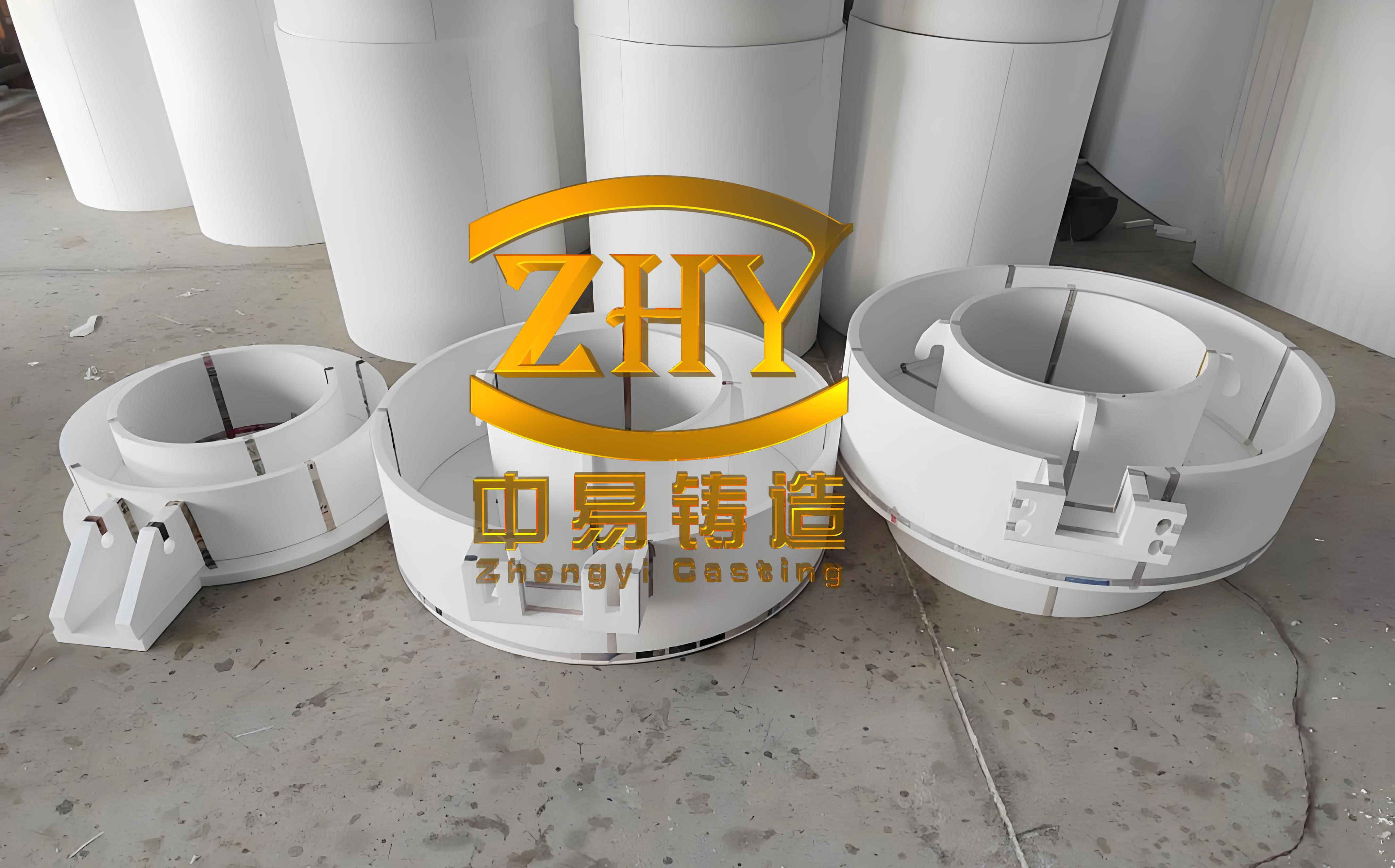
To contextualize our technical contributions, it is essential to understand the stringent requirements of precision investment casting. The ceramic shell must exhibit high green strength for handling, precise dimensional fidelity to the digital model, sufficient fired strength to resist metalostatic pressure, appropriate permeability to allow gas escape, and thermal stability to minimize reaction with the melt. Traditional shell fabrication, while reliable, is inherently laborious and less adaptable to design changes. Additive manufacturing introduces digital flexibility, enabling the direct production of shells with intricate internal features, such as integrated cores, which are challenging to achieve conventionally. Our work demonstrates that DLP photopolymerization, a high-resolution vat photopolymerization technique, is particularly suited for this application due to its fine feature resolution and relatively fast build speed for thin-walled structures like shells. Throughout this article, the term precision investment casting will be frequently reiterated to underscore the target application and the performance benchmarks derived from it.
Development of a Custom DLP Photopolymerization 3D Printer
Our journey began with the design and assembly of a custom-built, bottom-up (uplifting) DLP 3D printer tailored for ceramic slurry processing. Commercial DLP printers are often optimized for polymeric resins and may lack the robustness or kinematic design suitable for dense, abrasive ceramic suspensions. Our printer architecture comprised four main subsystems: the exposure system, the vat and recoating system, the Z-axis motion system, and the integrated control system.
The exposure system is the heart of the printer, responsible for projecting UV light patterns with high accuracy and intensity. We modified a standard DLP projector (model analogous to H6517ABD) to enhance its UV output, which is crucial for curing ceramic-filled slurries that typically require higher energy density due to light scattering and absorption by particles. The original UV filter was replaced with a fused quartz window to maximize transmission in the 365-405 nm range. The color wheel, which attenuates UV in standard projectors, was physically bypassed and fixed in place to satisfy the projector’s internal diagnostics without filtering the actinic light. Furthermore, the projection lens was replaced with a custom short-focal-length lens assembly to reduce the projection distance, concentrate the light flux onto a smaller build area (approximately 100 x 60 mm), and improve the lateral resolution. The optical path was designed for direct projection onto the vat bottom without intervening mirrors to minimize intensity loss and potential image distortion. The relationship between the required UV dose D (mJ/cm²) for adequate curing and the projector’s irradiance E (mW/cm²) and exposure time t (s) is given by:
$$ D = E \cdot t $$
For our ceramic slurry, a critical dose $D_c$ must be exceeded per layer to achieve sufficient green strength. The modified system provided an average irradiance $E_{avg}$ of 12 mW/cm² at 385 nm, as measured by a calibrated radiometer. Therefore, the baseline exposure time could be estimated from $t = D_c / E_{avg}$.
The vat system consisted of a transparent acrylic tank with a flexible, optically clear fluorinated ethylene propylene (FEP) film attached to the bottom. This film facilitates easy release of the cured layer from the vat after each exposure. A motor-driven blade stirrer was integrated to periodically agitate the slurry, preventing ceramic particle sedimentation and ensuring homogeneity before each layer’s exposure. The build platform, attached to the Z-axis, was made of aluminum with a sandblasted surface to enhance adhesion of the first printed layers.
The Z-axis motion system utilized a high-precision ball screw driven by a NEMA 17 stepper motor, guided by linear rails. This system controlled the precise incremental elevation of the build platform after each layer was cured. The layer thickness $\Delta z$, a critical parameter, was set by the control software coordinating the stepper motor’s steps. The motion profile included a slow descent speed for recoating and a faster ascent speed to separate the cured part from the FEP film, minimizing suction forces. Key parameters of our custom DLP printer are summarized in Table 1.
| Subsystem | Parameter | Value / Specification |
|---|---|---|
| Exposure System | Light Source | Modified Hg lamp (385 nm peak) |
| Projection Resolution | 1920 x 1080 pixels (X-Y resolution ~50 µm) | |
| Build Envelope | 100 mm (L) x 60 mm (W) x 100 mm (H) | |
| Average Irradiance at Vat | 12 mW/cm² @ 385 nm | |
| Motion System | Z-axis Drive | Ball screw (2 mm lead) |
| Z-axis Positioning Accuracy | ± 5 µm | |
| Maximum Travel Speed | 300 mm/min | |
| Vat System | Vat Material | Acrylic with FEP film (25 µm thick) |
| Recoating Mechanism | Motorized sweeping blade | |
| Control System | Microcontroller | Arduino Mega 2560 with custom firmware |
The control system was built around an Arduino Mega 2560 board, running custom G-code interpreter firmware. It managed the synchronization between the projector’s image display, the Z-axis movement, and the stirring mechanism. A graphical user interface (GUI) on a connected PC allowed for parameter input and print job monitoring.
Ceramic Slurry Formulation and Rheological Characterization
The development of a printable ceramic slurry is paramount for successful DLP-based fabrication of shells for precision investment casting. The slurry must satisfy conflicting requirements: high ceramic solid loading for low sintering shrinkage and sufficient fired density, low viscosity for efficient recoating and layer uniformity, and high photoreactivity for fast curing with good depth penetration. We formulated a slurry based on a photopolymerizable acrylate system. The ceramic phase consisted of a blend of alumina ($Al_2O_3$) and silica ($SiO_2$) powders in a mass ratio of 4:1. This blend offers a good balance of refractoriness, thermal shock resistance, and chemical inertness, which are desirable for precision investment casting of various alloys.
The organic vehicle comprised a mixture of difunctional and monofunctional acrylate monomers (e.g., dicyclopentadiene acrylate and butyl acrylate) to tailor crosslink density and flexibility, a photoinitiator (e.g., phenylbis(2,4,6-trimethylbenzoyl)phosphine oxide) sensitive to 385 nm light, and a dispersant (e.g., ethoxylated trimethylolpropane triacrylate) to stabilize the ceramic particles against agglomeration. The solid loading $\phi$, defined as the volume fraction of ceramic powder in the total slurry, was varied to study its impact. The viscosity $\eta$ of a concentrated suspension can be described by models like the Krieger-Dougherty equation:
$$ \eta = \eta_0 \left(1 – \frac{\phi}{\phi_{max}}\right)^{-[\eta]\phi_{max}} $$
where $\eta_0$ is the viscosity of the resin vehicle, $\phi_{max}$ is the maximum packing fraction, and $[\eta]$ is the intrinsic viscosity (typically ~2.5 for spheres). We measured the viscosity using a rotational rheometer under shear rates relevant to the recoating process (1-10 s⁻¹). Table 2 presents the properties of several slurry formulations we evaluated.
| Formulation ID | Solid Loading $\phi$ (vol%) | Viscosity $\eta$ at 10 s⁻¹ (mPa·s) | Curing Depth $C_d$ at 500 mJ/cm² (µm) | Green Density (g/cm³) |
|---|---|---|---|---|
| S-35 | 35 | 1,850 | 110 | 2.15 |
| S-40 | 40 | 3,250 | 85 | 2.42 |
| S-45 | 45 | 5,900 | 65 | 2.68 |
| S-48 | 48 | 9,500 | 50 | 2.80 |
Curing depth $C_d$ is a critical parameter determining the thickness of polymerized material per exposure. It follows the Beer-Lambert law modified for scattering suspensions:
$$ C_d = \frac{2}{3 \cdot \mu_{eff}} \ln\left(\frac{E}{E_c}\right) $$
where $\mu_{eff}$ is the effective attenuation coefficient (combining absorption and scattering), $E$ is the exposure energy density, and $E_c$ is the critical energy density for gelation. We measured $C_d$ by curing single layers at varying exposure energies and measuring the thickness of the hardened film. For precision investment casting shells, a balance is needed: sufficient curing depth to ensure good interlayer bonding but not excessive to cause over-curing and loss of Z-resolution. Based on our evaluation, formulation S-40 ($\phi$ = 40 vol%, $\eta$ ≈ 3247 mPa·s) offered the best compromise. Its viscosity allowed for consistent recoating of 100 µm layers without excessive stress on the green part during separation, and its curing characteristics provided reliable layer bonding and acceptable green strength. Higher solid loadings, while beneficial for sintering, led to prohibitively high viscosity and reduced cure depth, increasing the risk of print failures.
Optimization of Printing Process Parameters for Shell Fabrication
With the printer and slurry established, we systematically optimized the printing parameters to achieve dimensionally accurate and mechanically sound green shells. The process involves a cyclic sequence: 1) lowering the build platform to define a layer gap, 2) recoating the slurry, 3) projecting the slice image for a set exposure time, and 4) lifting the platform to separate the cured layer from the vat bottom. The key controllable variables are layer thickness ($\Delta z$), exposure time ($t_{exp}$), wait time after recoating ($t_{wait}$), lifting speed ($v_{lift}$), and lowering speed ($v_{lower}$).
A Design of Experiments (DoE) approach, specifically a Central Composite Design (CCD), was employed to model the effects of $\Delta z$ and $t_{exp}$ on the green part’s dimensional accuracy (measured as deviation from CAD in X, Y, Z) and flexural strength. The other parameters were kept constant based on preliminary tests: $t_{wait}$ = 1 s (for slurry leveling), $v_{lift}$ = 200 mm/min, $v_{lower}$ = 250 mm/min. The response surfaces generated from the DoE data indicated an optimal window. For the S-40 slurry, a layer thickness of 100 µm and an exposure time of 32 seconds per layer (corresponding to an energy dose of $12 \times 32 = 384$ mJ/cm²) yielded the best combination of accuracy and strength. For the initial 5 layers forming the base raft, a longer exposure time of 45 seconds was used to ensure strong adhesion to the build platform.
The separation force $F_s$ during platform lift-off is a major concern, as it can cause layer delamination or part failure. It depends on the adhesion between the cured layer and the FEP film, which is a function of the cured layer’s area $A$, the surface energy, and the peel velocity. An empirical model we observed can be approximated by:
$$ F_s \propto A \cdot \eta^{0.3} \cdot v_{lift}^{0.5} $$
This informed our choice of a moderate lifting speed. The complete set of optimized printing parameters is consolidated in Table 3. These parameters formed the baseline for all subsequent shell printing for precision investment casting trials.
| Process Parameter | Symbol | Optimal Value |
|---|---|---|
| Slurry Temperature | T | 30 °C |
| Layer Thickness | $\Delta z$ | 100 µm |
| Raft Exposure Time (first 5 layers) | $t_{raft}$ | 45 s |
| Shell Layer Exposure Time | $t_{shell}$ | 32 s |
| Lifting Speed (after exposure) | $v_{lift}$ | 200 mm/min |
| Lowering Speed (for next layer) | $v_{lower}$ | 250 mm/min |
| Wait Time after Recoating | $t_{wait}$ | 1 s |
| Stirring Cycle | – | 5 s stirring every 3 layers |
Digital Design and Support Strategy for Ceramic Shells
The digital design of the shell directly impacts printability, post-processing success, and final casting quality. For precision investment casting, the shell is a negative of the desired metal part, incorporating the part cavity, gating system, and sometimes integral cores. Our workflow started with the 3D CAD model of the final metal casting. To account for sintering shrinkage of the ceramic, the casting model was uniformly scaled by a factor $(1 + \alpha)$, where $\alpha$ is the linear shrinkage coefficient determined experimentally. For our S-40 slurry, the total linear shrinkage after debinding and sintering was measured to be approximately 18.5% ($\alpha = 0.185$). Therefore, the CAD model was enlarged by a factor of 1.185 in all dimensions before shell creation.
The shell thickness is a critical design variable. It must withstand the metallostatic pressure during pouring without fracture, yet excessive thickness reduces permeability and increases material use. For small to medium castings, we found a wall thickness in the range of 1-3 mm to be adequate. The shell was created using the “Shell” operation in CAD software, offsetting the enlarged part model inward by the desired thickness. The gating system (pouring cup, sprue, runners) was then digitally attached to the shell model. An important consideration for the bottom-up DLP process is part orientation and support structure. To minimize the cross-sectional area cured per layer (reducing separation forces) and to improve surface finish on critical casting surfaces, shells were oriented with the major axis vertically. However, this often creates large overhangs at the top of internal cavities.
We investigated three distinct support strategies for a cylindrical shell with one closed end (representing a simple casting), as illustrated in Figure 10 of the original work. Support structures are essential to anchor overhangs to the build platform or previous layers during printing. Their design influences green part handling, post-processing distortion, and final shell integrity. The strategies were: 1) Automatic generation of thin columnar supports, 2) Manual design of open (non-continuous) annular support webs, and 3) Manual design of closed, continuous annular support rings. Strategy 3, despite using slightly more material, proved vastly superior for precision investment casting applications. The continuous ring support acted as a reinforcing structure during printing, debinding, and sintering, significantly reducing warping and crack formation in the main shell body. Remarkably, this support did not need to be removed before casting; it became a permanent, strengthening part of the shell without interfering with the metal flow or final part geometry. This integrated support approach is a unique advantage of additive manufacturing for precision investment casting shells, where supports can be designed as functional elements rather than mere sacrificial aids.
The slicing of the supported shell model was performed using custom-configured software (e.g., ChiTuBox), generating a sequence of bitmap images for the DLP projector. A crucial step in preprocessing was the addition of a base raft, a thick, fully cured pad between the build platform and the first support layer. This raft compensated for any non-parallelism between the platform and vat, provided a sturdy foundation, and facilitated easy removal of the printed stack from the platform after completion.
Post-Processing: From Green Body to Sintered Ceramic Shell
The as-printed “green” ceramic shell contains a significant volume fraction of polymerized organic resin (the binder). This organic phase must be completely removed, and the ceramic particles must be sintered together to form a dense, strong ceramic body suitable for precision investment casting. Post-processing thus involves three sequential stages: cleaning, thermal debinding, and sintering. These stages were executed in a single, continuous thermal cycle in a programmable box furnace with air atmosphere.
Cleaning and Post-Curing: After printing, the green shell, attached to the raft and supports, was carefully removed from the build platform. Residual uncured slurry on the surface was washed away using anhydrous ethanol in an ultrasonic bath for 5 minutes. The part was then dried in warm air. To ensure complete polymerization of any residual monomers and increase green strength for handling, the shell underwent a post-curing step. This was done either by flood exposure to UV light in a curing chamber (405 nm LED, 10 mW/cm² for 15 minutes) or by thermal treatment at 80°C for 60 minutes. Both methods were effective, with thermal post-curing providing slightly higher strength.
Thermal Debinding and Sintering Cycle: The critical step is the thermal cycle, which must slowly volatilize and oxidize the organic binder without causing defects like bloating, cracking, or slumping, followed by densification of the ceramic. Based on Thermogravimetric Analysis (TGA) and Differential Scanning Calorimetry (DSC) of the slurry, we developed a tailored heating profile. The process can be divided into distinct temperature regimes, each governed by different kinetic processes. The total linear shrinkage $S$ during sintering is related to the initial porosity $\theta_0$ and the final relative density $\rho_{rel}$:
$$ S = 1 – \left( \frac{\rho_{rel}}{1 – \theta_0} \right)^{1/3} $$
For our S-40 slurry, $\theta_0 \approx 0.40$ and target $\rho_{rel} \approx 0.92$, giving $S \approx 0.185$, matching our empirical measurement. The developed thermal schedule is presented in Table 4 and illustrated as a temperature-time curve.
| Stage | Temperature Range | Heating Rate | Hold Time | Primary Physical/Chemical Process |
|---|---|---|---|---|
| 1. Drying & Pre-heat | RT to 200°C | 1°C/min | 30 min | Removal of residual solvent and moisture. |
| 2. Polymer Degradation | 200°C to 450°C | 0.5°C/min | 120 min at 450°C | Slow oxidative decomposition of acrylate polymer network. Critical to prevent rapid gas generation. |
| 3. Binder Burnout | 450°C to 600°C | 1°C/min | 60 min at 600°C | Complete removal of carbonaceous residue. |
| 4. Sintering Onset | 600°C to 1100°C | 3°C/min | 0 min | Initial neck formation between ceramic particles. |
| 5. Densification | 1100°C to 1350°C | 5°C/min | 180 min at 1350°C | Major stage of densification via diffusion mechanisms (e.g., volume diffusion, grain boundary diffusion). |
| 6. Cooling | 1350°C to RT | Furnace Cool (~2°C/min) | – | Controlled cooling to prevent thermal shock cracking. |
The total cycle time was approximately 18 hours. A key finding was the importance of part orientation within the furnace. Placing the shells vertically on setters, rather than horizontally, minimized distortion during sintering, likely due to more uniform gravitational stresses and better gas flow during debinding. The resulting sintered shells were off-white, rigid, and exhibited a smooth surface finish on the cavity side (facing the FEP film during printing). Their apparent porosity, measured by Archimedes’ method, was around 8-10%, providing adequate permeability for precision investment casting. The flexural strength, measured via three-point bending on shell segments, averaged 35 ± 5 MPa, sufficient for handling and sand embedding prior to pouring.
Casting Trials: Validation with Low and High Melting Point Alloys
The ultimate validation of our DLP-printed ceramic shells lies in their performance in actual precision investment casting. We conducted pouring trials with two classes of alloys: a low-melting-point tin-based alloy (Sn-3.5Ag-0.7Cu, melting point ~220°C) and a high-melting-point copper-based alloy (C11000 Electrolytic Tough Pitch Copper, melting point ~1085°C). This range tested the shells’ thermal stability and mechanical integrity under different thermal loads.
Low-Melting-Point Alloy Casting: For small-scale validation, we printed shells for a simple stepped cylindrical casting (green dimension ~20 mm height). The sintered shell, with its integrated closed-ring support, was prepared for pouring. To provide external support and ensure uniform heat dissipation, we employed a “sand backing” or “sand embedding” technique, common in ceramic shell casting. The shell was placed in a steel flask and surrounded by loose, dry silica sand, which was gently vibrated to fill all voids. This sand bed constrained the shell, preventing movement or rupture during pouring, and provided supplementary strength. The tin-based alloy was melted in a electric pot and poured at approximately 280°C. After solidification and cooling, the assembly was removed from the flask, the sand was brushed away, and the ceramic shell was easily broken away from the metal casting. The resulting casting, shown in Figure 12 of the original work, replicated the stepped geometry accurately with a clean surface finish. Dimensional inspection showed a deviation from the original CAD model of less than 0.3%, attributable to the combined effects of printing resolution, sintering shrinkage compensation, and metal solidification shrinkage.
High-Melting-Point Alloy Casting: A more demanding test involved casting a medium-sized impeller (approximate diameter 60 mm) from pure copper. The larger size and higher pouring temperature imposed greater thermal stress on the shell. Due to the size limitations of our printer’s build volume, the impeller shell and its central down sprue were printed separately. After sintering, they were assembled using a high-temperature ceramic adhesive (a slurry of zirconia flour and silica sol). The assembled shell system was then embedded in sand within a flask and, crucially, preheated in a furnace to 800°C before pouring. This preheating step is vital in precision investment casting to (a) eliminate any residual moisture, (b) reduce the thermal shock when molten metal contacts the shell, and (c) improve metal fluidity by slowing the cooling rate. The copper was melted in a induction furnace under a reducing atmosphere and poured at approximately 1150°C. After cooling, the shell was removed via vibration and light mechanical breaking. The copper impeller casting (Figure 14 of the original work) was successfully recovered. Visual inspection and coordinate measuring machine (CMM) analysis confirmed that the intricate blade profiles and hub details were captured faithfully. Some minor surface oxidation was present, which is typical for copper and can be removed by subsequent finishing. No shell cracking or metal penetration was observed, demonstrating the suitability of our DLP-fabricated shells for precision investment casting of higher-melting-point alloys.
The success of these trials underscores a significant finding: DLP photopolymerization can produce ceramic shells that meet the functional requirements of precision investment casting across a spectrum of alloy systems. The process chain, from digital model to cast metal part, is markedly shorter than the conventional lost-wax route.
Discussion: Advantages, Challenges, and Future Perspectives
The direct DLP printing of ceramic shells presents a paradigm shift with several compelling advantages for precision investment casting. Firstly, it enables unprecedented design freedom. Complex internal features, conformal cooling channels, and optimized gating systems that are impossible or prohibitively expensive to produce with traditional methods can be readily incorporated into the digital shell model and printed. Secondly, it dramatically compresses the lead time. Eliminating the need for wax pattern injection, assembly, and the multi-day dipping/drying cycles reduces the shell fabrication time from weeks to a matter of hours for printing plus a day for sintering. Thirdly, it is a digital, tool-less process, making it ideal for prototyping, low-volume production, and mass customization in precision investment casting. Fourthly, it reduces material waste, as ceramic slurry is only deposited where needed, unlike the slurry drip loss in dipping processes.
However, challenges remain. The current build volume of high-resolution DLP printers limits the size of single-piece shells. For larger castings, a segmented printing and assembly strategy, as demonstrated with the impeller, is necessary. The development of slurry formulations with even higher solid loading and lower viscosity is an ongoing materials science challenge to further reduce sintering shrinkage and improve fired density. The thermal debinding process for thick, dense green bodies requires careful optimization to avoid defects; potential solutions include catalytic debinding or combining thermal cycles with solvent extraction. Furthermore, the economics of the process need detailed analysis comparing slurry cost, printer depreciation, and energy consumption against traditional shell materials and labor.
Future research directions are abundant. Exploring other ceramic systems, such as zirconia or alumina-magnesia spinel, could expand the application to superalloy precision investment casting. Integrating in-situ process monitoring, such as real-time viscosity control in the vat or infrared imaging during sintering, could enhance reliability. Developing multi-material DLP printing could allow for graded shell structures with a dense inner face coat and a porous outer backup, optimizing both surface finish and permeability. Finally, the integration of this technology with digital twin and simulation software for predicting casting defects (e.g., porosity, mistruns) based on the printed shell’s exact geometry and properties will close the loop on a fully digital precision investment casting workflow.
From a fundamental perspective, the process involves fascinating multiphysics phenomena. The curing dynamics in a highly scattering medium can be modeled more accurately using radiative transfer equations. The sintering of bimodal particle distributions (Al2O3 and SiO2) involves complex phase evolution and liquid-phase sintering mechanisms, as silica can form a glassy phase at high temperature. The stress evolution during the coupled debinding-sintering cycle can be simulated to predict and mitigate distortion.
Conclusion
Our comprehensive study demonstrates the feasibility and potential of using DLP photopolymerization 3D printing to directly fabricate ceramic shells for precision investment casting. Through the development of a custom printer, formulation and characterization of a stable Al2O3-SiO2 ceramic slurry, optimization of printing and thermal post-processing parameters, and innovative digital support design, we have established a robust process chain. The validation via successful casting trials with both low-melting-point Sn-based alloy and high-melting-point copper confirms that the DLP-printed shells possess the necessary mechanical strength, thermal stability, dimensional accuracy, and permeability to function as effective molds in precision investment casting. This additive manufacturing approach offers a radical departure from conventional shell-building methods, promising significant reductions in lead time and cost, while unlocking new geometries for cast components. As the technology matures, addressing current limitations in build size, material options, and process economics, DLP-based ceramic shell printing is poised to become a disruptive, enabling technology for the next generation of precision investment casting, fostering innovation in sectors ranging from aerospace and energy to biomedical and jewelry manufacturing. The digital thread connecting CAD model to finished casting has never been more direct, heralding a new era of agility and capability in the ancient art of metal casting.