
In my extensive experience within the foundry industry, the launch of a new automated high-pressure molding line initially promised exceptional quality for gray iron brake drum castings. The components exhibited excellent surface finish, free from defects such as porosity or inclusions. However, approximately three months into full-scale production, a troubling trend emerged. Initially, minor and sporadic issues like local burn-on and mold wall tearing appeared on medium-sized drums. These were deemed inconsequential. The situation escalated dramatically when production shifted to larger brake drum specifications. A severe defect, identified as casting holes, began to manifest at an alarming rate, eventually reaching a scrap rate of around 10% in a single day. This crisis necessitated a thorough investigation and immediate corrective action, focusing on the root causes of these casting holes.
The term “casting holes” refers to cavities on or within a casting that contain sand particles, clusters, or aggregates. These defects are distinctly irregular in shape. Unlike the relatively smooth walls of gas pores or the dendritic structures of shrinkage cavities, casting holes are characterized by the entrapped granular material. They can occur in isolation or alongside other defects like sand drops, cuts, washes, or scabs. The fundamental question in addressing casting holes is tracing the origin of the loose sand within the mold cavity.
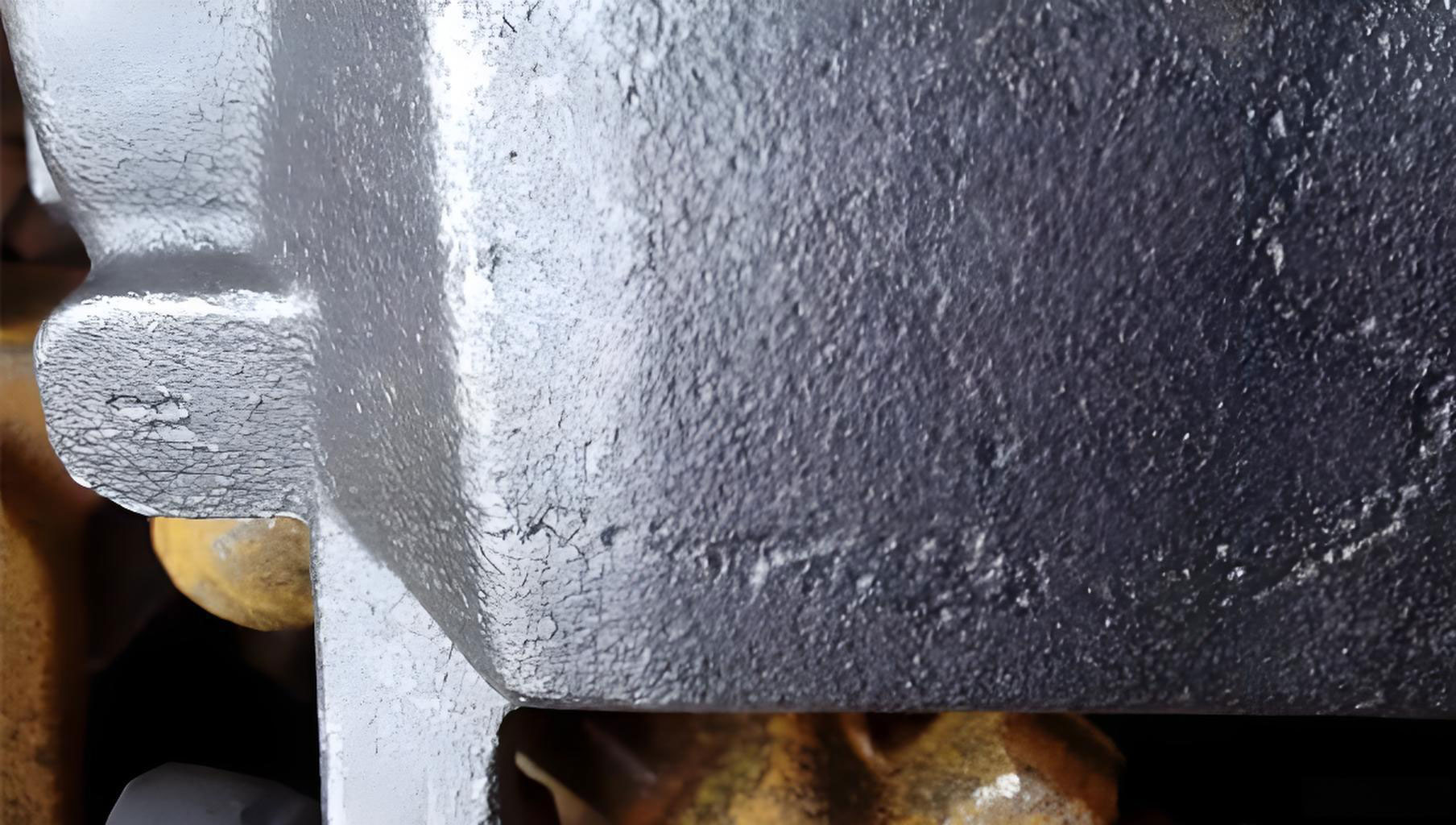
Based on my analysis, the potential sources for sand leading to casting holes can be systematically categorized. A comprehensive understanding of these sources is critical for effective diagnosis.
| Source Category | Description | Key Contributing Factors |
|---|---|---|
| Inadequate Mold Surface Strength | Sand grains dislodge from the mold wall due to thermal and mechanical erosion by molten metal. | Low green compression strength, inadequate clay content, poor sand distribution. |
| Excessive Pouring Dynamics | High velocity or turbulent metal flow physically scours sand from the mold or gating system. | Excessive pouring temperature/rate, poorly designed gating systems. |
| Gating System Failure | Sand is lost from runners, gates, or filters, and is then carried into the cavity. | Weak mold sand at gating junctions, mechanical impact from metal stream. |
| Core or Mold Wall Collapse | Localized sections of the mold or core fracture and fall into the cavity. | Insufficient core strength, severe thermal shock, undercuts. |
| Uncleaned Mold Cavity | Loose sand, known as “floating sand,” remains in the cavity after molding or closing. | Ineffective cleaning procedures, complex cavity geometries. |
| External Contamination | Sand falls into open sprues, risers, or vents after mold closure. | Poor handling practices, airborne sand in the pouring area. |
The initial step in our investigation was to confirm the defect as true casting holes and then eliminate improbable causes. The observed defects on the large brake drums were cavities of varying size, from pinhead to peanut dimensions, located seemingly at random on lower and middle sections of the castings. Crucially, they contained sand particles, confirming them as casting holes. We methodically ruled out several sources from the table above. The pouring temperature was strictly controlled below 1430°C, and the gating system had previously produced sound castings, eliminating “Excessive Pouring Dynamics” and inherent “Gating System Failure” as primary causes. Since the larger drums had been produced successfully before, a fundamental design flaw (“Core or Mold Wall Collapse”) was unlikely. Rigorous procedures for mold blowing before closing and the absence of open vents minimized risks from “Uncleaned Mold Cavity” and “External Contamination.” This deductive process strongly pointed towards “Inadequate Mold Surface Strength” as the root cause.
Subsequent data collection on the molding sand properties revealed significant insights. The green compression strength, a critical indicator of mold integrity, showed a distinct downward trend and excessive variability. Historically stable between 0.145 MPa and 0.179 MPa, readings now fluctuated unpredictably between 0.127 MPa and 0.156 MPa. This decline in strength directly increases the risk of sand erosion and the formation of casting holes. The relationship between green strength (\(\sigma_g\)) and key sand parameters can be expressed as a function of effective bentonite content (\(C_b\)), moisture content (\(M\)), and compactibility (\(Cp\)):
$$ \sigma_g = k_1 \cdot f(C_b, M, Cp) + \epsilon $$
Where \(k_1\) is a process constant and \(\epsilon\) represents other minor factors. A drop in \(C_b\) would directly lower \(\sigma_g\). Further investigation uncovered that additions of bentonite and seacoal (coal dust) had been reduced early in the line’s operation based on temporary observations of high strength and excessive gas generation, without subsequent re-adjustment based on systematic testing. The loss of these materials per cycle (\(L_{cycle}\)) due to burnout and dust removal was not being compensated by the addition rate (\(A_{add}\)). This can be modeled as:
$$ C_{b, effective}(t) = C_{b, initial} + \sum (A_{add} – L_{cycle}) $$
Over time (\(t\)), with \(A_{add} < L_{cycle}\), the effective content drifts below the critical threshold needed for the more demanding larger castings, leading to a higher propensity for casting holes.
| Parameter | Normal Production Period (Target) | Period with Rampant Casting Holes | Impact on Casting Holes |
|---|---|---|---|
| Green Compression Strength | 0.160 ± 0.020 MPa | 0.140 ± 0.015 MPa | Direct decrease increases erosion risk. |
| Bentonite Addition Rate | Adjusted to maintain strength | Fixed at ~0.6% per batch | Insufficient to counter losses. |
| Seacoal Addition Rate | Adjusted for surface finish | Fixed at ~0.4% per batch | Reduced lustrous carbon, worsening burn-on. |
| Mold Hardness | >90 | >85 (but with lower strength) | Hardness alone is misleading without strength. |
| Effective Bentonite Content | 8-10% (estimated) | <7% (estimated) | Core binder level too low for strength. |
| Key Process Change | Standard sand charge for all molds | Reduced sand charge for large drum drag mold | Masked warning signs (core breakage). |
The table clearly illustrates the systemic degradation. A critical masking effect was the intentional reduction of sand charge for the large drum’s drag mold to avoid core breakage during pattern withdrawal. This action concealed the early warning sign—that the sand strength had become inadequate for the deep, complex profile of the large drum core. The problem only became visibly acute when combined with a secondary factor: the use of an embedded fiber filter in the runner. With robust sand, the filter sat securely. With compromised strength, the metal stream during pouring could crush the sand around the filter, a defect known as “sand crushing” or “squeezing.” This process liberated small aggregates of sand, which were then transported into the casting cavity, creating the observed casting holes. The probability (\(P_{hole}\)) of a casting hole forming can be conceptually related to the sand strength and local stress (\(\sigma_{local}\)) from metal flow:
$$ P_{hole} \propto \int (\sigma_{local} – \sigma_g) \, dA $$
for areas where \(\sigma_{local} > \sigma_g\).
At the filter location, \(\sigma_{local}\) is high. As \(\sigma_g\) decreased over time, the condition \(\sigma_{local} > \sigma_g\) was met, initiating sand crushing and the subsequent creation of casting holes.
To arrest the epidemic of casting holes, a multi-pronged corrective strategy was implemented immediately. The measures were designed to restore sand system health, eliminate the immediate trigger, and institute robust process controls to prevent recurrence. The effectiveness of each action in mitigating casting holes was monitored closely.
| Action No. | Corrective Action | Technical Rationale | Expected Impact on Casting Holes |
|---|---|---|---|
| 1 | Increase bentonite addition to 1.4% and seacoal to 0.8% per batch. Maintain until sand strength is consistently in the upper half of specification. | Restores the effective clay and carbon carrier content. Increases green strength (\(\sigma_g\)) and improves surface finish, directly combating the root cause of sand erosion leading to casting holes. | Direct reduction in sand loss from mold walls and gating system. |
| 2 | Machine a relief groove or pocket in the pattern at the filter location. | Eliminates the localized high-stress point (\(\sigma_{local}\)) by providing space for the filter without putting pressure on the surrounding sand, preventing the sand crushing that fed casting holes. | Eliminates the primary sand aggregate source for the observed casting holes. |
| 3 | Restore the standard, full sand charge for the large drum drag mold. | Re-enables the natural process warning system. If sand strength degrades, core breakage will re-occur, providing an early alert before casting holes appear in the final product. | Enables proactive management to prevent conditions conducive to casting holes. |
| 4 | Implement a daily reporting system for sand properties and casting quality correlation. | Forces continuous monitoring and establishes a dynamic balance between sand parameters and product quality. Trends leading to casting holes can be spotted early. | Systemic early detection of factors that cause casting holes. |
| 5 | Establish regular testing for effective bentonite, active seacoal, loss on ignition, clay content, and permeability. | Provides a complete picture of sand system health beyond just green strength. Allows for scientific adjustment of additives based on actual consumption, not just feel. | Fundamental control over the compositional variables that prevent casting holes. |
The results were rapid and definitive. Within one week of implementing these actions, the occurrence of casting holes fell to zero. The accompanying minor defects like burn-on and tear-offs also disappeared. The sand system stabilized, with green strength returning to and maintaining its target band of 0.160-0.175 MPa. The relationship between additive addition (A), loss per cycle (L), and effective content (C) was brought back into equilibrium, which can be expressed as the steady-state condition for preventing casting holes:
$$ A_{add} = L_{cycle} + \Delta C_{target} $$
Where \(\Delta C_{target}\) is the small adjustment needed to keep the system in the optimal zone. Furthermore, the restored sand charge for the large drums meant that any future dip in strength would first manifest as a core breakage issue on the molding machine, serving as a crucial leading indicator, far preferable to discovering casting holes in finished castings.
This incident underscores several paramount lessons for the sustainable control of casting holes in high-volume foundry production. First, the vigilance of all personnel regarding subtle process shifts and quality trends is non-negotiable. Minor defects like localized burn-on are often precursors to major failures like severe casting holes. Second, there must be a disciplined, data-driven approach to maintaining the molding sand system. Relying on a single parameter like green strength or mold hardness is insufficient. A suite of tests, including those for effective constituents, is essential to understand the true state of the sand. Third, process discipline is critical. Deviating from established procedures, such as altering sand charges to solve a symptom (core breakage) rather than addressing the root cause (low sand strength), can mask problems and allow critical defects like casting holes to proliferate. Finally, a holistic view is necessary. The formation of casting holes is often the result of an interaction between a weakened mold system (low \(\sigma_g\)) and a specific design or process feature that imposes high local stress (\(\sigma_{local}\)). Controlling casting holes, therefore, requires both general system health and attention to specific risk points within the mold. By establishing a dynamic, monitored balance between sand properties and product requirements, and respecting process boundaries, the occurrence of costly casting holes can be minimized and stable production of high-quality castings can be assured.