
The rapid global expansion of the electric vehicle industry has created an unprecedented demand for ultra-thin, high-strength steel for battery shells. These casings, often as thin as 0.12 mm, are formed through multi-stage cold stamping of ultra-low carbon steel strips, demanding exceptional formability and flawless surface quality. Among various surface defects, the occurrence of “casting holes” or pinhole defects during stamping poses a significant challenge to production yield and product reliability. This study, conducted from a first-person research perspective, systematically investigates the metallurgical origins of these casting holes. My analysis traces the defect to large, brittle inclusions within the steel matrix and examines the influence of steelmaking practices, particularly steel cleanliness and reoxidation phenomena, on their formation. The objective is to establish process control guidelines to minimize the incidence of these detrimental casting holes.
My investigation began with a detailed failure analysis of battery shell samples exhibiting pinhole defects. Using ASPEX automated scanning electron microscopy, I examined the defect sites and the surrounding steel matrix. The microstructural analysis consistently revealed a critical finding: numerous Al2O3 particles were present within and around the crater-like imperfections. The morphology suggested that these were not native to the steel but were fragments of larger inclusions. This led me to hypothesize that the primary metallurgical cause of the casting holes is the fracture of large, cluster-type Al2O3 inclusions during the severe plastic deformation of cold stamping.
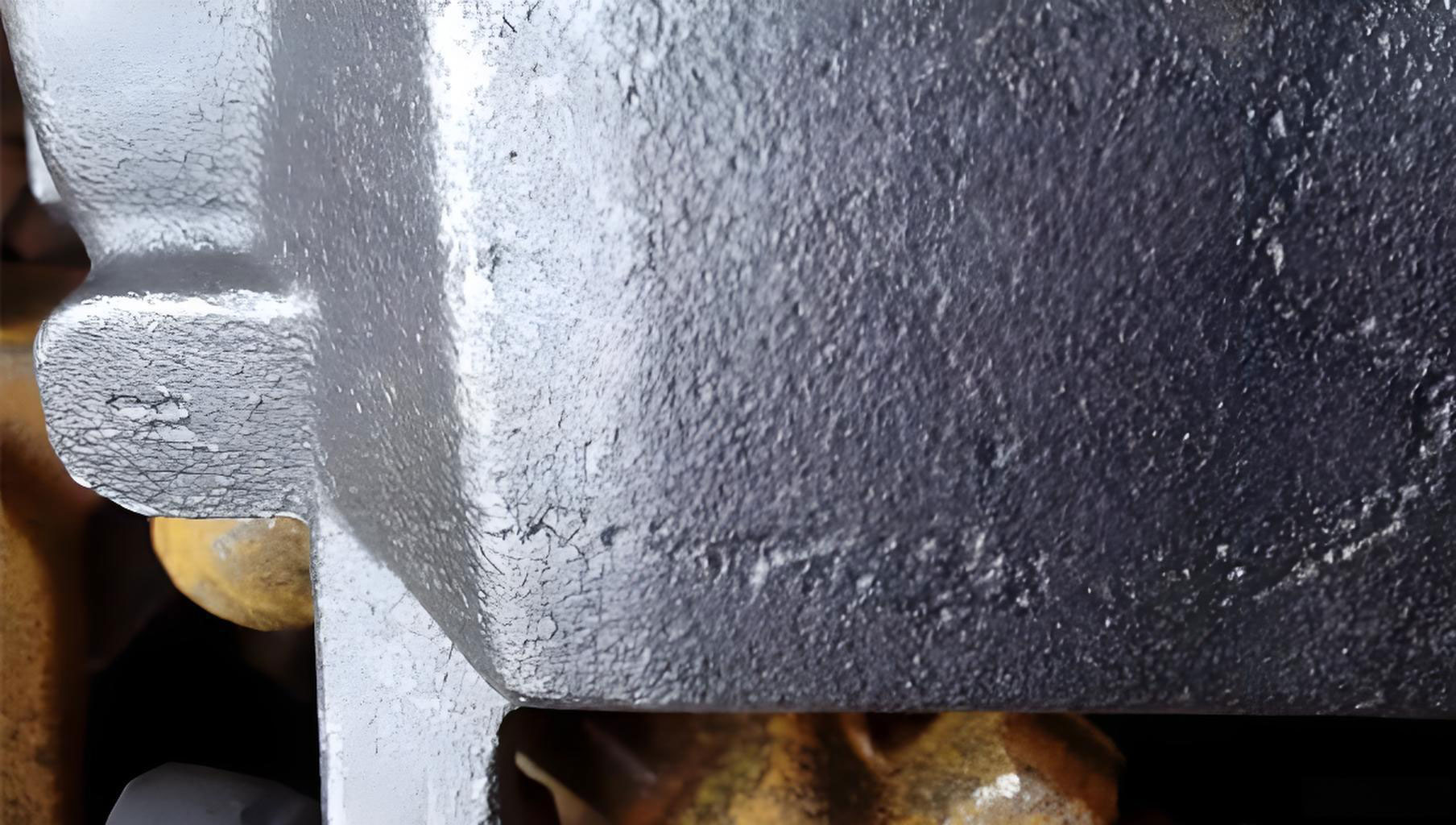
The postulated mechanism for the formation of casting holes is as follows. During the multi-pass stamping operation, the steel sheet undergoes significant thinning and complex strain paths. Large Al2O3 clusters, which are inherently hard and non-deformable, cannot accommodate the plastic flow of the surrounding ferritic matrix. As the steel flows, these brittle inclusions are subjected to immense compressive and shear stresses, causing them to fracture into smaller, angular particles. Concurrently, the steel thickness is drastically reduced. This combination of inclusion fragmentation and sheet thinning brings the fractured particles closer to the surface. At the interface between the hard oxide particles and the softer steel matrix, stress concentrations develop, initiating micro-voids or micro-cracks. With each successive stamping pass, these micro-defects propagate and coalesce, eventually leading to the surface-breaking imperfection identified as a casting hole or pinhole defect. Therefore, controlling the population and size of large Al2O3 inclusions is paramount to eliminating casting holes.
To trace the source of these inclusions, I conducted a comprehensive sampling campaign throughout the steelmaking process of a typical ultra-low carbon battery shell steel, produced via the route: BOF → LF → RH → Slab Casting. The average chemical composition of the steel in the tundish is summarized in Table 1.
| C | Mn | S | P | Si | Als | Ti |
|---|---|---|---|---|---|---|
| 0.0028 | 0.36 | 0.006 | 0.0095 | 0.013 | 0.04–0.08 | 0.045 |
Samples were taken at key stages: after RH degassing, after a 10-minute holding period post-RH, at the start of casting (tundish), at mid-casting, and from the final cast slab. Corresponding ladle slag samples were also acquired after RH treatment and at the end of casting. Steel samples were analyzed for total oxygen (T.O) and nitrogen content using infrared absorption methods, and for soluble aluminum ([Al]s) using ICP-AES. Slag composition was determined by X-ray fluorescence. The population, size, and composition of non-metallic inclusions were characterized using automated feature analysis with ASPEX SEM on polished metallographic specimens.
The evolution of steel cleanliness, as indicated by T.O and [N] content, revealed a critical dynamic. After RH degassing, the T.O and [N] were 43.4 ppm and 32 ppm, respectively. A 10-minute holding period allowed for inclusion floatation, reducing these values to 29.6 ppm and 28.5 ppm. However, a severe reoxidation event was captured at the start of casting, where T.O and [N] in the tundish surged to 57.8 ppm and 56.1 ppm. This was accompanied by a significant drop in the soluble aluminum content by approximately 220 ppm, providing direct chemical evidence of reoxidation. The cleanliness recovered to near RH-holding levels by mid-casting (T.O = 28.7 ppm), but the initial contamination event is crucial for the generation of new inclusions that can lead to casting holes.
| Processing Stage | T.O (ppm) | [N] (ppm) | [Al]s (ppm) |
|---|---|---|---|
| RH Degassing End | 43.4 | 32.0 | 720 |
| RH + 10 min Hold | 29.6 | 28.5 | 740 |
| Casting Start (Tundish) | 57.8 | 56.1 | ~520 |
| Mid-Casting | 28.7 | 29.3 | – |
The principal source of this reoxidation was identified as the oxidizing ladle slag. The composition of the ladle slag is detailed in Table 3. Despite a slag modification practice during RH treatment intended to reduce oxidizability, the FeO content decreased only marginally from 12.94% to 11.12%. More tellingly, by the end of the casting sequence, the FeO content in the ladle slag had dropped significantly to 5.85%. This depletion of FeO from the slag phase into the steel during the casting process confirms a continuous, parasitic reoxidation reaction at the slag-steel interface, which is a potent generator of the alumina inclusions responsible for casting holes.
| Sampling Time | CaO | Al2O3 | MgO | SiO2 | FeO | TFet | MnO |
|---|---|---|---|---|---|---|---|
| Before RH Modification | 43.09 | 17.77 | 7.93 | 6.81 | 12.94 | 13.72 | 2.92 |
| RH End | 41.84 | 21.34 | 7.91 | 6.67 | 11.12 | 11.71 | 3.18 |
| End of Casting | 42.27 | 28.07 | 8.45 | 6.77 | 5.85 | 5.50 | 3.60 |
To quantify the thermodynamic driving force for this reaction, I performed calculations using FactSage™ software (FToxid database) at 1873 K. The reaction governing the transfer of oxygen from slag FeO to steel aluminum is:
$$3(\text{FeO}) + 2[\text{Al}] = (\text{Al}_2\text{O}_3) + 3[\text{Fe}]$$
The equilibrium constant \(K\) for this reaction can be derived from the standard free energy changes of the component reactions:
$$\text{FeO(l)} = \text{Fe(l)} + [\text{O]} \quad \Delta G^\circ_1 = RT \ln K_1$$
$$2[\text{Al}] + 3[\text{O}] = \text{Al}_2\text{O}_3\text{(s)} \quad \Delta G^\circ_2 = RT \ln K_2$$
Combining these gives the overall reaction and its equilibrium constant. The calculated value at 1873 K is:
$$K = \frac{a_{\text{Al}_2\text{O}_3} \cdot a_{\text{Fe}}^3}{a_{\text{FeO}}^3 \cdot a_{[\text{Al}]}^2} \approx 6.2 \times 10^9$$
Where \(a_i\) represents the activity of component \(i\). For a steel with [Al] = 0.05% (activity ~0.03 using appropriate interaction parameters) in equilibrium with pure Al2O3 and pure Fe, the reaction quotient \(Q\) can be evaluated for different slag FeO activities. The results, shown in Table 4, demonstrate that for slags with FeO content above approximately 5%, the reaction quotient \(Q\) is much smaller than the equilibrium constant \(K\) (\(Q << K\)), indicating the reaction will proceed strongly to the right, transferring oxygen from slag to steel and generating Al2O3. Only when the slag FeO content is reduced to below 5% does \(Q\) approach \(K\), effectively suppressing this source of reoxidation and the consequent formation of inclusions that cause casting holes.
| Slag FeO (wt.%) | Estimated \(a_{\text{FeO}}\) | Reaction Quotient \(Q\)* | Equilibrium Constant \(K\) | Driving Force (\(K/Q\)) |
|---|---|---|---|---|
| 5 | 0.04 | 6.15 × 10⁶ | 6.20 × 10⁹ | ~1.0 × 10³ |
| 10 | 0.08 | 7.28 × 10⁵ | ~8.5 × 10³ | |
| 15 | 0.13 | 1.80 × 10⁵ | ~3.4 × 10⁴ |
*Calculated for \(a_{[Al]} = 0.03\), \(a_{Al_2O_3} = 1\), \(a_{Fe} = 1\).
The inclusion population analysis corroborated the chemical findings. The primary inclusion types observed were blocky Al2O3 (typically < 5 µm), spherical or globular Al-Ti-O complexes (< 15 µm), and large, clustered Al2O3 aggregates. It is these latter clusters, often exceeding 50 µm and found in the slab at sizes over 100 µm, that are directly implicated in the formation of casting holes. The number density of total inclusions and, more specifically, cluster-type Al2O3 tracked the cleanliness evolution, as shown in Table 5. The reoxidation at casting start caused a dramatic increase in cluster Al2O3. Even by mid-casting, the population density of these dangerous clusters (0.56 /mm²) remained higher than after the calm RH holding period (0.43 /mm²), indicating the persistent negative effect of the initial reoxidation surge.
| Processing Stage | Total Inclusion Density (pcs/mm²) | Cluster Al2O3 Density (pcs/mm²) |
|---|---|---|
| RH Degassing End | 28.1 | 0.87 |
| RH + 10 min Hold | 10.5 | 0.43 |
| Casting Start (Tundish) | 45.2 | 2.32 |
| Mid-Casting | 10.1 | 0.56 |
The mechanism for the formation of these large clusters during reoxidation is critical to understanding the root cause of casting holes. When dissolved aluminum in the steel is oxidized by FeO from the slag (or air entrainment during opening), the resultant Al2O3 forms as fine, de novo particles. In the highly agitated environment of steel transfer (e.g., during tapping or teeming), these newly formed particles frequently collide. Since Al2O3 is not wetted by liquid steel, the particles tend to adhere upon collision rather than separate. This leads to rapid agglomeration and sintering, forming the large, fragile cluster inclusions. If the casting system (tundish, mold) does not provide sufficient residence time or favorable flow conditions for these large clusters to float out, they become entrapped in the solidifying shell. These entrapped clusters are the direct precursors to the pinhole defects, or casting holes, observed in the final stamped product.
Based on my analysis, the pathway to minimize casting holes is clear. The central strategy must be the stringent prevention of reoxidation throughout the secondary steelmaking and casting process. This hinges on effective slag modification. The thermodynamic calculation provides a clear target: the mass fraction of FeO in the ladle slag must be reduced to less than 5% after RH treatment and maintained at that low level throughout the casting sequence. Achieving this requires optimized slag conditioner composition and addition practice to ensure thorough reduction of FeO and MnO before the start of casting.
Furthermore, operational practices to minimize air entrainment during ladle transfer, tundish opening, and casting are equally vital. This includes ensuring well-sealed shrouding systems between ladle and tundish and tundish and mold, as well as maintaining a protective argon atmosphere over the tundish bath. The tundish design itself should be optimized to promote the floatation of inclusions. This involves configuring flow control devices like dams and weirs to create a calm, plug-flow region with sufficient residence time, allowing even the larger clusters that cause casting holes to separate into the covering flux.
In conclusion, my investigation establishes that the casting holes defects in ultra-low carbon battery shell steel are metallurgically initiated by large, cluster-type Al2O3 inclusions. These inclusions fracture during the cold stamping process, leading to surface pinholes. The formation of these detrimental clusters is predominantly driven by reoxidation events, with the oxidizing ladle slag being a major continuous source. Process data and thermodynamic analysis converge on a critical control parameter: the FeO content in the ladle top slag must be rigorously controlled to a level below 5% before and during casting. By prioritizing slag deoxidation, preventing air ingress, and optimizing inclusion floatation in the tundish, the steelmaker can significantly improve the internal cleanliness of the steel. This directly translates to a reduction in the population of large Al2O3 clusters, thereby effectively eliminating the primary cause of casting holes and enhancing the quality and reliability of battery shell steel for the demanding electric vehicle market. The control of casting holes is, therefore, fundamentally a challenge of controlling steel cleanliness and reoxidation at every step of the liquid steel processing route.