
The persistent challenge of casting holes, commonly referred to as sand inclusions, represents a critical quality and cost barrier in high-volume foundry production. My experience in this field has consistently highlighted a fundamental disconnect: traditional quality control methods are inherently reactive. The standard practice involves discovering a batch of defective castings, followed by a post-mortem analysis often focused on isolating a single culprit parameter. While this can resolve specific incidents, the financial loss from the scrapped batch is irrevocable. More frustrating is the recurring scenario where all monitored process parameters remain within their specified “green” ranges, yet the scrap rate for casting holes inexplicably spikes. This paradox underscores the complex, interactive nature of the casting process, where the confluence of multiple “in-spec” factors can still precipitate failure. The pursuit of a simple yet effective methodology to preemptively control this defect has therefore been a paramount objective in my work.
This drive led to the design and development of an online prediction and control system specifically for casting holes in cylinder blocks. The core philosophy shifts from single-factor monitoring to a holistic, multi-factor synergy model. The system aims to achieve true online control—predicting the likelihood of defect occurrence in real-time during production by comprehensively weighing the interactive effects of all key influencing variables. By introducing the concept of “influence weight” and establishing a robust statistical model, the system can forecast the emergence of casting holes even when each individual parameter appears nominally acceptable. The ultimate goal is to minimize scrap rates, reduce operational waste, and maximize profitability by shifting the paradigm from defect detection to defect prevention.
The evolution of computer applications in foundries provides the essential technological backbone for this approach. Initially, computers aided in design and simulation (like solidification modeling). Later, expert systems were developed for defect diagnosis. However, the leap to proactive, online prediction for defects like casting holes, which result from a complex soup of sand, bonding, and process parameters, has been less explored. This work seeks to bridge that gap, demonstrating a practical framework that moves beyond theoretical simulation to actionable, real-time process control on the shop floor.
Analyzing the Core Problem: Casting Holes in Cylinder Blocks
The cylinder block is a geometrically complex casting, characterized by thin walls, intricate internal passages, and numerous cored features. In high-volume production using green sand and cold-box core processes, achieving consistent quality is a significant challenge. Historical scrap data consistently reveals that casting holes are the dominant defect category, often accounting for over 60% of total scrap. These defects manifest in several critical locations, leading to leaks, machining tool damage, or outright functional failure.
- Surface Holes on Faces: Often elliptical, these are visible after cleaning and typically arise from loose sand on the mold surface or eroded mold edges.
- Internal Holes on Cylinder Bores: Particularly detrimental, as they frequently lead to complete part rejection. They are often caused by sand washed from cores or the gating system during metal pouring.
- Leak-Path Holes: Discovered during pressure testing, these sub-surface holes in thin-wall sections like water jackets cause sealing failures.
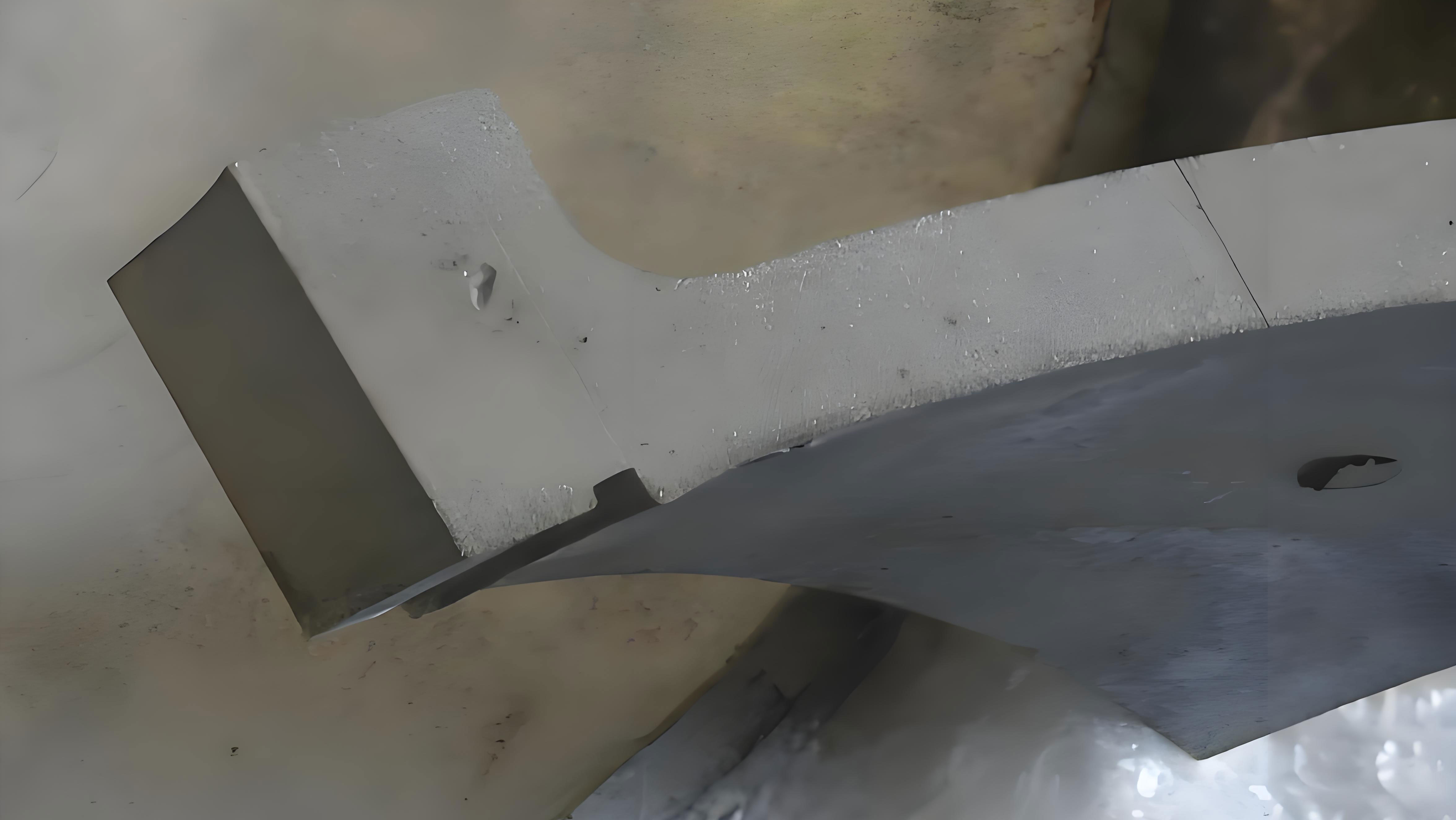
The root causes of these casting holes are multivariate and intertwined. Through longitudinal analysis of production data, ten primary influencing factors were identified as most significant for the specific production line in question. Isolating the effect of each one, while holding others constant at their process mean, yielded characteristic curves showing their individual impact on the casting holes scrap rate. The behavior varies: some factors show a monotonically increasing risk, others a decreasing risk, and some exhibit a minimum-risk “sweet spot.” This data forms the empirical foundation for the model.
| Influencing Factor | Unit | Process Lower Limit | Process Mean (Bi) | Process Upper Limit | Step Length (Li) |
|---|---|---|---|---|---|
| Mold Sand Green Compression Strength | MPa | 0.13 | 0.15 | 0.17 | 0.04 |
| Mold Sand Moisture | % | 2.7 | 3.1 | 3.5 | 0.8 |
| L1 Sand Resin Addition | % | 0.7 | 0.9 | 1.1 | 0.4 |
| L2 Sand Resin Addition | % | 0.6 | 0.8 | 1.0 | 0.4 |
| Pouring Temperature | °C | 1405 | 1415 | 1425 | 20 |
| Mold Sand Compactability | % | 38 | 41 | 44 | 6 |
| Core Shooting Pressure | MPa | 0.3 | 0.4 | 0.5 | 0.2 |
| Amine Curing Gas Pressure | MPa | 0.1 | 0.2 | 0.3 | 0.2 |
| Core Purge Pressure | MPa | 0.3 | 0.4 | 0.5 | 0.2 |
| Sand Hot Wet Tensile Strength | kPa | 2.5 | 3.0 | 3.5 | 1.0 |
Building the Predictive Mathematical Model
The central challenge was to move from understanding individual effects to modeling their combined, real-time influence on the occurrence of casting holes. The model needed to be computable, based on measurable parameters, and provide a clear go/no-go signal for process adjustment.
Core Model Equations
The model is built on three fundamental equations that calculate a single, comprehensive “Process Deviation Index” (Pc).
1. Single Factor Deviation (Pi): This quantifies how far a real-time measured value (X) for factor *i* is from its ideal process mean (Bi), normalized by its allowed process step length (Li), and weighted by its current influence coefficient (λi).
$$ P_i = \lambda_i \frac{|X – B_i|}{L_i} $$
2. Comprehensive Process Deviation Index (Pc): This is the sum of all individual factor deviations. It represents the total aggregated “pressure” from all process parameters pushing the system towards producing casting holes.
$$ P_c = \sum_{i=1}^{n} P_i $$
3. Standard Control Threshold (Ps): This is the critical benchmark value. It represents the maximum allowable aggregated deviation that corresponds to the economically acceptable scrap rate for casting holes (e.g., ~2.1% if total scrap allowance is 3.5%). It is calculated theoretically from the process limits for each factor.
$$ P_s = \sum_{i=1}^{n} \lambda_i \frac{|X_{s_i} – B_i|}{L_i} $$
Where $ X_{s_i} $ is the parameter value at the allowed scrap rate limit for factor *i*. The control logic is simple: If $ P_c > P_s $, the process is predicted to generate an unacceptable level of casting holes and requires adjustment. If $ P_c \leq P_s $, the process is stable.
The Critical Innovation: Dynamic Influence Weight (λ)
The “influence weight” (λ) is the model’s intelligence. It is not a constant. It quantifies both the direction and magnitude of a factor’s effect on casting holes at its specific current value. Its value changes dynamically based on how far the parameter is from its mean:
- $ \lambda > 0 $: The current parameter value favors the formation of casting holes.
- $ \lambda = 0 $: The parameter is in its optimal, neutral range.
- $ \lambda < 0 $: The current parameter value inhibits the formation of casting holes.
The weight function for each factor is derived empirically from the historical single-factor effect curves. It is typically a piecewise linear function for simplicity and computational efficiency within the narrow process window. For example, the weight function for Mold Sand Moisture might be constructed from key points derived from production data:
| Moisture (%) | Inferred Scrap Rate for Casting Holes | Assigned Weight (λ) | Reasoning |
|---|---|---|---|
| 2.7 (Lower Limit) | Very High | +1.0 | Dry sand is friable and prone to erosion, creating casting holes. |
| ~3.13 | Falls to Allowable Limit | 0.0 | Transition from positive to neutral effect. |
| ~3.19 | Rises from Allowable Limit | 0.0 | Transition from neutral to negative effect. |
| 3.5 (Upper Limit) | Very High | -1.0 | Overly wet sand reduces strength and can cause other defects, but its negative weight here reflects its role in reducing certain erosion-based casting holes in this specific system. |
From these points, the piecewise weight equations can be derived. For the segment between the lower limit (2.7, λ=+1) and the first zero point (3.13, λ=0):
$$ \lambda_{moisture} = 4.375X – 12.81 \quad \text{for} \quad 2.7 \leq X < 3.13 $$
This dynamic weighting allows the model to accurately reflect reality: two parameters both at their upper limits may have opposing effects on casting holes (one with λ=+1, another with λ=-1), and their contributions can partially cancel out in the $ P_c $ calculation.
Determining and Validating the Standard Threshold (Ps)
The Standard Control Threshold $ P_s $ is the linchpin for decision-making. Its value was determined through a combination of theoretical calculation and statistical validation against a full year of production data.
Theoretical Calculation: For each factor, the parameter value $ X_{s_i} $ corresponding to the maximum allowable casting holes scrap rate (e.g., 9%) was identified from its historical effect curve. The weight λ at that $ X_{s_i} $ was calculated using its weight function. $ P_s $ was then computed as the sum of all $ \lambda_i |X_{s_i} – B_i| / L_i $. This yielded a theoretical $ P_s $ value.
Statistical Validation: Daily process parameters and corresponding casting holes scrap rates were collected. For each day, the actual $ P_c $ was calculated. The distribution of $ P_c $ for days with acceptable scrap rates was analyzed. The threshold was refined to be the value that, with 95% confidence, separated “normal” from “excessive” deviation. This empirical $ P_s $ was found to be approximately 0.192. Verification runs using historical “good” and “bad” production days confirmed its accuracy. For instance, a day with a measured scrap rate of 2.38% (above the 2.1% limit) had a calculated $ P_c $ of 0.214, which is > 0.192, correctly triggering an “alarm.”
System Development and Implementation Logic
With the mathematical model and validated threshold established, the next step was to encapsulate this logic into a user-friendly online system. The development prioritized simplicity, speed, and clear operational guidance.
The system interface is designed around a single input screen where technicians enter the current measured values for the ten key parameters. Behind the scenes, the core engine executes the following sequence:
- Data Input & Validation: Checks for numeric input and basic range feasibility.
- Dynamic Weight Calculation: For each input value (X), the corresponding piecewise function calculates its current influence weight (λ).
- Deviation Aggregation: Calculates each $ P_i $ and sums them to obtain the real-time Comprehensive Process Deviation Index $ P_c $.
- Decision & Alert: Compares $ P_c $ to the pre-loaded Standard Threshold $ P_s $.
- If $ P_c \leq P_s $: A green signal is displayed: “Process Stable. Casting holes scrap rate within acceptable limits.”
- If $ P_c > P_s $: A red alarm is displayed: “Warning. High probability of excessive casting holes.” Crucially, the system then identifies the factor with the largest absolute weight $ |\lambda| $ as the most sensitive contributor to the problem and provides a directed advisory: “Primary Adjustment Recommended: [Factor Name]. [Increase/Decrease] value towards [Target].” The cursor automatically jumps to that input field to facilitate quick correction.
This advisory feature is the system’s greatest practical strength. It moves from mere prediction to prescriptive control, guiding the operator to the most effective corrective action rather than relying on trial and error. After an adjustment is entered, the system can be re-run instantly to verify that the new $ P_c $ falls below the $ P_s $ threshold, closing the control loop.
Conclusion and Practical Value
The development and application of this online prediction system for casting holes have yielded a robust framework for proactive quality control in a high-volume casting environment. The key conclusions and contributions are:
1. Paradigm Shift from Single- to Multi-Factor Control: The system successfully addresses the industry-wide frustration of “in-spec” parameters causing “out-of-spec” scrap. By integrating the weighted effects of all critical variables into a single Process Deviation Index ($ P_c $), it models the true, interactive nature of the process that leads to casting holes, effectively replacing unreliable single-factor limits with a holistic health metric.
2. Quantification of Interactive Effects via Dynamic Weights: The introduction of the dynamically calculated influence weight (λ) is a core innovation. It translates empirical process knowledge into a quantifiable, computable form. This allows the model to account for the fact that a deviation in one parameter can be amplified or mitigated by the state of others, providing a far more accurate assessment of risk than any parameter viewed in isolation.
3. A Validated, Actionable Mathematical Model: The model, defined by $ P_i = \lambda_i |X – B_i| / L_i $ and $ P_c = \sum P_i $, paired with the statistically validated Standard Threshold $ P_s $, provides a clear, data-driven rule for intervention. It moves quality control from a reactive, interpretive task to a proactive, computational one.
4. Real-World Impact: Implemented as an online tool, the system enables real-time prediction and control of casting holes. It minimizes scrap by allowing correction before defective castings are produced, directly reducing material and energy waste. Furthermore, it empowers floor technicians with clear guidance, reducing downtime and uncertainty during process excursions.
This framework demonstrates that the application of relatively straightforward statistical modeling and software development can yield significant advancements in foundry process control. The concept is extendable; the same methodology of identifying key factors, establishing dynamic weight functions, and calculating a composite deviation index can be adapted to predict and control other complex casting defects, paving the way for more intelligent and autonomous manufacturing systems. The battle against casting holes, a perennial foe in the foundry, is thus advanced from one of post-production containment to one of real-time, predictive command.