
The persistent occurrence of casting holes, often categorized as sand inclusions or blowholes, remains a significant challenge in the production of high-integrity castings such as diesel engine cylinder blocks. These defects not only compromise the pressure tightness and mechanical strength of the component but also lead to substantial scrap rates and economic losses. This article presents a detailed, first-person investigation into the root causes of pervasive casting hole defects in a specific type of diesel engine cylinder block. Through a combination of systematic process analysis, advanced simulation, and meticulous forensic examination of the defects themselves, the study moves beyond conventional wisdom to identify previously overlooked contributing factors. The journey begins with an initial focus on the gating system but ultimately uncovers a more complex interaction between core assembly practices, coating technology, and metal flow dynamics. The findings underscore that mitigating casting holes often requires a holistic approach rather than a single-parameter adjustment. This account details the analytical methods, experimental validations, and the comprehensive set of corrective actions implemented, which collectively succeeded in drastically reducing the defect rate from over 20% to below 3%.
Initial Problem Assessment and Focus on the Gating System
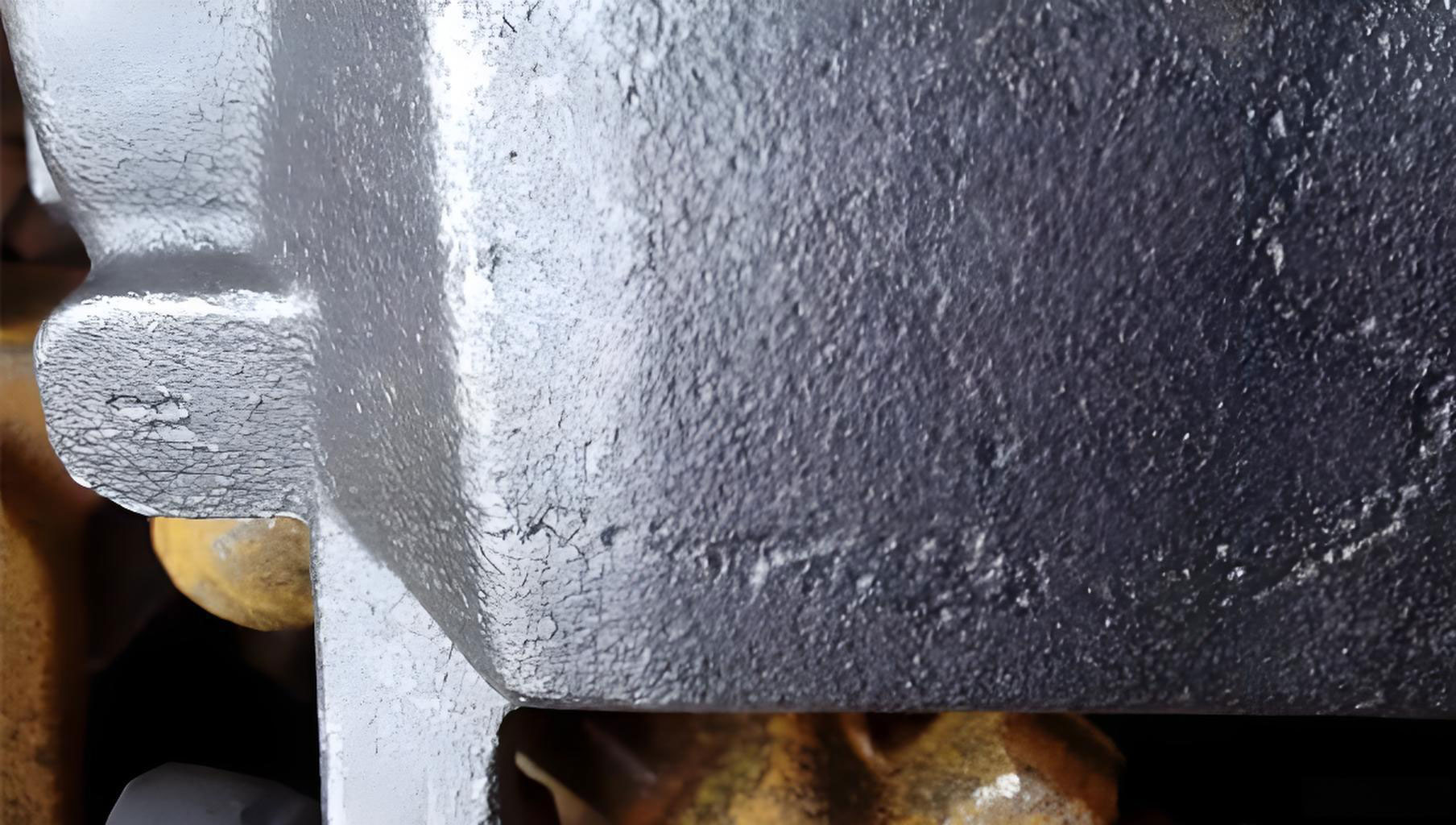
Faced with a consistently high scrap rate primarily attributed to casting holes, the initial diagnostic phase involved a thorough statistical review. The defects manifested in two predominant locations: on the upper surfaces of the castings visible after cleaning, and more critically, on the machined bore walls, which accounted for the majority of machining rejects. Traditional corrective measures, including adjustments to molding sand strength, pouring temperature, and enhanced process discipline, yielded negligible improvement. This resistance to standard fixes prompted a deep re-evaluation of the fundamental process design, starting with the gating system. A three-dimensional analysis of the existing layout revealed several potential vulnerabilities conducive to the formation of casting holes:
- Post-Filter Sand Presence: The filter was positioned in such a way that unbonded molding sand could reside downstream of it. During pouring, this loose sand could be entrained into the metal stream, leading to sand inclusions.
- Ineffective Choke Placement: The controlling choke section was located upstream of the filter. This arrangement prevented precise regulation of metal velocity through individual ingates, leading to unbalanced filling.
- Sequential Filling and Turbulence: The design caused the upper and lower ingates to fill sequentially rather than simultaneously. The significant velocity differential between these streams generated severe turbulence within the mold cavity, increasing the likelihood of mold surface erosion and sand washing.
The hypothesized mechanism for defect formation under this system can be partly described by considering the energy of the flowing metal. The kinetic energy ($E_k$) of the metal stream, which contributes to its erosive power, is given by:
$$E_k = \frac{1}{2} \dot{m} v^2$$
where $\dot{m}$ is the mass flow rate and $v$ is the local flow velocity. An unbalanced gating system creates regions of locally high $v$, thereby increasing $E_k$ and the risk of eroding mold or core surfaces, releasing material that becomes trapped as casting holes.
To visualize these issues, a numerical simulation of the original pouring process was commissioned. The results vividly illustrated the problematic flow patterns: severe turbulence, cold shuts due to premature freezing of slow-flowing metal, and significant temperature gradients across the casting. The simulation confirmed that the gating system was a primary suspect in generating the conditions for casting holes.
Redesign of the Gating System
Based on this analysis, a redesigned gating system was developed with clear objectives: to promote laminar flow, ensure simultaneous filling, and enhance slag and sand trapping capability. The key modifications were:
- Integrated Filter Placement: The filter was relocated to be encapsulated within the core assembly. This ensured that no loose sand could exist in the metal path after the filtration point.
- Strategic Choke Location: The choke was positioned between the runner and the ingates. This allowed for precise control of metal velocity into each ingate, balancing the flow.
- Balanced Ingate Design: The ingate geometry and cross-sectional areas were calculated to achieve near-simultaneous metal arrival at all critical sections of the mold cavity, minimizing turbulence.
The new design was modeled and simulated, showing a dramatic improvement. Metal flow appeared calm and sequential, with markedly reduced temperature differentials. The initial implementation of this new gating system did yield a measurable, yet insufficient, reduction in casting hole defects. While the scrap rate improved, it remained unacceptably high. This result was critical—it indicated that while the gating system was a contributing factor, it was not the sole root cause of the casting holes. This forced a return to the physical evidence: the defects themselves.
| Feature | Original Gating System | Redesigned Gating System |
|---|---|---|
| Filter Location | Upstream, with sand possible downstream | Encapsulated within core, no downstream sand |
| Choke Position | Upstream of filter | Between runner and ingates |
| Filling Pattern | Sequential, turbulent | Simultaneous, laminar |
| Primary Function | Basic metal delivery | Flow control, filtration, and calming |
Forensic Analysis: Identifying the True Nature of the Inclusions
Shifting focus, a meticulous examination of the casting holes was undertaken. The strong positional recurrence (upper surface, bore walls) suggested a systematic source. Microscopic analysis at 40x magnification was conducted on material extracted from defect sites. For comparison, samples of the core sand and the refractory coating used on the cores were separately ignited. The visual morphology of the defect inclusions showed a striking resemblance to the residue of the burned coating, characterized by a sintered, vitrified structure, and was distinctly different from the granular, crystalline appearance of burned sand.
This visual evidence led to the hypothesis that the casting holes were not primarily “sand” holes but “coating” holes. A controlled experiment was designed to test this: within a single mold, one set of cores was coated per the standard process, while an adjacent set was left uncoated. After pouring and cooling, the result was revealing. The uncoated core produced a casting with severe metal penetration and burn-on on the bore surfaces, but notably, it was free from the discrete, scattered casting holes. The coated core, however, exhibited the familiar pattern of casting holes. This experiment strongly implicated the core coating as the source of the inclusions.
To obtain definitive chemical proof, Energy Dispersive X-ray Spectroscopy (EDS) was performed on the defect sites. The analysis compared the chemical composition of the inclusion material directly to the adjacent sound metal. The results showed a significant elevation in Silicon (Si) content within the inclusion. The proprietary core coating was known to contain high levels of silica (SiO₂) and other refractory silicates as a base. This chemical fingerprint confirmed that the inclusions were, in fact, eroded and entrained core coating material. The mechanism was now clearer: the coating was detaching from the core surfaces, becoming suspended in the molten iron, and finally being trapped within the solidifying metal to form casting holes.
| Sample Point | Silicon (Si) Content (Weight %) | Iron (Fe) Content (Weight %) | Interpretation |
|---|---|---|---|
| Defect Inclusion | ~35-45% | ~50-55% | High Si confirms coating origin |
| Adjacent Sound Metal | ~2-3% (alloy base) | ~93-95% | Normal alloy composition |
| Reference Core Coating | ~50-60% | Trace | Primary constituent is silica/silicates |
Tracing the Source: Core Assembly and the Role of Chaplets
Identifying the coating as the culprit was only half the solution. The next question was: From which specific location was the coating most vulnerable to erosion and detachment? A systematic dissection of a production-ready mold assembly was conducted. This forensic audit revealed the critical link. The cylinder block design required the use of metal chaplets (studs) to support the complex water jacket core within the mold cavity. The standard assembly sequence was to attach these chaplets to the core before the core received its refractory coating via dipping. Consequently, the chaplets were fully coated alongside the sand core.
This practice created a perfect storm for generating casting holes. During pouring, the molten iron (at ~1380-1420°C) rapidly melts the small steel chaplets. However, the refractory coating on the chaplet’s surface, designed to withstand high temperatures, does not dissolve in the iron. Instead, it detaches as solid or semi-sintered particles. Furthermore, at the junction where the chaplet met the sand core, a meniscus of excess coating would accumulate during dipping. This accumulated mass was particularly prone to being washed away by the incoming metal stream. The force ($F_{erosion}$) required to detach a particle can be related to the shear stress ($\tau$) at the metal-coating interface, which in turbulent flow is a function of density ($\rho$), velocity ($v$), and a friction factor ($f$):
$$\tau \propto \frac{1}{2} \rho v^2 f$$
The redesigned gating system helped reduce $v$, thereby lowering $\tau$ and $F_{erosion}$, but the fundamental vulnerability of the coated chaplet remained.
These detached coating fragments were then carried by the turbulent flow throughout the cavity. Lighter particles floated to the upper surfaces of the casting, while others were swept into the water jacket passages and deposited on the bore walls, later being exposed during machining. This explained the precise and reproducible location of the casting holes.
Integrated Corrective Strategy and Implementation
The root cause analysis pointed to two interdependent issues: a suboptimal gating system that created turbulent conditions, and a core assembly process that introduced a vulnerable source of refractory inclusions. Therefore, the solution required a dual-pronged, integrated strategy.
1. Final Optimization of the Gating System: The redesigned system from the earlier phase was fully standardized. Its primary role was now understood as creating the calmest possible filling environment to minimize any erosive forces acting on the cores and, critically, to reduce the energy available to transport any loosened coating particles. A well-designed gating system acts as the first line of defense against all forms of inclusion-related casting holes.
2. Revolutionary Change to Core Assembly and Coating Process: This was the most critical corrective action. The sequence was completely inverted:
- Modification of Core Geometry: Precise pockets were created in the water jacket core at the locations where chaplets were required.
- Coating First: The bare sand core was dipped and coated, then thoroughly dried/cured. The coating was now only on the sand surfaces.
- Chaplet Insertion Post-Coating: The metal chaplets were manually inserted into the prepared pockets in the already-coated core.
- Pocket Sealing: The small gaps around the inserted chaplet were carefully sealed with a minimal amount of core repair paste. This secured the chaplet and prevented metal leakage, but crucially, the chaplet itself remained free of the primary refractory coating.
This method ensured that when the chaplet melted, it introduced clean liquid steel into the casting, not a solid coating fragment. The vulnerable coating meniscus at the chaplet-core joint was eliminated.
3. Enhanced Mold Hygiene: Concurrently, strict protocols were enforced during final mold assembly to eliminate all sources of loose sand. This included thorough cleaning of mold cavities, careful handling of cores, and the use of vacuum systems during closing. This addressed any residual potential for traditional sand-originated casting holes.
| Corrective Action | Targeted Issue | Mechanism of Effect |
|---|---|---|
| Gating System Redesign | Turbulent flow, high erosion potential | Reduces metal velocity ($v$) and shear stress ($\tau$), promoting laminar fill and lower particle transport energy. |
| Chaplet-Process Inversion | Coated chaplets as inclusion source | Prevents coating material from being introduced into the melt via chaplet melting, eliminating a major source of inclusions. |
| Strict Mold Hygiene | Loose sand inclusions | Eliminates secondary, traditional sources of sand that could cause casting holes. |
Results and Conclusion
The implementation of this combined strategy was followed by a sustained monitoring period over several production batches. The results were definitive and highly positive. The incidence of casting holes on the upper surfaces of the cylinder blocks became virtually negligible. More importantly, the defect that had been the primary driver of machining scrap—casting holes on the machined bore walls—was reduced from an initial, persistent rate of over 20% to a stable level below 3%. This represented a breakthrough in product quality and process capability.
In conclusion, this investigation into the pervasive casting hole defects yielded critical insights that transcend the specific case study. The journey from suspecting the gating system to definitively pinning the cause on core coating detachment from chaplets highlights a fundamental principle in foundry defect analysis: visible defects like casting holes often have a complex, multi-factorial origin. The following key learnings were crystallized:
- The Gating System is a Foundational Control: An improperly designed gating system that generates turbulence and high localized velocities can exacerbate almost any inclusion-related defect, including casting holes. It can increase the erosive removal of material and its distribution throughout the casting. Optimizing the gating system is a necessary, but not always sufficient, step.
- Forensic Defect Analysis is Indispensable: Visual inspection, microscopic examination, and chemical analysis (like EDS) of the defect inclusion are powerful tools to move from speculation (“sand holes”) to factual diagnosis (“coating holes”). This directs corrective efforts with precision.
- Process Interactions are Critical: The sequence of operations in core making and assembly can create unanticipated vulnerabilities. The standard practice of coating cores with chaplets already attached created a latent source of inclusions that would manifest only during casting. Re-engineering this sequence was the pivotal action that broke the cycle of defect generation.
- Holistic Solution is Required for Stubborn Defects: Lasting resolution of chronic quality issues like casting holes typically requires a systemic approach. In this case, it involved the synergy of fluid dynamics control (gating), a change in material introduction (chaplet process), and attention to basic shop floor discipline (mold hygiene).
The successful resolution demonstrates that a methodical, evidence-based approach to troubleshooting casting holes can lead to dramatic improvements. It reinforces the idea that every component introduced into the mold cavity—be it sand, coating, chaplet, or even a repair paste—must be evaluated for its potential to become an inclusion under the intense thermal and hydraulic conditions of the pouring process. By controlling these factors comprehensively, the foundry can achieve a high level of reliability and quality, minimizing the costly and wasteful occurrence of casting holes.