
In my years of experience within the foundry, I have come to regard porosity in casting as one of the most pervasive and challenging defects to consistently eliminate. These voids within the metal structure, appearing as spherical, elongated, or irregular cavities, not only compromise the mechanical integrity of a component but can also lead to catastrophic failure under load or pressure. The fundamental cause of porosity in casting is universally rooted in an imbalance of pressure: when the local gas pressure at a point within the solidifying metal exceeds the metallostatic pressure exerted by the liquid metal, a bubble is formed and trapped. While this principle is straightforward, the sources of this gas and the pathways for its entrapment are numerous and often interrelated, making diagnosis and remedy a complex task. This article synthesizes practical knowledge and theoretical principles to provide a comprehensive analysis of the origins and, crucially, the prevention strategies for porosity in casting.
Understanding the types of porosity in casting is the first critical step. While all are gas-related, their genesis differs significantly, which informs the corrective action.
| Type of Porosity | Primary Gas Source | Typical Location & Morphology | Key Identifying Feature |
|---|---|---|---|
| Intrusive (Blowhole) Porosity | Mold or core gases (moisture, binders). | Often subsurface or near hot spots; relatively large, smooth-walled cavities. | Directed towards the cope or nearest free surface; smooth interior. |
| Precipitated (Microshrinkage, Pinhole) Porosity | Gas dissolved in the molten metal (H2, N2). | Scattered uniformly or in interdendritic regions; very fine, often dendritic walls. | Can be confused with shrinkage; walls may show dendritic structure under magnification. |
| Reaction Porosity | Chemical reaction (e.g., C + FeO → CO). | Often at mold/metal interface or near internal chills/cores. | Associated with oxidation or specific materials (e.g., damp core inserts). |
| Entrapped Air Porosity | Turbulence during mold filling. | Along fill paths or in isolated pockets. | Irregular shape, often found in groups downstream of turbulent areas. |
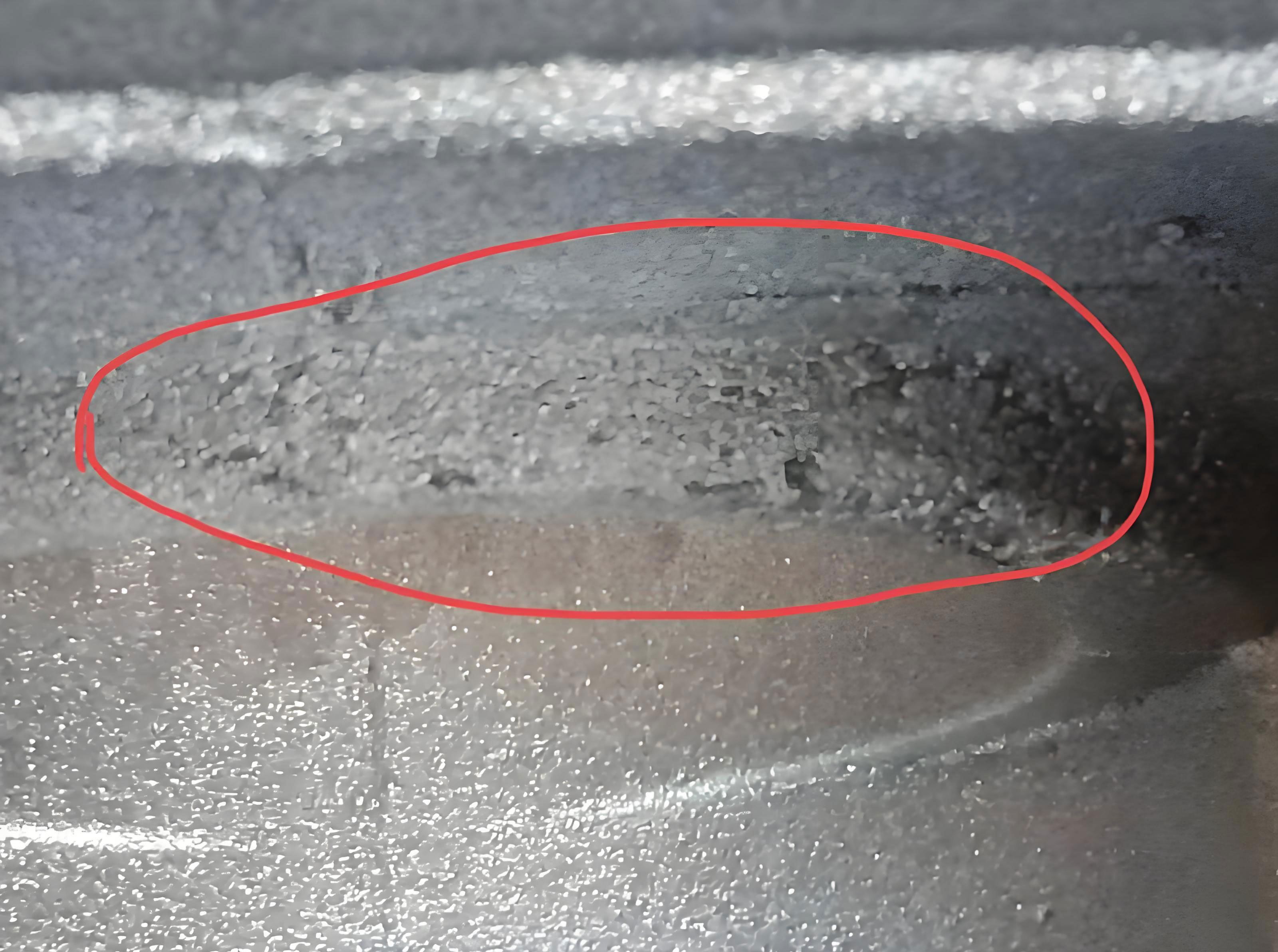
Distinguishing gas porosity in casting from shrinkage cavities is vital, as the remedies are opposite. A classic, though not infallible, rule is that gas pores tend to have smooth, shiny walls, while shrinkage cavities exhibit dendritic, jagged surfaces. The challenge arises when both phenomena occur simultaneously in the last-to-freeze sections of a casting.
1. Foundational Principles: The Pressure Balance
The formation of any blowhole or intrusive porosity in casting is governed by a simple pressure equilibrium. For a gas bubble to nucleate and grow at the mold/metal interface, the gas pressure (\(P_{gas}\)) must overcome the opposing pressures.
The condition for bubble formation is:
$$P_{gas} > P_{metal} + P_{atm} + \frac{2\sigma}{r}$$
Where:
\(P_{gas}\) = Total pressure of gases generated from the mold/core,
\(P_{metal}\) = Metallostatic pressure at that point (\( \rho g h \)),
\(P_{atm}\) = Atmospheric pressure,
\(\sigma\) = Surface tension of the metal,
\(r\) = Radius of the bubble nucleus.
This equation highlights the primary defense against porosity in casting: maximizing \(P_{metal}\) through adequate feeding head (sprue and riser height) and minimizing \(P_{gas}\) by controlling gas generation and ensuring its venting.
2. Systematic Analysis of Causes for Porosity in Casting
Preventing porosity in casting requires a methodical examination of every stage of the process. The following sections detail the potential failure points.
2.1. Pattern, Casting, and Tooling Design
Design decisions that hinder gas escape or reduce metal pressure directly predispose a casting to porosity. Common issues include:
- Inadequate Core Prints or Vent Paths: Small core prints restrict the cross-sectional area for gas to escape from the core into the atmosphere. If the pattern lacks clear vent grooves on prints, metal can seal the only exit, trapping gas inside the core.
- Insufficient Metallostatic Pressure Head: A casting with heavy sections located high in the mold may not develop enough pressure at those points if the sprue/riser height is not correspondingly increased. The pressure at a depth \(h\) is given by \(P_{metal} = \rho_{metal} \cdot g \cdot h\).
- Gas Entrapment at Parting Lines: If the parting plane is a large, flat area, gases collecting here may not escape quickly, leading to surface blowholes. Incorporating shallow vent grooves on the mold joint can alleviate this.
2.2. Molding Sand and Core Sand
The molding aggregate is a primary source of gas. Control of its properties is paramount to prevent porosity in casting.
| Factor | Mechanism Leading to Porosity | Optimal Control Parameter |
|---|---|---|
| High Moisture Content | Excess water vaporizes violently upon contact with metal, creating high local \(P_{gas}\). | Maintain moisture at the minimum necessary for green strength (typically 2.5-4.0% for green sand). |
| Poor Permeability | Fine, poorly distributed sand grains block gas flow, increasing back-pressure. | Use well-graded sand; maintain permeability number (often 80-150 for cast iron). |
| Excessive Volatiles (Coal Dust, Resins) | High gas evolution overwhelms venting capacity. | Limit additions; 3-5% sea coal is common for gray iron. |
| Sand Contamination (Slag, Nodules) | Localized gas sources create discrete blowholes. | Implement effective sand reclamation and screening. |
| Poor Mulling | Clay or moisture lumps become intense local gas generators. | Standardize mulling time and equipment maintenance. |
The permeability of a sand mixture is a critical metric. It can be approximated by the pressure drop of air flowing through a standard specimen:
$$P = \frac{Q \cdot H \cdot \mu}{A \cdot k}$$
Where \(P\) is pressure drop, \(Q\) is flow rate, \(H\) is sample height, \(A\) is area, \(\mu\) is air viscosity, and \(k\) is permeability. A low \(k\) value signals high risk for porosity in casting.
2.3. Core Making and Placement
Cores, surrounded by hot metal, are extreme gas generators. Their management is crucial.
- Incomplete Drying/Curing: Undercured resin-bonded or oven-dried cores release massive amounts of gas. Core stoves must have correct temperature profiles.
- Poor Internal Venting: Cores must have adequately sized and connected vent channels (wax strings, perforated vents) leading to the print. These must not be blocked by coating or adhesive.
- Core Coatings: Thick, un-dried, or damaged coatings can trap core gases, forcing concentrated release at a weak spot, causing a large blowhole.
- Hygroscopicity: Many binders absorb moisture from the atmosphere, leading to delayed gas generation. Minimize storage time of finished cores.
- Contaminated Core Sand: Foreign materials (wood, rust) introduce unpredictable gas sources.
2.4. Molding and Mold Assembly
Practices on the molding floor directly influence gas behavior and are a common source of variability leading to porosity in casting.
| Practice | Error & Consequence | Preventive Measure |
|---|---|---|
| Condensation (Cold/Hot Materials) | A cold chill or core placed in a warm mold draws moisture to its surface, creating a high-gas zone. | Pre-warm chills and cores to near mold temperature. Reduce mold-to-pour time. |
| Inadequate Mold Venting | Reliance on sand permeability alone is insufficient for large molds. Gases build up in pockets. | Use vent rods or needles systematically, especially in deep pockets and near cores. |
| Over-ramming | Creates hard spots with locally reduced permeability, particularly over pattern contours. | Train on uniform ramming; use controlled pressure systems. |
| Proximity of Reinforcements | Flasks, hooks, or braces too close to the cavity act as heat sinks and moisture condensation sites. | |
| Excessive Paste/Wash | Thick layers of mold sealant or paint introduce high moisture/volatiles that may not fully dry. | Use diluted, well-applied coatings and ensure thorough drying (e.g., torch flashing). |
2.5. Metallurgy, Melting, and Pouring
The condition of the metal itself is a major factor, particularly for precipitated porosity in casting.
For Steel: Hydrogen and nitrogen solubility drops sharply upon solidification. Proper oxidizing boil and subsequent deoxidation sequence are critical. The final gas content must be minimized. A relationship for hydrogen solubility is given by Sieverts’ Law:
$$[H] = K_H \sqrt{P_{H_2}}$$
Where \([H]\) is dissolved hydrogen concentration, \(K_H\) is the equilibrium constant (temperature-dependent), and \(P_{H_2}\) is the partial pressure of hydrogen. Melting under a wet atmosphere raises \(P_{H_2}\), increasing \([H]\) and the risk of pinhole porosity in casting.
For Cast Iron: A common source of subsurface pinholes is a low pouring temperature coupled with oxidized metal or slag inclusions. The reaction \(C + FeO → CO + Fe\) generates gas at the last moment. Maintaining a high superheat (e.g., >1420°C for gray iron) and good slag practice is essential.
For Non-Ferrous Alloys (Al, Mg, Cu): These are notoriously prone to absorbing hydrogen. Melting under a covering flux or inert atmosphere, followed by degassing with inert gas (N2, Ar) or solid fluxes (e.g., hexachloroethane for Al), is standard practice to prevent microporosity.
Pouring Practice: Errors here can introduce both entrapped air and thermal conditions favorable to gas evolution:
- Cold, Damp Ladles: Generate steam, introducing hydrogen into the stream.
- Low Pouring Temperature: Increases metal viscosity, hindering bubble float-out and reducing metal pressure head as it cools faster.
- Turbulent Gating: Un-tapered sprues, abrupt turns, and small choke areas aspirate air into the metal stream. The Bernoulli principle shows that high velocity (\(v\)) in a restricted area leads to low pressure (\(P\)): $$P + \frac{1}{2}\rho v^2 + \rho gh = constant$$ A local pressure drop below atmospheric can draw in air from the mold cavity or core vents.
- Interrupted Pour: Breaks the metal seal in the gating system, allowing air to be sucked into the mold.
2.6. Use of Chills, Chaplets, and Inserts
These internal items, if not properly prepared, become direct sources of reaction porosity in casting.
- Oxidized, Rusty, or Damp Surfaces: Any oxide or moisture reacts violently with the hot metal, generating gas (H2 from moisture, CO from reaction with carbon in iron).
- Improper Fixation: A chaplet or internal chill that shifts can create a gap that fills with gas or moisture-laden sand.
3. Integrated Prevention Strategy for Porosity in Casting
Prevention is not about a single fix but a systematic control across the entire process flow. The following table summarizes the primary countermeasures aligned with the causes discussed.
| Process Area | Primary Objective | Specific Actions to Prevent Porosity in Casting |
|---|---|---|
| Design & Tooling | Maximize gas escape & metal pressure. | Design generous core prints with vent grooves. Ensure adequate sprue/riser height for pressure head (\(h\)). Consider venting at the mold parting line. |
| Sand Control | Minimize & vent mold gases. | Control moisture and volatile content rigorously. Maintain high, consistent permeability. Use sand testing (moisture, permeability, strength) daily. |
| Core Making | Ensure low-gas, well-vented cores. | Verify full cure/drying. Install robust, open vent networks. Use dry, permeable coatings. Limit core storage time in humid environments. |
| Molding | Create a permeable, dry mold cavity. | Ram uniformly, avoid hard spots. Install abundant venting in deep sections. Pre-warm all chills and heavy inserts. Dry washes/repairs thoroughly. |
| Melting | Deliver gas-free metal. | Steel: Control boil and deoxidation. Iron: Superheat above critical temperature. Aluminum: Degas with rotary impeller or proven fluxes. Monitor charge cleanliness. |
| Pouring | Fill smoothly without turbulence or cooling. | Use tapered sprues with well bases. Maintain a pressurised, non-turbulent gating system. Pour at the correct, high temperature without interruption. Keep ladles hot and dry. |
| General | Eliminate secondary gas sources. | All chills, chaplets, and inserts must be clean, dry, and preferably warmed. Use exothermic riser sleeves to maintain local pressure. |
4. Diagnostic Approach: A Practical Flow
When porosity in casting is detected, a structured investigation is required:
- Locate and Characterize: Is the porosity subsurface (intrusive) or dispersed (precipitated)? Are the walls smooth or dendritic? Mapping the location on multiple castings can reveal a pattern linking to a specific core or hot spot.
- Analyze the Process Timeline: Correlate the defect’s appearance with recent changes in sand properties, binder ratios, melting practice, or pouring temperature logs.
- Check the Pressure Balance: For blowholes, calculate the metallostatic head at the defect location. Was it sufficient? Were vents open and clear?
- Inspect Materials: Check moisture on chills, cure state of a core sample, or sand permeability from the relevant mold section.
Often, the solution involves adjusting multiple small factors rather than one large change. For instance, a porosity problem near a heavy section might be solved not just by adding a riser, but by also improving the permeability of the sand around that riser to allow gases from the core below to escape sideways, rather than being forced into the casting.
5. Conclusion
Porosity in casting is a defect born from the competition between gas generation/entrapment and the metal’s ability to resist it. Its prevention is a testament to the foundry engineer’s comprehensive control over the entire process chain—from the design stage and sand mix formulation to core baking, mold venting, metallurgical treatment, and disciplined pouring. There is no universal panacea. Success lies in understanding the fundamental physics and chemistry at play, meticulously controlling each variable, and adopting a disciplined, investigative approach when defects occur. By viewing the casting system as an integrated whole—where the mold, the core, and the metal interact dynamically—we can develop robust processes that consistently minimize the risk of porosity in casting, ensuring the production of sound, reliable components.