
In my years of experience in the die casting industry, I have consistently observed that porosity in casting is one of the most pervasive and detrimental defects, leading to compromised mechanical properties, leakage failures, and increased scrap rates. Addressing this issue requires a holistic approach, integrating insights from mold design, process parameters, metallurgy, and auxiliary systems. This article delves into the core strategies for minimizing porosity in casting, with a particular emphasis on mold engineering and critical process variables that are often overlooked. I will present detailed analyses, supported by formulas and tables, to provide a comprehensive guide for practitioners aiming to enhance casting integrity.
The formation of porosity in casting is inherently linked to the entrapment of air, gases from lubricants, or shrinkage during solidification. In die casting, the rapid injection of molten metal into a mold cavity creates a dynamic environment where gas entrapment is likely if the flow is turbulent or if venting is inadequate. My approach focuses on two primary avenues: optimizing the mold design to facilitate orderly filling and efficient gas expulsion, and fine-tuning the process parameters to control the melt flow and minimize air incorporation. Throughout this discussion, the term ‘porosity in casting’ will be frequently referenced to underscore its central importance.
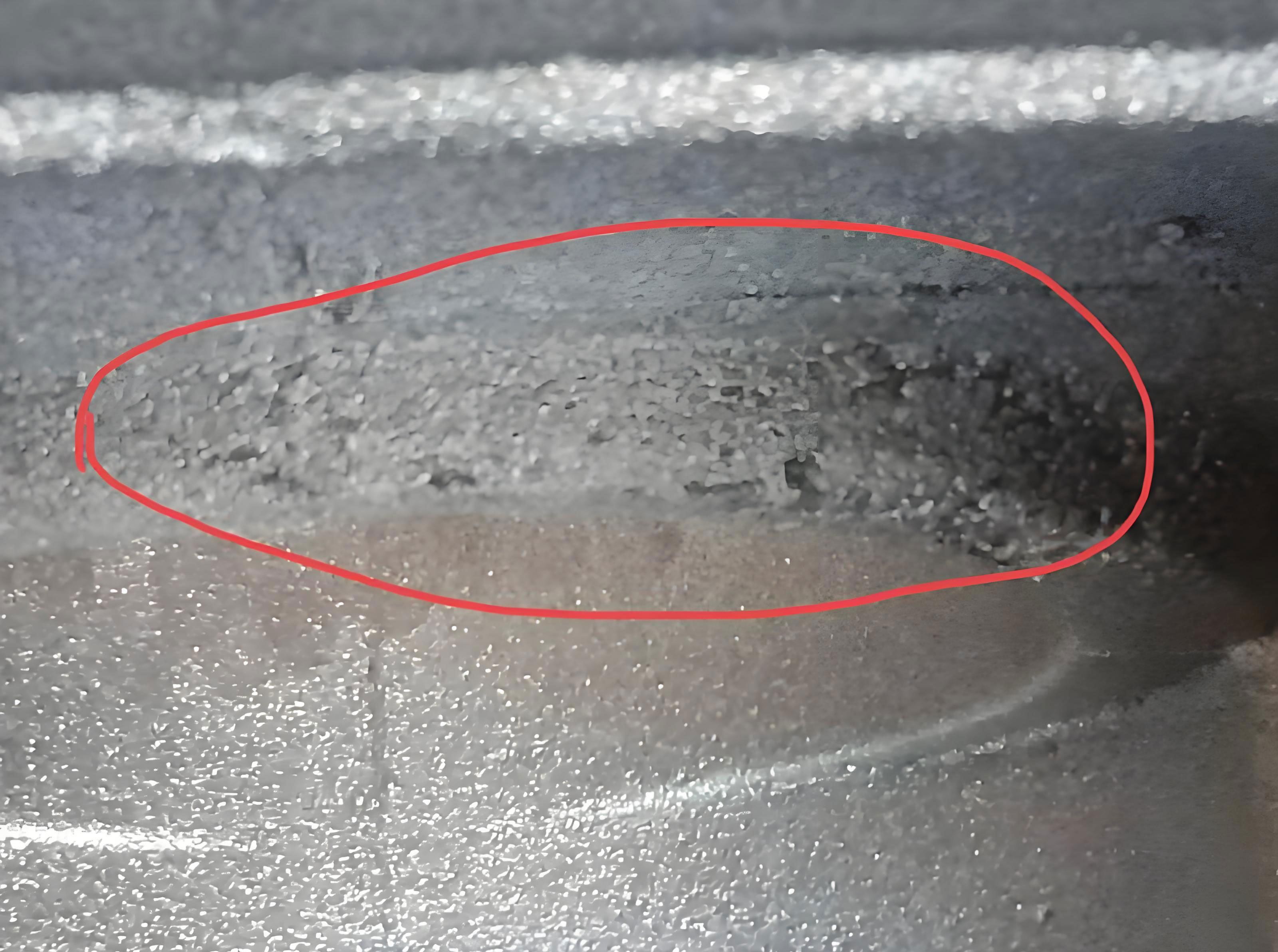
Let me begin with the mold, which I consider the most crucial and active element in controlling porosity in casting. The gating and venting system is not merely a passage for metal; it is a sophisticated hydraulic network designed to manage kinetic energy, flow direction, and gas evacuation. An ill-designed system inevitably leads to turbulence, jetting, and premature sealing of vents, all of which exacerbate porosity in casting. The ideal flow state is laminar or minimally turbulent, allowing the melt front to progress smoothly along the mold walls, pushing air ahead toward vents and overflows. Computer simulation software has become an invaluable tool for visualizing flow patterns, but interpreting results and modifying designs still rely heavily on empirical knowledge. For instance, the direction and distribution of gate entries profoundly impact flow order. Gates should be oriented to promote wall-hugging flow, and their layout must prevent impingement and gas entrapment in blind pockets. The following table summarizes key mold design principles to mitigate porosity in casting:
| Design Element | Principle | Effect on Porosity in Casting |
|---|---|---|
| Gate Location | Position to ensure sequential filling from thick to thin sections. | Reduces air entrapment by allowing gas to escape via vents. |
| Gate Direction | Angle gates to direct flow along cavity walls. | Minimizes turbulent impingement and bubble formation. |
| Runner Design | Use tapered runners with smooth transitions (large radii). | Maintains steady flow velocity, reducing vortex formation. |
| Overflow and Vent Design | Place overflows at last-filled areas; ensure adequate vent cross-section. | Provides escape routes for air and contaminated metal front. |
| Die Temperature Control | Maintain uniform die temperature via cooling channels. | Prevents premature solidification that can trap gas. |
The relationship between flow velocity and gas entrapment can be modeled using fluid dynamics. For a melt flowing through a gate, the critical velocity below which turbulence is minimized can be approximated by considering the Reynolds number ($Re$). For flow in a conduit:
$$ Re = \frac{\rho v D}{\mu} $$
where $\rho$ is the melt density, $v$ is the velocity, $D$ is the hydraulic diameter, and $\mu$ is the dynamic viscosity. To avoid excessive turbulence that promotes porosity in casting, we aim for $Re$ below a critical threshold, often around 2000 for transitional flow. Rearranging for velocity:
$$ v_{\text{critical}} = \frac{Re_{\text{critical}} \cdot \mu}{\rho D} $$
This formula underscores the need to balance gate size and injection speed to maintain laminar conditions, directly impacting porosity in casting.
Moving to process parameters, the control of the injection phase is paramount. Two factors stand out in my analysis: the shot sleeve fill ratio (or percent fullness) and the transition point between slow and fast injection phases. The fill ratio is defined as:
$$ \text{Fill Ratio} (FR) = \frac{V_{\text{melt}}}{V_{\text{chamber}}} = \frac{A_{\text{chamber}} \cdot L_{\text{melt}}}{A_{\text{chamber}} \cdot L_{\text{chamber}}} = \frac{L_{\text{melt}}}{L_{\text{chamber}}} $$
where $V_{\text{melt}}$ is the volume of molten metal, $V_{\text{chamber}}$ is the shot sleeve volume, $A_{\text{chamber}}$ is the sleeve cross-sectional area, $L_{\text{melt}}$ is the melt length in the sleeve, and $L_{\text{chamber}}$ is the total sleeve length. A low fill ratio means excessive air volume above the melt, which is compressed and entrained during injection, significantly increasing porosity in casting. I advocate for maximizing the fill ratio, ideally above 40-50%, which often necessitates using a smaller diameter shot sleeve or a shorter sleeve design. The “short sleeve” concept emerged precisely to achieve high fill ratios without sacrificing the required flow rate. The impact of fill ratio on air entrainment can be quantified. The volume of air in the sleeve available to be pushed into the mold is:
$$ V_{\text{air}} = V_{\text{chamber}} – V_{\text{melt}} = A_{\text{chamber}} (L_{\text{chamber}} – L_{\text{melt}}) $$
Thus, reducing $V_{\text{air}}$ by increasing $FR$ directly decreases the potential gas load contributing to porosity in casting.
The slow shot phase is intended to displace air from the shot sleeve without entraining it into the melt. The timing of the transition to fast shot is critical. If the fast shot is triggered too early (before the melt reaches the gates), air in the sleeve and runner system is not fully expelled, leading to卷气 (air entrainment). If too late, the melt may solidify prematurely, causing cold shuts. The optimal transition point, often called the “slow shot length” or “venting travel,” should position the melt front just at the gate entrance. This length ($L_s$) can be estimated from the sleeve geometry and gate location. Moreover, during the slow shot, there exists a critical velocity ($v_c$) that prevents wave formation and air entrainment in the sleeve. This velocity is related to the fill ratio and gravitational effects. An empirical model suggests:
$$ v_c = k \sqrt{g \cdot D_{\text{chamber}} \cdot (1 – FR)} $$
where $g$ is acceleration due to gravity, $D_{\text{chamber}}$ is the sleeve diameter, and $k$ is an empirical constant (typically 0.5-0.7). Operating the slow shot speed below $v_c$ helps minimize initial air entrapment, a key step in reducing porosity in casting. The table below summarizes these key parameters and their influence:
| Process Parameter | Definition & Ideal Range | Impact on Porosity in Casting |
|---|---|---|
| Shot Sleeve Fill Ratio (FR) | $FR = L_{\text{melt}} / L_{\text{chamber}}$; target >40-50%. | Higher FR reduces air volume, decreasing gas entrainment source. |
| Slow Shot Velocity ($v_s$) | Should be less than critical velocity $v_c$; typically 0.2-0.5 m/s. | Prevents wave formation and air entrainment in the sleeve. |
| Slow Shot Length ($L_s$) | Distance traveled during slow phase; set so melt front reaches gates. | Ensures air is expelled from sleeve before fast injection. |
| Fast Shot Velocity ($v_f$) | High enough to fill cavity before solidification; often 20-50 m/s. | Too low leads to cold shuts; too high may cause turbulence. |
| Intensification Pressure | Applied after filling to compress residual gases. | Can reduce shrinkage porosity but may not eliminate entrained air. |
To integrate these concepts, let me elaborate on a detailed case study from my practice. The component was an aluminum alloy (ADC12) engine cover, with a mass of 1.05 kg and an average wall thickness of 2.8 mm. Initial production using a 6300 kN locking force machine with an 80 mm diameter shot sleeve yielded unacceptable levels of porosity in casting. Leak test failure rates were around 30%, and overall scrap due to porosity in casting reached 70-85%. Analysis revealed two root causes: first, the gating system had poorly oriented gates that caused molten streams to collide, creating turbulence and trapping air. Specifically, one gate location caused flow impingement that sealed off venting paths early, preventing gas escape from deep cavity regions. Second, the shot sleeve fill ratio was only 30%, meaning a large volume of air was present above the melt and inevitably driven into the mold.
The modifications implemented were systematic. The gate design was revised: one problematic gate was removed, and the remaining gates were re-oriented to promote wall-directed, sequential filling. The shot sleeve was changed to a 70 mm diameter, increasing the fill ratio to 42%. Additionally, runner bend radii were increased to smooth flow transitions. The slow shot length was calculated precisely to ensure the melt front reached the gates at the transition point. The results were dramatic: leak test compliance reached 100%, eliminating the need for secondary impregnation processes, and machined surfaces showed no visible porosity in casting. This case underscores how synergistic adjustments in mold design and process parameters can conquer porosity in casting challenges. The economic benefits were substantial, reducing scrap and post-processing costs.
Expanding further on mold design, the venting system must be meticulously sized. The required vent area ($A_v$) can be estimated based on the volume of air to be expelled and the time available during filling. Assuming the air is displaced at atmospheric pressure initially, a simple relation is:
$$ A_v = \frac{V_{\text{air}}}{\alpha \cdot v_f \cdot t_f} $$
where $V_{\text{air}}$ is the air volume in the cavity and sleeves, $\alpha$ is a flow coefficient (≈0.7-0.9), $v_f$ is the fast shot velocity, and $t_f$ is the filling time. Inadequate vent area leads to backpressure, compressing air and forcing it into the melt, thereby increasing porosity in casting. Vent depth is also critical; typically kept at 0.05-0.15 mm to prevent metal extrusion while allowing gas escape.
Another aspect often neglected is the role of the plunger tip seal and the lubrication system. Die lubricants, if applied excessively or improperly, can vaporize and contribute to gas formation. The amount of lubricant should be minimized and evenly applied. Moreover, the plunger tip must maintain a good seal during the slow shot to prevent air leakage past it, which could be drawn into the melt. The wear of the tip and sleeve directly affects this seal, so regular maintenance is essential to control porosity in casting.
Thermal management of the die also influences porosity in casting. Non-uniform die temperatures can cause varying solidification rates, leading to shrinkage porosity and hot spots where gas solubility changes. Using conformal cooling channels and die temperature monitoring helps maintain a thermal balance. The ideal die temperature varies by alloy but generally ranges from 150°C to 300°C for aluminum alloys. A simple heat transfer model can guide this: the heat flux ($q$) from the melt to the die is given by Fourier’s law, and controlling it ensures proper solidification fronts that minimize gas entrapment.
In terms of metallurgy, alloy composition affects gas solubility and shrinkage behavior. For aluminum alloys like ADC12, hydrogen absorption from moisture is a common source of gas porosity. Degassing treatments using rotary impellers or inert gas purging are vital to reduce dissolved hydrogen. The equilibrium solubility of hydrogen in aluminum follows Sieverts’ law:
$$ C_{H} = K_H \sqrt{P_{H_2}} $$
where $C_H$ is the hydrogen concentration, $K_H$ is the solubility constant, and $P_{H_2}$ is the partial pressure of hydrogen. By reducing $P_{H_2}$ via degassing, we lower $C_H$, thereby decreasing the gas available to form porosity in casting during solidification. Additionally, modifying alloy elements can influence fluidity and solidification range, impacting feeding and gas evolution.
To provide a more quantitative framework, I have developed a composite index for predicting porosity in casting risk ($P_{\text{risk}}$) based on key variables. This index, while empirical, helps in process setup:
$$ P_{\text{risk}} = \beta_1 \cdot \left( \frac{1}{FR} \right) + \beta_2 \cdot \left( \frac{v_s}{v_c} \right) + \beta_3 \cdot \left( \frac{\Delta P_{\text{vent}}}{\rho v_f^2} \right) + \beta_4 \cdot (T_{\text{die variation}}) $$
where $\beta_i$ are weighting coefficients determined from historical data, $\Delta P_{\text{vent}}$ is the backpressure at vents, and $T_{\text{die variation}}$ is the temperature gradient across the die. A lower $P_{\text{risk}}$ indicates better control over porosity in casting. This formula encapsulates the multifactorial nature of the problem.
Furthermore, advanced monitoring techniques like real-time shot control systems can dynamically adjust parameters based on feedback from sensors measuring plunger position and pressure. These systems optimize the injection profile to adapt to variations in melt temperature or die condition, proactively reducing porosity in casting. The integration of such technologies represents the future of robust die casting processes.
In conclusion, my extensive involvement in die casting has taught me that reducing porosity in casting is not about a single silver bullet but a concerted effort across multiple domains. The mold design, particularly the gating and venting system, sets the foundation for orderly flow and gas expulsion. Process parameters, especially the shot sleeve fill ratio and the slow-fast shot transition, are levers that must be finely tuned to minimize air entrainment. Metallurgical practices and thermal management further support these efforts. By applying the principles and formulas discussed—such as maintaining a high fill ratio, calculating critical velocities, and ensuring adequate venting—foundries can achieve significant reductions in porosity in casting. The case study presented illustrates the tangible benefits of this integrated approach. As the industry advances, continuous improvement through simulation, monitoring, and empirical refinement will remain key to mastering the challenge of porosity in casting, leading to higher quality castings and improved economic outcomes.
To aid in practical implementation, below is a comprehensive checklist summarizing actions to mitigate porosity in casting:
| Aspect | Action Item | Target/Formula |
|---|---|---|
| Mold Design | Optimize gate location and direction. | Ensure sequential, wall-hugging flow. |
| Design adequate overflows and vents. | Vent area $A_v$ calculated based on air volume. | |
| Maintain uniform die temperature. | Use controlled cooling channels; monitor gradients. | |
| Process Parameters | Maximize shot sleeve fill ratio (FR). | Target $FR > 40\%$; use $FR = L_{\text{melt}}/L_{\text{chamber}}$. |
| Set slow shot velocity below critical. | $v_s < v_c = k \sqrt{g D (1-FR)}$. | |
| Adjust slow shot length precisely. | So melt front reaches gates at transition. | |
| Apply appropriate intensification pressure. | Based on part geometry and alloy. | |
| Metallurgy & Auxiliary | Degas molten alloy thoroughly. | Reduce hydrogen per Sieverts’ law: $C_H = K_H \sqrt{P_{H_2}}$. |
| Minimize and control die lubricant. | Avoid excessive application. | |
| Monitoring & Maintenance | Implement real-time shot monitoring. | Adjust parameters dynamically to reduce variation. |
| Regular maintenance of plunger tip and sleeve. | Ensure seal integrity to prevent air leakage. |
By adhering to these guidelines and continually refining processes through data analysis, the battle against porosity in casting can be decisively won, leading to castings that meet the highest standards of quality and reliability.