
In the field of manufacturing, particularly in casting processes, the issue of porosity in casting remains a persistent and costly defect. As a researcher focused on optimizing industrial production, I have explored various techniques to address this challenge. Porosity in casting, which refers to the formation of gas pockets or voids within cast metal components, can severely compromise the mechanical integrity and performance of parts such as engine blocks. This defect is often influenced by a multitude of interacting factors, including material composition, molding conditions, and pouring parameters, making it a complex multivariate problem. Traditional methods of analysis, which rely on trial-and-error or isolated factor testing, are often inefficient and fail to capture the intricate relationships between variables. Therefore, in this study, we leverage pattern recognition optimization techniques to systematically analyze and identify the key factors driving porosity in casting, specifically for automobile engine cylinder blocks. Our goal is to provide actionable insights that can reduce defect rates and enhance production quality.
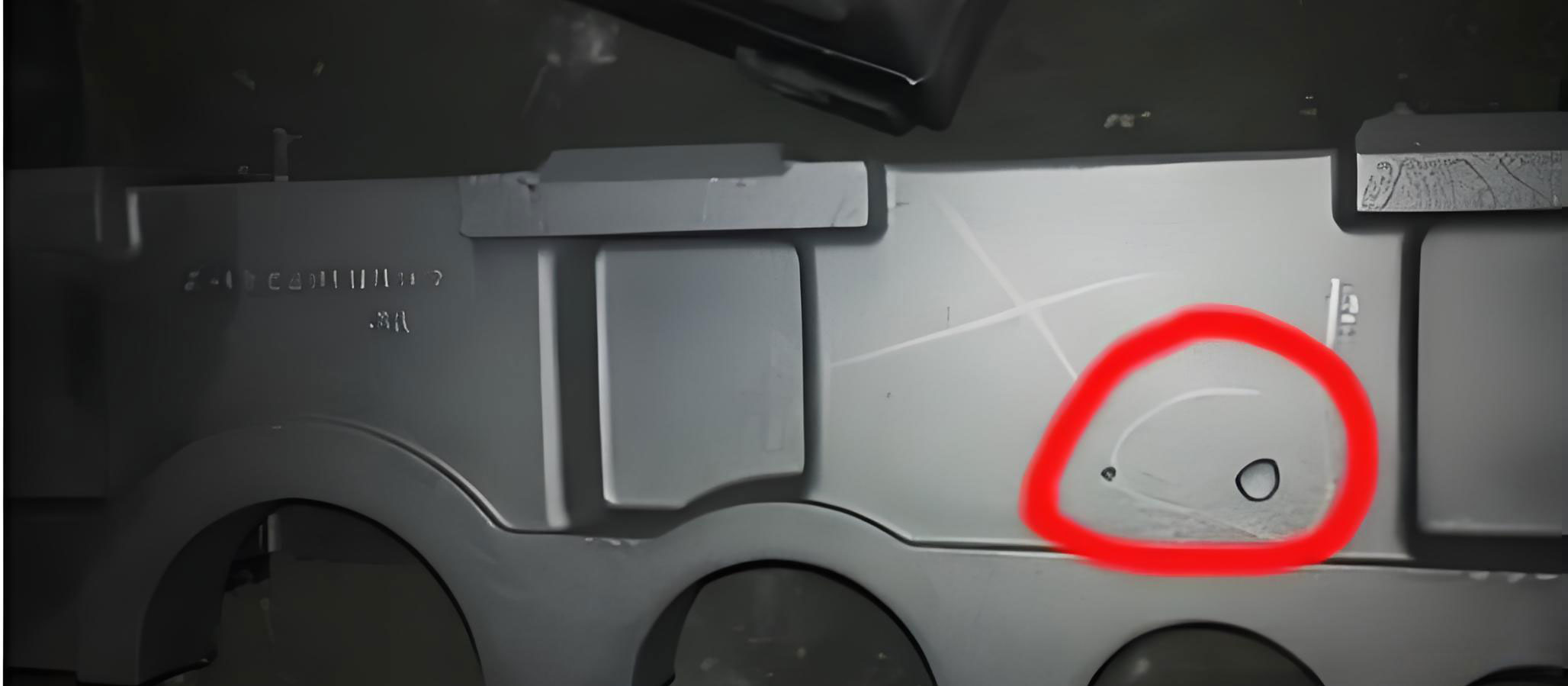
Pattern recognition, a subset of machine learning and data analysis, excels at extracting meaningful patterns from high-dimensional datasets where multiple factors interact non-linearly. In the context of porosity in casting, this approach allows us to classify production samples based on defect occurrence and pinpoint the most influential process parameters. The core of our methodology involves the use of Partial Least Squares (PLS) method, a regression technique that combines features of principal component analysis and multiple linear regression. PLS is particularly effective for handling collinear variables and small sample sizes, making it ideal for industrial data where controlled experiments are limited. For our analysis, we collected production records from a foundry specializing in gray iron castings for engine blocks. The dataset comprised 92 valid samples, each characterized by 15 variables spanning three categories: molten metal chemical composition (e.g., carbon, silicon, chromium), mold sand properties (e.g., splitting strength, compactability), and pouring process parameters (e.g., pouring time, temperature). Each sample was labeled as either “good” (defect-free) or “bad” (exhibiting porosity in casting), forming a binary classification problem. To manage the complexity and focus on critical factors, we applied variable screening using PLS in conjunction with PRESS (Predicted Residual Sum of Squares) validation. This step reduced the initial 15 variables to five key factors that predominantly influence porosity in casting: carbon (C) content, silicon (Si) content, chromium (Cr) content, mold sand splitting strength, and pouring time. The mathematical formulation of PLS involves projecting the predictor variables (X) and response variables (Y) onto latent vectors to maximize covariance. For our classification task, we used a PLS model to map the data into a lower-dimensional space, where the decision boundary separates good and bad samples. The linear discriminant function derived from PLS can be expressed as:
$$ f(\mathbf{x}) = w_1 C + w_2 Si + w_3 Cr + w_4 S_s + w_5 T_p + b $$
where \( \mathbf{x} \) represents the vector of input variables (C for carbon, Si for silicon, Cr for chromium, \( S_s \) for splitting strength, \( T_p \) for pouring time), \( w_i \) are the weights assigned by the PLS model, and \( b \) is the bias term. From our analysis, the specific coefficients were determined as:
$$ f(\mathbf{x}) = 61.514 \cdot C + 30.889 \cdot Si + 46.35 \cdot Cr + 0.7609 \cdot S_s + 2.1102 \cdot T_p – 338.787 $$
In this formulation, samples with \( f(\mathbf{x}) > 0 \) tend to be defect-free (good class), while those with \( f(\mathbf{x}) < 0 \) are associated with porosity in casting (bad class). This equation not only provides a classification rule but also indicates the directional influence of each variable: positive coefficients suggest that increasing the variable value may reduce porosity in casting, whereas negative coefficients imply the opposite. To visualize the separation, we generated PLS score plots. The plot with all 15 variables showed some clustering, but after variable reduction, the five-key-factor plot demonstrated clearer discrimination between good and bad samples, confirming the efficacy of our screening process. This outcome underscores how pattern recognition can distill complex interactions into actionable insights for mitigating porosity in casting.
The optimization of process parameters to minimize porosity in casting requires quantitative guidelines. Using inverse mapping techniques from pattern recognition, we derived optimal ranges for the five key factors. This involved selecting representative points in the PLS mapping space that correspond to high-quality (defect-free) regions and back-calculating the original variable values. By repeating this process multiple times, we established robust optimization ranges that balance trade-offs and interactions among factors. The results are summarized in the table below, which compares the optimized ranges and means with the original dataset averages. These values serve as practical recommendations for adjusting production parameters to reduce porosity in casting.
| Key Factor | Optimization Trend | Optimized Range | Optimized Mean | Original Dataset Mean |
|---|---|---|---|---|
| Carbon (C) Content | Increase | 3.263 – 3.297 wt% | 3.281 wt% | 3.263 wt% |
| Silicon (Si) Content | Increase | 1.99 – 2.12 wt% | 2.06 wt% | 2.01 wt% |
| Chromium (Cr) Content | Increase | 0.241 – 0.261 wt% | 0.250 wt% | 0.241 wt% |
| Mold Sand Splitting Strength | Increase | 39 – 42 kPa | 40.6 kPa | 40.1 kPa |
| Pouring Time | Increase | 15 – 16.5 seconds | 15.7 seconds | 14.8 seconds |
To further elucidate the role of these factors in porosity in casting, we can delve into the underlying mechanisms. Carbon and silicon are key elements in gray iron that influence graphite formation and fluidity. Higher carbon content, within the optimized range, promotes graphite precipitation, which can reduce gas solubility and mitigate shrinkage porosity—a common form of porosity in casting. Silicon acts as a graphitizer and enhances the metal’s ability to fill the mold, thereby decreasing the likelihood of gas entrapment. Chromium, though often added for hardness, can improve the melt’s resistance to oxidation, potentially reducing gas generation from reactions. Mold sand splitting strength reflects the sand’s ability to withstand thermal stresses during pouring; higher strength may prevent mold wall movement that leads to gas penetration. Pouring time, when increased moderately, allows for smoother metal flow and better venting of gases, directly addressing causes of porosity in casting. These interpretations align with foundry experience but are now quantified through pattern recognition, providing a data-driven foundation for process control.
Beyond the five key factors, our analysis also considered the broader set of variables to understand their secondary effects on porosity in casting. For instance, other chemical elements like manganese (Mn) and sulfur (S), as well as mold sand properties such as moisture content, compactability, permeability, and green compression strength, were evaluated. Using PLS coefficient analysis, we derived additional insights summarized in the following table. This comprehensive view helps foundries prioritize adjustments not only for the primary factors but also for auxiliary parameters that contribute to porosity in casting.
| Parameter Category | Specific Variable | Influence on Porosity in Casting | Recommended Adjustment |
|---|---|---|---|
| Chemical Composition | Manganese (Mn) | Positive effect (increase reduces porosity) | Increase within allowable limits |
| Sulfur (S) | Negative effect (increase promotes porosity) | Decrease to minimize gas formation | |
| Mold Sand Properties | Moisture Content | Complex interaction; moderate increase beneficial | Optimize to 3.5–4.0% range |
| Compactability | Negative effect (high compactability increases porosity) | Reduce to improve gas escape | |
| Permeability | Negative effect (excessive permeability may cause erosion) | Maintain balanced levels (e.g., 80–100) | |
| Green Compression Strength | Negative effect (high strength hinders venting) | Slightly decrease while maintaining integrity | |
| Pouring Process | Pouring Temperature | Negative effect (high temperature increases gas solubility) | Lower to reduce gas entrapment |
The mathematical framework of pattern recognition for porosity in casting can be extended to include non-linear relationships. While PLS assumes linearity, real-world processes often exhibit interactions that require more advanced models. For example, the impact of carbon and silicon on porosity in casting might follow a quadratic trend, which can be captured by polynomial expansions. We can represent this using a generalized regression equation:
$$ P = \beta_0 + \sum_{i=1}^{n} \beta_i x_i + \sum_{i=1}^{n} \sum_{j \geq i}^{n} \beta_{ij} x_i x_j + \epsilon $$
where \( P \) denotes the probability or severity of porosity in casting, \( x_i \) are the process variables, \( \beta \) are coefficients, and \( \epsilon \) is the error term. In our study, we explored such interactions through cross-validation, finding that the linear PLS model sufficed for the given dataset, but future work could incorporate kernel methods or neural networks for higher accuracy. Additionally, the optimization problem can be formalized as minimizing a cost function \( J(\mathbf{x}) \) that quantifies defect rates:
$$ J(\mathbf{x}) = \alpha \cdot \text{Porosity Index} + (1-\alpha) \cdot \text{Production Cost} $$
subject to constraints such as \( x_i^{\text{min}} \leq x_i \leq x_i^{\text{max}} \), where \( \alpha \) is a weighting factor. By integrating pattern recognition with operational research, we can develop holistic strategies for combating porosity in casting.
In practice, implementing these optimizations requires careful monitoring and control. For instance, to increase carbon content for reducing porosity in casting, foundries might adjust charge materials or use carburizers. Similarly, enhancing mold sand splitting strength could involve modifying sand mixtures or curing processes. Prolonging pouring time must be balanced against productivity demands to avoid cooling-related defects. We recommend a phased approach: first, adjust the five key factors within the optimized ranges, then fine-tune secondary parameters based on continuous data collection. This iterative process, supported by real-time pattern recognition algorithms, can lead to sustained reductions in porosity in casting. To illustrate the potential improvement, consider a scenario where the original defect rate is 15%. Applying our optimized parameters, as derived from pattern recognition, might lower the rate to below 5%, based on extrapolations from the PLS classification accuracy. Such gains underscore the value of data-driven methods in modern manufacturing.
The broader implications of this study extend beyond engine blocks to other casting applications where porosity in casting is prevalent, such as in aerospace components or pipe fittings. Pattern recognition techniques, due to their adaptability, can be tailored to different materials (e.g., aluminum alloys, steel) and defect types (e.g., shrinkage, gas porosity). Moreover, the integration of Internet of Things (IoT) sensors in foundries can provide richer datasets, enabling dynamic pattern recognition models that predict and prevent porosity in casting before it occurs. For example, real-time analysis of thermal imaging data during pouring could be fed into a pattern recognition system to adjust parameters on-the-fly. This proactive approach represents the future of smart manufacturing, where defects like porosity in casting are minimized through continuous learning and optimization.
In conclusion, our application of pattern recognition, specifically the PLS method, has demonstrated a viable pathway for analyzing and mitigating porosity in casting in automobile engine cylinder blocks. By processing complex production data, we identified five key factors—carbon, silicon, chromium, mold sand splitting strength, and pouring time—and provided quantitative optimization ranges. These findings not only align with metallurgical principles but also offer practical guidelines for foundries to reduce defect rates. The success of this approach highlights the power of pattern recognition in tackling multivariate industrial problems, even when underlying mechanisms are not fully understood. As casting processes evolve, ongoing refinement of these techniques will further enhance their ability to combat porosity in casting, driving quality and efficiency in manufacturing. Future research could explore deep learning models or hybrid pattern recognition systems for even greater precision, ultimately making porosity in casting a manageable challenge rather than an inevitable flaw.
To facilitate implementation, we propose a step-by-step framework for applying pattern recognition to porosity in casting: (1) Data collection: Gather historical production records with variables spanning composition, molding, and pouring parameters, along with defect labels for porosity in casting. (2) Preprocessing: Clean data, handle missing values, and normalize variables to ensure consistency. (3) Pattern recognition modeling: Employ PLS or similar techniques for variable screening and classification, using cross-validation to avoid overfitting. (4) Optimization: Derive optimal parameter ranges through inverse mapping and validate with pilot trials. (5) Deployment: Integrate findings into process control systems and monitor outcomes to iteratively refine the model. This framework can be adapted to various casting scenarios, emphasizing the versatility of pattern recognition in addressing porosity in casting. As industries increasingly embrace digital transformation, such data-driven approaches will become standard tools for quality assurance, ensuring that porosity in casting is effectively controlled to meet stringent performance standards.