
In my extensive experience within the foundry industry, addressing defects in critical castings has always been a paramount concern. One of the most persistent and challenging issues encountered is porosity in casting. This phenomenon not only compromises the structural integrity and pressure-bearing capacity of components but also leads to significant financial losses due to scrap rates and project delays. This article presents a detailed, first-person account of a failure analysis I conducted on a series of thick-walled copper alloy cover castings used in hydroturbine testing apparatus. The primary objective was to diagnose the root cause of severe porosity in casting that rendered multiple high-value components unusable and to develop effective corrective measures. The insights gained underscore the critical importance of meticulous process control in every stage of metal casting to prevent porosity in casting.
The component in question was a large, thick-walled cover casting fabricated from silicon brass, specifically ZCuZn16Si4. This alloy is favored for such applications due to its excellent corrosion resistance in fresh water and steam, good mechanical properties, and superior castability characterized by high fluidity, low shrinkage, and good airtightness of the castings. The typical wall thickness of this cover exceeded 100 mm in many sections, classifying it as a heavy-section casting. For years, a standardized casting process involving bottom chills, top risers, resin sand molds, and zircon flour coatings had yielded consistently sound castings. However, during the manufacturing cycle for several new projects, a disturbing pattern emerged. After rough machining, extensive networks of spherical and irregular cavities were revealed on both the top and bottom surfaces of the cast covers. These defects were not superficial; they persisted deep into the machining allowance, leading to the categorical rejection of the parts. The recurrence of this problem threatened project timelines and highlighted a critical vulnerability in a supposedly stable process, compelling a thorough investigation into the nature and origin of this porosity in casting.
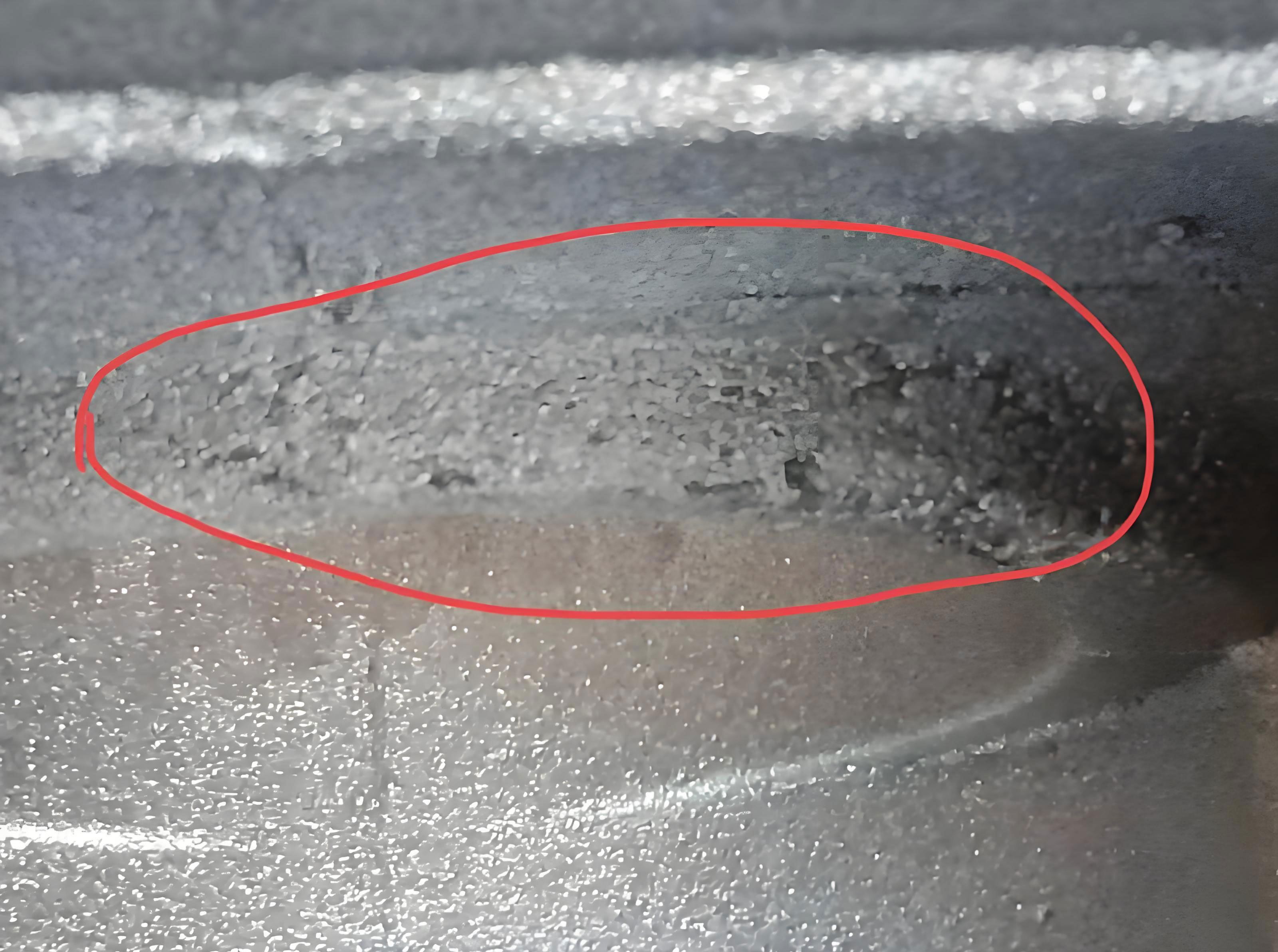
My initial step was a meticulous macroscopic and microscopic examination of the defective castings to classify the porosity in casting. Porosity defects in cast metals are broadly categorized into three primary types, each with distinct formation mechanisms and morphological signatures. A clear understanding of these is essential for accurate diagnosis.
First, precipitation porosity or gas porosity arises from the evolution of dissolved gases during solidification. As the molten metal cools, the solubility of gases like hydrogen and nitrogen decreases dramatically. If the dissolved gas content is too high or the solidification front advances too rapidly, the excess gas cannot diffuse out of the melt and forms bubbles trapped within the solid matrix. The governing relationship for gas solubility in molten metals is given by Sieverts’ law:
$$ S = k \sqrt{P} $$
where \( S \) is the solubility of a diatomic gas, \( k \) is a temperature-dependent equilibrium constant, and \( P \) is the partial pressure of the gas above the melt. During cooling, if the local concentration exceeds the solubility limit \( S \), nucleation and growth of pores occur. The final morphology of this porosity in casting can range from fine, scattered spherical pores to larger, irregular cavities, often distributed uniformly throughout the casting cross-section or concentrated in the last-to-freeze regions like riser necks.
Second, intrusion porosity is caused by gases generated from the mold or core materials invading the liquid metal front. When molten metal is poured into a sand mold, binders (like resins) and moisture decompose, generating gas pressure at the metal-mold interface. If this pressure exceeds the metallostatic pressure and the surface tension forces restraining bubble formation, gas bubbles penetrate the liquid metal. These bubbles, if unable to float to the surface, become trapped. The characteristic features of this porosity in casting include larger, often pear-shaped pores with smooth, oxidized surfaces, typically located just beneath the casting skin. The gas composition usually involves H2, CO, CO2, and hydrocarbons.
Third, reaction porosity forms from chemical reactions within the mold cavity or the metal itself. A common example in ferrous castings is the reaction between carbon in the steel and mold moisture to form CO bubbles. For copper alloys cast in furan resin-bonded sand, a “pinhole” or subsurface blowhole defect can occur if the pouring temperature is excessively high, leading to vigorous resin decomposition. However, for silicon brass with typical pouring temperatures between 950°C and 1100°C, this mechanism is generally not active, making reaction porosity a less likely candidate.
The table below summarizes the key distinguishing characteristics of these porosity types, a reference I constantly use during defect analysis:
| Porosity Type | Primary Cause | Typical Location | Morphology | Preventive Focus |
|---|---|---|---|---|
| Precipitation (Gas) | Excess dissolved gas (H2, N2) in melt | Throughout casting, esp. thermal centers | Small, spherical, often uniform dispersion | Melt degassing, proper holding |
| Intrusion (Blowhole) | Gas from mold/core invasion | Subsurface, near mold wall | Large, pear-shaped, smooth/oxidized walls | Mold permeability, venting, low gas binders |
| Reaction (Pinhole) | In-mold metal-mold reactions | Just below surface | Small, elongated, oriented perpendicular to surface | Control of pouring temp, mold materials |
Upon examining the rejected cover castings, I observed that the porosity was not confined to subsurface areas but was present in the bulk material, visible on machined surfaces from both top and bottom. The pores were primarily spherical but varied in size. Crucially, observation of the risers provided the first major clue: the riser tops showed minimal shrinkage depression, and cutting into the riser necks revealed internal cavities. This is a classic indicator of precipitation porosity in casting. When the riser, which is designed to be the last point of solidification and a reservoir of liquid metal, itself contains gas pores, it strongly suggests that the gas originated from the melt itself, not from external mold sources. The gas evolved during solidification, occupying volume that would otherwise be filled by feeding metal, thereby reducing the visible shrinkage. This finding directed the investigation towards the melting and pouring operations.
To further confirm the hypothesis, I conducted a destructive analysis by sectioning a scrapped casting. The results were unequivocal: the entire cross-section, from the casting body into the riser junction, exhibited a dispersed,弥散性 network of pores. This confirmed the defect as systemic precipitation porosity in casting. The next critical question was identifying the source of the excessive gas in the melt.
The silicon brass alloy, ZCuZn16Si4, has a inherent advantage: zinc acts as a natural degasser during melting. At melting temperatures, zinc has a high vapor pressure, and its boiling action helps to purge other dissolved gases. The standard practice involved using high-purity raw materials (copper, zinc ingots, Cu-Si master alloy, and clean returns), all properly preheated to eliminate moisture. This made it unlikely that the raw materials were the primary source. My attention turned to the melting and pouring logistics. Upon visiting the production floor and reviewing process logs, I discovered a significant deviation from the historical, successful practice for these large castings. Due to the substantial metal weight required, the foundry had switched to a “tap-and-hold” or dual-melt pouring scheme. The sequence was as follows: one furnace was tapped, and the metal was transferred to a holding furnace to maintain temperature. A second furnace was then melted, and the contents of both were combined into a single ladle for degassing and final pouring.
This procedure introduced several risk factors for inducing porosity in casting. The extended holding time in the first furnace allowed for temperature drop and, more critically, potential re-gassing of the melt. Molten copper alloys are particularly susceptible to hydrogen pickup from atmospheric moisture or combustion products. The solubility of hydrogen is high in the liquid state but plummets during solidification. The governing equation for the nucleation rate \( J \) of a gas pore can be expressed as:
$$ J = J_0 \exp\left(-\frac{\Delta G^*}{kT}\right) $$
where \( \Delta G^* \) is the critical free energy for nucleation, which is inversely proportional to the square of the gas supersaturation \( \Delta P \). Prolonged holding increases the chance for gas absorption, raising the supersaturation level \( \Delta P \).
Furthermore, when the two batches were combined, the overall temperature was lower than optimal for effective degassing. The standard degassing practice involved using hexachloroethane (C2Cl6) tablets. The reaction is:
$$ \text{C}_2\text{Cl}_6 (s) \rightarrow 2\text{C} (s) + 3\text{Cl}_2 (g) $$
The chlorine gas bubbles formed scavenge dissolved hydrogen through the formation of HCl. However, the kinetics of this reaction are highly temperature-dependent. The rate constant \( k \) follows an Arrhenius relationship:
$$ k = A \exp\left(-\frac{E_a}{RT}\right) $$
where \( E_a \) is the activation energy. At lower melt temperatures, the degassing reaction is sluggish and incomplete. Consequently, a significant amount of dissolved gas remained in the melt during pouring. As the thick-walled casting solidified relatively slowly, the dissolved gases had ample time to nucleate, grow, and become trapped as the viscosity increased in the mushy zone, leading to the widespread porosity in casting observed.
The table below contrasts the problematic process with the recommended single-melt process, highlighting the key variables influencing porosity in casting:
| Process Parameter | Problematic Dual-Melt Process | Recommended Single-Melt Process | Impact on Porosity Risk |
|---|---|---|---|
| Melting Sequence | Two separate melts combined | Single continuous melt | Combining increases temp loss and holding time. |
| Total Holding Time | Extended (for 1st melt) | Minimized | Longer holding promotes gas absorption. |
| Degassing Temperature | Sub-optimal (lower due to combined cool melt) | Optimal (controlled from single melt) | Lower temp reduces degassing efficiency, leaving more dissolved gas. |
| Gas Supersaturation (\( \Delta P \)) | Likely High | Controlled Low | High \( \Delta P \) drastically increases pore nucleation rate \( J \). |
| Process Complexity | High (synchronization risk) | Low | Complexity introduces variability, a key enemy of casting quality. |
Based on this root-cause analysis, I formulated a comprehensive set of corrective and preventive actions to eliminate porosity in casting for future production runs. The cornerstone was abandoning the dual-melt approach. I insisted on reverting to a single furnace melt for the entire casting weight. This immediately eliminated the extended holding and temperature management issues. For degassing, I recommended shifting from hexachloroethane to a zinc-based degassing practice, leveraging the alloy’s own composition. Adding a controlled amount of pure zinc late in the melt cycle provides a vigorous boiling action that effectively removes hydrogen. The zinc addition must be calculated to stay within the alloy specification while providing the necessary agitation.
Furthermore, I mandated stricter control over pouring parameters. The pouring temperature was to be maintained at the upper end of the specified range (around 1100°C) to ensure good fluidity and provide a larger temperature gradient for directional solidification. The gating system was redesigned to a tangential side-pouring configuration to increase the pouring rate, fill the mold more rapidly, and minimize air entrainment and temperature loss during mold filling. The practice of “feeding the riser” immediately after the main pour was reinforced to maintain a hot top for effective feeding and gas escape.
While the melting practice was the primary culprit, I also reviewed the solidification design. Although the original chill and riser placement was proven, the recurrent porosity in casting indicated that the feeding efficiency might be marginal under the new, gassier melt conditions. To optimize the process, I initiated a numerical simulation study using commercial casting simulation software. The goal was to model the thermal gradients and solidification sequence to ensure sound feeding. The simulation involved solving the transient heat conduction equation with phase change:
$$ \rho c_p \frac{\partial T}{\partial t} = \nabla \cdot (k \nabla T) + \rho L \frac{\partial f_s}{\partial t} $$
where \( \rho \) is density, \( c_p \) is specific heat, \( k \) is thermal conductivity, \( L \) is latent heat, and \( f_s \) is the solid fraction. The model incorporated the material properties of ZCuZn16Si4 and the mold materials.
The simulation revealed that while the bottom chills were effective in creating a steep gradient from the bottom up, the internal cylindrical surfaces also required careful thermal management. The original design used internal chills, which the simulation suggested could be contributing to premature localized solidification, potentially trapping gas in isolated pockets. The optimized design removed the internal chills and slightly increased the size and repositioned the top risers to create a more progressive and predictable solidification front from the bottom chilled surface towards the top risers. This promoted a longer-lasting liquid channel for both feeding metal and allowing evolved gases to escape towards the riser. The simulation predicted a significant reduction in isolated liquid pockets and, consequently, a lower risk of shrinkage and gas entrapment porosity in casting.
The following table summarizes the critical parameters from the simulation-based optimization for the riser design, a crucial tool for combating porosity in casting:
| Riser Design Parameter | Original Design | Optimized Design (Simulation-Based) | Rationale for Change |
|---|---|---|---|
| Number of Riser | 4 (standard layout) | 4 (repositioned) | Better coverage of thermal hot spots identified by simulation. |
| Riser Volume / Casting Volume Ratio | ~18% | ~22% | Increased volume provides larger liquid reservoir for feeding and gas collection. |
| Riser Neck Modulus | Calculated empirically | Optimized to solidify after casting hot spot | Ensures riser remains open as a gas vent until the last possible moment. |
| Chill Configuration | Bottom + Internal Cylindrical Chills | Bottom Chills Only | Removing internal chills avoids creating isolated solidification zones that trap gas. |
| Predicted Solidification Time Gradient (max to min) | Less uniform | More uniform, directional bottom-to-top | A steeper, controlled gradient promotes directional solidification, pushing gas and shrinkage to the riser. |
The implementation of these combined measures—process discipline in melting, optimized pouring, and simulation-validated casting design—was meticulously executed in the subsequent production batch. I supervised the mold preparation, which used the same high-quality resin sand system but with renewed emphasis on proper venting. The melt was conducted in a single charge, degassed with a controlled zinc addition at the correct temperature, and poured rapidly using the new tangential gating system. The temperature was monitored throughout, and the risers were promptly topped up after the pour.
The results were unequivocally successful. The castings, after cooling and shakeout, showed excellent surface quality. The risers exhibited the characteristic deep shrinkage cavities, indicating effective feeding and the absence of significant internal gas pressure. Most importantly, through all stages of rough machining, finish machining, and final inspection, the castings were completely free from any detectable porosity in casting. They met all dimensional, pressure-test, and non-destructive examination requirements, constituting a “zero-defect” production run. This successful outcome validated the failure analysis and demonstrated that the root cause of the porosity in casting was indeed the suboptimal melting and holding practice, exacerbated by a marginal solidification design when process variables drifted.
In conclusion, this investigation into severe porosity in casting within thick-walled silicon brass components provided several critical lessons. First, it reinforced that even long-standing, stable processes are vulnerable to deviations in fundamental steps like melt handling. The shift to a dual-melt scheme, intended to solve a logistical challenge, inadvertently created ideal conditions for gas absorption and incomplete degassing, leading to systemic precipitation porosity in casting. Second, it highlighted the indispensable role of fundamental metallurgical principles—gas solubility kinetics, degassing thermodynamics, and solidification science—in practical problem-solving. Third, it showcased the power of combining traditional defect analysis (macroscopic examination, sectioning) with modern tools like numerical simulation to not only diagnose but also proactively optimize the process. Preventing porosity in casting is a multi-front endeavor requiring control over raw materials, melt chemistry, temperature history, mold environment, and solidification dynamics. For critical castings, there is no substitute for rigorous process discipline, constant monitoring, and a deep understanding of the underlying physics that govern quality. This experience stands as a testament to the fact that mitigating porosity in casting is fundamentally about controlling every variable that influences gas content and its behavior from the furnace to the solidified casting.