
In my years of experience in steelmaking and foundry operations, I have consistently encountered the challenging defect of porosity in casting. This issue, which manifests as voids or gas pockets within solidified metal, severely compromises the mechanical integrity, pressure tightness, and surface quality of cast components. The root cause is often intricately linked to the behavior of gases, primarily oxygen and hydrogen, during the steel melting and refining processes. Through this detailed account, I will share my analysis of the mechanisms behind porosity in casting and the practical measures I advocate for its prevention, leveraging formulas, tables, and operational insights.
The fundamental journey begins in the furnace. Molten steel, prior to deoxidation, is a solution saturated with oxygen acquired during the oxidation stages of smelting. Whether in an open-hearth furnace or an electric arc furnace, oxygen is introduced to remove impurities like silicon, manganese, and phosphorus through slag formation. However, this necessary oxidation leaves the bath rich in dissolved oxygen, denoted as [O]. The equilibrium between oxygen in the metal and oxygen in the slag is governed by the FeO equilibrium:
$$ \text{(FeO)} \rightletharpoons [\text{Fe}] + [\text{O}] $$
Here, (FeO) represents the activity of iron oxide in the slag, and [Fe] and [O] are the dissolved iron and oxygen in the metal. The distribution law suggests that the oxygen content in the steel is directly proportional to the oxidizing power of the slag. The solubility of oxygen in liquid iron, or the saturated oxygen content [%O]sat, is a function of temperature:
$$ \log [\%\text{O}]_{\text{sat}} = -\frac{6320}{T} + 2.734 $$
where T is the temperature in Kelvin. In practice, the actual oxygen content [%O] is given by:
$$ [\%\text{O}] = [\%\text{O}]_{\text{sat}} \cdot a_{\text{(FeO)}} $$
This relationship is crucial. A highly oxidized slag (high a(FeO)) leads to excessively high dissolved oxygen in the melt. If this oxygen is not adequately removed before casting, it becomes a primary agent for the formation of porosity in casting. The subsequent critical reaction is the carbon-oxygen interaction, which is the heart of the decarburization process but also a key source of gas evolution.
The carbon-oxygen reaction is expressed as:
$$ [\text{C}] + [\text{O}] \rightarrow \text{CO}_{(g)} $$
This reaction is desirable during refining as the ascending CO bubbles stir the bath, promoting homogeneity and removing dissolved gases like [H] and [N] through flotation. However, for casting, if the reaction persists into the solidification stage, it is catastrophic. The product of [%C] and [%O] at a given temperature and pressure is approximately constant under equilibrium conditions:
$$ m = [\%\text{C}] \cdot [\%\text{O}] \approx \text{constant} $$
As the temperature drops during solidification, the solubility of both carbon and oxygen in the solid decreases dramatically. The dissolved oxygen, if present above the equilibrium level, will react with carbon to form CO gas. Since solidification is rapid, these gas bubbles become trapped within the dendritic structure, creating the characteristic blowholes or pinhole porosity in casting. This phenomenon is particularly severe in rimming steels or when deoxidation is insufficient. Therefore, the primary goal of deoxidation is to suppress this reaction before the metal enters the mold.
The objectives of deoxidation, from my standpoint, are threefold: firstly, to reduce the dissolved oxygen content to a level where carbon-oxygen reaction during solidification is minimized, thereby preventing porosity in casting; secondly, to alter the morphology and type of oxide inclusions, making them more separable or less harmful; and thirdly, to achieve a predictable and consistent chemical composition in the final product. The requirements for effective deoxidation are stringent. It must be complete, the deoxidizers must be added in a sequence corresponding to their affinity for oxygen (e.g., Al > Si > Mn), and the residual amounts of strong deoxidizers like aluminum must be controlled to prevent excessive inclusion formation or casting surface issues.
To systematize the behavior of common deoxidizers, I often refer to the following table which summarizes their key reactions and the nature of their products, all critical for understanding inclusion formation and subsequent risks for porosity in casting.
| Deoxidizer | Reaction in Melt | Deoxidation Product | Key Property for Porosity |
|---|---|---|---|
| Aluminum (Al) | 2[Al] + 3[O] → Al2O3(s) | Solid, clustered alumina | Strong deoxidizer; controls pinhole porosity; excess can lead to clogging. |
| Silicon (Si) | [Si] + 2[O] → SiO2(s/l) | Solid or liquid silicate | Moderate strength; often used with Mn to form liquid MnSiO3 for easy removal. |
| Manganese (Mn) | [Mn] + [O] → MnO(l) | Liquid manganese oxide | Weak deoxidizer; primarily used to modify SiO2 inclusions. |
| Calcium (Ca) | Liquid calcium aluminate | Powerful for inclusion shape control; aids in desulfurization. |
The efficiency of deoxidation is not merely about adding these elements. It is a function of their respective equilibrium constants. For a general deoxidation reaction: x[M] + y[O] ⇌ MxOy, the equilibrium constant K is:
$$ K_{M} = \frac{a_{M_xO_y}}{[a_M]^x \cdot [a_O]^y} $$
Where a denotes activity. For dilute solutions, activity can be approximated by concentration using interaction coefficients. The dissolved oxygen after deoxidation can be estimated from these constants. Incomplete deoxidation leaves “residual” oxygen available for the carbon-oxygen reaction during solidification, directly feeding porosity in casting.
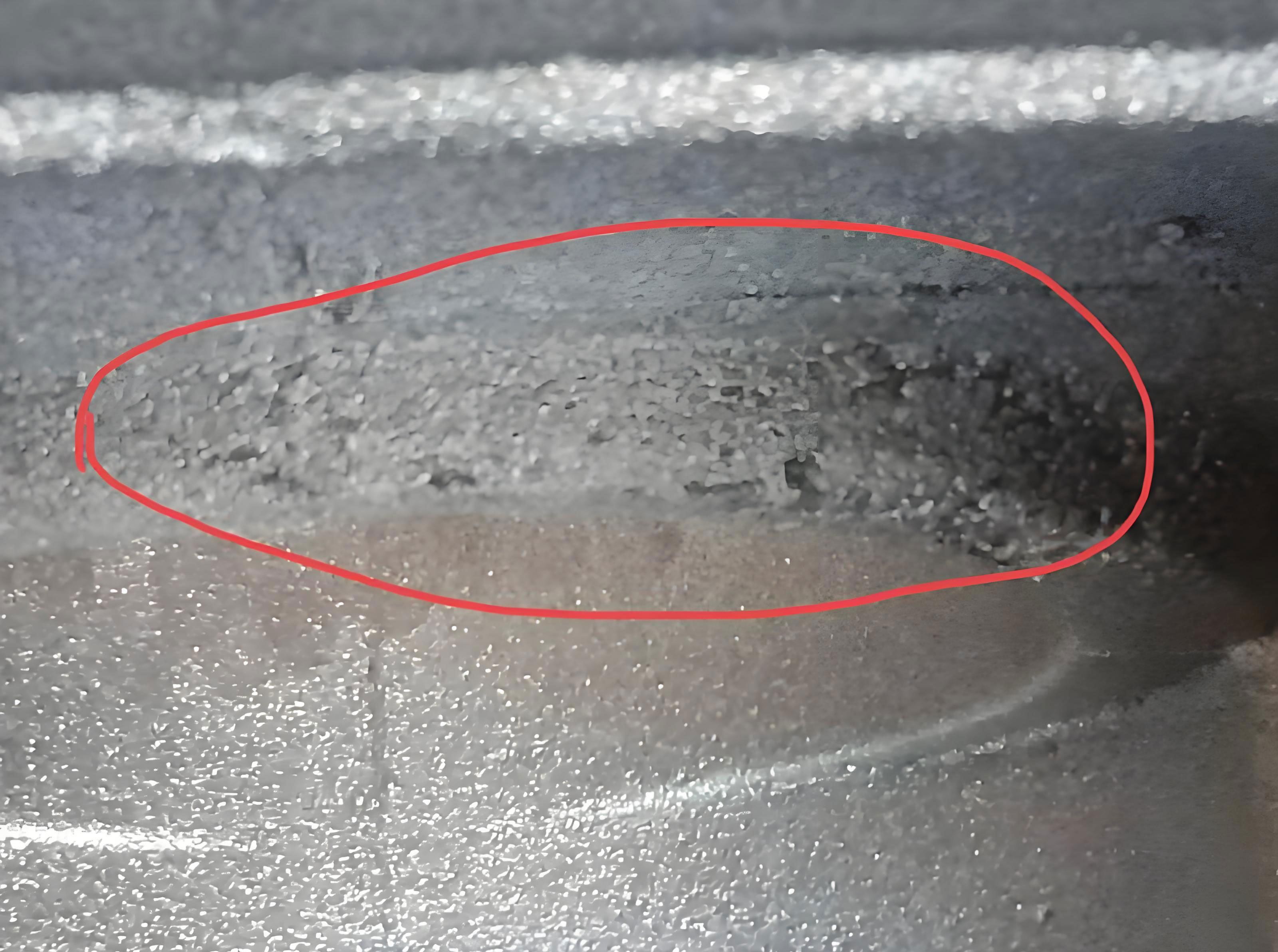
Beyond oxygen, hydrogen is a silent contributor to porosity in casting. Hydrogen dissolves atomically in liquid steel: ½H2(g) ⇌ [H]. Its solubility decreases drastically upon solidification. Sources are ubiquitous: moisture from damp linings, rust (Fe2O3·H2O), wet alloys, and the atmosphere. During solidification, hydrogen precipitates as molecular H2 gas, often nucleating on non-metallic inclusions. The combined effect of CO and H2 gas evolution can create severe interdendritic or shrinkage-assisted porosity in casting. The critical hydrogen content to avoid such defects is remarkably low, often cited as below 1-2 ppm (0.0001-0.0002%).
Reflecting on specific incidents, I recall cases where porosity in casting was traced back to operational lapses. One category involved the use of newly repaired or lined ladles. Even with baking, the drying is often insufficient if time is short. The residual moisture decomposes at steel temperature: H2O → 2[H] + [O], simultaneously increasing both hydrogen and oxygen pickup at the worst possible moment—during taping. This double blow significantly elevates the risk of porosity in casting. Another common scenario is “soft melts” or heats with insufficient boiling action. A vigorous carbon boil (CO evolution) is essential for flushing out dissolved gases. A quiet bath, perhaps due to high oxidation state early on or incorrect charge composition, retains [H] and [N]. When such steel is cast, the gases have no escape route and form porosity.
To quantify the interaction between different factors leading to porosity in casting, I have developed a conceptual risk assessment framework. The following table correlates various process parameters with their potential to contribute to gas-related defects.
| Process Stage | Key Parameter | Optimal Range/Condition | Risk for Porosity if Deviated |
|---|---|---|---|
| Melting & Oxidation | Slag (FeO) before deox. | < 20-25% (for casting grades) | High: Leads to excessive [O], requiring more deoxidizer and leaving more inclusions. |
| Boiling Period | Decarburization rate | 0.6 – 1.0 %C/hour | High if too low: Inadequate gas flushing. High if too high: Excessive slag foaming, temperature loss. |
| Deoxidation | Residual Aluminum | 0.03 – 0.06% for killed steel | High if too low: Insufficient killing, CO evolution. High if too high: Excessive Al2O3 clusters. |
| Slag Condition | Basicity (CaO/SiO2) | 2.0 – 3.0 (depends on grade) | High if too low: Poor desulfurization, inclusion absorption. High if too high: Erosive to refractories. |
| Tapping & Ladle | Ladle Pre-heat Temp. | > 800°C (bright red heat) | Critical Risk: Moisture pickup is the prime source of [H] causing pinhole porosity in casting. |
| Alloy Addition | Condition of Ferro-alloys | Dry, pre-heated | High if damp: Direct source of [H] and [O]. |
| Casting Temperature | Superheat | Grade-dependent, but controlled | High if too high: Increased gas solubility, longer solidification time for gas segregation. |
Building on this analysis, the strategies to prevent porosity in casting must be holistic, addressing every step from furnace to mold. My prescribed set of measures is as follows:
1. Rigorous Control of Raw Materials and Furnace Practices: All charge materials—scrap, pig iron, alloys—must be clean, dry, and free of excessive rust. During melting, aim for a slag that is oxidizing enough to remove impurities but not so oxidizing that it makes deoxidation excessively difficult. Monitoring the slag FeO content before tap is crucial. For casting grades, I recommend a final FeO below 15% whenever possible, achieved through controlled ore additions or oxygen lancing.
2. Ensuring an Active Boil: A defined decarburization period with a minimum carbon drop of 0.3-0.4% and a sustained rate is non-negotiable. The CO bubbles act as a vacuum cleaner for dissolved gases. The relationship between decarburization rate and hydrogen removal can be conceptualized. While complex, the rate of hydrogen decrease d[H]/dt is roughly proportional to the CO evolution rate, which itself is a function of the carbon-oxygen product and stirring energy.
3. Precise and Sequential Deoxidation: Deoxidize according to the affinity for oxygen. Typically, I add ferromanganese first, then ferrosilicon, and finally aluminum or a complex deoxidizer. The additions must be calculated not just to meet the final chemical specifications but to ensure a sufficient “kill.” For many cast steel grades, I target silicon and manganese towards the upper half of their specification range to enhance deoxidation power inherently. The final dissolved oxygen after deoxidation should be low enough that the product [%C]·[%O] is below the equilibrium constant for CO formation at the solidification temperature:
$$ [\%\text{C}]_f \cdot [\%\text{O}]_f < K_{\text{CO}}(T_{\text{solidus}}) $$
This is the fundamental criterion to suppress gas evolution during solidification and prevent porosity in casting.
4. Meticulous Ladle and Tapping Hygiene: This is perhaps the most critical operational step. Ladles, tundishes, and pouring spouts must be thoroughly dried and preheated to a minimum of 800°C to eliminate all moisture. New or repaired linings require extended baking schedules—often 24 hours or more—not just a few hours. The tapping stream should be shielded from atmospheric moisture as much as possible.
5. Minimizing Post-Tap Reoxidation and Hydrogen Pickup: Use ladle covers or inert gas shrouding during tapping and holding. Avoid excessive “ladle additions” or carburizers after deoxidation, as they can introduce moisture and disturb the achieved oxygen level. If alloy adjustments are necessary, use pre-heated, vacuum-sealed cored wire injection where feasible.
6. Controlled Casting Temperature: Avoid excessive superheat. Higher temperatures increase the solubility of gases like hydrogen and nitrogen, which then precipitate more vigorously during cooling. Maintain the casting temperature within a narrow, optimal band for the specific grade and casting geometry to limit gas segregation time.
7. Effective Slag Management and Inclusion Control: Maintain a fluid, basic slag in the ladle to absorb deoxidation products. Consider calcium treatment for aluminum-killed steels to modify stringy Al2O3 into globular calcium aluminates, which are less likely to act as nucleation sites for gas bubbles and are more easily removed. The modification reaction can be simplified as:
$$ x\text{Ca} + y\text{Al}_2\text{O}_3 \rightarrow \text{CaO}·\text{Al}_2\text{O}_3 \text{ (liquid)} $$
8. Process Monitoring and Quality Feedback: Implement direct or indirect monitoring of gas content. While direct measurement of [H] and [N] requires specialized probes, monitoring the behavior of the steel during solidification in a test mold can be indicative. A fully killed steel should solidify quietly without any rising or rimming action. Every incident of porosity in casting should trigger a thorough review of the corresponding heat’s data—tapping temperature, deoxidation practice, ladle condition, and casting parameters.
The fight against porosity in casting is a continuous one, requiring diligence at every stage. It is a defect born from the complex interplay of thermodynamics, kinetics, and operational discipline. By understanding the oxygen and hydrogen pathways, rigorously applying deoxidation principles, and maintaining impeccable practice in material handling and temperature control, the incidence of this costly defect can be reduced to a minimum. In my foundry, adherence to these principles has led to a marked improvement in casting soundness and yield. The key is to remember that porosity in casting is not an inevitable flaw but a consequence of specific, controllable process conditions. Each bubble trapped in the casting is a story of a gas molecule that was not given an opportunity to escape before the metal solidified; our job is to write a different story—one of thorough refinement and controlled solidification.