
In the specialized field of titanium investment casting, the pursuit of high-integrity components is perpetually challenged by various solidification defects. Among these, gas porosity stands as a predominant and costly issue. The presence of porosity in casting not only deteriorates mechanical properties, such as fatigue strength and ductility, but also compromises pressure tightness, leading to the rejection of critical components like pump housings and impellers. This article details a first-person, practitioner-oriented account of systematically addressing and significantly reducing gas hole defects in titanium castings through the rigorous application of Quality Control (QC) methodologies, supplemented by statistical analysis and fundamental process engineering principles.
The inherent reactivity of molten titanium and its alloys necessitates processing under high vacuum or inert atmosphere, typically using skull melting techniques like Vacuum Arc Remelting (VAR). Despite this controlled environment, the occurrence of porosity in casting persists, indicating a complex interplay between process parameters, mold materials, and design. The economic impact is substantial, as titanium raw material and processing costs are exceptionally high. Therefore, a targeted, data-driven approach to eliminate this scrap driver is not merely beneficial but essential for operational viability and quality leadership.
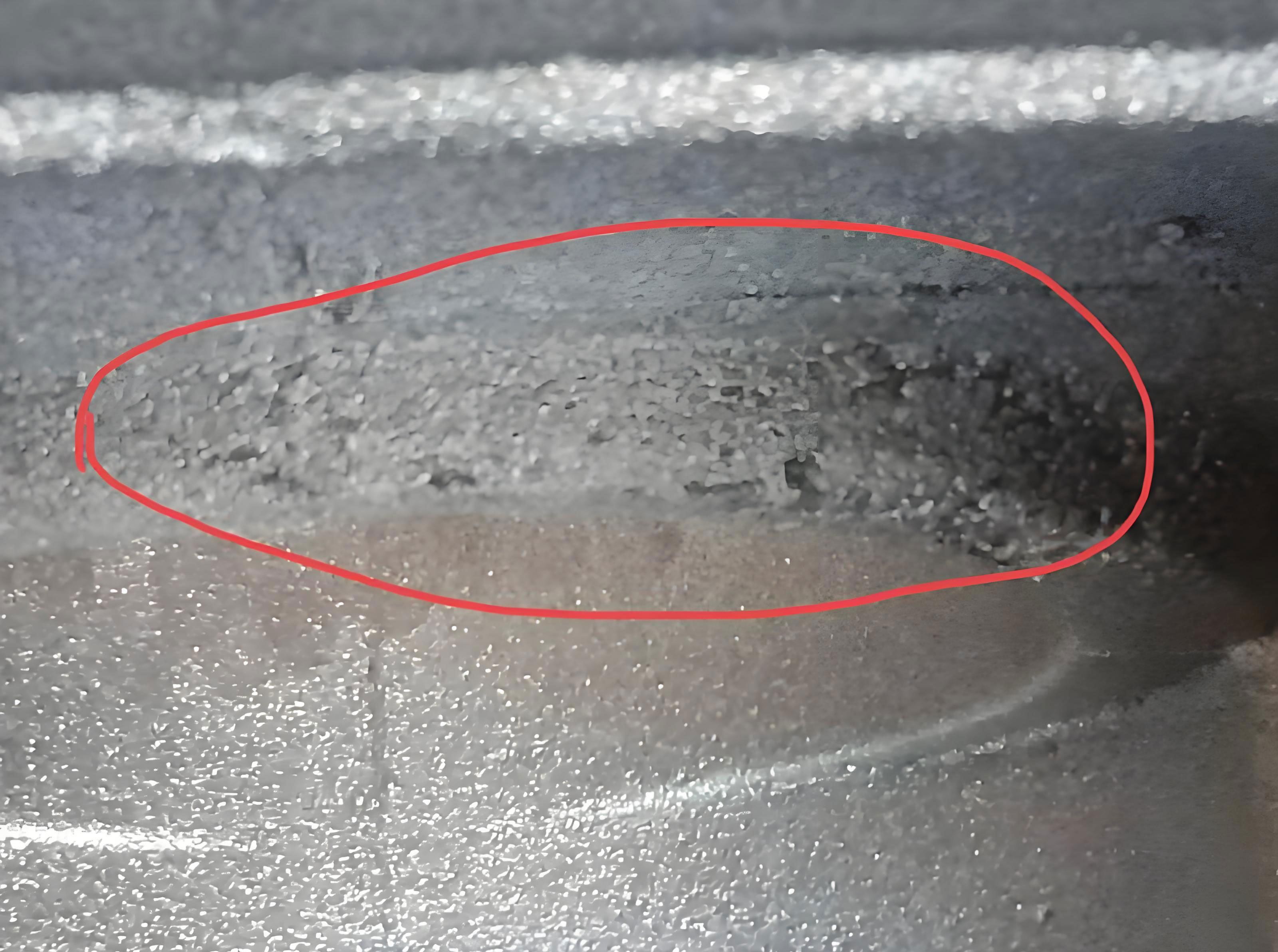
The formation of porosity in casting is fundamentally a consequence of gas entrapment or evolution during the metal’s liquid and solidification phases. The primary sources can be categorized as follows:
- Metal Source: Gases (primarily hydrogen, oxygen, nitrogen) dissolved in the starting electrode or ingot material.
- Process Source: Inadequate vacuum or furnace leakage during melting and pouring, allowing atmospheric contamination.
- Mold/Sand Source: Gases released from the mold material (e.g., bonded graphite), cores, or surface contaminants (oils, moisture).
The solubility of gas in molten titanium, $C_s$, can be described by Sievert’s law for diatomic gases:
$$C_s = k \sqrt{P}$$
where $C_s$ is the solubility, $k$ is a temperature-dependent equilibrium constant, and $P$ is the partial pressure of the gas above the melt. During solidification, the solubility drops precipitously, forcing the excess gas to precipitate out. If the gas cannot diffuse to the surface or be carried away by mold gases, it nucleates and grows as porosity. The critical radius for a gas pore to nucleate heterogeneously can be approximated by:
$$r^* = \frac{-2\gamma_{lg}}{\Delta G_v}$$
where $r^*$ is the critical nucleus radius, $\gamma_{lg}$ is the liquid-gas surface energy, and $\Delta G_v$ is the volume free energy change driving nucleation. Turbulent mold filling dramatically increases the probability of entrapping air or mold gases, providing ready nucleation sites and exacerbating the problem of porosity in casting.
The initial phase of any effective QC campaign involves establishing a clear baseline. A systematic data collection was instituted over a six-month period, cataloging every casting produced, its weight, and the nature and frequency of defects leading to scrap. This data is paramount for objective analysis. A simplified representation of the initial findings is presented below, which clearly highlights the dominance of gas-related defects.
| Defect Category | Frequency (Count) | Percentage of Total Scrap (%) | Cumulative Percentage (%) |
|---|---|---|---|
| Porosity / Gas Holes | 11 | 61.1 | 61.1 |
| Shrinkage Cavities | 4 | 22.2 | 83.3 |
| Cracks | 2 | 11.1 | 94.4 |
| Cold Shuts & Misruns | 1 | 5.6 | 100.0 |
| Total Scrap | 18 | 100.0 |
This Pareto analysis visually confirmed that porosity in casting was the primary contributor to component rejection, accounting for over 60% of all scrap. This unambiguous finding set the definitive project goal: to reduce the scrap rate attributable to gas holes by at least 50% within the next production cycle.
With the target defined, the next step involved identifying all potential root causes. A cause-and-effect diagram (Ishikawa diagram) was constructed through team brainstorming, considering all aspects of the process: Man, Method, Material, Machine, and Measurement. The major branches investigated included:
- Melting & Pouring Practice: Electrode gas content, furnace vacuum level and leak rate, pouring temperature/speed.
- Mold Design & Gating: Gating system design (size, location, type), venting provisions, mold geometry complexity.
- Mold Material & Preparation: Type of graphite/binder, mold baking/outgassing cycle, moisture absorption, surface contamination.
- Solidification Conditions: Mold temperature, cooling rate.
To move from potential causes to verified key factors, the data for the 11 scrapped castings with porosity were analyzed in detail. Each scrap was investigated to determine the most probable contributing factor(s) based on its location, morphology, and production records. The results of this stratification are shown below:
| Influencing Factor | Number of Scrap Castings Attributed | Contribution to Porosity Scrap (%) | Cumulative Contribution (%) |
|---|---|---|---|
| Gating System Design | 5 | 45.5 | 45.5 |
| Mold Outgassing Inefficiency | 3 | 27.3 | 72.8 |
| Inadequate Mold Venting | 1 | 9.1 | 81.9 |
| High Electrode Gas Content | 1 | 9.1 | 91.0 |
| Other / Unspecified | 1 | 9.1 | 100.0 |
The analysis revealed that over 70% of the instances of porosity in casting were linked to two primary, addressable factors: Suboptimal Gating System Design and Ineffective Mold Outgassing. This finding allowed us to focus our improvement efforts with precision, rather than attempting to tackle all potential causes simultaneously.
Addressing the number one cause—gating design—required a fundamental review of fluid flow dynamics during mold filling. Historically, many castings, especially pump bodies, utilized a top-gating system. While simple, this approach often leads to turbulent, uncontrolled flow. The Reynolds number, $Re$, which indicates flow regime, is given by:
$$Re = \frac{\rho v D}{\mu}$$
where $\rho$ is density, $v$ is velocity, $D$ is the hydraulic diameter (e.g., of the gate), and $\mu$ is dynamic viscosity. High $Re$ ($>$ 2000) signifies turbulence, which promotes air entrainment and agitation of mold gases. In top-gating, the metal falls freely, reaching high velocity, thus creating a highly turbulent condition ($Re \gg 2000$) upon impact with the mold bottom or core. This turbulence violently interacts with the mold atmosphere and any gases evolving from the mold walls, trapping them and creating nuclei for porosity in casting.
The countermeasure was a systematic shift towards bottom or side gating systems. In a bottom-filling system, the metal rises steadily in the mold cavity, promoting laminar flow ($Re < 2000$) and allowing mold gases to be displaced upwards and out through vents at the top of the mold. For smaller components like impellers and sub-15kg pump bodies, side-gating was implemented successfully. This not only reduced turbulence but also improved yield, as multiple castings could be arranged around a central sprue. The improvement in casting soundness was immediate and dramatic in these cases, virtually eliminating surface-connected porosity in casting on critical faces.
For larger pump bodies where thermal considerations sometimes necessitated top-feeding to avoid mistuns, a hybrid solution was developed. The primary fill remained top-gated, but strategic venting was added. Small (≈2 mm) vent holes were drilled into the mold core at the highest points adjacent to problematic thick sections, such as flanges. These vents provided a direct escape path for entrapped air and mold gases before they could be encapsulated by the advancing solidification front. The effectiveness of this venting can be conceptually modeled by considering the pressure buildup, $P_g$, of trapped gas:
$$P_g = \frac{nRT}{V(t)}$$
where $n$ is moles of gas, $R$ is the gas constant, $T$ is temperature, and $V(t)$ is the decreasing volume available to the gas as solidification progresses. By providing an escape ($dV/dt$ outwards), $P_g$ is kept below the metallostatic pressure, preventing pore formation. This targeted venting allowed the use of top-gating for large castings without the associated penalty of severe porosity in casting.
The second key factor, inadequate mold outgassing, was tackled through a revised thermal processing protocol for the graphite molds. The previous practice involved a single-stage vacuum bake-out. However, graphite, especially if machined or stored in non-controlled environments, can absorb significant amounts of moisture (H₂O) and harbor hydrocarbon contaminants. The revised, two-stage process was implemented:
- Atmospheric Bake-Out: Molds are heated to 300-400°C for a minimum of 3 hours in an air furnace. This step efficiently drives off the bulk of physically adsorbed water and decomposes/volatilizes light organic contaminants. The kinetics of moisture removal can be described by a diffusion-based model where the drying rate is proportional to the moisture concentration gradient.
- High-Vacuum Degassing: Following the bake, molds undergo an extended high-vacuum ($< 10^{-2}$ mbar) heat treatment at a similar temperature. This step removes more tightly bound gases (like hydrogen from decomposed water) and any gases absorbed during the transfer. The outgassing rate under vacuum, $Q$, follows a relationship like:
$$Q \propto \exp\left(-\frac{E_a}{kT}\right) \sqrt{P}$$
where $E_a$ is an activation energy for desorption, $k$ is Boltzmann’s constant, and $T$ is the absolute temperature. The combination of thermal energy and near-zero external pressure creates a strong driving force for gas removal.
Furthermore, a strict shelf-life control was instituted: degassed molds must be used within 72 hours or must undergo a repeat vacuum degassing cycle. This prevents re-absorption of atmospheric moisture, a common and often overlooked contributor to sporadic porosity in casting.
The implementation of these targeted countermeasures—redesigned gating and enhanced mold preparation—yielded quantifiable results. Data collection continued over the subsequent six months. A comparative statistical summary is presented below:
| Performance Metric | Before QC Implementation (Months 1-6) | After QC Implementation (Months 7-12) | Relative Improvement |
|---|---|---|---|
| Average Scrap Rate (by count) | 3.9% (18/315) | 1.7% (8/557) | -56.4% |
| Scrap Due to Porosity (by count) | 61.1% of total scrap | 12.5% of total scrap | -79.5% (within scrap) |
| Absolute Porosity Scrap Rate | ~2.4% (11/457* total) | ~0.2% (8/557* total) | -91.7% |
| *Total estimated production count based on provided data. | |||
The effectiveness of the changes can be assessed using a simple hypothesis test for proportions. Let $p_1$ be the proportion of castings scrapped due to porosity before, and $p_2$ be the proportion after. The reduction is statistically significant, confirming that the interventions had a real, measurable impact on suppressing porosity in casting.
A new Pareto analysis of post-implementation scrap revealed a shift in the defect landscape. While porosity in casting was drastically reduced, shrinkage porosity and solidification-related voids emerged as the new dominant scrap category. This is a classic outcome in quality improvement: solving the primary problem brings secondary issues into sharper focus. It validates the QC cycle, providing a clear direction for the next project phase. The focus now must shift to optimizing feeding and solidification control through riser design, chilling, and simulation-led optimization to address the now-dominant shrinkage issues.
The success achieved in controlling porosity in casting is not a one-time event but a new standard that must be maintained. The countermeasures have been codified into official standard operating procedures (SOPs). The gating design rules (preference for bottom/side gating, strategic venting for top-gated large castings) are now embedded in the casting process design manual. The two-stage mold bake-out and degassing protocol, along with the 72-hour usage rule, are mandatory steps in the mold preparation workflow. Furthermore, the QC tools themselves—systematic data logging, Pareto analysis, and cause-and-effect diagramming—have been institutionalized for continuous monitoring and for tackling future quality challenges, be they shrinkage, cracks, or inclusions. This creates a culture of data-driven problem-solving essential for high-technology foundry operations.
The principles and methodologies detailed here for titanium have broad applicability across the casting industry for controlling porosity in casting. While the specific materials and parameters differ, the core approach remains valid:
- Data-Driven Diagnosis: Systematically collect defect data and use Pareto analysis to identify the vital few causes of porosity in casting.
- Root Cause Analysis: Employ tools like fishbone diagrams to explore all potential sources—metal cleanliness, mold/gas reactions, gating turbulence, and solidification dynamics.
- Targeted Interventions Based on Science: Implement changes grounded in metallurgical and fluid flow principles. This may involve redesigning filling systems to minimize $Re$, optimizing mold venting using $P_g$ calculations, or enhancing core/mold drying/degradation cycles.
- Statistical Validation & Control: Quantify the improvement and use control charts to ensure the process remains stable, preventing the recurrence of porosity in casting.
The fight against porosity in casting is perpetual, but with a structured QC framework, it becomes a manageable and continually improvable aspect of the casting process, leading to higher quality, reduced cost, and greater customer satisfaction.