
In the production of high-integrity castings, particularly for automotive components like cylinder blocks, the occurrence of internal cavities remains a formidable challenge. Among these, gas porosity stands out as one of the most prevalent and detrimental defects. This article, drawn from extensive practical experience, delves into a systematic analysis of the root causes of porosity in casting and details the multifaceted engineering solutions implemented to eradicate it. The focus is on a specific cylinder block model, where initial production runs were plagued by severe porosity in casting, primarily located in upper-section bolt bosses and oil pan flange areas. This porosity in casting severely compromised pressure tightness and mechanical strength, leading to high scrap rates. Our investigation and subsequent corrective actions spanned the entire process chain, from core and mold design to metallurgy and material science.
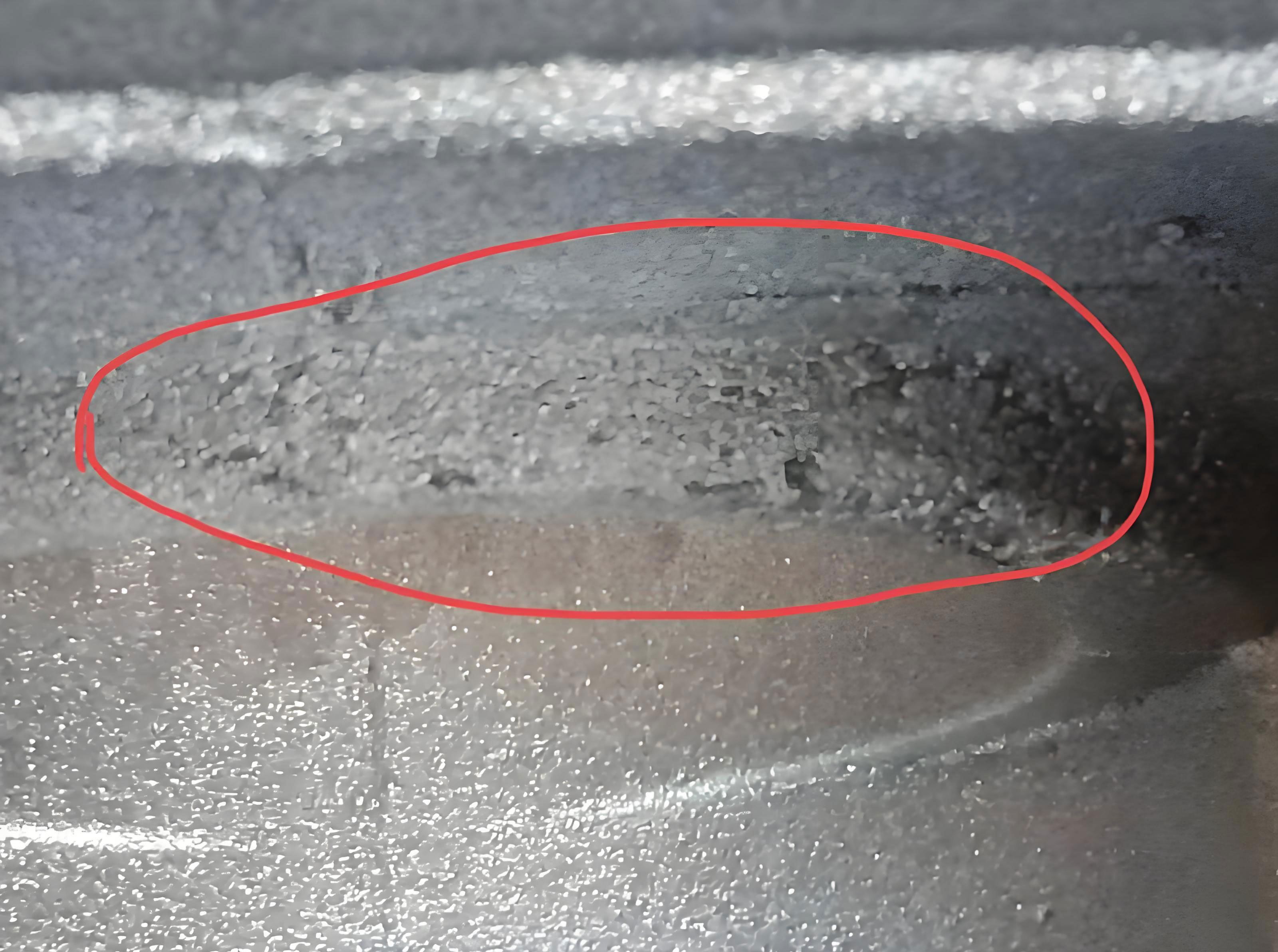
The fundamental mechanism of porosity in casting formation involves the entrapment of gas within the solidifying metal. These gases can originate from multiple sources: air entrainment during turbulent pouring, gases generated from the decomposition of binders in sand cores and molds, or moisture vaporization. When the solidification front advances faster than the buoyancy-driven escape velocity of these gas bubbles, they become permanently trapped, creating voids. The propensity for porosity in casting is significantly influenced by geometric complexity, which in cylinder blocks is exceptionally high due to intricate water jackets, crankshaft passages, and mounting features.
1. Deconstructing the Genesis of Porosity
The cylinder block in question featured a dry-liner design with a copper and chromium-alloyed gray iron (approximate equivalent to ASTM Class 40). The molding process utilized green sand with a permeability range, while cores were made from a combination of materials: shell cores for complex shapes like water jackets, and oil-bonded or self-setting resin sands for others. The genesis of porosity in casting in this context is a multi-variable problem.
First, fluid dynamics during mold filling play a critical role. The molten iron enters the mold cavity through a gating system. If the flow is turbulent, it can readily aspirate air from the gating channels themselves or from the cavity air it displaces. The Reynolds number ($Re$) helps characterize this flow regime:
$$Re = \frac{\rho v D_h}{\mu}$$
where $\rho$ is the fluid density, $v$ is the flow velocity, $D_h$ is the hydraulic diameter of the channel, and $\mu$ is the dynamic viscosity. For $Re$ exceeding a critical threshold (typically >2000 for pipe flow), turbulence sets in, dramatically increasing the risk of gas entrainment and subsequent porosity in casting.
Second, core gas generation is a paramount factor. Cores, especially large water jacket cores completely surrounded by molten metal, act like pressurized gas generators upon contact with the hot metal. The gas pressure ($P_{gas}$) building up inside the core must overcome the sum of the local metallostatic pressure ($P_{static}$), the pressure drop through the core venting paths ($P_{vent}$), and any additional resistance from coatings ($P_{coat}$) to escape into the mold or atmosphere. If venting is inadequate, the pressure builds until it exceeds the sum of opposing pressures, forcing gas into the liquid metal, leading to core-generated porosity in casting. This can be conceptualized as:
$$P_{gas}(t) > P_{static}(z) + P_{vent} + P_{coat}$$
where $z$ is the depth below the liquid surface. The gas generation rate $ \frac{dG}{dt} $ of a core sand is a function of temperature and binder type, often peaking within seconds of contact.
Third, the solidification dynamics determine whether entrapped bubbles can escape. The local solidification time ($t_f$) at a given point in the casting must be compared to the bubble floatation time ($t_b$). A bubble of diameter $d_b$ will rise due to buoyancy at a Stokes’ law-adjusted velocity ($v_b$). If the time for the bubble to reach the surface is longer than the time for the surface to freeze, porosity in casting will result. The thermal gradient also matters; a steep gradient promotes rapid surface freezing, sealing in bubbles.
The table below summarizes the primary sources and contributing factors to porosity in casting for cylinder blocks:
| Source Category | Specific Mechanism | Key Contributing Factors | Resultant Porosity Type |
|---|---|---|---|
| Mold Filling | Turbulent Air Entrainment | High pouring velocity, improper gating design, abrupt changes in flow direction. | Randomly distributed spherical pores, often near gates. |
| Mold Atmosphere Displacement | Inadequate venting of the mold cavity itself. | Subsurface pores in upper sections of the casting. | |
| Core/Mold Decomposition | Binder Pyrolysis | High core/mold gas generation, low gas permeability, slow gas evolution. | Pores concentrated near core surfaces, often irregular in shape. |
| Moisture Vaporization | High moisture content in green sand or inadequately dried cores/coatings. | Blowhole type defects, often large and near mold surfaces. | |
| Additive Reaction | Reaction of carbonaceous materials or other additives with the metal oxide layer. | Pinhole porosity, often associated with the metal chemistry. | |
| Solidification | Gas Solubility Change | Decreasing gas solubility in iron during cooling (e.g., hydrogen, nitrogen). | Fine, dispersed microporosity. |
2. A Multifaceted Strategy for Porosity Elimination
Addressing porosity in casting required a holistic approach targeting design, process parameters, and materials. The strategy was built on three pillars: optimizing core and mold architecture for superior venting, redesigning the filling system to promote laminar flow and proper temperature gradients, and meticulously controlling the gas-generation characteristics of all sand materials.
2.1 Pillar I: Revolutionary Core Design for Maximum Venting
Traditional core design for cylinder blocks often uses “small cores” or “core extensions” that merely follow the internal contour of the part. This results in a core print (the interface between core and mold) that is recessed below the highest point of the cavity wall. This geometry creates a “pocket” that hinders the natural escape of gases from the main cavity into the upper mold vents or risers. To combat this, we adopted a “Large Core Print” philosophy.
The large core print extends the core sand beyond the internal contour, creating a substantial vertical channel that connects the core’s internal venting system directly to the mold’s upper排气 network. This transforms the core print from a mere locating feature into a primary排气 highway. The comparative benefits are outlined below:
| Design Feature | Small Core Print | Large Core Print | Impact on Porosity in Casting |
|---|---|---|---|
| Venting Path | Indirect, constricted. Gas must travel laterally to find an exit. | Direct, vertical, and large cross-section. | Dramatically reduces back-pressure, preventing gas invasion. |
| Connection to Riser | Poor or non-existent. Cavity gas is trapped. | Directly links cavity volume to open riser/vent. | Allows cavity gas to be efficiently purged during filling. |
| Core Support & Stability | Adequate for location. | Superior, reduces core shift. | Indirect benefit: maintains intended wall thickness. |
Furthermore, every core was engineered with an integrated, continuous venting channel from its deepest section to the core print. During mold assembly, these channels were meticulously aligned with vent holes drilled in the core boxes and mold, leading to external排气 risers. A critical detail was the use of sealing systems (like sand rings and fire-clay paste) at the core print interface to prevent metal penetration into these vital airways, which would immediately cause porosity in casting by blocking the escape route.
2.2 Pillar II: Scientific Gating and Riser Design
The filling system was completely re-evaluated with the dual goals of minimizing turbulence and establishing a favorable temperature gradient for gas escape.
2.2.1 Gating Philosophy: Middle-Injection and Large-Channel Flow
We moved from a potentially turbulent top or bottom gate to a middle-injection system. The molten iron was introduced at the parting line near the main bearing webs. This promotes a more balanced, upward-and-outward fill, reducing splashing and vortex formation. The most crucial calculation was determining the choke area ($A_{choke}$) of the gating system. Instead of a restrictive choke, we applied the “large orifice outflow” principle. The goal was to achieve a rapid fill before the cores could generate peak gas pressure and to minimize iron oxidation. The system was designed as mildly pressurized: $A_{sprue} : A_{runner} : A_{choke} = 1.2 : 1.1 : 1$. The choke area was calculated based on a desired fill time ($t_f$).
The required flow rate $Q$ is given by the casting volume $V$: $Q = V / t_f$. Applying Bernoulli’s principle and accounting for friction losses, the choke area can be approximated by:
$$A_{choke} = \frac{Q}{C_d \sqrt{2 g H_p}}$$
where $C_d$ is the discharge coefficient (~0.8 for sand molds), $g$ is gravity, and $H_p$ is the effective metallostatic head at the choke. We empirically determined that fill times exceeding 14 seconds led to a high incidence of porosity in casting. By optimizing runner layout and choke size, we consistently achieved fill times between 9-12 seconds, which significantly reduced gas entrainment.
2.2.2 Riser System: Engineered for Exhaust and Thermal Control
Risers were not merely for feeding but served as the primary exhaust ports for the mold cavity. Three types were strategically employed:
- Vent Risers: Small, open risers placed at the highest points of the mold, especially on core prints, to provide a direct path for air escape.
- Blind Risers (Exothermic/Insulating): Placed at strategic hotspots to aid directional solidification.
- Flow-Off or Washburn Risers: This was the key innovation. A large, open riser was placed at the farthest point from the ingate, in the upper deck area. Its purposes were multifold:
- To act as a sink for the first, cooler, and often oxide-laden iron that traverses the entire cavity.
- To provide a low-pressure zone toward which gases and bubbles can float during and after filling.
- To create a “hot spot” that delays solidification of the casting’s upper surface, allowing more time for bubbles to escape. The temperature gradient from the ingate (hot) to the flow-off riser (cooler, but still liquid longer than the casting surface) is crucial.
The total排气 area of all risers ($A_{vent-total}$) must exceed the choke area to ensure cavity pressure never builds up. We established the rule: $A_{vent-total} \geq 1.5 \times A_{choke}$. This ensures the mold “breathes” easily during pouring, actively drawing gases out rather than forcing them into the metal, thereby mitigating porosity in casting.
Additionally, on flat sections between risers, we added small, tapered “up-ramps” (at 10°-15° angles) connecting the casting to the riser. These ramps facilitate the lateral movement of bubbles trapped under the upper solidification skin into the riser, a simple yet highly effective tactic against subsurface porosity in casting.
2.3 Pillar III: Precise Control of Mold/Core Gas Generation
Material science is as important as geometry in the fight against porosity in casting. We targeted both the total gas volume and, critically, the gas evolution rate.
2.3.1 Green Sand Discipline: Moisture control is non-negotiable. The expansion of water into steam generates a vast volume of gas. The relationship between moisture content and potential gas volume is exponential near the critical point. We maintained tight control, keeping moisture levels between 3.2-3.6% for our specific sand mix, optimizing the balance between mold strength and low gas generation.
2.3.2 Core Drying and Conditioning: Even cured phenolic shell cores have an uncured interior that can be a significant gas source. We implemented a mandatory secondary baking process for all water jacket cores. The cores were baked at 180-220°C for 1 hour. This post-curing drove off residual volatiles, darkening the core color and reducing its overall gas potential ($G_{total}$) by over 30%, bringing it closer to the low-gas characteristic of the fully cured shell layer.
The gas evolution characteristics of different core sands were compared. The ideal sand has a high early gas evolution rate, peaking and finishing before the metal solidifies its surface. The gas evolution curve $G(t)$ can be modeled for a thin section as:
$$G(t) = G_{total} \cdot (1 – e^{-k t})$$
where $k$ is a rate constant dependent on binder and temperature. We selected and modified oil-sand formulations for certain cores to achieve this rapid early gas burst, ensuring gases were released while the iron was still highly fluid and could let them escape.
2.3.3 The Protective Role of Coatings: Every core, regardless of material, received a uniform coating of alcohol-based zirconia paint. This served a dual purpose: preventing metal penetration (burn-on) and, importantly, acting as a gas barrier. The coating increases the resistance term ($P_{coat}$) in the gas invasion inequality. Even a thin, well-dried coating of 0.3-0.5 mm significantly impedes the direct influx of core gases into the metal, forcing them to take the longer path through the intended vent channels. Strict protocols were enforced for coating drying and core storage to prevent moisture pickup, which would negate these benefits and increase the risk of porosity in casting.
The table below synthesizes the material control measures and their specific impact on the mechanisms of porosity in casting:
| Material/Process | Control Parameter | Target Value/Range | Primary Effect on Porosity in Casting |
|---|---|---|---|
| Green Sand | Moisture Content | 3.2 – 3.6% | Minimizes explosive steam generation, reduces mold gas pressure. |
| Shell Cores | Secondary Bake | 180-220°C for 1 hr | Reduces total gas volume from uncured resin, lowering $G_{total}$. |
| Core Binder Selection | Gas Evolution Rate Constant (k) | High ‘k’ for early peak evolution | Ensures gas release occurs during metal fluidity period, allowing escape. |
| Coatings | Thickness & Dryness | 0.3-0.5 mm, fully dried | Increases $P_{coat}$, barriers direct gas invasion, channels gas to vents. |
3. Quantitative Outcomes and Concluding Principles
The implementation of this integrated strategy yielded transformative results. The scrap rate due to porosity in casting in the affected cylinder block model fell from an initial critical level to well under 1%. Radiographic and destructive testing confirmed the virtual elimination of gross gas holes in the bolt boss and flange areas. The principles established are universally applicable to complex, thin-walled castings prone to porosity in casting.
The battle against porosity in casting is won at the intersection of physics, chemistry, and design. Key takeaways include:
- Venting is Paramount: Design must prioritize gas escape paths as highly as metal feeding. Large core prints and dedicated, oversized vent risers are not luxuries but necessities for sound castings.
- Fill Fast and Friendly: A gating system designed for rapid, laminar fill based on the “large orifice” principle minimizes air entrainment and delivers thermal advantages.
- Risers are Exhaust Valves: Their排气 function is often more critical than their feeding function for preventing porosity in casting. Ensure $A_{vent-total} > A_{choke}$.
- Command the Gas: Actively manage the gas generation characteristics of mold and core materials. Reduce total gas where possible, and where not, engineer its release to occur early in the solidification sequence. Coatings are effective gas-flow directors.
In conclusion, porosity in casting is a defect that seldom has a single root cause. Its successful elimination demands a systemic analysis of the entire casting process—from the molecular decomposition of binders to the macroscopic flow of molten metal. By treating the mold cavity and core assembly as a integrated pneumatic system that must be actively vented, and by rigorously controlling the sources and timing of gas generation, it is possible to produce even the most geometrically challenging castings, like cylinder blocks, with exceptional internal soundness and minimal porosity in casting. This holistic approach transforms foundry practice from an art into a predictable engineering discipline.