
In the realm of metal casting, particularly for valve components, the resin coated sand (RCS) shell molding process offers significant advantages, including excellent dimensional accuracy, superior surface finish, and relatively environmentally friendly operations due to the near-complete combustion of resin binders during pouring. However, a persistent challenge associated with this otherwise efficient process is the formation of porosity in castings. As a foundry engineer specializing in valve cast steel components, I have observed that porosity remains the most common and troublesome defect in RCS production. Addressing porosity in casting requires a holistic understanding of its multifaceted origins, spanning from raw material properties to final pouring operations. This article synthesizes practical experience and theoretical principles to analyze the root causes and propose comprehensive prevention strategies for porosity in resin coated sand castings.
Fundamental Mechanisms and Classification of Porosity
The formation of porosity in castings within the RCS process is primarily driven by gases generated from the thermal and chemical decomposition of the sand mold and core upon contact with molten metal. We can classify these defects into two main categories based on their formation mechanism: invasive (or entrained) porosity and reactive (or nitrogen) porosity. Understanding their distinct characteristics is the first step in effective diagnosis.
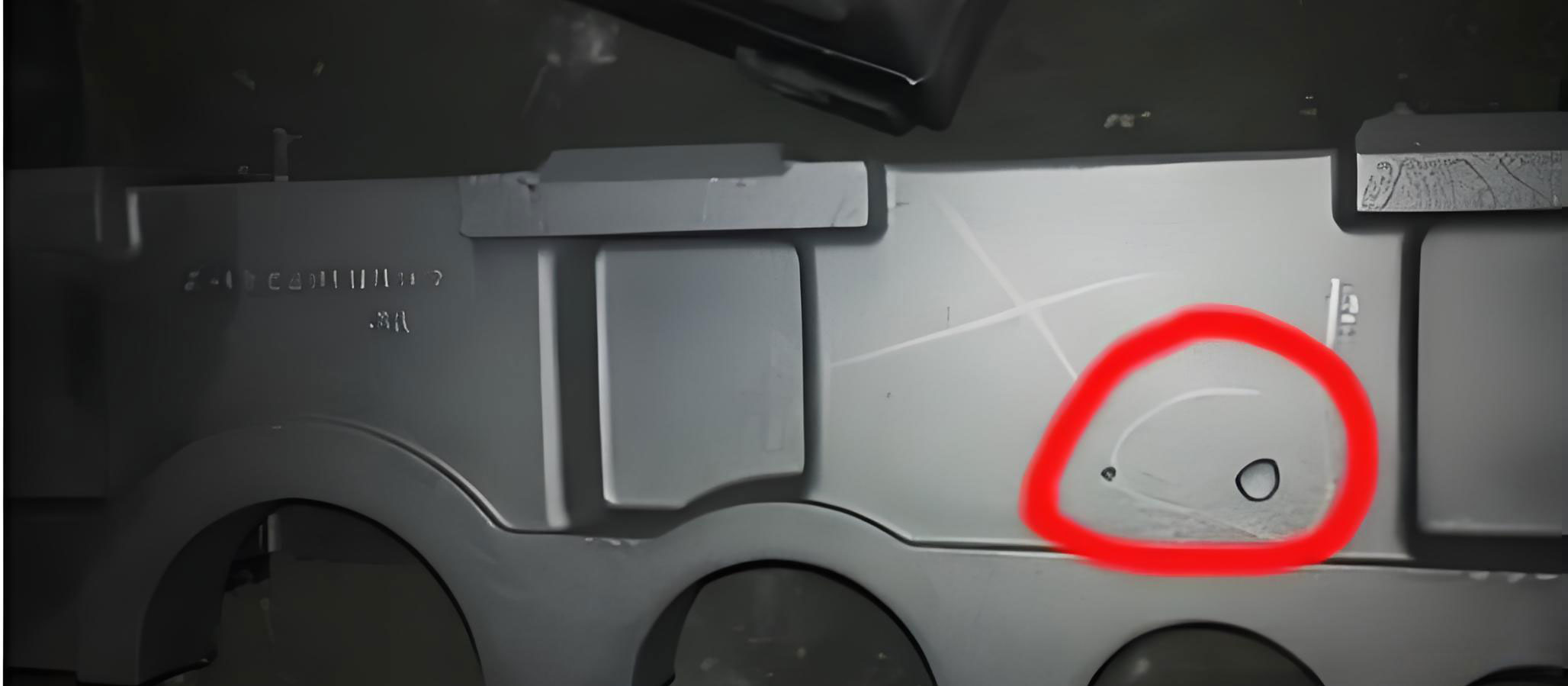
1. Invasive Porosity: This is the most frequently encountered type of porosity in casting. During pouring, the heat from the molten metal causes the resin binder, hardener (hexamine), and other volatiles in the shell mold/core to pyrolyze, generating substantial gas pressure at the metal-mold interface. When this gas pressure exceeds the combined forces of metallostatic pressure, atmospheric pressure, and the surface tension of the molten metal before a solidified skin forms, gas bubbles can invade the liquid metal. Once trapped, these bubbles solidify as pores.
- Characteristics: The pores are typically spherical, pear-shaped, or elongated, often with smooth internal walls. Their size is generally large (macro-porosity). A pear-shaped pore indicates the direction of gas inflow, with the narrow end pointing towards the gas source. They are commonly found in the upper sections of the casting (cope side) relative to the pouring position and can manifest as surface blows, subsurface blows, or internal cavities.
The fundamental condition for the formation of invasive porosity can be expressed by a simplified pressure balance equation:
$$P_{gas} > P_{metal} + P_{atm} + \frac{2\gamma}{r}$$
Where:
$P_{gas}$ is the gas pressure at the mold/metal interface,
$P_{metal}$ is the local metallostatic pressure,
$P_{atm}$ is the atmospheric pressure,
$\gamma$ is the surface tension of the molten metal,
$r$ is the pore radius.
2. Reactive (Nitrogen) Porosity: While less common, this type of porosity is specific to certain binder systems. The hardener hexamine (C$_6$H$_{12}$N$_4$) decomposes at high temperatures to release ammonia (NH$_3$), which further dissociates into active nitrogen [N] and hydrogen [H] atoms. These atoms can dissolve into the molten steel. The solubility of nitrogen decreases sharply as the metal solidifies. If the total nitrogen content exceeds its solubility limit in the solidifying metal, nitrogen gas precipitates, forming bubbles that can be trapped just below the casting surface.
- Characteristics: These pores are usually small, round or oval “pinholes,” often found in the sub-surface layer (subcutaneous porosity). They may appear individually or in clusters.
The relationship governing nitrogen solubility is crucial:
$$S_N = k \sqrt{P_{N_2}}$$
Where $S_N$ is the solubility of nitrogen in the molten steel, $k$ is the equilibrium constant (temperature-dependent), and $P_{N_2}$ is the partial pressure of nitrogen at the interface. A drop in $S_N$ during cooling leads to gas precipitation and potential porosity in casting.
Root Cause Analysis and Countermeasures for Porosity in Casting
Effectively combating porosity in casting requires a systematic examination of every stage, from raw material selection to process execution. The causes are often interdependent.
1. Influence of Resin Coated Sand Properties
The inherent properties of the RCS directly determine the volume and rate of gas generation during pouring, which is a primary driver for porosity in casting. Key parameters must be strictly controlled.
| Property | Target Range / Standard | Effect on Porosity in Casting | Control Measure |
|---|---|---|---|
| Gas Evolution (mL/g) | < 25 (Typically 18-22) | Directly proportional to gas pressure ($P_{gas}$). Higher values significantly increase risk of invasive porosity. | Use low-gas evolution sand. Specify and test per batch. |
| Gas Evolution Rate | Slow and delayed | A slow rate allows time for a solidified skin to form on the casting before major gas release, acting as a barrier against bubble invasion. | Select sand formulated for low and slow gas evolution. |
| Hot & Cold Tensile/Bending Strength (MPa) | As required (e.g., 2.6-3.6 hot bend, 4.0-5.0 cold bend) | Inadequate strength can lead to mold wall movement or erosion, altering cavity geometry and gas flow paths. | Use high-strength sand to minimize resin addition for the same strength, indirectly reducing gas. |
| Hexamine (Hardener) Content | Optimized minimum | High content increases nitrogen potential, raising the risk of reactive (nitrogen) porosity in casting. | Use sands with optimized, low-hardener formulations. |
| LOI (Loss on Ignition) (%) | < 4.0 | High LOI indicates more combustible material (resin), leading to higher total gas volume. | Monitor LOI as a secondary indicator of gas potential. |
The selection strategy should favor High-Strength, Low-Gas Evolution, and Low-Expansion coated sands. High-strength sands achieve the required strength with less resin, thereby reducing the total gas-generating material. The low gas evolution rate is perhaps the most critical property for preventing porosity in casting, as it manages the timing of gas release relative to the solidifying metal skin.
2. Deficiencies in Process and Tooling Design
Poor design of the casting system and molds is a major, yet preventable, cause of porosity in casting. The core principle is to ensure all gases generated can escape freely to the atmosphere.
A. Gating and Risering System Design: An inadequate venting system is a primary culprit. Common flaws include using only blind risers or having no venting provision at the highest points or liquid metal flow fronts. The countermeasure is to design an explicit, low-resistance exhaust path.
$$Q_{gas} = A_{vent} \cdot v_{gas} = A_{vent} \cdot \sqrt{\frac{2 \Delta P}{\rho_{gas}}}$$
Where $Q_{gas}$ is the volumetric gas flow rate out of the mold, $A_{vent}$ is the vent cross-sectional area, $v_{gas}$ is gas velocity, $\Delta P$ is the pressure differential, and $\rho_{gas}$ is gas density. Maximizing $A_{vent}$ and minimizing flow resistance is key.
- Use of Open (Top) Risers: At least one open riser should be incorporated into the system, preferably at the highest point or flow terminus. This provides a direct escape route for displaced air and mold gases.
- Venting Cones: For areas where an open riser is impractical, specially designed venting cones are highly effective. These are thin-walled conical projections (shell thickness ~2-2.5 mm) placed at high points. Gas gathers here, and the thin wall allows easy venting. Even if a small hole (<3 mm) forms at the cone tip during molding, the low metal pressure and temperature at that location prevent metal runout while allowing gas escape, effectively localizing any potential porosity in casting to the cone itself.
B. Mold and Core Design: The mold design dictates the physical characteristics of the shell, which in turn influence gas generation and escape.
- Uniform Shell Thickness: A mold cavity that produces shells with significant thickness variation leads to uneven curing. Thicker sections may be under-cured (“green sand”), containing resin that hasn’t fully polymerized. This under-cured sand has a much higher and faster gas evolution rate upon pouring, creating localized high-pressure zones and leading to porosity in casting. Mold design must aim for consistent wall thickness to ensure uniform curing under a single set of process parameters.
- Core Venting Design: Cores, especially large ones, must be designed to vent internally generated gases. The ideal is a hollow core. When a solid core is structurally necessary, it should be drilled after production to create a vent channel. Furthermore, core prints must incorporate vent channels. A “V”-shaped channel in the core print is an excellent design—it maintains venting capacity while minimizing the risk of metal penetration and runout during pouring if the core erodes.
- Mold Half Registration: The male/female alignment features (ridges and grooves) for glue application should be designed so that the recess is on the drag (lower) half and the protrusion on the cope (upper) half. This prevents excess adhesive from being squeezed into the mold cavity, where it would become a concentrated, high-gas source causing localized porosity in casting.
3. Production Process Variables
Even with optimal design and materials, lapses in process control during manufacturing can directly induce porosity in casting.
| Process Stage | Potential Cause of Porosity | Physicochemical Principle / Effect | Preventive Measure & Best Practice |
|---|---|---|---|
| Shell Molding/Core Making | Under-cured (“green”) shells/cores. | Incomplete resin polymerization leaves uncured components that rapidly decompose at high temps, causing a sudden surge in $P_{gas}$. | Optimize curing parameters (time, temperature). Perform destructive tests on trial shells to confirm complete, uniform cure. Drill vent holes in solid cores. |
| Coating & Drying | Wet coating or moisture retention in shell. | Water (from water-based coatings) flashes to steam (H$_2$O(g)) upon pouring, generating high-pressure gas: $H_2O(l) \xrightarrow{\Delta} H_2O(g)$. | Avoid coating pooling. Implement a two-stage drying: 1) Immediate torch drying after coating. 2) Final baking before pouring (e.g., 160°C for 60 min). |
| Mold Assembly | Blocked core vents; Adhesive in cavity. | Obstructs $Q_{gas}$, causing pressure buildup ($\Delta P \uparrow$) inside core/mold. | Clean vent channels of coating debris before assembly. Apply adhesive carefully, avoiding vent paths. Practice “hot assembly” (assemble just before pouring). |
| Metal Melting & Treatment | High gas content (H, O, N) in melt; Wet ladle. | Dissolved gases precipitate during solidification $[H] \rightarrow \frac{1}{2}H_{2(g)}$, $[O] + [C] \rightarrow CO_{(g)}$, forming porosity from within. | Use clean, dry charge materials. Effective deoxidation (e.g., Al, Si-Ca). Thorough ladle pre-heating to >800°C (bright red heat). |
| Pouring Practice | Low pouring temperature; Turbulent filling. | Low temp increases metal viscosity $\mu$, reducing bubble floatation velocity (Stokes’ Law: $v \propto 1/\mu$). Turbulence entraps air. | Control pouring temp within optimal range (e.g., 1550-1580°C for steel). Use lower-temp metal for non-critical parts. Maintain a smooth, non-turbulent pour rate. |
The gas generation from a shell mold during pouring is a thermally activated process. The rate can be modeled as:
$$\frac{dV}{dt} = A \cdot B \cdot e^{-E/(R T_{int})}$$
where $dV/dt$ is the gas evolution rate, $A$ and $B$ are constants related to sand properties, $E$ is the activation energy, $R$ is the gas constant, and $T_{int}$ is the metal-mold interface temperature. Proper baking reduces the volatile content (affecting $B$), and a higher pouring temperature ($T_{int}$) can sometimes help by ensuring gas is released earlier when metal is fully liquid and bubbles can rise, but this must be balanced against other metallurgical considerations.
Integrated Prevention Strategy and Foundry Management
Solving porosity in casting is rarely about a single fix; it requires an integrated quality chain. A proactive approach, considering all potential factors at the product and process design stage, is the most cost-effective strategy. This involves:
- Sand Qualification: Establish and enforce strict incoming inspection standards for RCS based on properties like those in Table 1. Partner with suppliers to develop tailored sand formulations for specific product families.
- Design for Manufacturability (DFM): Implement checklists for casting and mold designers that mandate venting analysis, uniform wall thickness review, and core venting design. Use simulation software to predict potential areas of gas entrapment and porosity in casting before tooling is made.
- Process Standardization (SOPs): Develop and rigorously enforce Standard Operating Procedures for every step: molding parameter windows, coating application and drying cycles, mold handling and assembly sequences, metal treatment practices, and pouring protocols.
- Critical Parameter Monitoring: Implement statistical process control (SPC) for key variables: shell curing parameters, baking furnace temperature profiles, molten metal temperature and chemistry, and pouring times. Small drifts in these parameters can be early indicators of an increasing risk for porosity in casting.
The economic impact of preventing porosity in casting is substantial. It reduces scrap and rework rates, shortens lead times by minimizing trial-and-error cycles, improves yield, and enhances overall product quality and reliability—critical factors for pressure-containing components like valves.
Conclusion
Porosity in resin coated sand castings is a complex defect with roots in material science, fluid dynamics, thermodynamics, and process engineering. Its manifestation as either invasive or reactive porosity guides the diagnostic approach. The primary levers for control are: selecting a coated sand with inherently low and slow gas evolution; designing casting systems and molds with prioritized, unobstructed gas escape routes; and meticulously controlling all production processes to prevent the introduction of additional gas sources or the trapping of generated gases. A synergistic focus on all these areas—from raw material to poured casting—is essential. By adopting this comprehensive, prevention-oriented methodology, foundries can significantly reduce the incidence of porosity in casting, achieving higher quality levels, greater operational efficiency, and improved competitiveness in the production of precision cast components.