
In my extensive experience within the foundry industry, the pervasive challenge of porosity in casting has consistently been traced back to the fundamental quality of the molten iron. Porosity in casting is not merely a surface defect; it compromises the structural integrity, pressure tightness, and machinability of components, leading to significant scrap rates and financial loss. Through years of observation and process refinement, I have concluded that the properties of the molten metal at the point of pouring—specifically its temperature and purity—are the most dominant factors influencing the formation of gas-related defects, often outweighing the effects of mold sand properties and gating system design. This article delves into the intricate relationship between molten iron parameters and the manifestation of porosity in casting, supported by empirical data, chemical principles, and practical guidelines.
The journey to minimize porosity in casting begins at the furnace. Molten iron quality is a multifaceted concept encompassing chemical composition, inoculation efficacy, tapping temperature, pouring temperature, and overall cleanliness. While all elements play a role, I have found that temperature and purity are the twin pillars upon which success or failure in preventing porosity in casting rests. A common misconception in smaller foundries is the practice of high-temperature melting followed by low-temperature pouring, a tradition that directly invites gas entrapment and subsequent porosity in casting.
The Paramount Influence of Molten Iron Temperature
Temperature is the first and most critical lever to control. The thermal state of the iron dictates its fluidity, its capacity to dissolve gases, and its ability to withstand the chilling effect of the mold while allowing entrapped gases to escape. For cupola melting, which remains prevalent, a tapping temperature exceeding 1450°C is absolutely essential to ensure adequate superheat for most cast iron grades. This high temperature is not an end in itself but a prerequisite for achieving a suitably high pouring temperature.
I have witnessed countless instances where green sand molds with seemingly high moisture content produced sound castings, while others with low moisture yielded porous ones. Similarly, with resin-bonded sands, immediate pouring after molding or delayed pouring after complete hardening does not reliably predict the occurrence of porosity in casting. The common denominator is not the absolute amount of gas generated by the mold, but the dynamic race between metal solidification and gas expulsion. If the gases produced during pouring can escape the mold cavity before the metal develops a solid skin, the casting remains free from defects. Conversely, even minimal gas generation can lead to severe porosity in casting if it becomes trapped by the advancing solidification front. This race is won by thermal energy.
A higher pouring temperature provides a longer “window of opportunity” for gas escape by delaying solidification. It increases metal fluidity, reducing the likelihood of mist runs and turbulent entrapment of air. It also lowers the viscosity of the metal, allowing smaller bubbles to coalesce and rise more easily. The relationship between superheat and gas escape potential can be conceptually framed. If we define the critical solidification time ($t_s$) as the period during which gases can still permeate through the mushy zone and the gas evolution rate from the mold ($\dot{G}$), the condition for avoiding porosity in casting is that the total gas volume produced before the skin forms is less than the volume that can escape. The pouring temperature ($T_p$) directly influences $t_s$ through the solidification parameters.
$$ t_s \propto \frac{(T_p – T_{liquidus})^n}{\kappa} $$
where $T_{liquidus}$ is the liquidus temperature of the iron, $\kappa$ is the thermal diffusivity of the mold/metal system, and $n$ is an exponent related to casting geometry. Higher $T_p$ increases $t_s$, providing more time for gas evacuation.
Machinists often report that harder, higher-grade iron castings (e.g., high-strength grades) show a higher incidence of subsurface pinholes compared to softer, lower-grade ones poured under identical conditions. This is a direct consequence of temperature. Higher-grade irons typically have higher carbon equivalents and lower liquidus temperatures. Therefore, at the same pouring temperature, a high-grade iron has a lower effective superheat ($\Delta T_{superheat} = T_p – T_{liquidus}$) than a low-grade iron. This reduced superheat shortens the gas escape window, making high-grade irons more susceptible to porosity in casting, all else being equal. The table below summarizes the recommended temperature benchmarks for different casting processes to mitigate porosity in casting.
| Casting Process / Iron Grade | Minimum Tapping Temperature (°C) | Target Pouring Temperature Range (°C) | Critical Superheat $\Delta T$ (°C, approx.) |
|---|---|---|---|
| General Gray Iron (Cupola) | 1450 | 1380 – 1420 | > 50 |
| High-Strength Gray Iron (Ductile Base) | 1480 | 1400 – 1440 | > 80 |
| Ductile Iron (Mg-treated) | 1500 | 1350 – 1400* | > 60 |
| Thin-Wall Castings | 1520 | 1450 – 1500 | > 100 |
| Thick-Wall Castings | 1460 | 1320 – 1360 | > 30 |
*Note: For ductile iron, pouring must occur quickly after treatment to prevent fading and gas pickup, which itself causes porosity in casting.
The primary enabler of high tap temperatures is coke quality. The use of foundry-grade coke with low ash, low sulfur, and high fixed carbon is non-negotiable. Inferior coke leads to unstable combustion, excessive slag formation, and ultimately, lower iron temperature—a direct path to increased porosity in casting.
The Crucial Factor of Molten Iron Purity (Cleanliness)
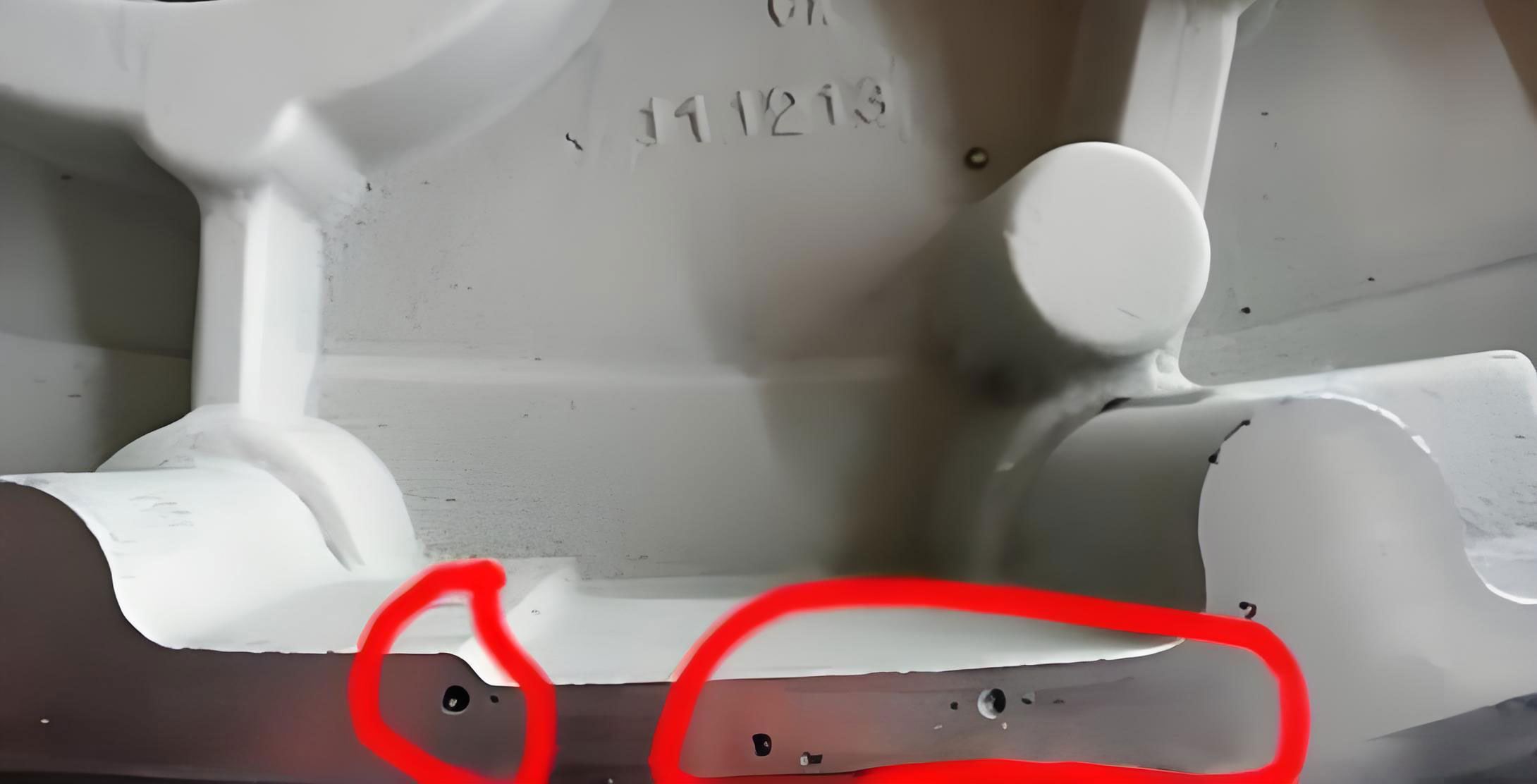
If temperature controls the race against time, purity determines the number of contestants. Molten iron is never a pure Fe-C-Si melt; it contains dissolved gases (oxygen, hydrogen, nitrogen) and suspended non-metallic inclusions. Each of these impurities can nucleate or contribute to the formation of porosity in casting. The most deceptive scenarios occur with open-top pouring, where the mold cavity is exposed to the atmosphere. One might assume gas escape is unimpeded, yet these castings frequently exhibit severe porosity in the upper sections. The reason is reoxidation. The exposed iron surface reacts with atmospheric oxygen, forming a layer of FeO-rich slag. This slag can then react with carbon in the iron underneath the initial solidifying shell, producing carbon monoxide (CO) gas trapped as sub-surface pinholes.
The governing reaction is:
$$ \text{FeO} + \text{C} \rightarrow \text{Fe} + \text{CO} \uparrow $$
This reaction is highly temperature-dependent and is a prime source of porosity in casting, particularly in poorly designed gating systems that promote turbulence and oxidation.
Oxidation during cupola melting is inevitable but manageable. The key is charge material preparation. Using clean, rust-free, and appropriately sized steel scrap and returns is fundamental. Rust (hydrated iron oxide) introduces both oxygen and hydrogen into the bath. After tapping and slag removal, it is imperative to cover the iron surface in the ladle with an insulating or exothermic covering compound to prevent atmospheric contact. The quality of the slag itself is an indicator. Slag with an FeO content exceeding 5% poses a high risk for promoting porosity in casting through the reaction mentioned above. In practice, slags often exceed this threshold due to poor melting practice.
Beyond oxygen, hydrogen and nitrogen are potent contributors to porosity in casting. Their solubility in iron follows Sieverts’ law, where solubility decreases sharply upon solidification, causing gas precipitation and pore formation.
$$ [H] = K_H \sqrt{p_{H_2}} $$
$$ [N] = K_N \sqrt{p_{N_2}} $$
where $[H]$ and $[N]$ are the dissolved gas concentrations, $K_H$ and $K_N$ are temperature-dependent equilibrium constants, and $p$ denotes partial pressure.
Hydrogen primarily originates from moisture. Two major sources are often overlooked: blast air humidity and coke moisture. In regions with high ambient humidity (e.g., coastal areas), blast air can carry over 10 g/Nm³ of moisture. When this humid air contacts the hot coke in the cupola, it dissociates, injecting hydrogen and oxygen into the rising gas stream and ultimately into the metal. Hydrogen levels above 2 ppm (2 cm³/100g) in the molten iron can lead to the characteristic shiny, round pinholes known as hydrogen porosity in casting. Coke with high volatile matter similarly releases hydrocarbons that crack at high temperatures, contributing hydrogen. The table below outlines critical limits for dissolved gases to prevent porosity in casting.
| Gas Species | Typical Source | Critical Level in Molten Iron | Type of Porosity Induced |
|---|---|---|---|
| Hydrogen (H) | Moisture in air, coke, rust | > 2.0 ppm (cm³/100g) | Small, round pinholes with bright walls. |
| Nitrogen (N) | High steel scrap, certain binders | > 80 – 100 ppm (thin wall) > 120 ppm (thick wall) |
Interdendritic shrinkage-like or fissure porosity. | Oxygen (Active, as FeO) | Oxidation, rust, poor slag | Slag FeO > 5% | Subsurface pinholes, often with associated slag. |
Nitrogen becomes a significant concern with the increasing use of steel scrap to achieve higher strength grades (e.g., for grades requiring >30% steel scrap). Nitrogen solubility is higher in iron with lower carbon and silicon. High nitrogen levels (exceeding 100-120 ppm) can lead to a particularly nasty form of interdendritic porosity in casting that closely resembles shrinkage, often appearing in heavy sections or at thermal centers like under bolt bosses or in gear teeth roots. This nitrogen-induced porosity in casting can be counteracted by adding nitride-forming elements such as titanium or aluminum, which tie up nitrogen as stable nitrides, removing it from solution.
Furthermore, the practice of heavy inoculation, especially with ferrosilicon, can indirectly promote hydrogen pickup. Silicon has an affinity for oxygen, and the reaction of silicon with moisture can release hydrogen at the metal surface:
$$ \text{Si} + 2\text{H}_2\text{O} \rightarrow \text{SiO}_2 + 2\text{H}_2 \uparrow $$
This hydrogen can then dissolve into the metal, contributing to porosity in casting.
A parallel phenomenon occurs in ductile iron with excessive residual magnesium. Magnesium is a powerful deoxidizer and desulfurizer, but excess Mg (typically >0.06%) reacts violently with moisture or oxygen, generating hydrogen or water vapor that gets trapped:
$$ \text{Mg} + \text{H}_2\text{O} \rightarrow \text{MgO} + \text{H}_2 \uparrow $$
Thus, controlling residual magnesium within the optimal range of 0.03%-0.05% is vital to prevent gas-related porosity in casting in ductile iron production.
The Final Gatekeeper: Pouring Practice
Even the best-quality iron can be ruined during the transfer from ladle to mold. Pouring is the final defense against porosity in casting. The objectives are twofold: minimize the amount of gas entrained with the metal stream, and maximize the expulsion of any gases that do enter the cavity.
The ladle itself is a potential contaminant. Ladle linings must be thoroughly dried and preheated to a minimum of 800°C to avoid steam generation. Refractory materials should be stable and non-reactive to prevent slag formation. Ladles should be equipped with effective slag gates or tea-pot spouts to keep slag out of the stream.
The single most effective pouring parameter to control porosity in casting is pouring speed. A fast pour achieves rapid mold filling, establishing a high metallostatic pressure head quickly. This high pressure suppresses gas generation from the mold materials and hinders the ingress of mold gases into the metal stream. More importantly, a fast fill reduces the time for air entrainment and surface oxidation within the gating system. For critical castings, the use of a stoppered pouring basin or a metering pin-hole ladle allows for fill times measured in seconds, drastically reducing the opportunity for gas-related defects. For instance, a cylinder block weighing 50 kg, poured vertically with a stopper ladle, can be filled in 8-10 seconds, virtually eliminating porosity in casting.
Contrast this with a conventional hand-poured system with an open basin. The pour rate is often too slow to suppress mold gas generation. The gas pressure in the cavity builds up, potentially causing metal boiling, splashing (“false running”), mist runs, or back-pressure that prevents complete filling. This inevitably leads to gross porosity in casting at the cope surfaces or along hot spots. The strategy should be: pour rapidly until the mold is about 90-95% full, then reduce the stream to a trickle to allow the last pockets of gas trapped at the highest points to vent out through the risers or vents.
The relationship between fill time, gate velocity, and defect formation can be modeled. To prevent air aspiration and excessive turbulence, the gate velocity ($v_g$) should be kept below a critical threshold, while the fill time ($t_f$) should be minimized. A common rule of thumb for avoiding porosity in casting related to turbulence is:
$$ v_g < \frac{C}{\sqrt{H}} $$
where $C$ is a material constant (approx. 500 for iron) and $H$ is the sprue height in mm. Simultaneously, to ensure sufficient pressure to suppress mold gas, the fill time should satisfy:
$$ t_f \leq \frac{V_{casting}}{A_g \cdot v_g} $$
where $V_{casting}$ is the casting volume and $A_g$ is the total gate area. Optimizing these parameters is key to gating system design for preventing porosity in casting.
| Practice Aspect | Recommended Method | Effect on Porosity in Casting |
|---|---|---|
| Ladle Preheating | > 800°C, until lining is red-hot | Prevents steam generation, reduces hydrogen pickup. |
| Pouring Speed | Fast initial fill, slow at end. | Suppresses mold gas, allows final gas evacuation. |
| Gating Design | Pressurized, tapered sprue, filters. | Reduces turbulence, air entrainment, and oxide formation. |
| Mold Venting | Adequate vents at high points, permeable sand. | Provides escape path for gases before metal solidifies. |
| Atmosphere Control | Covered ladle, inert gas shroud (if possible). | Minimizes reoxidation and hydrogen/nitrogen pickup from air. |
Synthesis and Holistic Control Strategy
Porosity in casting is rarely the result of a single factor. It is typically the synergistic effect of multiple deviations: slightly low temperature, marginally high moisture, a bit of rust on the charge, and a slower-than-ideal pour. Therefore, a systematic, monitored approach is essential. The following equation conceptually represents the overall risk factor ($R$) for porosity in casting:
$$ R = \alpha \cdot \left(\frac{1}{\Delta T_{superheat}}\right) + \beta \cdot [H] + \gamma \cdot [N] + \delta \cdot (\%FeO) + \epsilon \cdot \left(\frac{1}{t_f}\right) + \zeta \cdot (M_{H_2O}) $$
where $\alpha, \beta, \gamma, \delta, \epsilon, \zeta$ are weighting factors specific to the foundry’s materials and processes, $M_{H_2O}$ is mold sand moisture, and other terms are as defined earlier. The goal is to minimize $R$.
In conclusion, my experience unequivocally shows that mastering molten iron quality is the most direct route to eliminating porosity in casting. This requires unwavering commitment to high tapping and pouring temperatures, vigilant control over charge materials and slag chemistry to ensure purity, and disciplined execution of optimized pouring practices. Investing in coke quality, charge preparation, ladle management, and operator training yields far greater returns in reducing scrap from porosity in casting than chasing after marginal improvements in molding sand alone. The foundry that controls its metal controls its quality; the foundry that controls its temperature and purity conquers porosity in casting.
The battle against porosity in casting is won degree by degree, ppm by ppm, and second by second at the pouring lip. It demands a scientific understanding of the underlying principles coupled with the rigorous discipline of daily practice. By internalizing the concepts discussed here—the critical role of superheat, the dangers of dissolved gases, and the importance of rapid, controlled filling—any foundry can significantly reduce the scourge of porosity in casting and achieve higher levels of productivity and quality.