
As is widely recognized in foundry practice, cavity-type casting defects, such as porosity, directly reduce the effective load-bearing cross-section of a casting’s wall thickness. This reduction critically impacts the final service performance of the product, including key mechanical properties like tensile strength, stiffness, and toughness, as well as vital characteristics such as resistance to impact or fracture and pressure tightness. The formation of porosity in casting is a persistent and complex challenge. Therefore, investigating the root causes of internal porosity in casting defects within ZL205A alloy components, proposing effective countermeasures, and optimizing the casting process are of paramount practical importance. This research is essential for stabilizing the internal quality of castings, enhancing performance metrics, shortening product development cycles, improving yield rates, and reducing overall costs.
The subject of this study is a housing component, a high-strength ZL205A alloy casting. Its envelope dimensions are approximately Φ430mm in diameter and 280–530mm in height. The wall thickness is highly non-uniform, ranging from a minimum of only 4mm to a maximum of 46mm, classifying it as a medium-sized structural part. The internal surface of the casting features numerous bosses and ribs (up to 18), making the geometry complex. The as-cast internal cavity is a non-machined surface, and the dimensional tolerance for wall thickness is 4±0.7mm. This tolerance level is equivalent to CT7–CT9 per casting dimensional tolerance standards, which is 2 to 3 grades stricter than the typical requirement for conventional sand castings. This imposes significant demands on dimensional accuracy and stability.
Structural and Process Challenges
The complexity of the housing geometry, combined with the inherent characteristics of the ZL205A alloy, presents several manufacturing challenges that predispose the component to defects, notably porosity in casting.
1. Mold and Core Design: To mitigate defects like concentrated shrinkage, micro-porosity, inclusions, segregation, and hot tears, the initial process employed a split metal core box. Cores and molds were made using cold-curing resin-bonded sand. The casting method was low-pressure casting, utilizing a vertical-slot gating system, combined with a comprehensive feeding and chilling strategy employing variable-section chills and conformal risers.
2. Sand Process Considerations: Large aluminum alloy castings typically use resin-bonded sand. Two prevalent types are furan resin sand and phenolic urethane resin sand (PEPSET). While furan sand offers high strength, its poor collapsibility can lead to hot tearing in crack-sensitive alloys like ZL205A and complicate cleaning. PEPSET sand offers excellent flowability, collapsibility, replication, and knockout properties, resulting in castings with sharp definition and high dimensional accuracy. However, a significant drawback is its higher gas evolution rate during pouring, as the organic binders (resin and catalyst) decompose upon contact with molten metal. This gas generation is a primary contributor to the formation of porosity in casting. Optimizing the sand mixture ratio and mixing process is therefore a critical avenue for defect reduction. A typical optimized formulation is presented below:
| Sand Type | Weight (kg) | Resin Addition (kg) | Catalyst Addition (kg) | Notes |
|---|---|---|---|---|
| Silica Sand | 100 | 0.7–1.4 | 0.65–1.4 | Continuous mixer |
| Chill Sand | 100 | 0.5–1.2 | 0.45–1.2 | Batch mixer |
3. Alloy Characteristics and Melting: ZL205A is a complex Al-Cu series alloy. Its chemical composition is critical to its performance but also governs its casting behavior, heavily influencing the tendency for porosity in casting.
| Element | Cu | Mn | Ti | Cd | V | Zr | B | Fe | Si | Mg |
|---|---|---|---|---|---|---|---|---|---|---|
| Content (wt%) | 4.6–5.3 | 0.3–0.5 | 0.15–0.35 | 0.15–0.25 | 0.05–0.3 | 0.05–0.2 | 0.005–0.06 | ≤0.15 | ≤0.06 | ≤0.05 |
The alloy exhibits a wide freezing range (approximately 100°C), leading to poor fluidity (about 68% that of common Al-Si alloys), significant volumetric shrinkage, and a pronounced tendency for macro- and micro-shrinkage (porosity) and hot tearing. The table below contrasts its mechanical properties with a common Al-Si alloy, highlighting its superior strength but more challenging casting nature.
| Alloy | Condition | Tensile Strength (MPa) | Elongation (%) |
|---|---|---|---|
| ZL205A | As-Cast | 190–230 | 2.0–5.0 |
| ZL205A | T6 | 450–500 | 3.0–7.0 |
| ZL104 (Al-Si) | T6 | ~220 | ~2 |
The complex composition, with elements of vastly different densities and melting points, promotes segregation. Furthermore, hydrogen, the primary gas causing porosity in casting in aluminum, is highly soluble in the liquid state but much less so in the solid. During solidification, hydrogen is rejected at the solid-liquid interface. In an alloy with a long mushy zone, the trapped hydrogen can form pores that are difficult to float out, resulting in dispersed microporosity. The solubility relationship is governed by Sieverts’ law:
$$ S = k \sqrt{P_{H_2}} $$
where \( S \) is the solubility of hydrogen, \( k \) is a constant dependent on temperature and alloy, and \( P_{H_2} \) is the partial pressure of hydrogen above the melt. During cooling and solidification, the decreasing solubility forces hydrogen out of solution, leading to pore nucleation and growth, a key mechanism for porosity in casting.
4. Gating and Feeding Philosophy: For complex, high-integrity castings, conventional gravity pouring often falls short in eliminating internal defects. Turbulence during filling can entrap air and oxide films, becoming nucleation sites for porosity in casting. An effective gating system must ensure quiescent, non-turbulent filling, effective slag trapping, and establish a strong directional solidification gradient towards feed metal sources (risers).
Mechanisms of Porosity Formation in ZL205A
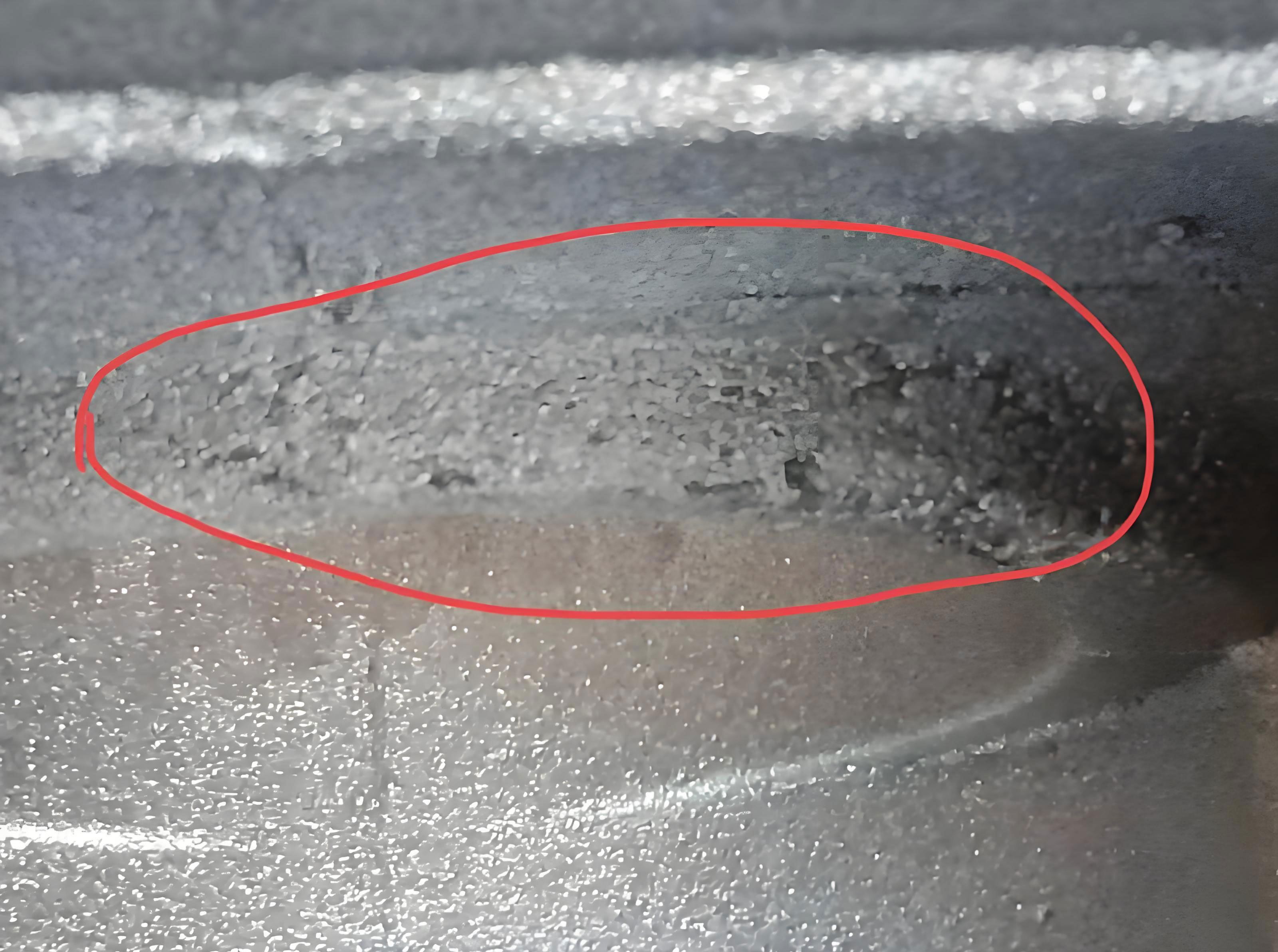
The appearance of scattered porosity, as seen in preliminary castings, can be attributed to a confluence of factors inherent to the alloy and the process. The formation of porosity in casting is primarily driven by two phenomena: gas evolution (mainly hydrogen) and shrinkage during solidification. In many cases, they act synergistically; a shrinkage cavity provides a low-pressure site that attracts dissolved gas to form a gas pore.
For ZL205A, the wide freezing range is particularly detrimental. It creates an extensive, tortuous mushy zone where interdendritic feeding becomes difficult in the later stages of solidification. As feeding stops, micro-shrinkage voids form. Simultaneously, the rejected hydrogen from the solidifying dendrites accumulates in these isolated liquid pockets. Once the hydrogen partial pressure exceeds the sum of the local metallostatic pressure and the capillary pressure, a pore nucleates and grows. The pressure balance can be described as:
$$ P_{gas} \geq P_{atm} + \rho g h + \frac{2\gamma}{r} $$
Where \( P_{gas} \) is the gas pressure within the nascent pore, \( P_{atm} \) is atmospheric pressure, \( \rho g h \) is the metallostatic head, \( \gamma \) is the surface tension, and \( r \) is the pore radius. The long solidification time associated with a wide freezing range gives hydrogen ample time to diffuse into these nucleation sites, promoting the growth of dispersed porosity in casting.
Additionally, gas generated from the decomposition of the resin sand (from binders and moisture) can penetrate the metal surface if the mold atmosphere pressure exceeds the metal pressure, or can be trapped at the metal-mold interface, causing surface or sub-surface blowholes. The high gas evolution rate of some sand systems exacerbates this risk.
Optimized Process Strategy for Porosity Mitigation
Based on the analysis above, a multi-faceted optimized process strategy was developed and implemented to combat porosity in casting in the ZL205A housing.
1. Enhanced Alloy Melting and Treatment: Controlling hydrogen and oxide content in the melt is the first line of defense against gas-related porosity in casting.
- Raw Material Control: Use of high-purity primary ingots and master alloys to minimize initial hydrogen and impurity content.
- Refining Process: Implementation of a rigorous degassing procedure. While rotary degassing with inert gas (Ar/N2) is ideal for efficiency and consistency, a reliable method involved using hexachloroethane (C2Cl6) with a carrier flux. The process parameters were optimized:
| Refiner Type | Addition (wt%) | Temperature (°C) | Treatment Time (min) | Holding Time (min) |
|---|---|---|---|---|
| C2Cl6 + Carrier | 0.35–0.65 | 680–750 | 8–30 | 6–30 |
Mechanical stirring during and after degassing was emphasized to ensure uniform treatment and facilitate the agglomeration and removal of inclusions, which can act as pore nucleation sites. Thorough slag removal before pouring was mandatory.
2. Sand Process Optimization: To manage mold gas evolution, the PEPSET sand formulation was fine-tuned towards the lower end of the binder addition range (as shown in the earlier table) while maintaining sufficient strength for handling. This directly reduces the potential gas volume available to cause porosity in casting. Ensuring proper mixing and uniform distribution of binders is equally important to avoid local high-gas areas.
3. Casting Process Optimization: Low-Pressure Casting with Vertical Slot Gating
The core of the optimized forming process was the adoption of a well-designed low-pressure casting (LPC) process. LPC provides distinct advantages for reducing porosity in casting:
- Quiescent Filling: Metal is pushed upwards into the mold cavity under controlled pressure, minimizing turbulence, air entrapment, and oxide film formation.
- Directional Solidification & Feeding: The thermal gradient is naturally aligned from the top (farthest from the gate) down to the gate/feed stalk. Combined with applied pressure during solidification, this greatly enhances interdendritic feeding, compresses any forming gas pores, and promotes denser structure. The pressure helps suppress the nucleation and growth of porosity in casting by increasing the \( \rho g h \) term in the pore formation equation.
- Improved Yield: The system eliminates extensive risers needed in gravity casting.
The vertical slot gating system, coupled with the use of variable-section chills and exothermic/chill sands in strategic locations, was designed to enforce a controlled solidification sequence. The chills rapidly extract heat from thick sections, preventing hot spots that lead to shrinkage porosity in casting, and help establish a more favorable temperature gradient.
The low-pressure casting cycle was carefully programmed, typically involving stages of ramp-up, filling, shell formation, pressure increase for feeding, and solidification under pressure. A precise pressure-time profile is crucial. The final applied pressure during solidification, \( P_{app} \), directly increases the effective feeding pressure, reducing both shrinkage and gas porosity in casting. The modified pressure condition for pore nucleation becomes:
$$ P_{gas} \geq P_{atm} + \rho g h + P_{app} + \frac{2\gamma}{r} $$
By applying \( P_{app} \), the threshold for pore formation is raised, effectively suppressing it.
Experimental Results and Analysis
Implementation of the optimized process strategy yielded multiple housing castings. The internal quality, as inspected by non-destructive testing (X-ray), showed significant improvement with no major scattered porosity defects detected. Chemical composition and mechanical properties met and often exceeded specification requirements.
Chemical Composition (Example Heats):
| Element (wt%) | Cu | Mn | Ti | Zr | Cd | V | Si | Mg | Fe |
|---|---|---|---|---|---|---|---|---|---|
| Heat 1 | 4.8 | 0.4 | 0.17 | 0.10 | 0.18 | 0.16 | 0.01 | 0.01 | 0.01 |
| Heat 2 | 5.3 | 0.4 | 0.21 | 0.11 | 0.20 | 0.20 | 0.005 | 0.01 | 0.001 |
*Balance Al, B within specification.
Mechanical Properties (T7 Condition):
| Sample | Ultimate Tensile Strength (MPa) | Yield Strength (MPa) | Elongation (%) |
|---|---|---|---|
| 1 | 480 | 400 | 9.5 |
| 2 | 485 | 390 | 10.0 |
| 3 | 475 | 360 | 10.0 |
| 4 | 470 | 355 | 12.0 |
| 5 | 440 | 345 | 12.0 |
| 6 | 410 | 380 | 4.0 |
The properties consistently meet the high demands of HB963-90 specification, demonstrating the effectiveness of the process in producing sound, high-performance castings.
Conclusion
This study successfully addressed the challenge of porosity in casting for complex, high-strength ZL205A alloy housings. The root causes were identified as a combination of the alloy’s inherent wide freezing range and susceptibility to hydrogen pickup, coupled with process factors such as mold gas evolution and suboptimal feeding.
The integrated solution involved:
- Melt Quality Control: Strict raw material selection and an optimized degassing/holding practice to minimize hydrogen content and inclusions.
- Mold Material Management: Optimization of the phenolic urethane resin sand formulation to reduce binder-derived gas generation.
- Advanced Casting Methodology: Implementation of a low-pressure casting process with a vertical slot gating system. This provided tranquil filling, a natural thermal gradient for directional solidification, and most importantly, the application of sustained pressure during solidification to suppress both shrinkage and gas pore formation.
- Targeted Cooling: Strategic use of chills and special sands to control local solidification rates, eliminating hot spots.
The resulting castings exhibited excellent internal soundness, dimensional accuracy, and superior mechanical properties, fully qualifying for their intended high-performance application. This work demonstrates that a systematic approach targeting the specific mechanisms of porosity in casting—through alloy treatment, mold engineering, and controlled solidification under pressure—is essential for reliably producing high-integrity castings from challenging alloys like ZL205A.