
In the modern manufacturing landscape, aluminum die casting has emerged as a pivotal process for producing lightweight, high-strength components with excellent dimensional accuracy and surface finish. The automotive, aerospace, and consumer electronics industries, among others, rely heavily on this technique due to its ability to form complex shapes rapidly and cost-effectively. However, a persistent challenge that plagues aluminum die casting is the formation of internal defects, particularly porosity in casting. Porosity in casting refers to the presence of voids or gas pockets within the solidified metal, which can severely compromise mechanical properties such as tensile strength, fatigue resistance, and ductility. In critical applications like transmission housings or engine components, even minor porosity in casting can lead to catastrophic failures, making it a paramount concern for foundries worldwide. This article delves into the root causes of porosity in casting from the perspective of melting and refining processes, offering a comprehensive analysis of how molten aluminum handling influences defect formation, and proposes targeted measures to mitigate these issues. By focusing on the interplay between hydrogen absorption, oxide inclusion, and process parameters, we aim to provide a detailed framework for achieving high-integrity castings with minimized porosity in casting.
The fundamental mechanism behind porosity in casting in aluminum alloys is intimately tied to the solubility of gases in molten metal. Aluminum, in its liquid state, exhibits a strong affinity for absorbing gases from the environment, with hydrogen being the primary culprit due to its high diffusivity and solubility in aluminum. Hydrogen absorption occurs through various sources: inherent gas content in raw materials, atmospheric moisture, combustion products from furnaces, and contaminants like oils or moisture on charge materials. The dissolution of hydrogen in aluminum follows Sieverts’ law, which states that the solubility of a diatomic gas in a metal is proportional to the square root of its partial pressure. Mathematically, this is expressed as:
$$S = k \sqrt{P_{H_2}}$$
where \( S \) is the solubility of hydrogen in cm³ per 100g of aluminum, \( k \) is a temperature-dependent constant, and \( P_{H_2} \) is the partial pressure of hydrogen in the atmosphere. The constant \( k \) increases exponentially with temperature, leading to a dramatic rise in hydrogen uptake as the melt temperature escalates. This relationship is critical in understanding why temperature control is paramount in preventing porosity in casting. To illustrate, the solubility of hydrogen in aluminum at different temperatures under a constant pressure of 1 atmosphere is tabulated below, highlighting the steep increase beyond 700°C.
| Temperature (°C) | Hydrogen Solubility (cm³ per 100g Al) | Notes on Porosity in Casting Risk |
|---|---|---|
| 660 | 0.69 | Low risk, near melting point |
| 700 | 0.92 | Moderate risk, common melting range |
| 750 | 1.23 | High risk, excessive absorption |
| 800 | 1.67 | Very high risk, severe porosity in casting likely |
| 850 | 2.15 | Extreme risk, unacceptable for quality castings |
During solidification, hydrogen’s solubility drops precipitously—from approximately 0.65 cm³/100g in the liquid to 0.034 cm³/100g in the solid at the eutectic temperature. This disparity forces hydrogen to precipitate out of solution, forming bubbles that become trapped as the metal skin solidifies, thereby creating porosity in casting. The nucleation and growth of these bubbles can be described by classical nucleation theory, where the critical radius \( r^* \) for a bubble to form is given by:
$$r^* = \frac{2\gamma}{\Delta P}$$
Here, \( \gamma \) is the surface tension at the liquid-gas interface, and \( \Delta P \) is the pressure difference driving bubble formation, which is influenced by hydrogen supersaturation. Higher hydrogen concentrations lower the energy barrier for nucleation, exacerbating porosity in casting. Additionally, the presence of non-metallic inclusions, such as oxides, can act as nucleation sites, further promoting gas pore formation. Thus, managing hydrogen levels through meticulous melting practices is essential to control porosity in casting.
Beyond hydrogen, aluminum melts are prone to oxidation, which compounds the issue of porosity in casting. When molten aluminum is exposed to air, it rapidly forms a layer of aluminum oxide (Al₂O₃) according to the reaction:
$$4Al + 3O_2 \rightarrow 2Al_2O_3$$
Aluminum oxide is a solid with a density similar to that of molten aluminum, causing it to remain suspended in the melt. These oxide particles are hygroscopic, meaning they absorb moisture from the environment, which subsequently dissociates into hydrogen and oxygen upon contact with the hot metal. The hydrogen thus released dissolves into the melt, increasing gas content and contributing to porosity in casting. Moreover, oxide inclusions disrupt the uniformity of the metal matrix, acting as stress concentrators and reducing mechanical properties. The kinetics of oxide formation can be modeled using the parabolic rate law:
$$\frac{dx}{dt} = \frac{k_p}{x}$$
where \( x \) is the oxide layer thickness, \( t \) is time, and \( k_p \) is a temperature-dependent rate constant. This indicates that oxidation accelerates with higher temperatures and longer exposure times, underscoring the need for controlled melting environments. To mitigate this, protective atmospheres or flux coverings are often employed to shield the melt from air, thereby reducing oxide generation and its associated porosity in casting.
The melting process itself is a critical juncture where porosity in casting can be either minimized or exacerbated. Key factors include charge material selection, melting temperature, holding time, and refining procedures. Raw materials must be clean, dry, and free from contaminants to limit hydrogen and oxide introduction. For instance, using only high-purity primary aluminum ingots and carefully controlled returns (such as biscuits or sprues) can reduce variability. Returns should be of the same alloy grade to avoid compositional shifts that might affect gas solubility. During melting, temperature must be tightly regulated; exceeding 750°C significantly boosts hydrogen absorption, as shown in the solubility table. A practical guideline is to maintain the melt between 700°C and 750°C, with a target of 720°C ± 20°C for optimal fluidity without excessive gas uptake. The following table summarizes recommended melting parameters to curb porosity in casting.
| Parameter | Optimal Range | Impact on Porosity in Casting |
|---|---|---|
| Melting Temperature | 700–750°C | Lower temperatures reduce hydrogen solubility, minimizing porosity in casting. |
| Holding Time | < 4 hours | Prolonged holding increases hydrogen pickup and oxide formation, raising porosity risk. |
| Charge Material Moisture | < 0.1% | Dry materials limit hydrogen sources, directly reducing porosity in casting. |
| Atmosphere Control | Inert or reducing | Prevents oxidation and hydrogen absorption, suppressing porosity in casting. |
After melting, degassing is indispensable for removing dissolved hydrogen and thus preventing porosity in casting. Degassing methods can be classified into chemical and physical techniques. Chemical degassing involves the addition of reactive compounds that generate gas bubbles to scavenge hydrogen. Common solid degassers include salts like zinc chloride (ZnCl₂), manganese chloride (MnCl₂), and aluminum chloride (AlCl₃). These salts decompose at melting temperatures, releasing chlorine gas that reacts with aluminum to form AlCl₃ vapor bubbles. The reaction proceeds as:
$$3ZnCl_2 + 2Al \rightarrow 2AlCl_3 \uparrow + 3Zn$$
The rising AlCl₃ bubbles attract hydrogen atoms due to partial pressure gradients, collecting them and carrying them to the surface where they escape into the atmosphere. This process effectively reduces hydrogen concentration, thereby mitigating porosity in casting. Alternatively, gaseous degassing uses inert gases like nitrogen or argon, or reactive gases like chlorine. Nitrogen bubbling is widely adopted due to its safety and cost-effectiveness. When nitrogen is injected through a rotating impeller, it creates fine bubbles that provide ample surface area for hydrogen diffusion. The efficiency of degassing can be quantified by the mass transfer coefficient \( k_L \), related to bubble size and agitation intensity. A simplified model for hydrogen removal rate is:
$$\frac{dC}{dt} = -k_L A (C – C_s)$$
where \( C \) is the bulk hydrogen concentration, \( C_s \) is the saturation concentration at bubble interface, \( A \) is the total bubble surface area, and \( t \) is time. Optimizing bubble size and distribution enhances degassing performance, directly lowering porosity in casting. Following degassing, dross removal is crucial to eliminate oxide skims that could entrap gas or cause inclusions. The melt should then be promptly transferred to holding furnaces for casting, as prolonged storage leads to re-gassing. Industry standards recommend completing casting within 2 hours post-degassing; if delayed beyond 4 hours, re-degassing is necessary to maintain low hydrogen levels and avoid porosity in casting.
Implementing these melting refinements yields tangible improvements in casting quality. In one case, adjustments to melting temperature, strict control of returns, and enhanced degassing protocols resulted in a marked reduction of porosity in casting for transmission covers and chain case covers. Prior to improvements, machining rejection rates due to porosity in casting exceeded 50%, but after optimization, rejections dropped to 20%, representing a 60% relative improvement. This underscores how targeted melting interventions can drastically enhance product integrity. The visual manifestation of porosity in casting can range from microscopic pores to large cavities, often detectable only through X-ray or ultrasonic inspection. To illustrate a typical porosity in casting defect, consider the following image that shows gas pores in an aluminum die-cast component.
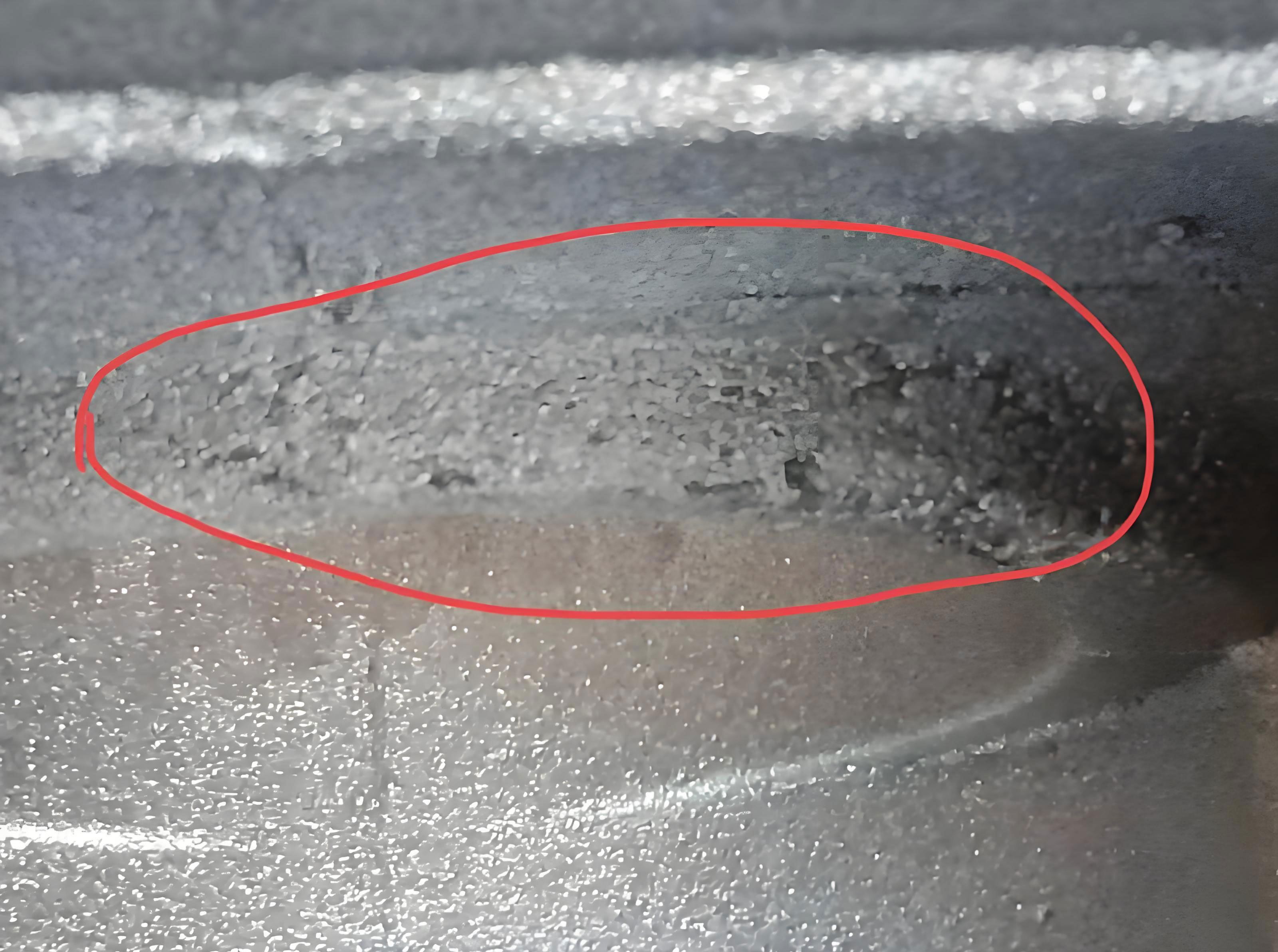
Such defects not only weaken the part but also impair pressure tightness and surface finish, highlighting the importance of continuous process monitoring. Statistical process control (SPC) charts can be employed to track hydrogen content via reduced pressure test (RPT) or thermal analysis, enabling real-time adjustments to melting parameters. For example, maintaining hydrogen levels below 0.15 cm³/100g is often a benchmark for high-quality castings with minimal porosity in casting.
Further advancements in melting technology offer additional levers to combat porosity in casting. Vacuum melting or low-pressure die casting can create environments where hydrogen partial pressure is minimized, thus reducing solubility according to Sieverts’ law. Flux-based refining compounds that combine degassing and slag removal are also gaining traction. These fluxes typically contain mixtures of chlorides, fluorides, and carbonates that react exothermically to generate bubbling and promote impurity adsorption. The efficacy of various degassing agents can be compared using metrics like hydrogen removal efficiency (HRE), defined as:
$$\text{HRE} = \frac{C_i – C_f}{C_i} \times 100\%$$
where \( C_i \) and \( C_f \) are initial and final hydrogen concentrations, respectively. Trials have shown that rotary degassing with nitrogen achieves HRE values of 70–80%, whereas tablet degassers may reach 50–60%. Selecting the appropriate method depends on melt volume, alloy type, and cost constraints, but all aim to curb porosity in casting. Additionally, pre-heating tools and ladles to above 200°C prevents moisture condensation that could introduce hydrogen during transfer. Coating these surfaces with refractory materials further reduces thermal shock and metal-tool interactions that might generate oxides.
In summary, porosity in casting in aluminum die casting is predominantly driven by hydrogen absorption and oxide formation during melting. To mitigate this, a holistic approach encompassing temperature control, raw material hygiene, effective degassing, and rapid processing is essential. Key takeaways include: maintaining melt temperatures below 750°C to limit hydrogen solubility; using dry, clean charge materials to minimize gas sources; employing rotary degassing with inert gases for efficient hydrogen removal; and minimizing melt holding times to prevent re-gassing. By adhering to these practices, foundries can significantly reduce porosity in casting, enhancing mechanical properties and yield rates. Future research may focus on real-time sensor-based monitoring of hydrogen and oxides, enabling closed-loop control of melting parameters for near-zero porosity in casting. As the demand for high-performance aluminum components grows, mastering these melting fundamentals will remain crucial for producing defect-free castings in competitive markets.
To encapsulate the interplay of factors affecting porosity in casting, the following comprehensive table outlines causes, mechanisms, and corrective actions related to melting processes.
| Factor | Mechanism Leading to Porosity in Casting | Corrective Measure | Expected Outcome |
|---|---|---|---|
| High Melting Temperature | Increases hydrogen solubility per Sieverts’ law, leading to supersaturation and bubble formation during solidification. | Control temperature to 720°C ± 20°C; use pyrometers for monitoring. | Reduced hydrogen uptake, lower porosity in casting incidence. |
| Wet or Contaminated Charge | Moisture and oils decompose into hydrogen, which dissolves into melt; oxides act as nucleation sites for pores. | Store materials in dry conditions; pre-dry returns; use covered furnaces. | Decreased initial hydrogen and oxide content, minimizing porosity in casting. |
| Inadequate Degassing | Dissolved hydrogen remains in melt, precipitating as pores upon solidification. | Implement rotary degassing with nitrogen or chlorine; optimize bubble size and contact time. | Hydrogen levels below 0.15 cm³/100g,显著减少 porosity in casting. |
| Prolonged Melt Holding | Extended exposure to atmosphere increases hydrogen re-absorption and oxide growth. | Limit holding to under 4 hours; re-degas if exceeded; use protective atmospheres. | Maintained low gas content, preventing porosity in casting from time-dependent effects. |
| Oxide Inclusions | Al₂O₃ particles trap gas and create stress concentrations, promoting pore formation. | Employ flux covers; skim dross regularly; use filters during transfer. | Cleaner melt with fewer inclusions, reducing porosity in casting nucleation sites. |
Ultimately, the battle against porosity in casting is won at the melting stage. By integrating scientific principles with robust industrial practices, foundries can achieve consistent, high-quality aluminum die castings that meet stringent performance criteria. Continuous education and adoption of best practices will further drive improvements, ensuring that porosity in casting becomes a manageable variable rather than an inevitable defect.