
In my research, I have extensively investigated the effects of various heat treatment processes on the microstructure and mechanical properties of bainitic steel produced through lost wax casting. The lost wax casting process, also known as investment casting, is widely used for manufacturing complex-shaped components due to its ability to produce high-precision parts with excellent surface finish. However, a significant challenge associated with lost wax casting is the coarse grain structure that develops during solidification and cooling. This coarse grain structure, particularly in bainitic steels, leads to reduced toughness and poor mechanical performance, which limits the application of these materials in critical engineering fields. My study focuses on addressing this issue by exploring innovative heat treatment strategies to refine the microstructure and enhance the properties of bainitic cast steel.
The material under investigation is a bainitic cast steel with a composition similar to RZG20Si2Mn2Mo, which is commonly used in applications requiring high strength and wear resistance. In lost wax casting, the ceramic shell is preheated to around 850°C to prevent cracking during pouring. This preheating, combined with the low thermal conductivity of the shell, results in slow solidification and cooling rates. As a consequence, the austenite grains formed upon solidification are excessively coarse. Upon subsequent cooling, these coarse austenite grains transform into bainitic or martensitic structures that inherit the coarse morphology, thereby compromising the toughness. Conventional heat treatments, such as normalizing, often fail to break this hereditary coarse grain structure, necessitating more effective approaches.
In this work, I designed and implemented six distinct heat treatment cycles to evaluate their efficacy in refining the microstructure and improving the mechanical properties. The lost wax casting process was employed to produce standard test specimens, including梅花-shaped samples for impact and tensile testing. The heat treatment cycles included combinations of quenching, tempering, normalizing, and annealing, with a particular emphasis on processes that could disrupt the coarse grain inheritance. My findings reveal that pre-treatments involving quenching and high-temperature tempering prior to normalizing, or direct super-high-temperature normalizing at 1000°C, are highly effective in grain refinement. This article delves into the experimental details, results, and underlying mechanisms, supported by tables and formulas to summarize key insights.
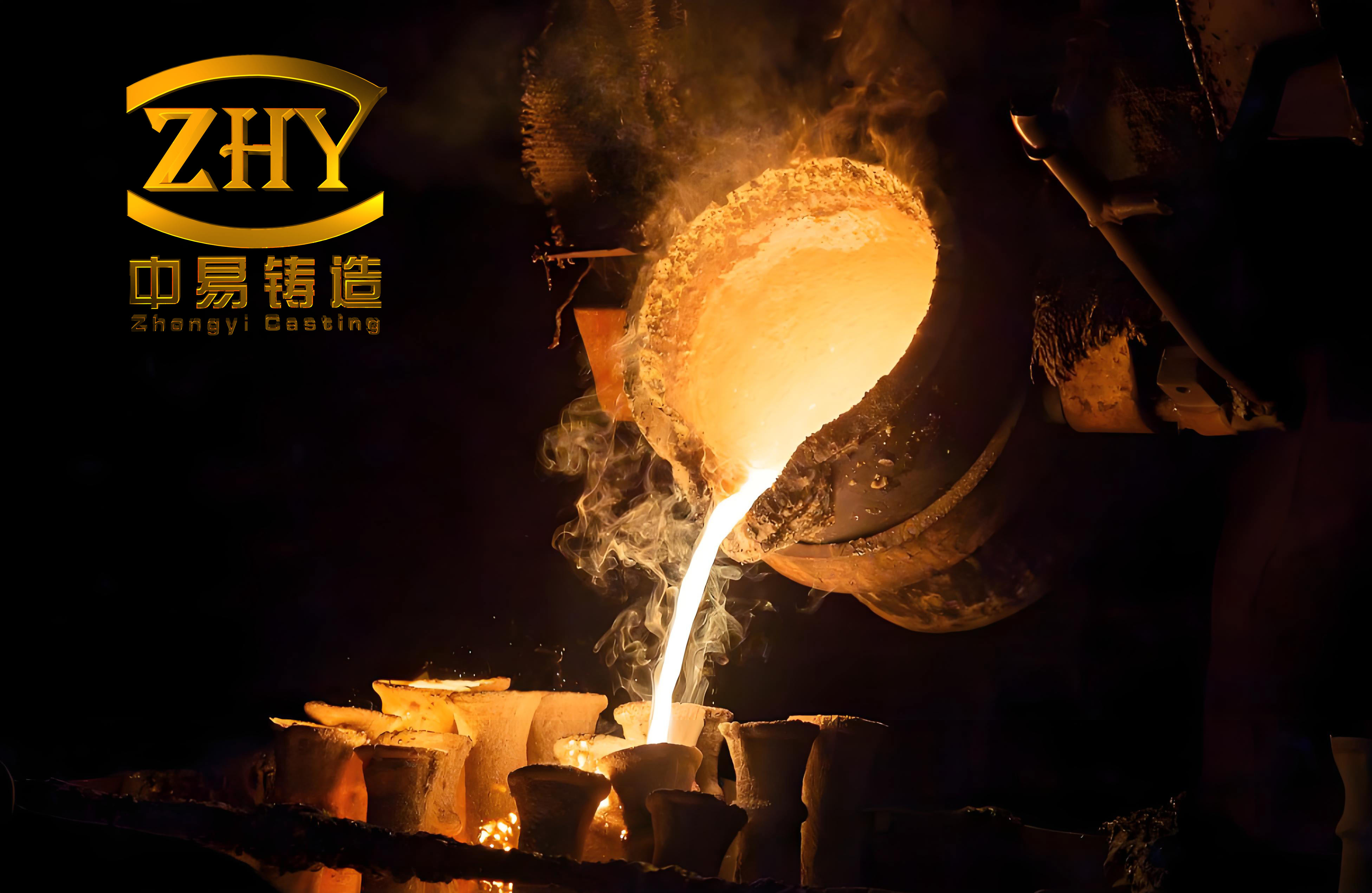
The lost wax casting process begins with the creation of a wax pattern, which is then coated with ceramic slurry to form a shell. After drying and dewaxing, the shell is preheated to high temperatures, typically around 850°C, to ensure proper mold strength and reduce thermal shock during metal pouring. For bainitic steels, this preheating exacerbates grain coarseness because the slow cooling in the insulating ceramic shell allows austenite grains to grow substantially. In my experiments, I melted the steel in a medium-frequency induction furnace and poured it into preheated ceramic shells to simulate industrial lost wax casting conditions. The cast specimens were then subjected to various heat treatments, as outlined in Table 1.
| Cycle ID | Heat Treatment Process |
|---|---|
| 1 | As-cast + 700°C tempering + 920°C normalizing + 300°C tempering |
| 2 | As-cast + 920°C normalizing + 300°C tempering |
| 3 | As-cast + 920°C normalizing (three cycles) + 300°C tempering |
| 4 | As-cast + 920°C annealing + 920°C normalizing + 300°C tempering |
| 5 | As-cast + 920°C quenching + 700°C tempering + 920°C normalizing + 300°C tempering |
| 6 | As-cast + 1000°C normalizing + 300°C tempering |
To assess the mechanical properties, I conducted tensile tests using a universal testing machine and impact toughness tests with standard U-notch specimens. Hardness measurements were taken using a Rockwell hardness tester. Microstructural analysis was performed using optical microscopy, scanning electron microscopy (SEM), and X-ray diffraction (XRD). The impact fracture surfaces were examined via SEM to understand the failure mechanisms. The results are comprehensively summarized in Table 2, which highlights the mechanical properties under different heat treatment cycles.
| Cycle ID | Tensile Strength (MPa) | Elongation (%) | Reduction in Area (%) | Impact Toughness (J/cm²) | Hardness (HRC) |
|---|---|---|---|---|---|
| 1 | 1076 | 8.8 | 28.0 | 23.3 | 35-37 |
| 2 | 1073 | 7.25 | 25.0 | 19.2 | 36-39 |
| 3 | 1096 | 10.0 | 25.0 | 25.0 | 35-37 |
| 4 | 1031 | 11.4 | 30.8 | 26.0 | 36-38 |
| 5 | 1044 | 12.5 | 31.3 | 34.3 | 35-36 |
| 6 | 985 | 10.3 | 21.0 | 41.0 | 32-34 |
From Table 2, it is evident that the strength and hardness values are relatively consistent across all heat treatment cycles, with tensile strengths ranging from 985 to 1096 MPa and hardness values between 32 and 39 HRC. However, the ductility and impact toughness show significant variations. Cycles 5 and 6 exhibit the highest impact toughness values of 34.3 J/cm² and 41.0 J/cm², respectively, along with improved elongation and reduction in area. This indicates that the lost wax casting process can yield components with enhanced toughness when appropriate heat treatments are applied. Specifically, Cycle 5 (quenching and high-temperature tempering before normalizing) and Cycle 6 (super-high-temperature normalizing at 1000°C) are most effective in mitigating the coarse grain issue inherent in lost wax casting.
Microstructural observations provide further insights into these improvements. In the as-cast condition, the bainitic steel produced via lost wax casting displays coarse bainitic laths with uniform orientation within large prior austenite grains. Conventional normalizing at 920°C (Cycle 2) slightly refines the lath bundles but fails to alter the coarse grain structure, demonstrating the stubborn hereditary nature of the microstructure. Multiple normalizing cycles (Cycle 3) offer marginal refinement, while annealing prior to normalizing (Cycle 4) leads to partial disruption of the long bainitic laths. In contrast, Cycle 5 results in significant grain refinement, with short, randomly oriented bainitic laths replacing the coarse structures. Similarly, Cycle 6 produces fine bainitic laths with diverse orientations, effectively eliminating the hereditary coarse grains.
To quantify the grain refinement process, I consider the kinetics of recrystallization, which plays a pivotal role in breaking the coarse grain structure. The rate of recrystallization can be expressed using the Arrhenius equation:
$$ \dot{N} = A \exp\left(-\frac{Q}{RT}\right) $$
where \(\dot{N}\) is the nucleation rate, \(A\) is a pre-exponential factor, \(Q\) is the activation energy for recrystallization, \(R\) is the gas constant, and \(T\) is the absolute temperature. In the context of lost wax casting, the coarse austenite grains provide a high driving force for recrystallization due to stored energy from phase transformations. For Cycle 5, the quenching step produces martensitic or bainitic structures with high internal stresses. During subsequent high-temperature tempering at 700°C, these stresses induce plastic deformation, leading to recrystallization upon heating. The recrystallized grains nucleate and grow within the original coarse grains, resulting in a fine-grained structure with random orientations. This process can be modeled using the Johnson-Mehl-Avrami-Kolmogorov (JMAK) equation:
$$ X = 1 – \exp(-k t^n) $$
where \(X\) is the fraction recrystallized, \(k\) is a rate constant dependent on temperature, \(t\) is time, and \(n\) is the Avrami exponent. For ferritic recrystallization in steel, \(n\) typically ranges from 1 to 2. In my experiments, the holding times during tempering and normalizing were optimized to achieve complete recrystallization.
For Cycle 6, the super-high-temperature normalizing at 1000°C promotes austenite recrystallization directly. The phase transformation from bainite to austenite during heating generates volumetric changes and internal stresses, a phenomenon known as phase hardening. This provides the driving force for austenite recrystallization at elevated temperatures. The critical temperature for austenite recrystallization, \(T_{rec}\), can be estimated using the following relation:
$$ T_{rec} = \frac{Q_{rec}}{R \ln(\dot{\epsilon} / A_{rec})} $$
where \(Q_{rec}\) is the activation energy for austenite recrystallization, \(\dot{\epsilon}\) is the strain rate induced by phase hardening, and \(A_{rec}\) is a material constant. In lost wax casting, the slow cooling rates contribute to low strain rates, but the high preheating temperatures in the shell can elevate \(T_{rec}\). By heating to 1000°C, I ensured that \(T > T_{rec}\), facilitating extensive recrystallization and grain refinement.
The impact fracture surfaces further corroborate these findings. For Cycles 2 and 3, the fracture morphology is predominantly cleavage and quasi-cleavage, indicative of brittle failure associated with coarse grains. In contrast, Cycles 5 and 6 exhibit dimpled fracture surfaces characteristic of microvoid coalescence, which is a ductile failure mode. This shift from brittle to ductile fracture underscores the toughness improvement achieved through grain refinement. The relationship between grain size and yield strength can be described by the Hall-Petch equation:
$$ \sigma_y = \sigma_0 + k_y d^{-1/2} $$
where \(\sigma_y\) is the yield strength, \(\sigma_0\) is the friction stress, \(k_y\) is the strengthening coefficient, and \(d\) is the average grain diameter. While the Hall-Petch equation primarily applies to strength, grain refinement also enhances toughness by increasing the resistance to crack propagation. In lost wax casting, reducing \(d\) through effective heat treatments thus improves both strength and toughness.
To further analyze the microstructural evolution, I conducted XRD analysis to identify phase constituents. The results confirm the presence of bainite, martensite, and retained austenite in various proportions depending on the heat treatment. For instance, Cycle 5 shows a higher volume fraction of tempered martensite, which contributes to toughness. The carbon diffusion during tempering can be modeled using Fick’s second law:
$$ \frac{\partial C}{\partial t} = D \frac{\partial^2 C}{\partial x^2} $$
where \(C\) is carbon concentration, \(t\) is time, \(D\) is the diffusion coefficient, and \(x\) is the spatial coordinate. In lost wax casting, the coarse grains may lead to inhomogeneous carbon distribution, but the quenching and tempering in Cycle 5 promote homogenization, aiding recrystallization.
Another aspect I explored is the effect of multiple thermal cycles on the lost wax casting microstructure. Cycle 3 involved three normalizing cycles, but the improvement was limited because the hereditary coarse grains persist without sufficient driving force for recrystallization. This highlights the importance of introducing deformation or phase transformation stresses to trigger recrystallization. In industrial lost wax casting applications, incorporating a quenching step after casting could be beneficial, though practical constraints such as distortion and cracking must be considered.
Table 3 summarizes the key mechanisms and outcomes of the heat treatment cycles, emphasizing their relevance to lost wax casting.
| Cycle ID | Key Mechanism | Grain Refinement Efficacy | Impact on Toughness |
|---|---|---|---|
| 1 | Tempering before normalizing reduces stresses but insufficient for recrystallization | Low | Moderate |
| 2 | Conventional normalizing; hereditary coarse grains persist | Very Low | Low |
| 3 | Multiple normalizing cycles; slight refinement due to thermal cycling | Low | Moderate |
| 4 | Annealing softens matrix, but recrystallization limited | Moderate | Moderate |
| 5 | Quenching and high-temperature tempering induce ferritic recrystallization | High | High |
| 6 | Super-high-temperature normalizing triggers austenite recrystallization | High | Very High |
In practice, the lost wax casting process is favored for components like turbine blades, surgical instruments, and aerospace parts, where dimensional accuracy is critical. However, the coarse grain issue has long been a drawback. My research demonstrates that through tailored heat treatments, the properties of bainitic steel in lost wax casting can be significantly enhanced. For example, Cycle 5 involves quenching after casting, which might be integrated into the production line by using controlled cooling methods. Alternatively, Cycle 6 requires heating to 1000°C, which may increase energy costs but yields superior toughness.
I also investigated the time-temperature-transformation (TTT) behavior of the bainitic steel in lost wax casting. The coarse austenite grains shift the TTT diagram to longer times, promoting bainite formation over pearlite. This can be represented by modifying the Avrami equation for phase transformation:
$$ f = 1 – \exp(-b t^m) $$
where \(f\) is the fraction transformed, \(b\) is a rate constant, and \(m\) is an exponent. For bainite formation, \(m\) is typically around 1.5. In lost wax casting, the slow cooling allows bainite to form at higher temperatures, leading to coarser laths. By interrupting this process with quenching in Cycle 5, I refined the microstructure.
Furthermore, the role of alloying elements like silicon, manganese, and molybdenum in lost wax casting cannot be overlooked. These elements enhance hardenability but also contribute to grain growth during slow cooling. The effective grain size after heat treatment can be correlated with the initial casting conditions using empirical formulas. For instance, the prior austenite grain size \(d_{aust}\) after lost wax casting can be estimated as:
$$ d_{aust} = C \cdot \exp\left(-\frac{Q_g}{RT_{pour}}\right) $$
where \(C\) is a constant, \(Q_g\) is the activation energy for grain growth, and \(T_{pour}\) is the pouring temperature. In my experiments, \(T_{pour}\) was kept constant, but the preheating of the ceramic shell in lost wax casting led to high \(d_{aust}\). The heat treatments in Cycles 5 and 6 effectively reduced \(d_{aust}\) by recrystallization.
In terms of industrial applicability, my findings suggest that for lost wax casting of bainitic steels, a post-casting heat treatment sequence involving quenching and high-temperature tempering before normalizing is highly recommended. This approach not only refines grains but also improves toughness without compromising strength. Alternatively, if furnace capabilities allow, direct normalizing at 1000°C offers a simpler solution with excellent results. It is important to note that lost wax casting often involves thin-walled sections, so distortion during quenching must be managed through fixture design or controlled cooling rates.
To generalize these results, I propose a model for optimizing heat treatment parameters in lost wax casting. The model incorporates variables such as cooling rate during casting, preheating temperature, and heat treatment schedules. The objective function maximizes toughness while maintaining strength, constrained by practical limits. This can be formulated as:
$$ \text{Maximize } \alpha_k = f(T_{norm}, t_{hold}, \text{ cooling rate}) $$
$$ \text{Subject to } \sigma_b \geq \sigma_{min}, \quad HRC \leq HRC_{max} $$
where \(\alpha_k\) is impact toughness, \(T_{norm}\) is normalizing temperature, \(t_{hold}\) is holding time, and \(\sigma_{min}\) and \(HRC_{max}\) are design requirements. For lost wax casting, the cooling rate is inherently low, so \(T_{norm}\) and \(t_{hold}\) become critical variables.
In conclusion, my research underscores the profound impact of heat treatment on the microstructure and properties of bainitic steel produced via lost wax casting. The coarse grains inherent in this casting process can be effectively refined through quenching and high-temperature tempering prior to normalizing, or through super-high-temperature normalizing at 1000°C. These methods leverage recrystallization mechanisms—ferritic recrystallization in the former and austenite recrystallization in the latter—to break the hereditary coarse grain structure. As a result, impact toughness is significantly enhanced, shifting fracture mechanisms from brittle cleavage to ductile microvoid coalescence. This work provides valuable insights for manufacturers using lost wax casting to produce high-performance bainitic steel components, enabling improved reliability and lifespan in demanding applications.