
In the field of precision manufacturing, lost wax casting remains a critical process for producing complex, high-integrity components, particularly in aerospace applications. However, porosity defects in lost wax casting have long been a persistent challenge, leading to significant scrap rates and compromising component reliability. As an engineer involved in quality improvement initiatives, I have observed that traditional approaches often address symptoms rather than root causes, resulting in unpredictable defect recurrence. To achieve sustainable quality enhancement, my team and I adopted the Six Sigma DMAIC (Define, Measure, Analyze, Improve, Control) framework to systematically investigate and mitigate porosity in lost wax casting. This article details our comprehensive application of this methodology, employing various analytical tools to identify key influencers of porosity and implement robust control measures, ultimately stabilizing the process and reducing defect rates.
The Six Sigma DMAIC model provides a structured problem-solving approach aimed at reducing variation and achieving near-zero defect levels. Its phases—Define, Measure, Analyze, Improve, and Control—offer a roadmap for process improvement. In our project, we leveraged this framework to tackle porosity in lost wax casting, utilizing tools such as flowcharts, cause-and-effect diagrams, binary logistic regression (BLR), failure mode and effects analysis (FMEA), and statistical process control (SPC) charts. The DMAIC cycle, as illustrated below, guided our efforts from problem definition through to sustainable control.
$$ \text{DMAIC Cycle: } \text{Define} \rightarrow \text{Measure} \rightarrow \text{Analyze} \rightarrow \text{Improve} \rightarrow \text{Control} $$
Common tools applicable to each DMAIC stage are summarized in Table 1, which we referenced throughout our project to ensure methodological rigor.
| Phase | Tools/Methods |
|---|---|
| Define | Pareto chart, flowchart |
| Measure | Process capability analysis, measurement system analysis |
| Analyze | Brainstorming, cause-and-effect diagram, chi-square test, binary logistic regression (BLR) |
| Improve | Proposal and implementation of improvement solutions |
| Control | Control chart, mistake-proofing, process capability control, standard operating procedures, process documentation control |
In the Define phase, we focused on a specific lost wax casting component—a structural part made of ZG35CrMnSi alloy, commonly used in aerospace assemblies. This component was chosen due to its high scrap rate, which initially reached 79%, with porosity accounting for 49.8% of all defects. A Pareto analysis confirmed porosity as the dominant issue, aligning with industry-wide challenges in lost wax casting. We formed a cross-functional team comprising technical, production, inspection, and management personnel to establish a project charter with clear goals: reduce porosity-related scrap by at least 50% and stabilize the process using Six Sigma principles.
The Measure phase involved assessing current process capability. We collected data from multiple production batches of the lost wax casting process, documenting key parameters such as pouring temperature, shell cleanliness, and gating system design. Process capability indices (e.g., Cpk) were calculated, revealing high variability and instability in porosity occurrence. The baseline defect rate was plotted over time, showing sporadic spikes that indicated uncontrolled factors. Measurement system analysis ensured that our inspection methods for detecting porosity—such as visual examination and non-destructive testing—were reliable and consistent, with a Gage R&R below 10% to minimize measurement error.
To visualize the lost wax casting process, we developed a detailed flowchart encompassing all steps from pattern making to final casting, as shown in Figure 3 of the original text. This helped identify potential intervention points. The equipment used in our lost wax casting facility included medium-frequency induction furnaces, semi-automatic wax injection machines, and specialized shell baking ovens, all operating within standard specifications. However, despite adherence to nominal parameters, porosity persisted, prompting deeper analysis.
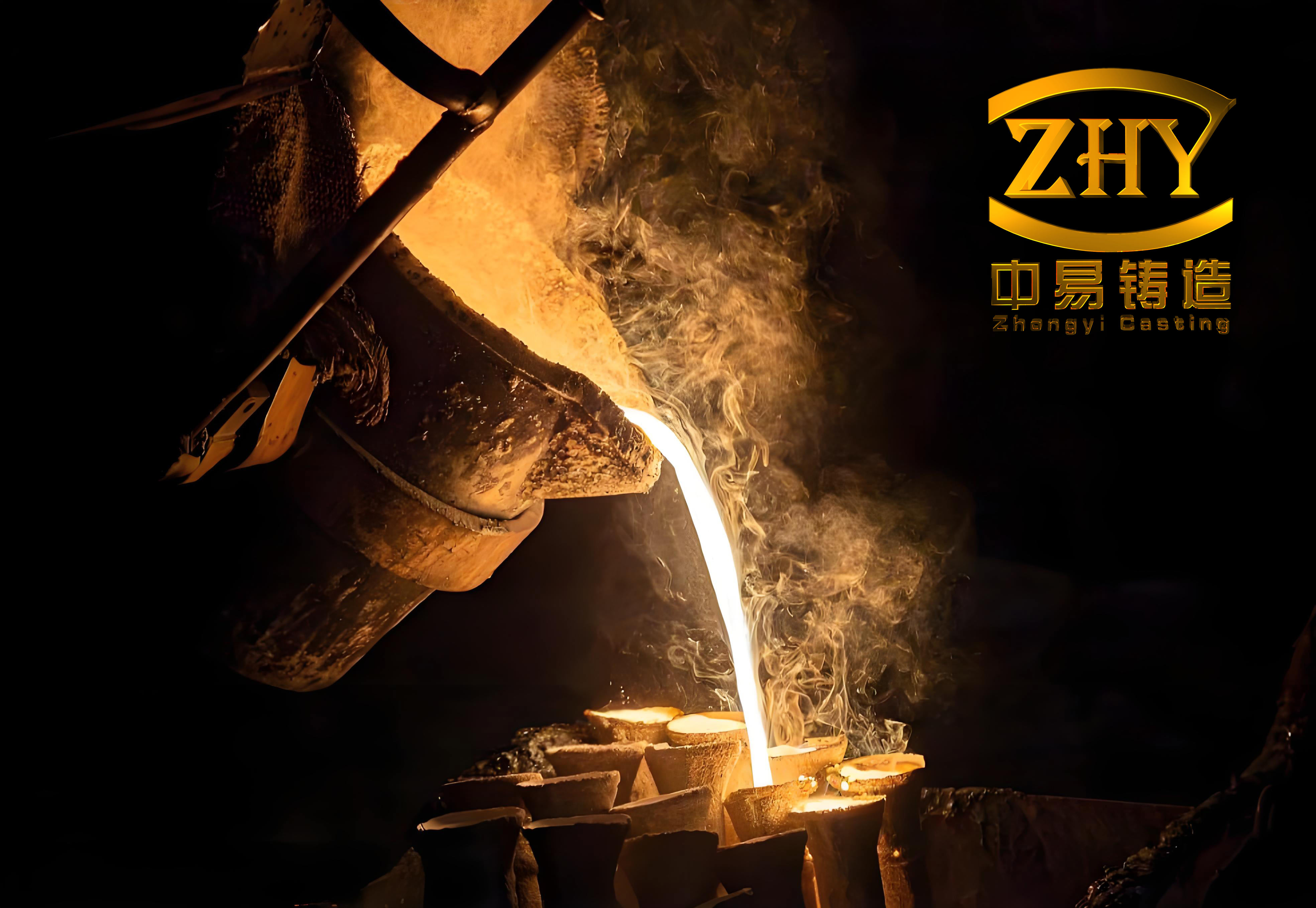
The Analyze phase began with a theoretical review of porosity formation mechanisms in lost wax casting. Porosity in castings generally arises from three sources: entrapped gas pores, formed when gases from the mold or atmosphere are trapped in the molten metal; precipitated gas pores, resulting from decreased gas solubility during solidification; and reaction-induced pores, generated by chemical reactions between the metal and mold materials. In lost wax casting, these mechanisms are influenced by numerous process variables. The solubility of gases like hydrogen in molten alloys, for instance, follows Henry’s law:
$$ C = k_H \cdot P $$
where \( C \) is the gas concentration, \( k_H \) is Henry’s constant, and \( P \) is the partial pressure. During cooling, solubility drops, leading to gas precipitation if not properly managed. Additionally, the solidification time \( t_s \) can be estimated using Chvorinov’s rule:
$$ t_s = B \left( \frac{V}{A} \right)^n $$
where \( V \) is volume, \( A \) is surface area, \( B \) is a mold constant, and \( n \) is an exponent typically around 2. Longer solidification times may allow gas escape, but in lost wax casting, rapid cooling often traps gases.
Using a cause-and-effect diagram (Ishikawa diagram), we categorized potential factors into six groups: Man, Machine, Material, Method, Measurement, and Environment. Through brainstorming sessions, we narrowed down to several key variables: pouring temperature, gating system design, dwell time, holding time, and shell cleanliness. Initial hypotheses suggested that higher pouring temperatures might reduce viscosity and facilitate gas escape, while improper gating could hinder flow and venting. Shell cleanliness, often overlooked, was suspected to contribute to reaction-induced porosity due to residual wax or contaminants.
To quantitatively assess these factors, we employed binary logistic regression (BLR) analysis, modeling the probability of porosity occurrence as a function of process parameters. For each variable, we fit a BLR model of the form:
$$ \log\left(\frac{p}{1-p}\right) = \beta_0 + \beta_1 X_1 + \beta_2 X_2 + \cdots + \epsilon $$
where \( p \) is the probability of porosity, \( \beta_i \) are coefficients, \( X_i \) are predictor variables, and \( \epsilon \) is error. Results indicated that pouring temperature, dwell time, and holding time, within their specified ranges, were not statistically significant predictors (p-values > 0.05). However, gating system design and shell cleanliness showed strong significance (p-values < 0.01), with odds ratios indicating substantial impact on porosity risk. For instance, a poorly designed gating system increased the odds of porosity by a factor of 3.5, while inadequate shell cleanliness raised odds by 4.2. This confirmed that in lost wax casting, these two factors were critical root causes.
| Factor | Coefficient (β) | Odds Ratio | p-value | Significance |
|---|---|---|---|---|
| Pouring Temperature | -0.12 | 0.89 | 0.45 | Not Significant |
| Gating System | 1.25 | 3.49 | 0.003 | Significant |
| Dwell Time | 0.08 | 1.08 | 0.62 | Not Significant |
| Holding Time | -0.05 | 0.95 | 0.71 | Not Significant |
| Shell Cleanliness | 1.44 | 4.22 | 0.001 | Significant |
The Improve phase targeted the key factors: gating system and shell cleanliness. For the gating system in lost wax casting, we redesigned it to include additional risers and optimized runner dimensions to enhance venting and reduce turbulence. The modified gating system increased the feeding efficiency and provided escape paths for gases, as illustrated in Figure 7 of the original text. The design changes were documented in revised process specifications, ensuring consistency across production.
For shell cleanliness, we introduced a post-shell-building washing step using hot water (≥90°C) to remove residual wax and debris. The washing process was standardized: shells were immersed and agitated 1–3 times until visual inspection confirmed no floating wax particles. This directly addressed reaction-induced porosity by minimizing combustible materials that could generate gases during pouring. The overall lost wax casting process flow was updated to include this washing step, along with a checkpoint for cleanliness verification. Table 3 summarizes the improvements and actions taken.
| Key Factor | Improvement Method | Actions Implemented |
|---|---|---|
| Gating System | Redesign to enhance venting and feeding | Updated gating design per engineering drawings; modified process files to include riser additions. |
| Shell Cleanliness | Introduce shell washing and inspection | Added hot water washing step to process flow; created inspection checklist; revised work instructions to specify washing criteria (no floating wax). |
We conducted a failure mode and effects analysis (FMEA) to evaluate risks associated with the new washing procedure. Parameters were rated on severity (SEV), occurrence (OCC), and detection (DET) on a 1–10 scale, with risk priority numbers (RPN) calculated as RPN = SEV × OCC × DET. As shown in Table 4, the highest RPN was 7, well below the threshold of 120, indicating negligible risk. For instance, over-washing could theoretically weaken shells, but controlled washing cycles mitigated this.
| Process Step | Potential Failure Mode | Potential Effect | SEV | Cause | OCC | Current Controls | DET | RPN |
|---|---|---|---|---|---|---|---|---|
| Shell Washing | Excessive washing reducing shell strength | Surface defects or shell collapse | 7 | Too many wash cycles | 1 | Limited cycles based on water temperature monitoring | 1 | 7 |
| Gating Modification | Incorrect riser placement | Ineffective gas venting | 6 | Human error in setup | 2 | Template-guided assembly and pre-pour inspection | 3 | 36 |
The Control phase ensured sustainability of improvements. We implemented statistical process control (SPC) using p-charts to monitor the porosity defect rate over time. The control limits were calculated based on historical data:
$$ \text{Center Line (CL)} = \bar{p} = \frac{\text{Total defects}}{\text{Total inspected}} $$
$$ \text{Upper Control Limit (UCL)} = \bar{p} + 3\sqrt{\frac{\bar{p}(1-\bar{p})}{n}} $$
$$ \text{Lower Control Limit (LCL)} = \bar{p} – 3\sqrt{\frac{\bar{p}(1-\bar{p})}{n}} $$
where \( n \) is the sample size. The p-chart tracked daily defect rates, with rules for detecting special causes (e.g., points outside control limits, runs). As depicted in Figure 9 of the original text, the process remained stable within limits after improvements. Comparative analysis showed a dramatic reduction in porosity scrap, from nearly 50% to below 10%, with no rebound over multiple production cycles. This demonstrated that lost wax casting quality could be consistently maintained through DMAIC-driven controls.
In conclusion, our application of Six Sigma DMAIC methodology to lost wax casting porosity provided a systematic framework for identifying and controlling critical factors. By focusing on gating system design and shell cleanliness, we achieved significant reductions in defect rates, enhancing the reliability of lost wax casting components. The use of quantitative tools like BLR and SPC enabled data-driven decision-making, while FMEA mitigated implementation risks. This approach underscores the value of structured quality management in complex manufacturing processes like lost wax casting, where multiple interacting variables can lead to defects. Future work may explore advanced simulation models to further optimize lost wax casting parameters, but the DMAIC foundation offers a robust starting point for continuous improvement in lost wax casting operations worldwide.
Throughout this project, the term “lost wax casting” was repeatedly emphasized to highlight its centrality to the discussion. From pattern making to final inspection, every phase of lost wax casting demands meticulous control to mitigate porosity. By sharing these insights, we hope to contribute to broader industry efforts in refining lost wax casting techniques, ensuring that this ancient yet evolving process meets modern quality standards. The integration of Six Sigma principles into lost wax casting not only resolves immediate defects but also fosters a culture of proactive problem-solving, essential for advancing manufacturing excellence in sectors reliant on precision castings.