
In my experience working with lost wax casting processes, particularly for thin-walled steel components in the automotive industry, I have frequently encountered challenges related to misrun defects. These defects, where the molten metal fails to completely fill the mold cavity, are especially prevalent in complex, lightweight parts with diminishing wall thicknesses. The drive for vehicle light-weighting has pushed the limits of casting design, leading to structures with average wall thicknesses as low as 4-5 mm. Such geometries inherently possess poor casting manufacturability, making the control of process parameters critically important to avoid defects like cold shuts and misruns. This article details my application of computational aided engineering (CAE) simulation, specifically using the ProCAST software, to analyze, predict, and ultimately eliminate misrun defects in production castings. The methodology developed through this work provides a robust framework for optimizing lost wax casting processes.
The foundational principle of lost wax casting involves creating a ceramic shell around a wax pattern, which is subsequently melted out to form a cavity for molten metal. While excellent for achieving high dimensional accuracy and complex shapes, the process becomes highly sensitive to thermal and fluid dynamics when casting thin sections. Misruns occur when the metal front loses sufficient heat and viscosity increases before the mold is completely filled, causing premature solidification. Traditionally, process optimization relied heavily on empirical trial-and-error, which is time-consuming and costly. Numerical simulation offers a powerful alternative by allowing for the virtual testing of multiple scenarios, analyzing the coupled effects of fluid flow, heat transfer, and solidification. In this context, my work focused on leveraging ProCAST’s capabilities to dissect the root causes of a specific misrun defect and formulate data-driven improvements.
Product Introduction and Defect Analysis
The problematic component was a steel bracket (material: ZGD410-700) used in automotive applications. Its dimensions were approximately 400 mm x 310 mm x 270 mm, featuring a very thin-walled design with a minimum wall thickness of 4 mm and an average of 5 mm. The initial lost wax casting process scheme utilized a bottom-gating system where molten metal entered from the lower section of the mold and was intended to fill the cavity upwards.
Production data indicated a misrun defect rate exceeding 40%. The defects were predominantly concentrated in two upper regions of the casting, which were the farthest points from the ingate. A third area showed occasional defects. Visual inspection of defective parts confirmed that these areas were incompletely filled. The primary hypotheses for the defect origin were: (1) Inadequate superheat (pouring temperature too low), causing the metal to cool too rapidly during its long flow path. (2) Insufficient pouring velocity, failing to maintain the necessary kinetic energy to fill thin sections before solidification initiated. (3) Potential gas entrapment or “back-pressure” due to the absence of dedicated venting features in the mold, as the last areas to fill were at the top of the cavity with no escape path for displaced air. The long flow distance to the defect zones, combined with the heat-sinking effect of core prints or other geometrical features, exacerbated the cooling rate of the metal front.
ProCAST Simulation Methodology for Flow Analysis
To investigate these hypotheses, I constructed a detailed 3D simulation model of the casting, shell, and gating system in ProCAST. Accurate simulation of misrun defects hinges on correctly modeling the transient fluid flow and heat transfer during mold filling. ProCAST offers several numerical algorithms for this purpose, and selecting the appropriate one is crucial for obtaining physically meaningful results that correlate with reality.
The core governing equations for the filling process are the Navier-Stokes equations for fluid flow coupled with the energy equation for heat transfer. The general form of the momentum conservation equation (for an incompressible fluid) is:
$$\rho \left( \frac{\partial \vec{v}}{\partial t} + \vec{v} \cdot \nabla \vec{v} \right) = -\nabla p + \mu \nabla^2 \vec{v} + \rho \vec{g}$$
where $\rho$ is density, $\vec{v}$ is velocity, $t$ is time, $p$ is pressure, $\mu$ is dynamic viscosity, and $\vec{g}$ is gravitational acceleration. The energy equation is:
$$\rho C_p \left( \frac{\partial T}{\partial t} + \vec{v} \cdot \nabla T \right) = \nabla \cdot (k \nabla T) + \dot{Q}$$
where $C_p$ is specific heat, $T$ is temperature, $k$ is thermal conductivity, and $\dot{Q}$ is a volumetric heat source term (e.g., latent heat of solidification).
ProCAST provides two primary algorithms for tracking the free surface (the interface between molten metal and air): the Mass Conservation method (FREESFOPT=1) and the Momentum Conservation method (FREESFOPT=2). A legacy method (FREESFOPT=0) also exists. Furthermore, the software allows the flow and energy equations to be solved either in a coupled (COUPLED=yes) or decoupled (COUPLED=no) manner. Coupled solving is more accurate but computationally expensive, as it solves momentum and energy equations simultaneously within each iteration loop until both converge. Decoupled solving first converges the flow field assuming a fixed temperature, then solves the energy equation, iterating between the two.
I conducted a series of simulations on the defective bracket to evaluate these methods. The key material and process parameters for the baseline simulation are summarized in Table 1. A pouring temperature of 1540°C was used initially to amplify defect trends for clearer comparison.
| Parameter | Value / Specification |
|---|---|
| Casting Material | C45E Steel |
| Shell Material | Silica Sand-based Ceramic |
| Shell Thickness | 8 mm |
| Shell Preheat Temperature | 650 °C |
| Pouring Temperature (Baseline) | 1540 °C |
| Pouring Velocity (Baseline) | 0.38 m/s |
| Casting-Shell Heat Transfer Coefficient | 900 W/(m²·K) |
| Free Surface Heat Transfer Coefficient | 10 W/(m²·K) |
| Cooling Condition | Air Cooling |
| Critical Liquid Fraction to Stop Flow | 0.3 |
Eight different simulation schemes were executed by varying the algorithm and solving method, as detailed in Table 2. The “Volume Heat” column indicates whether the latent heat release during solidification was actively considered during the filling phase.
| Scheme | FREESFOPT (Algorithm) | COUPLED Flow-Energy | Volume Heat Active | Compute Time (hours) | Misrun/Cold Shut Prediction |
|---|---|---|---|---|---|
| a | 2 (Momentum) | Yes | No | 11.2 | Significant cold shut trend in last-to-fill areas |
| b | 2 (Momentum) | No | No | 4.2 | Significant cold shut trend in last-to-fill areas |
| c | 1 (Mass Cons.) | Yes | No | 8.0 | Almost no cold shut predicted |
| d | 1 (Mass Cons.) | No | No | 3.2 | Almost no cold shut predicted |
| e | 2 (Momentum) | Yes | Yes | 11.5 | Significant cold shut trend |
| f | 1 (Mass Cons.) | Yes | Yes | 8.5 | Almost no cold shut predicted |
| g | 1 (Mass Cons.) | No | Yes | 3.5 | Almost no cold shut predicted |
| h | 2 (Momentum) | No | Yes | 4.25 | Significant cold shut trend |
The analysis of results was striking. Schemes using the Momentum Conservation method (a, b, e, h) consistently predicted pronounced cold shuts and premature solidification (solid fraction reaching 20-30%) in the last-to-fill regions before the mold was completely filled. This prediction aligned closely with the actual defect locations observed in the lost wax casting production. In contrast, schemes using the Mass Conservation method (c, d, f, g) predicted nearly complete filling with minimal risk of cold shuts, which contradicted the empirical evidence. This indicates that for thin-section lost wax casting where fluid momentum and heat loss at the front are critical, the Momentum Conservation method offers superior predictive accuracy for misruns.
Furthermore, comparing coupled vs. decoupled solving revealed that while coupled analysis (a, c, e, f) is theoretically more rigorous, the decoupled analysis (b, d, g, h) with the Momentum method produced very similar defect predictions in a significantly shorter computational time (approximately 2-3 times faster). Therefore, for practical engineering analysis of misruns in lost wax casting, I determined that the Momentum Conservation method with decoupled flow-energy solving provides an optimal balance of accuracy and efficiency.
Based on this conclusion, I proceeded with the Momentum/Decoupled approach to investigate other factors. A critical aspect in lost wax casting is the role of trapped gas within the impermeable ceramic shell. I simulated the original process at the actual average pouring temperature of 1560°C, activating ProCAST’s gas pressure model. The model calculates the pressure build-up in air pockets as the metal displaces them, and flow can be stopped if this pressure exceeds a user-defined critical value. Simulations were run with different critical gas pressures (0.5, 1, 2, and 10 MPa). The results were illuminating: without considering shell permeability, the internal gas pressure peaked near 4.5 MPa (45 bar) just before complete filling. When the stopping pressure was set to 0.5, 1, or 2 MPa, the simulation showed metal flow terminating at 85.7%, 92.9%, and 96.1% fill, respectively, with the resulting unfilled areas matching the actual defect locations almost perfectly. This confirmed that gas back-pressure was a contributing, though not necessarily the primary, factor in the misrun mechanism for this lost wax casting setup.
Influence of Pouring Temperature and Pouring Velocity
Having established a reliable simulation method, I conducted parametric studies to quantify the influence of the two most controllable process parameters in lost wax casting: pouring temperature and pouring velocity. The goal was to define a “process window” that would guarantee complete filling.
Pouring Temperature Study: Holding the pouring velocity constant at the production average of 0.38 m/s, I simulated four different pouring temperatures: 1540°C, 1560°C, 1580°C, and 1600°C. The gas model was temporarily disabled to isolate the thermal effects. The critical metric was the predicted solid fraction at the flow front during filling. The results are summarized conceptually in Table 3 and showed a clear trend: the risk of misrun decreased monotonically with increasing superheat. At 1540°C, extensive unfilled areas were predicted. At 1560°C, the predicted misrun zones closely matched the actual defects. At 1580°C, the risk became minimal, and at 1600°C, the simulation showed complete filling with no cold shuts. This defined a minimum recommended pouring temperature of 1580°C for this specific lost wax casting geometry at the given pouring speed.
| Pouring Temperature (°C) | Simulated Solid Fraction at Flow Front (Before Complete Fill) | Predicted Misrun Risk | Qualitative Conclusion |
|---|---|---|---|
| 1540 | High (>30% in last zones) | Very High | Unacceptable for lost wax casting of this part. |
| 1560 | Moderate (20-30%) | High | Matches observed defect pattern. |
| 1580 | Low (<10%) | Low | Minimum recommended temperature. |
| 1600 | Negligible | None | Safe operating window. |
The underlying physics can be related to the thermal energy of the melt. The available fluidity length, a key concept in casting, is often empirically related to superheat. A simple thermal balance at the flow front can be expressed as:
$$ \rho V C_p (T_{pour} – T_{liquidus}) \approx h A (T_{front} – T_{mold}) t_{fill} + \rho V L_f f_s $$
where $V$ is the volume of the metal front, $T_{liquidus}$ is the liquidus temperature, $h$ is the heat transfer coefficient, $A$ is the interfacial area, $T_{mold}$ is the mold temperature, $t_{fill}$ is the local fill time, $L_f$ is the latent heat, and $f_s$ is the solid fraction. Higher $T_{pour}$ directly increases the left-hand side (thermal energy), delaying the time when the right-hand side (heat loss) causes $f_s$ to reach the critical stopping value (e.g., 0.3).
Pouring Velocity Study: Next, I investigated pouring velocity at two temperatures: 1560°C (original) and 1600°C (target). The results are consolidated in Table 4. At 1560°C, velocities of 0.3 m/s and below caused significant misruns, while 0.4 m/s still showed risk. A velocity of 0.5 m/s yielded only minor risk, and 0.6 m/s showed none. At the higher temperature of 1600°C, the process became more robust; misruns were predicted only at the very low velocity of 0.3 m/s. This highlights the interaction between parameters: higher temperature widens the allowable velocity window. However, excessive velocity in lost wax casting can cause turbulence, mold erosion, and gas entrapment. Therefore, an optimal range was identified: for this component, a pouring temperature ≥1580°C combined with a pouring velocity between 0.4 and 0.5 m/s should eliminate thermal-based misruns.
| Pouring Temp. (°C) | Pouring Velocity (m/s) | Predicted Misrun Risk | Remarks for Lost Wax Casting Process |
|---|---|---|---|
| 1560 | 0.3 | Significant | Unacceptable |
| 0.4 – 0.5 | Moderate to Low | Risky, requires tight control | |
| 0.6 | None | Risk of turbulence-related defects | |
| 1600 | 0.3 | Low | Marginally acceptable |
| 0.4 – 0.5 | None | Recommended safe window | |
| ≥0.6 | None | High velocity, potential for new defects |
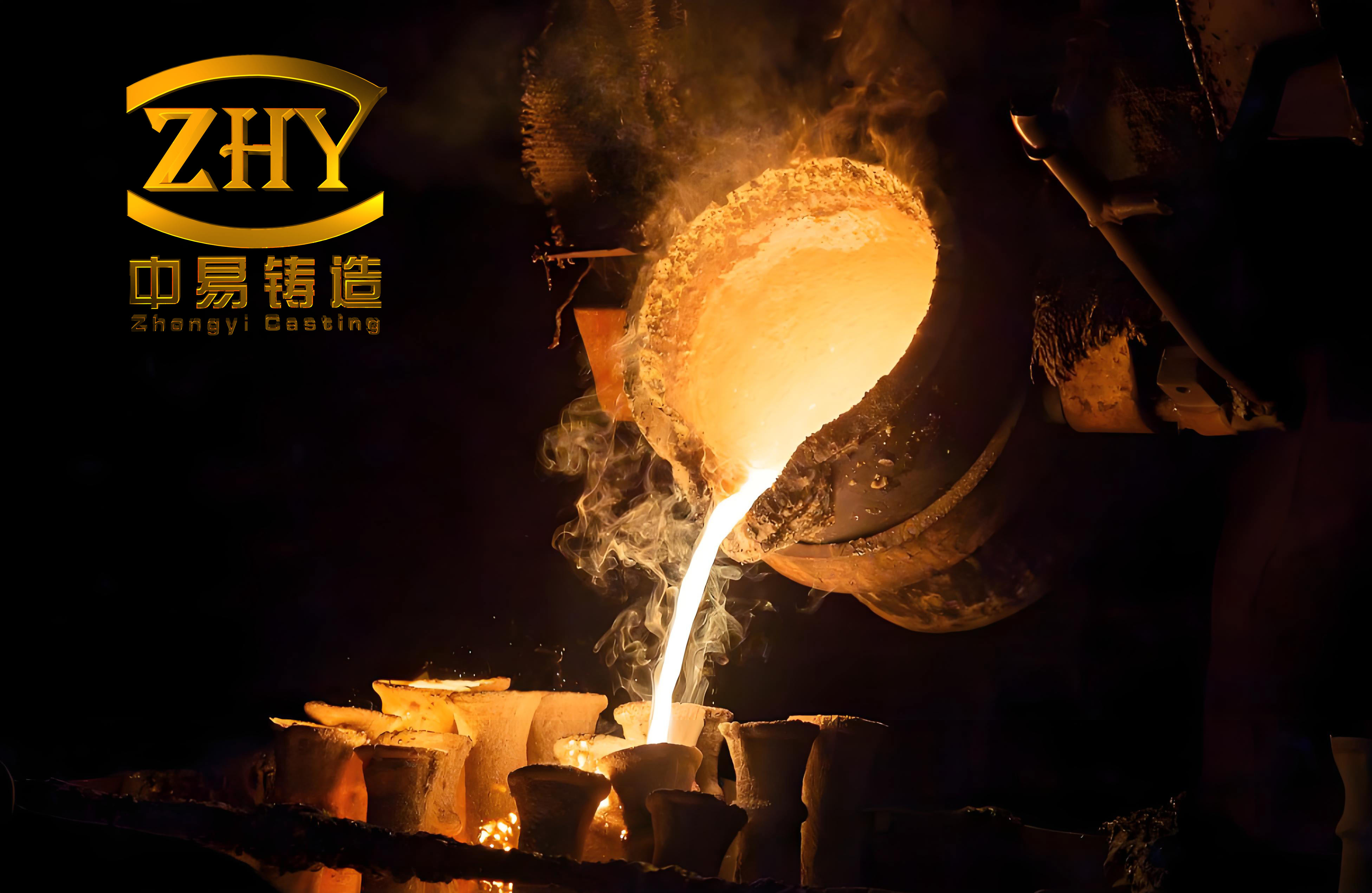
The image above illustrates a typical complex thin-walled component produced via the lost wax casting process, similar in challenge to the parts analyzed in this study. Achieving complete fill in such intricate geometries demands precise thermal and fluid dynamics management.
Defect Improvement Strategies and Validation
Armed with the simulation insights, I developed and tested two improvement strategies for the bracket casting.
Improvement Strategy 1: Adding Venting Channels. The initial hypothesis included gas back-pressure. Therefore, the first modified lost wax casting process design incorporated thin, sacrificial venting ribs (feeder gates) extending from the last-to-fill areas to the shell exterior. Simulation of this design at 1560°C with the gas model showed a drastic reduction in trapped gas pressure—from 4.5 MPa down to about 0.35 MPa. The gas was effectively vented. However, the thermal analysis still predicted solidification onset at the flow front, and cold shuts were indicated in the same locations. Physical trials confirmed this: castings poured at 1560°C still suffered ~40% misruns. Only when the pouring temperature was raised to 1600°C did the defect rate drop below 10%. This proved that while venting alleviated gas pressure, the fundamental issue was insufficient thermal energy. The gating design itself was suboptimal: the defect zones had low metallostatic pressure (being at the top of a bottom-gated mold) and the longest flow distance, resulting in excessive heat loss.
Improvement Strategy 2: Reorienting the Casting and Gating. A more radical redesign was undertaken. The casting was inverted in the mold. The gating system was moved to attach near the geometric center of the part, with most of the casting volume located *below* the ingates. This fundamentally changed the filling dynamics in the lost wax casting process. The previously problematic areas were now filled under a higher metallostatic head and, crucially, in a top-down direction, which is inherently more efficient than bottom-up filling for thin sections. The recommended parameters (1600°C, 0.38 m/s) were applied in the simulation. The results were excellent: no premature solidification was predicted during filling, and the misrun risk indicator showed zero defects. Physical production trials were conducted, and the results matched the simulation perfectly. The misrun defect rate in batch production dropped to a stable level below 2%, effectively solving the problem. This successful application demonstrated the power of integrated CAE simulation in optimizing lost wax casting processes.
Methodology Verification on Another Lost Wax Casting Component
To validate the general applicability of the developed simulation methodology, I applied it to a different thin-walled steel lost wax casting—a larger component with dimensions 540 mm x 520 mm x 220 mm, an average wall thickness of 8 mm, and a minimum of 5 mm. This part had experienced a misrun defect rate over 90% during prototyping, with defects concentrated in two specific thin regions. Using the established best practice (Momentum algorithm with coupled solving for final validation), I simulated the original process at 1580°C.
The simulation clearly showed that one of the thin regions was the last to fill. During filling, the metal front in this area began to solidify (reaching 20-30% solid fraction) well before the mold was full, accurately predicting the misrun location. The root causes were again identified as low superheat for the required flow length and poor gating design placing a critical thin section at the end of the fill path.
An improved lost wax casting process was designed: the gating was modified to introduce metal closer to the problematic area, and the shell was tilted during pouring to increase the effective pressure head. Simulation of the new design at 1600°C showed a complete, sequential fill from the farthest point back to the ingate, with no solidification during filling. The misrun prediction map was clear. This modified process was put into production, and the misrun defects were completely eliminated, confirming the predictive accuracy and utility of the simulation approach for lost wax casting.
Generalized Insights and Concluding Remarks
Through this detailed investigation, several key insights for preventing misruns in thin-wall steel lost wax casting have been crystallized and can be generalized into a workflow:
- Simulation Setup: For accurate misrun prediction, use the Momentum Conservation (FREESFOPT=2) algorithm in ProCAST. Decoupled flow-energy solving offers a good balance of speed and accuracy for initial screening, while coupled solving may be used for final validation. Always include the gas pressure model to assess back-pressure effects, especially in lost wax casting where shells have low permeability.
- Parameter Sensitivity: Pouring temperature is the most influential parameter. A quantitative relationship between superheat and fillability can be established via simulation. The required temperature increases with part complexity, thinness, and flow distance. Pouring velocity has a secondary but important effect; there exists an optimal range that ensures fillability without causing other defects.
- Gating Design Philosophy: For thin-walled lost wax castings, design the gating to minimize the flow distance to critical sections and maximize the metallostatic pressure acting on them during filling. Top-down or controlled pressurization filling is preferable to bottom-up filling for extensive horizontal thin sections.
- Process Window Definition: CAE simulation enables the definition of a robust process window (Pouring Temperature vs. Pouring Velocity) that guarantees sound casting. This window can be described by a set of constraints derived from simulation results:
- Thermal Constraint: $T_{pour} \geq T_{min}(V)$, where $T_{min}$ is the temperature at which the critical solid fraction (e.g., 0.3) is not reached at any point before complete fill.
- Velocity Constraint: $V_{min} \leq V_{pour} \leq V_{max}$, where $V_{min}$ ensures fillability and $V_{max}$ limits turbulence and gas entrapment.
- Gas Pressure Constraint: $P_{gas, max} \leq P_{critical}$, often addressed by adding vents or optimizing fill sequence.
The successful resolution of these case studies underscores the transformative role of numerical simulation in modern lost wax casting foundries. It moves the process from art-based intuition to science-based decision-making. By virtually testing multiple scenarios, engineers can identify root causes of defects, optimize gating and venting designs, and establish precise process parameters before any metal is poured. This reduces development time, scrap rates, and material costs while improving quality and reliability. As demands for lighter and more complex castings continue to grow, the integration of advanced CAE tools like ProCAST into the lost wax casting workflow will become increasingly indispensable for maintaining competitiveness and achieving manufacturing excellence.