
In this study, we focus on the precision casting of TC4 alloy variable cross-section components, which are critical in aerospace applications due to their complex geometry and demanding service conditions. The investment casting process, particularly centrifugal investment casting, is employed to fabricate these components, but challenges such as shrinkage porosity, stress concentration, and dimensional inaccuracies often arise. We aim to optimize the process parameters using numerical simulation and experimental validation to minimize defects and enhance mechanical properties. Through a systematic approach involving orthogonal experiments and ProCAST software, we analyze the filling and solidification behaviors, identify key factors influencing defect formation, and propose an optimized casting scheme. The results demonstrate that controlled process parameters can significantly reduce shrinkage porosity and stress concentration, leading to high-quality castings that meet practical requirements.
The TC4 alloy, known for its excellent strength-to-weight ratio and corrosion resistance, is widely used in precision casting applications. However, the variable cross-section design of components introduces complexities in mold filling, solidification, and defect control. In investment casting, the interplay of process parameters such as pouring temperature, mold preheating temperature, pouring rate, and centrifugal speed critically affects the final quality. We utilize numerical simulation to model these phenomena and guide the optimization process. The orthogonal experimental design allows us to efficiently evaluate the effects of multiple factors on shrinkage porosity, which is a common defect in narrow freezing range alloys like TC4. By integrating simulation results with experimental characterization, we establish a robust framework for defect control in investment casting.
We begin by describing the numerical simulation setup, which involves creating a 3D model of the casting and mold assembly. The mesh generation ensures adequate resolution, with the casting comprising 456,058 volume elements. The thermophysical properties of TC4 alloy and ZrO2 ceramic mold are defined, including liquidus and solidus temperatures of 1660°C and 1604°C, respectively. The heat transfer coefficient between the casting and mold is set to 800 W/(m·K). We employ the Niyama criterion to predict shrinkage porosity, expressed as:
$$ M = \frac{G}{\sqrt{C}} $$
where \( M \) is the mapping parameter, \( G \) is the temperature gradient (K), and \( C \) is the cooling rate (K/s). This criterion helps identify regions prone to shrinkage defects based on local solidification conditions. Additionally, the centrifugal speed is calculated using the formula:
$$ n = 29.9 \sqrt{\frac{G}{r_0}} $$
where \( n \) is the centrifugal speed (r/min), \( G \) is the gravity coefficient (ranging from 40 to 100), and \( r_0 \) is the inner radius of the casting (m). The centrifugal pressure for feeding is given by:
$$ P_{\text{feed}} = \frac{\omega^2 \rho}{2g} (R^2 – R_0^2) $$
where \( P_{\text{feed}} \) is the feeding pressure (Pa), \( \omega \) is the angular velocity (rad/s), \( \rho \) is the melt density (kg/m³), \( R \) is the distance from the rotation center (m), \( R_0 \) is the distance to the free surface (m), and \( g \) is the gravitational acceleration (m/s²). These equations underpin our analysis of the casting process.
We design an orthogonal experiment with four factors and three levels (L9(3^4)) to investigate the effects of pouring temperature (A), mold preheating temperature (B), pouring rate (C), and centrifugal speed (D). The factors and levels are summarized in Table 1.
| Factor | Level 1 | Level 2 | Level 3 |
|---|---|---|---|
| A: Pouring Temperature (°C) | 1680 | 1700 | 1750 |
| B: Mold Preheating Temperature (°C) | 300 | 350 | 400 |
| C: Pouring Rate (kg/s) | 3 | 5 | 7 |
| D: Centrifugal Speed (r/min) | 350 | 450 | 550 |
The nine experimental schemes are simulated using ProCAST, and the volume of shrinkage porosity is quantified for each. The results, presented in Table 2, show that Scheme A1B1C1D1 (Pouring Temperature: 1680°C, Mold Preheating Temperature: 300°C, Pouring Rate: 3 kg/s, Centrifugal Speed: 350 r/min) has the minimum shrinkage porosity volume of 5.041 cm³. However, further analysis of the K values (sum of shrinkage porosity volumes for each factor level) reveals the optimal combination. The K values and range (R) analysis indicate that pouring temperature has the most significant influence on shrinkage porosity, followed by pouring rate, mold preheating temperature, and centrifugal speed. Based on this, we propose the optimized scheme: A1B3C1D1 (Pouring Temperature: 1680°C, Mold Preheating Temperature: 400°C, Pouring Rate: 3 kg/s, Centrifugal Speed: 350 r/min), which yields a shrinkage porosity volume of 4.9326 cm³ upon verification.
| Scheme | A (°C) | B (°C) | C (kg/s) | D (r/min) | Shrinkage Porosity (cm³) |
|---|---|---|---|---|---|
| A1B1C1D1 | 1680 | 300 | 3 | 350 | 5.041 |
| A1B2C2D2 | 1680 | 350 | 5 | 450 | 5.141 |
| A1B3C3D3 | 1680 | 400 | 7 | 550 | 5.285 |
| A2B1C2D3 | 1700 | 300 | 5 | 550 | 5.501 |
| A2B2C3D1 | 1700 | 350 | 7 | 350 | 5.411 |
| A2B3C1D2 | 1700 | 400 | 3 | 450 | 5.167 |
| A3B1C3D2 | 1750 | 300 | 7 | 450 | 6.146 |
| A3B2C1D3 | 1750 | 350 | 3 | 550 | 5.323 |
| A3B3C2D1 | 1750 | 400 | 5 | 350 | 5.404 |
The filling process for the optimized scheme is simulated, revealing that the melt reaches the casting at 2.37 s, with preferential flow to the top thicker regions due to centrifugal force. The maximum flow velocity is 19.09 m/s, occurring in the top area, which indicates lower filling stability. Complete filling is achieved at 5.20 s. The solidification process shows that the bottom and top regions solidify first, followed by the middle and gating system, with full solidification at 49.74 s. This sequence facilitates effective feeding from the gating system, reducing shrinkage defects. The macrostructure simulation indicates that columnar grains dominate, with some equiaxed grains in the center, consistent with narrow freezing range alloy behavior. The cessation of melt flow follows the characteristics of such alloys, where the “mushy zone” appears only at the end of solidification.
Shrinkage porosity is primarily concentrated in the top region of the casting, with scattered defects in the middle and bottom. Isolated liquid zones, formed due to large cross-sectional variations and poor feeding, are the main cause. The formation of grain frameworks by columnar and equiaxed crystals impedes melt flow, leading to porosity. Stress concentration, with a maximum effective stress of 414.0 MPa, occurs at the connections between the inner gating and the casting, attributed to significant structural changes. The deformation analysis shows a minimal contraction of 0.4734 cm, indicating negligible distortion.
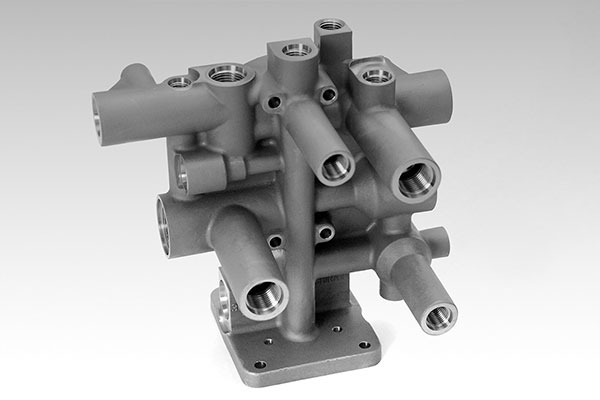
We experimentally validate the optimized investment casting process by producing castings using the determined parameters. The ceramic mold and resulting casting exhibit good surface quality without visible defects such as misruns, cracks, or excessive flash. X-ray radiography and sectioning confirm the absence of internal shrinkage porosity, aligning with simulation predictions. Dimensional analysis using 3D laser scanning shows close agreement with design specifications, with only minor deviations requiring minimal machining. This demonstrates the effectiveness of the precision casting approach in achieving high-dimensional accuracy.
The microstructure of hot isostatically pressed (HIPed) specimens reveals a typical Widmanstätten structure, consisting of grain boundary α phase (α_G) and α/β colonies. The Burgers orientation relationship influences the growth directions within β grains. Quantitative analysis gives an prior β grain size of 1.12 mm, α/β colony width of 121.89 μm, α_G width of 3.14 μm, and α lath width of 0.76 μm. The room-temperature tensile properties of HIPed castings are excellent: ultimate tensile strength of 953.5 MPa, yield strength of 835.0 MPa, and elongation of 10.0%, meeting service requirements. Fracture surfaces show necking, with a mix of dimples and cleavage planes, indicating a ductile-brittle fracture mode. Cleavage plane sizes correlate with β grain and α/β colony dimensions, highlighting the role of microstructure in mechanical behavior.
In conclusion, our study successfully optimizes the investment casting process for TC4 alloy variable cross-section components through numerical simulation and experimental validation. The optimized parameters—pouring temperature of 1680°C, mold preheating temperature of 400°C, pouring rate of 3 kg/s, and centrifugal speed of 350 r/min—effectively control shrinkage porosity and stress concentration. The casting exhibits high internal and dimensional quality, with mechanical properties suitable for aerospace applications. This work underscores the importance of precision casting techniques in manufacturing complex geometries and provides a reference for similar investment casting processes. Future research could explore the effects of alloy modifications or alternative molding materials on defect formation in investment casting.