
In my experience within advanced manufacturing, the evolution of precision investment casting stands as a cornerstone for modern aerospace propulsion. Often referred to as lost-wax casting, this centuries-old technique has been refined into a highly sophisticated process capable of producing net-shape components with exceptional dimensional accuracy and surface finish. Its significance is paramount in the realm of high-performance gas turbine engines, where materials must withstand extreme thermal, mechanical, and environmental stresses. The relentless pursuit of higher thrust-to-weight ratios and operational efficiency has driven a paradigm shift towards integrally cast, lightweight structures. This has given rise to the formidable challenge of manufacturing large, thin-wall, complex (LTWC) superalloy castings—components often exceeding 800 mm in diameter with wall sections as thin as 1-2 mm and featuring intricate internal passages. Mastering the precision investment casting of these components is not merely a manufacturing goal but a critical enabler for next-generation aviation and space exploration.
The fundamental appeal of precision investment casting for such applications lies in its unique ability to form monolithic components that would be impossible or prohibitively expensive to machine from forgings or fabricate via assembly. By eliminating joints and fasteners, overall structural integrity, reliability, and weight savings are dramatically improved. Nickel-based superalloys, particularly those like IN718 (K4169), are the material of choice due to their outstanding combination of high-temperature strength, creep resistance, oxidation tolerance, and crucially, good castability and weldability for repair. Other alloys such as Mar-M247, IN738, and Rene’220C are also employed for specific high-temperature capabilities. The transition to these large, intricate geometries, however, amplifies every aspect of the casting challenge: complete mold filling, controlled solidification to avoid defects, dimensional stability, and consistent metallurgical properties.
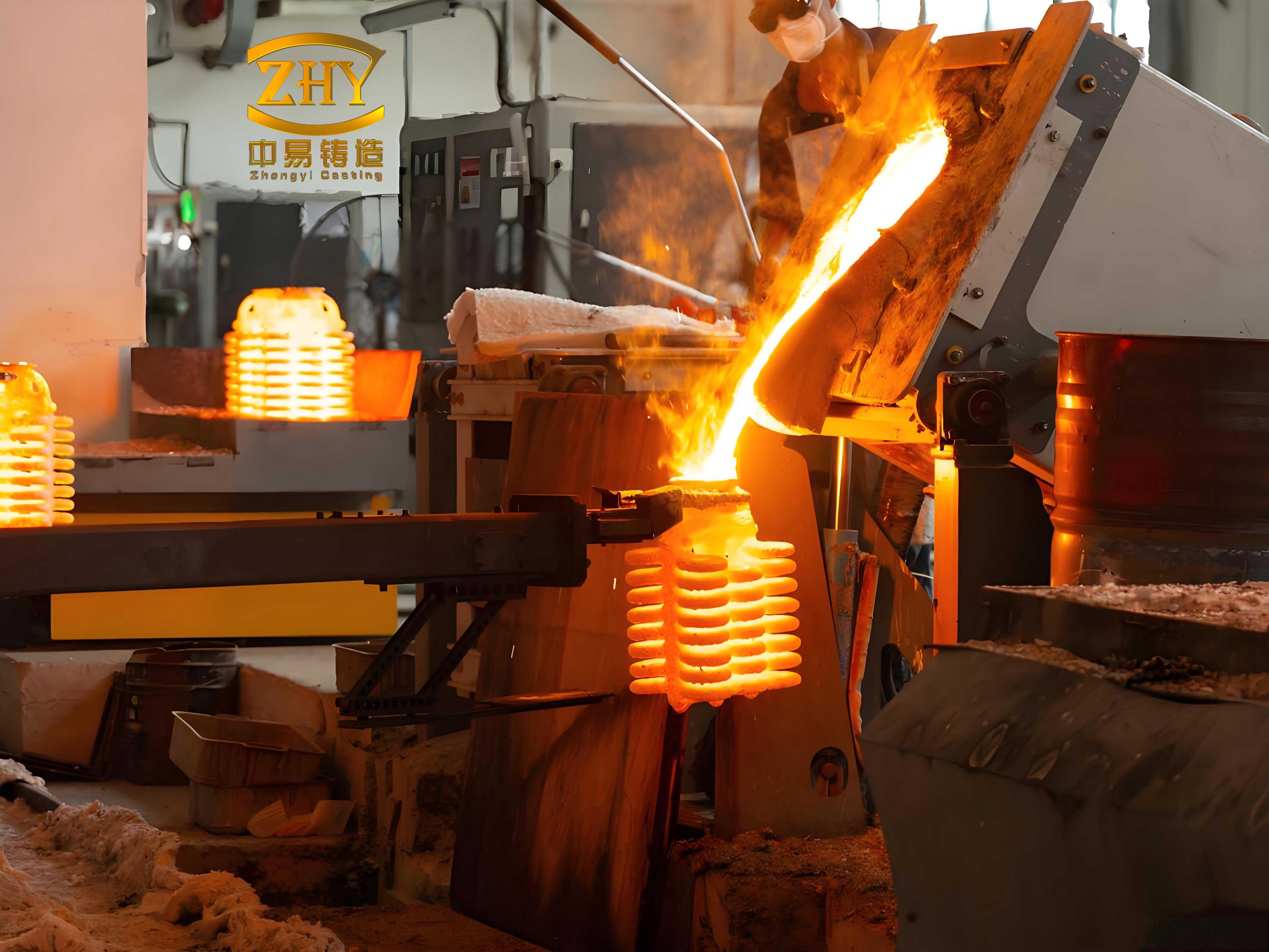
Defining the Challenge: Large, Thin-Wall, Complex Castings
The category of LTWC superalloy castings is defined by a confluence of demanding parameters that push the limits of conventional foundry practice.
| Characteristic | Typical Range/Description | Primary Manufacturing Challenge |
|---|---|---|
| Size | Major dimension > 800 mm (e.g., casings, frames) | Managing thermal gradients, mold handling, and volumetric shrinkage. |
| Wall Thickness | 1.0 mm to 3.0 mm in critical sections | Achieving complete fill before freezing; minimizing distortion. |
| Geometric Complexity | Integral hollow structures, internal cores, thin ribs, and non-axisymmetric features. | Core design and stability; ensuring directional solidification paths. |
| Material | High-alloy Nickel-based superalloys (e.g., IN718, Mar-M247) | High melting temperature, susceptibility to segregation and hot tearing. |
| Quality Requirement | Aerospace structural integrity; often fracture-critical. | Near-zero defect tolerance, demanding rigorous NDE and property validation. |
Gating, Risering, and Solidification Control: The Foundation of Success
In my work, the design of the feeding and gating system is arguably the most critical step in the precision investment casting process for LTWC components. It must simultaneously address the conflicting requirements of thin-wall filling and volumetric feeding of heavier sections. A poorly designed system leads to misruns, cold shuts, shrinkage porosity, and entrapped gases. Traditional trial-and-error methods are economically untenable for these high-value castings. The industry has progressively moved towards physics-based computational modeling as an indispensable tool.
Advanced simulation software solves the coupled equations of fluid flow, heat transfer, and solidification. The Navier-Stokes equations govern mold filling:
$$
\rho \left( \frac{\partial \mathbf{u}}{\partial t} + \mathbf{u} \cdot \nabla \mathbf{u} \right) = -\nabla p + \mu \nabla^2 \mathbf{u} + \rho \mathbf{g}
$$
where $\rho$ is density, $\mathbf{u}$ is velocity, $p$ is pressure, $\mu$ is dynamic viscosity, and $\mathbf{g}$ is gravity. Coupled with the energy equation, these models predict fill patterns, temperature histories, and final shrinkage locations. The goal is to engineer a thermal gradient that promotes directional solidification towards designated feeders (risers), ensuring any shrinkage is confined to these sacrificial areas. A landmark advancement was the development of “Thermally Controlled Solidification” processes, which actively manipulate thermal profiles within the mold to maintain the solidification front within an equiaxed grain growth regime, thereby achieving a favorable combination of fillability, internal soundness, and controlled grain size in sections of vastly different mass.
The optimization loop involves iterative design changes—adjusting gate sizes, locations, and feeder geometries—to achieve a sound casting. Key outcomes from a successful simulation are a uniform fill front to avoid turbulence and oxide entrapment, and a clearly defined, progressive solidification sequence.
Melt Processing and Pouring: Achieving Purity and Grain Refinement
The quality of the molten metal is non-negotiable. For superalloys, vacuum induction melting (VIM) is standard. The vacuum environment (typically below 0.1 Pa) prevents oxidation and removes dissolved gases like hydrogen and nitrogen. However, the quest for ultra-clean metal to enhance fatigue performance—highly sensitive to inclusions—has led to further refinements. The use of calcined lime (CaO) crucibles is a notable practice. At high temperatures, CaO can react with sulfur and other impurities, effectively gettering them into a slag phase that can be removed. The purification reactions can be conceptually simplified as:
$$
3[\text{CaO}] + 2[\text{Al}] + 3[\text{S}] \rightarrow 3\text{CaS} + \text{Al}_2\text{O}_3\text{(slag)}
$$
where bracketed elements denote those dissolved in the melt. This results in sulfur levels potentially below $5 \times 10^{-4}$ wt.%. Additionally, ceramic foam filters placed in the gating system provide the final filtration barrier. Their efficacy depends on the base material’s chemical compatibility with the superalloy.
| Filter Base Material | Typical Composition | Primary Application Note |
|---|---|---|
| Partially Stabilized Zirconia | 97% ZrO₂ – 3% MgO | Excellent thermal shock resistance for high superheat pouring. |
| Alumina-Zirconia | 65% ZrO₂ – 35% Al₂O₃ | Good chemical inertness and mechanical strength. |
| High-Purity Alumina | >99% Al₂O₃ | Cost-effective for many nickel-based alloys. |
Grain structure control is equally vital. While equiaxed grain casting is common for complex shapes, coarse grains can harbor microporosity and reduce low-cycle fatigue life. Precision investment casting often employs surface inoculation or bulk melt treatment to refine grains. A classic method involves coating the ceramic shell’s primary layer with a cobalt-aluminate-based inoculant (e.g., CoO + Al₂O₃). During pre-heat and pouring, CoO reduces to metallic Cobalt, which has a lattice parameter closely matching the γ-Ni matrix, acting as potent nucleation sites. The resulting fine-grained surface layer significantly improves mechanical properties. For bulk refinement, specific master alloys like Ni-Al-Ti can be added to the melt to provide dispersed, potent substrates for heterogeneous nucleation, effectively reducing the critical undercooling required for solidification.
Post-Casting Thermal Processing: Densification and Microstructural Development
Even with optimal precision investment casting design, some level of microshrinkage or porosity is often unavoidable in large, complex geometries. This is where Hot Isostatic Pressing (HIP) becomes an essential, non-negotiable step for aerospace-grade structural castings. HIP subjects the component to high temperature and isostatic gas pressure (typically Argon), usually for several hours. The combined thermal and pressure energy enables creep and diffusion mechanisms to collapse and heal internal voids. The densification process can be modeled by power-law creep equations, where the steady-state strain rate $\dot{\epsilon}$ is a function of applied stress $\sigma$, temperature $T$, and material constants $A$ and $n$:
$$
\dot{\epsilon} = A \sigma^n \exp\left(-\frac{Q}{RT}\right)
$$
where $Q$ is the activation energy and $R$ is the gas constant. A typical HIP cycle for IN718 is 1160°C at 100-150 MPa for 4 hours. This process not only eliminates porosity but also promotes homogenization of the cast microstructure. Following HIP, a tailored heat treatment sequence is mandatory to develop the required service properties. For precipitation-strengthened alloys like IN718, this involves a solution treatment to dissolve primary phases and a multi-step aging treatment to precipitate fine, coherent strengthening phases (e.g., γ″ and γ’).
| Process Step | Typical Parameters for IN718 | Metallurgical Objective |
|---|---|---|
| Hot Isostatic Pressing (HIP) | 1160°C / 100-150 MPa / 4 hrs (Argon) | Close internal porosity; homogenize composition. |
| Solution Treatment | 955-980°C / 1-2 hrs, Argon cool | Dissolve undesirable phases and segregation. |
| Aging Treatment | 720°C / 8 hrs, furnace cool to 620°C / 8 hrs, Air Cool | Precipitate fine γ″ (Ni₃Nb) and γ’ (Ni₃(Al,Ti)) strengthening phases. |
For LTWC castings, the use of supporting fixtures during all heat treatments is critical to prevent distortion due to non-uniform thermal expansion and creep under the component’s own weight at high temperature.
Non-Destructive Evaluation and Quality Assurance
The verification of integrity in LTWC castings produced via precision investment casting demands a multi-faceted non-destructive evaluation (NDE) strategy. The complexity of the geometry makes defect detection and characterization particularly challenging. A typical inspection flow involves several complementary techniques applied at different stages:
1. Dimensional Inspection: Coordinate Measuring Machines (CMM) are used to create a digital map of the as-cast component, verifying critical dimensions and geometric tolerances against the CAD model before any machining.
2. Volumetric Defect Detection: X-ray radiography is the primary method for detecting internal defects like shrinkage, inclusions, and core remnants. For complex shapes, determining the optimal X-ray source orientation to inspect all regions often requires multiple exposures and advanced techniques like digital detector arrays and computed tomography (CT). Industrial CT is a transformative technology, generating a full 3D volumetric model from which internal features and defects can be isolated and analyzed quantitatively.
3. Surface and Near-Surface Defect Detection: Fluorescent Penetrant Inspection (FPI) is extensively used to reveal surface-connected defects like hot tears, cracks, and micro-porosity. The process involves applying a low-viscosity fluorescent dye, removing excess, and applying a developer to draw the dye out of any discontinuity. Proper surface preparation is vital, as contaminants can block defect openings and cause misleading results.
4. Advanced and Emerging Techniques: Ultrasonic testing, particularly using phased-array probes, is being adapted to inspect thicker sections of castings and even characterize grain structure. Synchrotron radiation sources offer incredibly high-resolution imaging for fundamental studies of solidification dynamics and defect formation. The future of NDE in precision investment casting lies in the fusion of data from these multiple modalities to create a comprehensive “digital twin” of the component’s quality state.
Industrial Applications and Technology Drivers
The maturation of precision investment casting for LTWC components is evidenced by their widespread adoption in commercial and military aerospace engines. Pioneering work in the 1980s and 1990s by leading foundries demonstrated the feasibility and benefits. For instance, complex integrally cast components like high-pressure compressor stators, diffuser cases, and turbine rear frames became standard in engines such as the CFM56 and GE90. These parts, often made from IN718, consolidated dozens of individual pieces into single castings, reducing weight, part count, assembly time, and leakage paths.
The driving force is the relentless aerospace demand for improved performance metrics. The relationship between engine thrust-to-weight ratio and operating temperature creates a direct pull for materials and processes that allow higher turbine inlet temperatures. Precision investment casting enables the manufacture of intricate cooling passage geometries within turbine blades and vanes that are essential for survival in these extreme environments. For structural components like fan frames and intermediate cases, the technology enables optimized, weight-efficient designs that are unattainable through forging or fabrication.
Future Trajectories and Concluding Perspectives
The evolution of precision investment casting for the most demanding applications is far from static. Several interconnected frontiers define its future trajectory:
1. Digital Thread and Predictive Engineering: The integration of process simulation will deepen from macroscopic flow and shrinkage prediction to the forecasting of microstructural features (grain size, phase distribution) and even mechanical properties (strength, fatigue life). This will enable true “first-time-right” manufacturing by linking design parameters directly to performance outcomes through multi-scale models.
2. Advanced Alloy and Process Synergy: Development of new castable superalloys with enhanced temperature capability continues. In parallel, hybrid processes are emerging. For example, combining the mold-filling control of counter-gravity or pressure-regulated pouring with the shape-making capability of ceramic shell precision investment casting could offer unprecedented control for filling ultra-thin sections while minimizing turbulence.
3. Smart Foundry Concepts: The incorporation of in-situ monitoring sensors within molds or the use of machine learning to analyze process data (melt parameters, furnace temperatures, cooling rates) will allow for real-time adaptive control and the creation of robust digital pedigrees for each casting.
4. Sustainability and Cost Reduction: Efforts to reduce the environmental footprint and cost will focus on recyclable shell materials, optimized gating to improve yield, and reducing the energy intensity of processes like HIP through cycle optimization or alternative densification methods.
In conclusion, the art and science of precision investment casting have been fundamentally transformed to meet the needs of modern high-performance engineering. The production of large, thin-wall, complex superalloy castings represents the apex of this technology, demanding a synthesis of advanced design, ultraclean metallurgy, controlled solidification, and rigorous quality assurance. It is a field defined by constant innovation, where incremental improvements in modeling fidelity, material purity, and process control collectively enable the realization of propulsion and energy systems that push the boundaries of the possible. The continued advancement of this critical manufacturing discipline remains essential for the aerospace ambitions of nations and the broader technological landscape.