
In the realm of advanced manufacturing, investment casting stands as a pivotal process for producing complex, high-precision metal components with excellent surface finish and dimensional accuracy. As technology evolves at a breakneck pace, the craft of investment casting must also advance, particularly in shell manufacturing techniques, which are fundamental to defect-free castings. My experiences in a mid-sized defense manufacturing facility have centered on refining these very processes to bridge the gap between cost-effectiveness and superior quality. This article delves into a comprehensive journey of experimentation, analysis, and implementation aimed at enhancing shell systems for investment casting of low-alloy steel components, specifically those akin to grade ZG270-500. The core challenge lay in moving beyond the conventional water-glass-based systems without succumbing to the prohibitive costs of advanced binder systems.
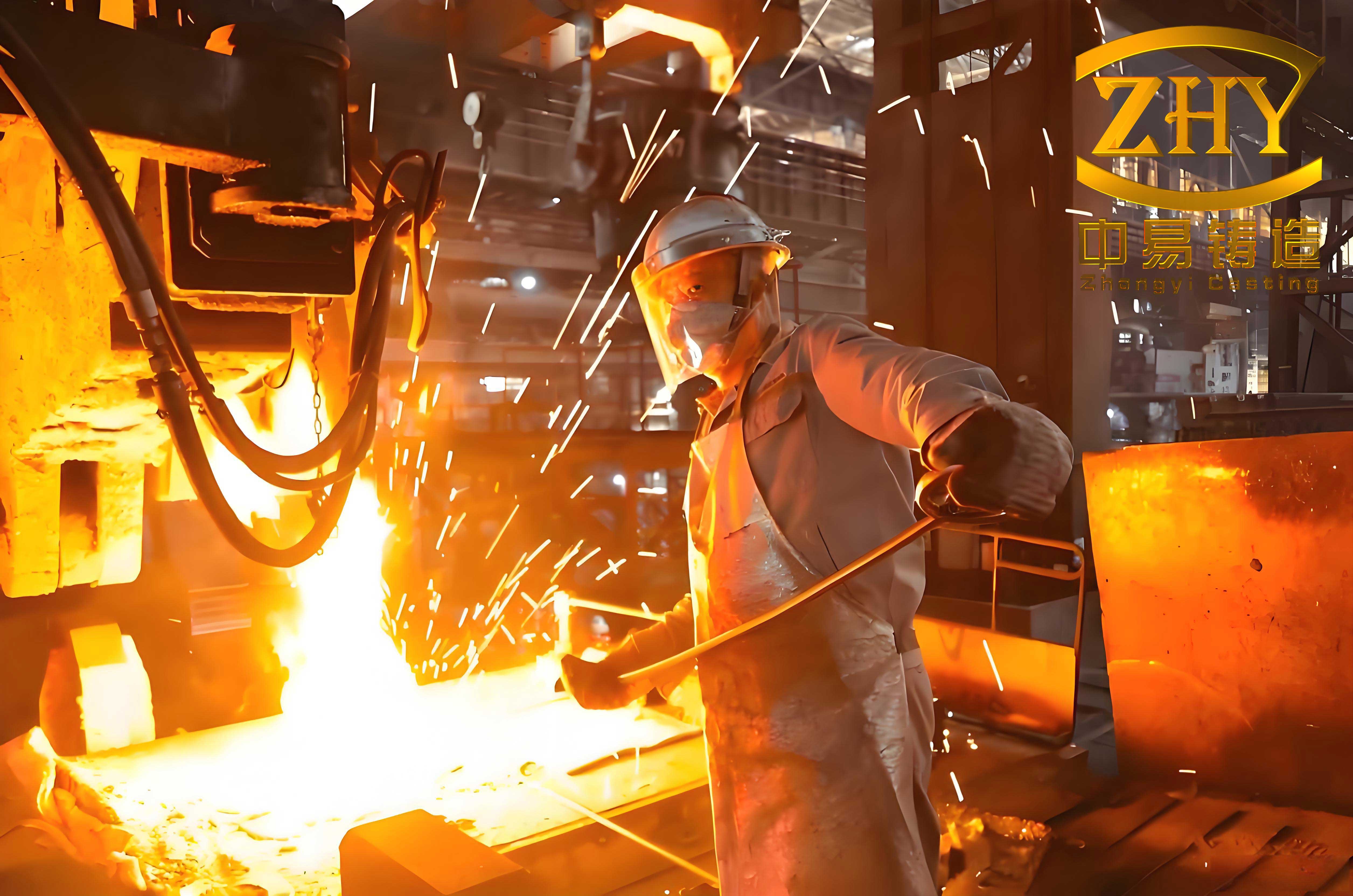
The foundational process for our investment casting operations was the traditional water-glass (sodium silicate) shell system. The binder was aqueous sodium silicate, and the slurry consisted of silica flour. Stuccoing employed silica sand with an AFS grain fineness number (GFN) of 30 for the first two coats, followed by a coarser silica sand with a GFN of 16 for the third through sixth coats. Dewaxing was performed using a steam autoclave, and mold firing was conducted at approximately 850°C. While functional, this investment casting methodology yielded components with significant quality shortcomings that increasingly failed to meet stringent technical specifications. The primary defects are cataloged systematically below.
| Defect Category | Manifestation | Impact on Production |
|---|---|---|
| Elevated Surface Roughness | General surface coarseness, presence of metallic nodules (iron beads) and fine fins. | Mandated extensive post-casting finishing operations like grinding and filing, increasing labor time by 60-70%. |
| Excess Metal (Fins & Swells) | Pronounced in narrow channels, undercuts, and internal corners. | Nearly impossible to clean mechanically, necessitating removal via machining, often disrupting downstream CNC operations and tool life. |
| Surface Pitting & Veining | Minor but frequent irregularities linked to shell cracking. | Contributed to rejection rates during visual inspection. |
The root causes were traced to the inherent properties of the silica-based materials. Silica undergoes a disruptive phase transformation at around 573°C, accompanied by a sudden volumetric expansion. This phenomenon, described by the coefficient of thermal expansion (α), is critical. For silica, the average α over the firing and pouring range is disproportionately high compared to more stable refractories. The instantaneous expansion can be modeled as a step change in strain, contributing to micro-cracking in the investment casting shell. Furthermore, silica is prone to chemical reaction with iron oxides at high temperatures, leading to burn-on and penetration defects that manifest as surface roughness and adhered sand. The relationship for linear thermal expansion is fundamental:
$$ \Delta L = L_0 \cdot \alpha \cdot \Delta T $$
where \( \Delta L \) is the change in length, \( L_0 \) is the original length, \( \alpha \) is the linear coefficient of thermal expansion, and \( \Delta T \) is the temperature change. The high and non-linear α for silica makes dimensional stability of the investment casting mold a significant challenge.
Driven by the need for improvement, a rigorous R&D program was initiated, focusing on hybrid shell systems. The objective was to retain the economic advantage of water-glass while selectively incorporating advanced materials to enhance the critical first layers of the investment casting shell. Two distinct trial schemes were conceived and executed over multiple phases.
| Trial Scheme | Primary Binder | Face Coat Refractory & Grain Size (GFN) | Secondary/Backup Coats | Dewaxing & Firing |
|---|---|---|---|---|
| Scheme A (Advanced Binder) | Silica Sol | Zircon Sand, GFN 100-120 | Coat 2 & 3: Mullite (GFN 60-80). Coat 4-6: Silica Sand (GFN 16). | Steam Autoclave; 850°C. |
| Scheme B (Hybrid System) | Water Glass | Zircon Sand, GFN 100-120 (for Coats 1 & 2) | Coat 3-6: Original water-glass/silica sand process (GFN 30 then GFN 16). | Steam Autoclave; 850°C. |
| Scheme C (Control Variant of B) | Water Glass | Silica Sand, GFN 100-120 (for Coats 1 & 2) | Coat 3-6: Original water-glass/silica sand process. | Steam Autoclave; 850°C. |
Phase I Trials (Scheme A): Initial trials focused on Scheme A, involving the production of 50 test castings. The results were disappointing. Approximately 40% of the investment casting components exhibited extensive surface defects like pits and orange peel texture. Analysis revealed that the silica sol binder, while excellent in theory, had poor adhesive affinity to the wax pattern under our specific plant conditions. The success of this investment casting approach is highly sensitive to ambient parameters governed by the equation for drying kinetics:
$$ \frac{dM}{dt} = -k (M – M_e) $$
where \( dM/dt \) is the drying rate, \( k \) is a rate constant dependent on temperature and humidity, \( M \) is the moisture content, and \( M_e \) is the equilibrium moisture content. Our workshop could not consistently maintain the low humidity and controlled temperature required for optimal silica sol gelation and drying, leading to weak, defective shell faces that replicated as casting flaws.
Phase II Trials (Scheme B): The investigation pivoted to Scheme B, producing another batch of 50 parts. The outcome was markedly superior. Over 85% of the investment casting products displayed smooth surfaces, a near-total absence of iron beads and fins, and a measurable reduction in surface roughness. This indicated that the problem was not the water-glass binder per se, but the refractory material in direct contact with the molten metal. The substitution of zircon for silica in the first two coats was the transformative factor.
Phase III Trials (Scheme C): To isolate the variable of cost (zircon being significantly more expensive than silica), Scheme C was tested. Using fine silica sand of the same grain size (GFN 100-120) for the face coats within the water-glass system yielded intermediate results. Surface roughness was better than the original full-silica process but worse than Scheme B. Crucially, the problematic fins and nodules in recessed areas persisted, confirming that the thermal and chemical properties of the face coat refractory were decisive in investment casting quality.
The superiority of Scheme B for our investment casting needs can be explained through materials science principles. Zircon sand (ZrSiO₄) possesses a low, consistent, and linear coefficient of thermal expansion over the critical temperature range. Its thermal stability can be contrasted with silica’s using their respective α values:
$$ \alpha_{silica} \approx 12.0 \times 10^{-6} \, \text{°C}^{-1} \, \text{(up to ~573°C, then nonlinear)} $$
$$ \alpha_{zircon} \approx 4.5 \times 10^{-6} \, \text{°C}^{-1} \, \text{(linear up to ~1500°C)} $$
This means the volumetric change \( \Delta V \) for a shell grain, approximated as \( 3\alpha \Delta T \), is substantially smaller for zircon. More importantly, zircon lacks the destructive β-to-α quartz transformation at 573°C that plagues silica. This transformation involves a sudden volume increase of about 1.4%, which for a constrained shell system generates internal stresses exceeding the strength of the binder bridge, causing microfractures. The probability of shell cracking (P_c) can be heuristically related to the expansion mismatch:
$$ P_c \propto \int_{T_{room}}^{T_{pour}} (\alpha_{refractory}(T) – \alpha_{binder/matrix}(T)) \, dT $$
For zircon, this integral value is minimal, promoting shell integrity. Furthermore, zircon is chemically inert to iron oxides, preventing the formation of low-melting-point eutectics that cause metal penetration, a common source of roughness and “burn-on” in investment casting. The free energy of reaction \( \Delta G \) for zircon with FeO is highly positive, indicating non-spontaneity:
$$ \Delta G_{ZrSiO_4 + FeO} \gg 0 $$
whereas for silica, \( \Delta G_{SiO_2 + FeO} \) can be negative at casting temperatures, facilitating slag formation.
Based on this conclusive analysis, the hybrid shell system (Scheme B) was adopted for full-scale production. The modified investment casting process delivered profound benefits, quantitatively summarized below.
| Performance Metric | Original Process (Baseline) | Modified Process (Scheme B) | Improvement |
|---|---|---|---|
| Average Surface Roughness (Ra, μm) | 12.5 – 15.0 | 6.3 – 8.0 | ~50% reduction (One grade improvement) |
| Post-cast Cleaning & Finishing Time | 100% (Baseline time unit) | 30-35% | Time reduced to ~1/3 of original |
| Machining Disruption due to Casting Defects | Frequent tool wear, stopages | Negligible | Near-elimination of defect-related machining issues |
| Overall Casting Yield (First-pass acceptable) | Approx. 82% | Approx. 95% | 13 percentage point increase |
| Relative Shell Material Cost Increase | 0% (Baseline) | ~18% | Moderate cost uplift offset by downstream savings |
The economic rationale is clear. While zircon sand adds to the direct material cost of the investment casting shell, the savings from drastically reduced labor for finishing, lower scrap rates, and improved throughput in machining operations result in a net positive return on investment. The total cost per good casting \( C_{total} \) can be modeled as:
$$ C_{total} = C_{shell} + C_{metal} + C_{labor} + C_{scrap} $$
For the modified process, \( C_{shell} \) increases, but \( C_{labor} \) and \( C_{scrap} \) decrease significantly, minimizing \( C_{total} \). This makes the hybrid investment casting process not just a technical success but a commercially viable one.
The principles of dimensional control learned through this shell development also apply to other aspects of investment casting, such as pattern and mold design for compensating solidification shrinkage. For instance, designing for components with curved geometries, like arc plates, requires careful application of linear shrinkage allowances. A common mistake is applying a uniform linear shrinkage factor \( f_s \) to all dimensions, including radii. For an arc segment, the correct approach is to apply the shrinkage to the arc length \( S \) or the subtended angle \( \theta \), not the radius \( R \). The relationships are:
$$ S_{pattern} = S_{casting} \cdot (1 + f_s) $$
$$ \theta_{pattern} = \theta_{casting} \cdot (1 + f_s) $$
$$ R_{pattern} = R_{casting} $$
This ensures the cast arc fits its intended assembly without mismatch. The linear shrinkage \( f_s \) is a material-dependent parameter, typically ranging from 2.0% to 2.5% for the low-alloy steels used in our investment casting work.
In conclusion, the journey to optimize our investment casting shell process underscores a vital engineering tenet: significant quality gains are often achievable not through wholesale, expensive technology replacement, but through strategic, knowledge-based hybridization. By understanding the failure mechanisms of the traditional silica-based system and selectively introducing a high-performance refractory like zircon for the critical face coats, we engineered a robust solution. This modified investment casting process delivered a dramatic enhancement in surface finish, a radical reduction in labor-intensive cleanup, and a substantial boost in production yield. The success of this investment casting improvement initiative demonstrates that continuous, evidence-based refinement of established processes remains a powerful tool for maintaining competitiveness in precision manufacturing. Future work may explore the integration of even newer binder systems or composite refractories, but the foundational lesson—that material properties at the metal-mold interface dictate investment casting quality—will remain paramount.